



Between Giants: The Sino-Indian Cold War in the Indian Ocean
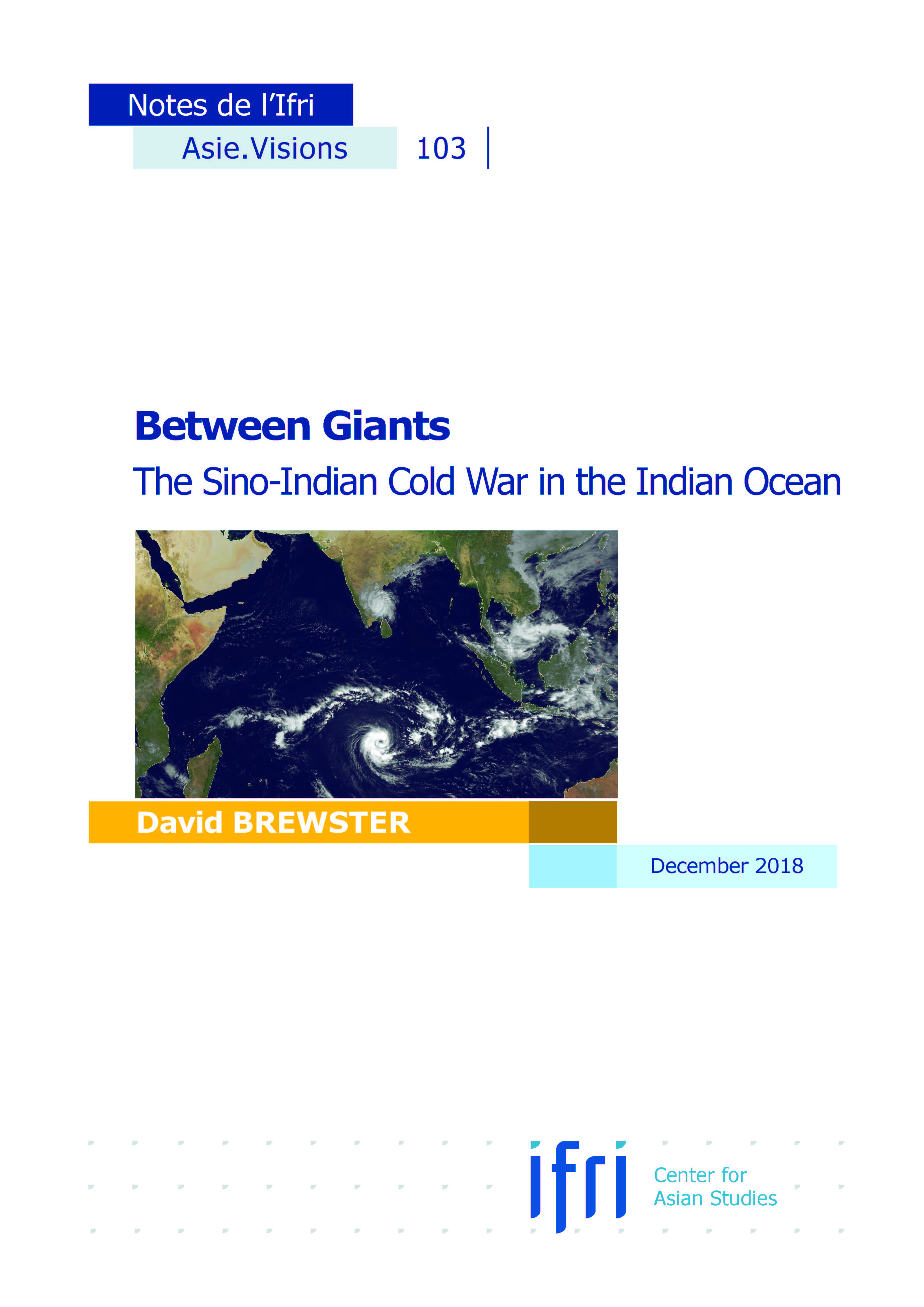
Strategic competition between India and China in the Indian Ocean is growing and has the potential to profoundly impact the stability and security of the region. The Indian Ocean is becoming the scene of a sustained contest that in some ways resembles strategic competition during the Cold War.
This will include pressure on Indian Ocean states to align themselves with one side or another within an increasingly unstable and complex strategic environment.
The series of political crises that occurred in the Maldives during 2018 presages significant future instability right across the region. These events demonstrated the influence wielded by Delhi and Beijing, but also the constraints they each face. The Maldives political crises began in February 2018, involving a “self-coup” by the Chinese-backed President Abdulla Yameen. Although this represented a further erosion in India’s traditional security role in the country, Delhi found itself with few good options to respond. But Yameen’s shock election loss in September 2018 to his opponent, Ibrahim (“Ibu”) Solih, demonstrates the power of democratic forces and the constraints that are also faced by China. It is another chapter in a long-term competition for influence that will likely be played out in different ways elsewhere in the region.
Indeed, it appears that as part of its Belt and Road Initiative, China will actively pursue all economic opportunities available to it in the Indian Ocean without significant regard for Indian sensitivities. Despite rhetoric of the “Wuhan spirit” that emphasizes Sino-Indian policy coordination in the region, there is no real sense that China should limit its opportunities or divide them with India. China is also pursuing infrastructure projects, including ports and airports, without regard for their short-term economic feasibility. This often involves large amounts of debt, corruption and/or the provision of political support for local leaders. These factors may make it difficult for non-Chinese players to compete.
Moreover, China encourages India’s neighbors to develop close political and security relationships with Beijing and opposes any suggestions that India should be allowed a sphere of influence in which it exercises special rights. In the long term, China has many strategic imperatives in the Indian Ocean that may drive a significant military presence in the region. This could range from full service naval/air bases to more discrete access/logistical support arrangements. But for the time being, Beijing will be cautious about being drawn into a direct security role in local conflicts, including domestic political disputes and disputes with India. The Indian Ocean is far away from China and its military position there is currently weak.
India has long-term aspirations to leadership of the Indian Ocean. Traditionally, it has perceived a sphere of influence in South Asia in which it plays a pre-eminent economic, political and security role. These aspirations are being increasingly tempered by the reality of China’s regional presence and economic power. India remains highly resentful of any Chinese economic presence or political influence in the island states of the Indian Ocean; however, it also recognizes that its short-term options may be constrained.
As this competition plays out, the Indian Ocean island states also exercise considerable agency. Some countries may try to insulate themselves from competition by declaring themselves “non-aligned”, but many will also seek economic or political benefits from the major players. Some will seek to balance against perceived Indian hegemony through economic and political relationships with outside powers such as China and Saudi Arabia. At the same time, China’s Indian Ocean partners will generally resist requests by Beijing to establish a security presence, although they may not be able to do so indefinitely. These factors point to an increasingly unstable and contested strategic environment.

Available in:
Regions and themes
ISBN / ISSN
Share
This page contains only a summary of our work. If you would like to have access to all the information from our research on the subject, you can download the full version in PDF format.
Between Giants: The Sino-Indian Cold War in the Indian Ocean

Center for Asian Studies
Asia is a nerve center for multiple global economic, political and security challenges. The Center for Asian Studies provides documented expertise and a platform for discussion on Asian issues to accompany decision makers and explain and contextualize developments in the region for the sake of a larger public dialogue.
The Center's research is organized along two major axes: relations between Asia's major powers and the rest of the world; and internal economic and social dynamics of Asian countries. The Center's research focuses primarily on China, Japan, India, Taiwan and the Indo-Pacific, but also covers Southeast Asia, the Korean peninsula and the Pacific Islands.
The Centre for Asian Studies maintains close institutional links with counterpart research institutes in Europe and Asia, and its researchers regularly carry out fieldwork in the region.
The Center organizes closed-door roundtables, expert-level seminars and a number of public events, including an Annual Conference, that welcome experts from Asia, Europe and the United States. The work of Center’s researchers, as well as that of their partners, is regularly published in the Center’s electronic journal Asie.Visions.

China as an ambivalent supporter of the WTO and the multilateral trading system
Amid rising trade tensions between Europe and China and broader uncertainty in the international rules-based trade regime, Beijing has worked to preserve and bolster the multilateral trading system while at the same time failing to reform the domestic policies that have served to undermine that same system.

Pakistan and the Israel-Palestine Conflict: Transformation in Pakistan’s Approach After the War in Gaza
Pakistan has long combined vocal support for the Palestinian cause with covert engagement with Israel. Since the war in Gaza, this balance has become untenable: public opinion is united against Israel, joining Trump’s Board of Peace has drawn rare cross-party criticism, and new regional alignments put normalization out of reach.
The Oceania Factor in France’s Evolving Indo-Pacific Strategy
This paper examines the two-way relationship between France’s Indo-Pacific strategy and developments in Oceania. Oceania was not a priority in the initial years of France’s Indo-Pacific strategy, as the region was largely treated as secondary to major strategic hotspots and key partnerships, while overseas territories were primarily handled as domestic issues and recipients of a top-down strategy.
France’s View: From Diplomacy to Public-Private Action
France has emerged as the EU’s IMEC forerunner, combining port infrastructure, diplomatic alliances and public-private cooperation. With Marseille Fos at its core, the country brings a strategic hub for logistics, energy and digital connectivity to the corridor.