





Data (extra)territoriality: what sovereignty for Europe?

The expansion of the extraterritorial reach of laws governing digital data highlights the rise of new power dynamics surrounding control over global data flows. In this context, data localization is gradually emerging as a strategic tool employed by various states for purposes of political and ideological control, the protection of industrial interests and national security, or to support innovation and data protection.

In Europe, the preeminence of American cloud service providers is subject to extraterritorial legislations such as the CLOUD Act or Foreign Intelligence Surveillance Act (FISA), highlighting the limits of a European strategy based solely on data localization. Given the extent of its dependencies in the digital and technological sectors (cloud computing, software, semiconductors, 5G) and the resulting vulnerabilities, the European Union (EU) would benefit from fully implementing a data sovereignty policy.
Several approaches could therefore be considered: ensuring the continuity of digital services, ensuring the resilience of critical infrastructure or implementing a policy to diversify Europe’s technological partnerships with actors that share the same values. Such a strategy would make it possible to combine the goals of economic competitiveness and data sovereignty, thereby fostering technological innovation, particularly in the field of artificial intelligence (AI).
This study is available only in French : "(Extra)territorialité des données : quelle souveraineté pour l'Europe ?"

Available in:
Themes and regions
ISBN / ISSN
Share
Download the full analysis
This page contains only a summary of our work. If you would like to have access to all the information from our research on the subject, you can download the full version in PDF format.
Data (extra)territoriality: what sovereignty for Europe?

Author(s)
Related centers and programs
Discover our other research centers and programs
Center for Geopolitics of Technology
Artificial intelligence (AI), 5G, cybersecurity, robotics, semiconductors, space…Technologies—particularly digital technologies—now profoundly affect all human activities and, by extension, international relations. The political, strategic, economic, and social stakes that arise from them are expressed across multiple political levels, involving states, international organizations, and private companies alike. International dynamics of competition and cooperation are being reshaped as a result. To address these challenges, Ifri launched its Geopolitics of Technology Center in 2020, offering a distinctly European perspective on the international issues surrounding so-called critical technologies.
Find out more
Discover all our analyses
Regulatory Dynamics and Tensions in the Space Sector: Towards and Americanization of Space Law?
The development of space law has gradually evolved from a top-down normative dynamic dominated by the founding impetus of the UN to a bottom-up normativity driven by national and industrial practices. This evolution is now accompanied by growing normative competition, raising the risk of an Americanization of space law and prompting the question of a European response.

The Sustainability of Space Operations: An Opportunity for European Leadership?
As space becomes a key arena for power projection strategies, while facing growth and diversification of orbital activities, the concept of “space sustainability” is emerging as a new framework of analysis for space governance.
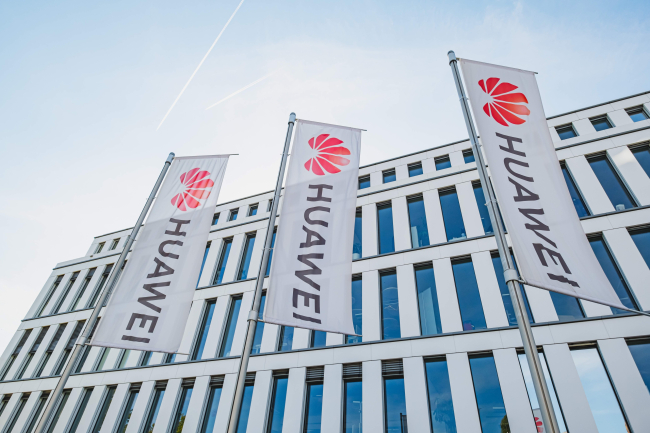
The “Huawei Saga” in Europe Revisited: German Lessons for the Rollout of 6G
While the European Union attempted to coordinate a collective response through its 5G Toolbox in Europe’s 5G infrastructure, member states diverged significantly in balancing political, economic, and technological considerations. Germany, despite its economic ties to China and status as Europe’s largest telecom market, only reached a tentative agreement in July 2024—one that appears largely symbolic.

European Startups and Generative AI: Overcoming Big Tech Dominance
Europe is at a crossroads. Faced with the domination of American Big Tech across the entire generative Artificial Intelligence (AI) value chain, from foundation models to cloud infrastructure, distribution channels, and open source, it risks long-term technological and economic decline. Yet generative AI also represents a major opportunity for economic transformation, with a potential value estimated at 1.5 times France’s gross domestic product (GDP). To turn it into a driver of renewal, Europe must move beyond the illusion of total technological independence and instead build an ecosystem that leverages Big Tech resources while strengthening its own innovation capabilities.