



Economics in Narendra Modi’s Foreign Policy
A distinct feature of Prime Minister Narendra Modi’s first year in office was the remarkable speed and alacrity with which he moved on external engagement. During his first twelve months as Prime Minister, he travelled to almost twenty countries in different parts of the world. Indeed, Modi appeared to be guided by the impression that high rates of economic growth cannot be generated only by domestic policies and initiatives.
These need to be matched by external engagement that, apart from serving geo-strategic imperatives, would be economically proactive by enabling greater exchange of goods and services and fostering business collaborations between India and the rest of the world.
As this paper points out, the drivers of Modi’s foreign policy are embedded in the objectives of domestic economic growth and expansion of the Indian economy. These drivers primarily aim to facilitate India’s economic turnaround and consolidate its comparative advantages in several key industries for expanding India’s share in global production over time. In this regard, the paper emphasizes the importance of ‘Make in India’, Modi’s signature initiative for transforming India into a global hub for several manufacturing and services industries. It also analyses Modi’s efforts to rectify India’s supply–side deficiencies, particularly its limited access to energy and argues that building nuclear energy capacities has become an important objective of the Modi government’s external outreach.
Another important driver of Modi’s external engagement is the diaspora. This is a ‘natural’ engagement given the BJP’s strong links with the overseas Indian community and the political and financial leverages it draws from the links. The paper points to the multiple significance of the Diaspora, including improving India’s global image and extracting greater strategic benefits from bilateral relations with countries that are host locations of the Diaspora. A final driver identified by the paper is Modi’s plan to ensure that India becomes an active member of major regional and economic groupings. Taking APEC as a case in point, the paper argues formal entry in APEC would enable India to be a part of the significant changes taking place in the region’s trade and economic architecture and avoid being left out of the region’s growth story.
In conclusion, the paper suggests that Modi’s challenge will be to maintain the momentum he has generated and ensure translation of positive sentiments into tangible assets facilitating India’s economic growth. Unfortunately, the Prime Minister may not be in complete control of the situation in this regard as changes pertaining to doing business conditions need to be implemented mostly by state governments. At the same time, foreign trade negotiations, particularly in the pending and upcoming FTAs and RTAs, will be an important determinant of Modi’s ability to translate words into action. The paper indicates the strategy of the Modi government is not clearly spelt out in this regard in its Foreign Trade Policy (2015-2020).
This page contains only a summary of our work. If you would like to have access to all the information from our research on the subject, you can download the full version in PDF format.
Economics in Narendra Modi’s Foreign Policy


Center for Asian Studies
Asia is a nerve center for multiple global economic, political and security challenges. The Center for Asian Studies provides documented expertise and a platform for discussion on Asian issues to accompany decision makers and explain and contextualize developments in the region for the sake of a larger public dialogue.
The Center's research is organized along two major axes: relations between Asia's major powers and the rest of the world; and internal economic and social dynamics of Asian countries. The Center's research focuses primarily on China, Japan, India, Taiwan and the Indo-Pacific, but also covers Southeast Asia, the Korean peninsula and the Pacific Islands.
The Centre for Asian Studies maintains close institutional links with counterpart research institutes in Europe and Asia, and its researchers regularly carry out fieldwork in the region.
The Center organizes closed-door roundtables, expert-level seminars and a number of public events, including an Annual Conference, that welcome experts from Asia, Europe and the United States. The work of Center’s researchers, as well as that of their partners, is regularly published in the Center’s electronic journal Asie.Visions.

China as an ambivalent supporter of the WTO and the multilateral trading system
Amid rising trade tensions between Europe and China and broader uncertainty in the international rules-based trade regime, Beijing has worked to preserve and bolster the multilateral trading system while at the same time failing to reform the domestic policies that have served to undermine that same system.
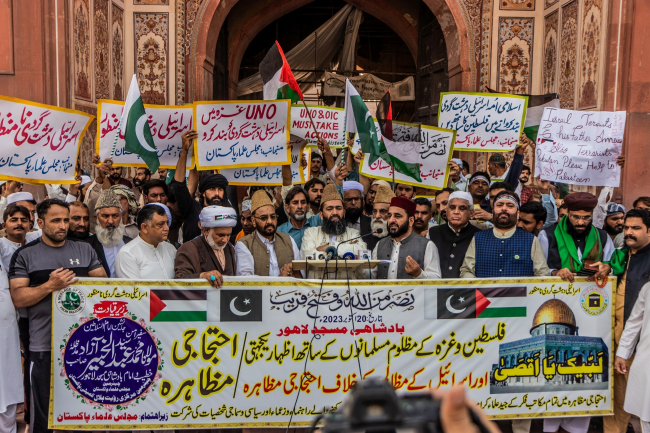
Pakistan and the Israel-Palestine Conflict: Transformation in Pakistan’s Approach After the War in Gaza
Pakistan has long combined vocal support for the Palestinian cause with covert engagement with Israel. Since the war in Gaza, this balance has become untenable: public opinion is united against Israel, joining Trump’s Board of Peace has drawn rare cross-party criticism, and new regional alignments put normalization out of reach.
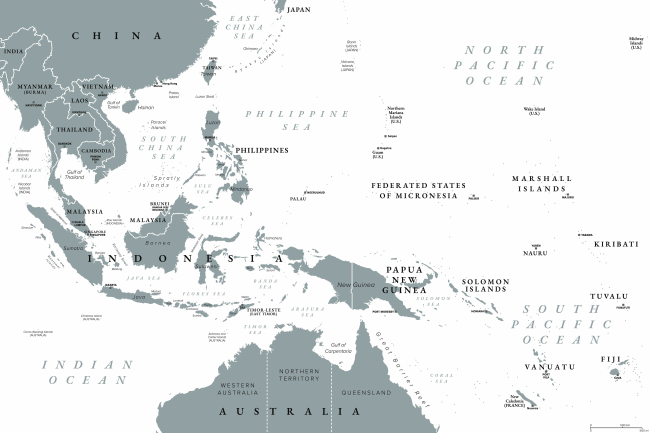
The Oceania Factor in France’s Evolving Indo-Pacific Strategy
This paper examines the two-way relationship between France’s Indo-Pacific strategy and developments in Oceania. Oceania was not a priority in the initial years of France’s Indo-Pacific strategy, as the region was largely treated as secondary to major strategic hotspots and key partnerships, while overseas territories were primarily handled as domestic issues and recipients of a top-down strategy.
France’s View: From Diplomacy to Public-Private Action
France has emerged as the EU’s IMEC forerunner, combining port infrastructure, diplomatic alliances and public-private cooperation. With Marseille Fos at its core, the country brings a strategic hub for logistics, energy and digital connectivity to the corridor.