



Making Sense of India’s Citizenship Amendment Act 2019: Process, Politics, Protests
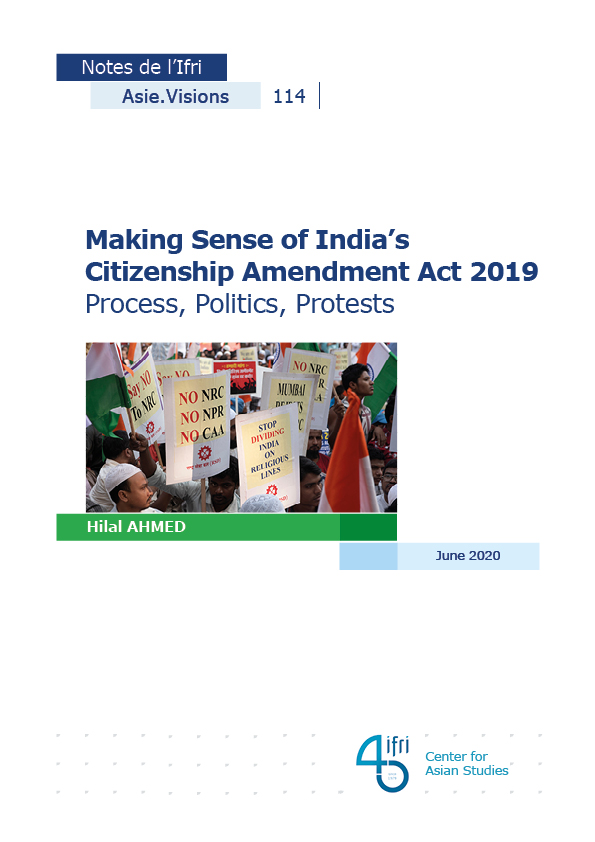
India's new citizenship law is an outcome of Hindutva Constitutionalism that legitimizes the notion of Hindu victimhood. While the opposition to the law has been vocal, it has remained fragmented.
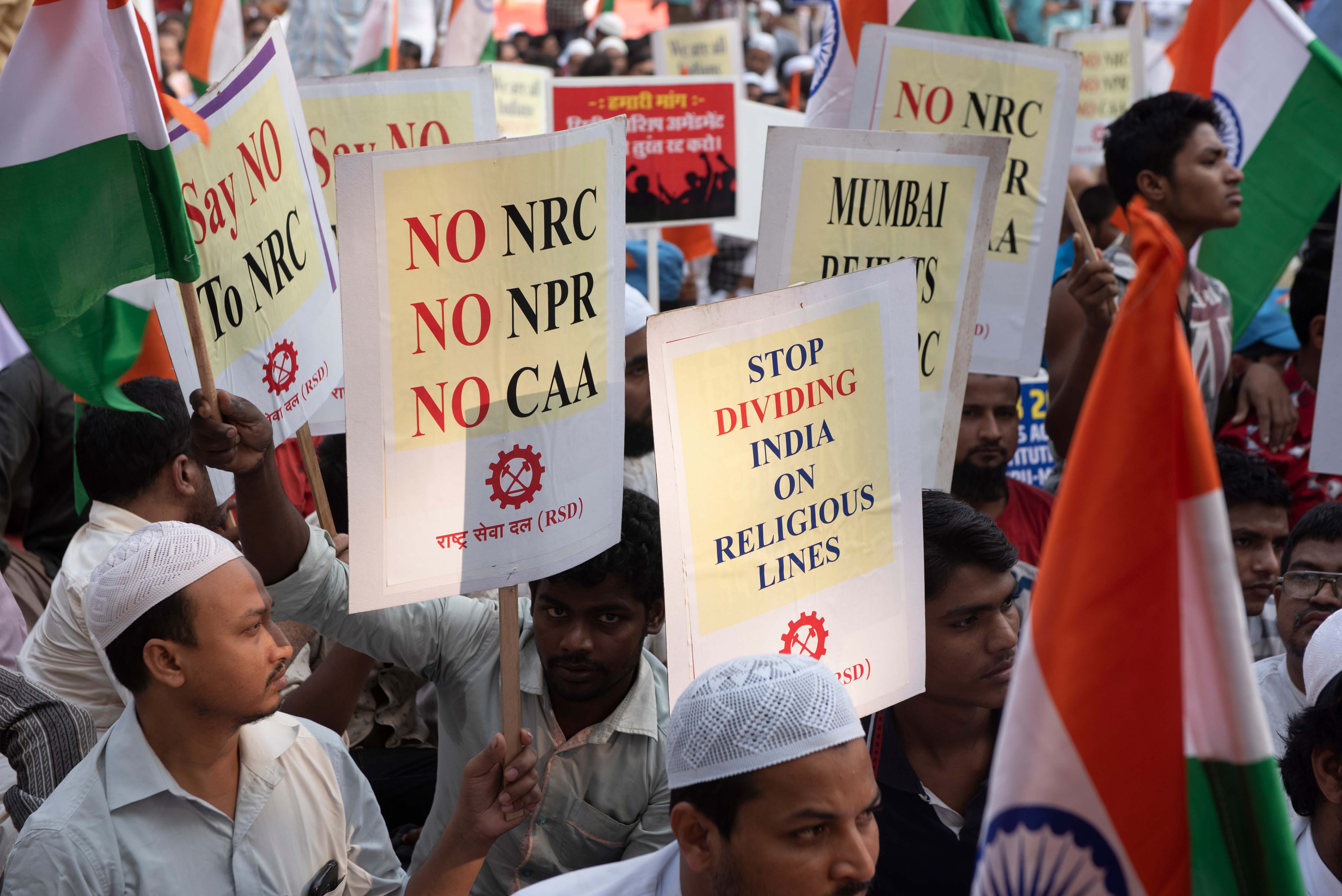
The objective of this paper is to go beyond the standard story of the Citizenship Amendment Act (CAA) 2019, a law passed by the Indian Parliament that offers citizenship to non-Muslim religious communities of three Muslim-majority states (Pakistan, Bangladesh and Afghanistan). The paper recognizes the CAA as a political phenomenon and tries to map out the ways in which CAA-related politics is played out. It asks three sets of questions: (a) What is the historical/political background that makes this law highly controversial? (b) What are the legal-technical issues related to this law and what are its political implications? (c) What has been the response of different groups, especially of the Muslim communities? What are their arguments and positions?
The paper argues that the CAA is an outcome of a new politics of Hindutva constitutionalism. This politics relies heavily on the legal-technical ambiguities inherent in the post-1980 citizenship framework to carve out a space for itself. The growing centralization and state control to regulate the citizenship apparatus is reflected not only in the CAA, but also in the National Register of Citizens and the National Population Register. The CAA, in this sense, stems from the notion of New India, a political doctrine that is based on the desirability of responsive citizens.
Second, the CAA is mostly concerned about the BJP’s newly created Hindutva constituency. The non-Muslims coming from Afghanistan, Pakistan and Bangladesh will not get Indian citizenship on their arrival. The government has not yet prepared the proper mechanism to determine the level of religious persecution, a precondition of citizenship as per the 2015 rules. In fact, there is no guarantee that these migrants would eventually get Indian citizenship. This technical ambiguity, however, is politically useful. It provides an opportunity to Hindutva forces to reinvent the Hindu victimhood argument. Citizenship to non-Muslims of Muslim countries, in this sense, is a new long-term project of contemporary Hindutva.
Third, the opposition to CAA is equally fragmented. The political class does not want to go beyond the established Hindutva hegemony. In fact, except a few parties, the non-BJP groups found it difficult to associate themselves directly with anti-CAA protests. As a result, the creative potentials unleashed by the Muslim-dominated anti-CAA protests could not be channelized to produce any creative critique of Hindutva hegemony.
This page contains only a summary of our work. If you would like to have access to all the information from our research on the subject, you can download the full version in PDF format.
Making Sense of India’s Citizenship Amendment Act 2019: Process, Politics, Protests


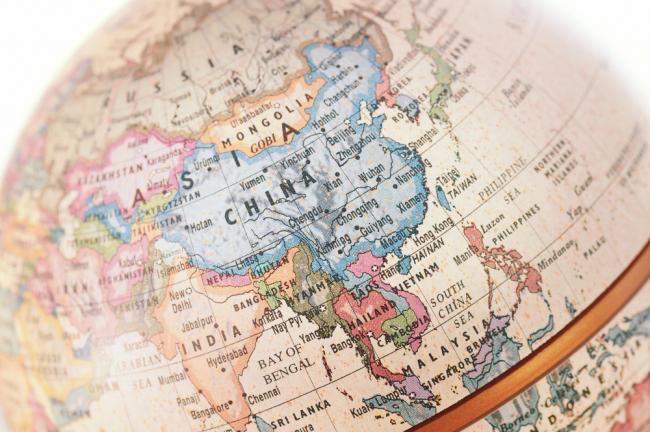
Center for Asian Studies
Asia is a nerve center for multiple global economic, political and security challenges. The Center for Asian Studies provides documented expertise and a platform for discussion on Asian issues to accompany decision makers and explain and contextualize developments in the region for the sake of a larger public dialogue.
The Center's research is organized along two major axes: relations between Asia's major powers and the rest of the world; and internal economic and social dynamics of Asian countries. The Center's research focuses primarily on China, Japan, India, Taiwan and the Indo-Pacific, but also covers Southeast Asia, the Korean peninsula and the Pacific Islands.
The Centre for Asian Studies maintains close institutional links with counterpart research institutes in Europe and Asia, and its researchers regularly carry out fieldwork in the region.
The Center organizes closed-door roundtables, expert-level seminars and a number of public events, including an Annual Conference, that welcome experts from Asia, Europe and the United States. The work of Center’s researchers, as well as that of their partners, is regularly published in the Center’s electronic journal Asie.Visions.
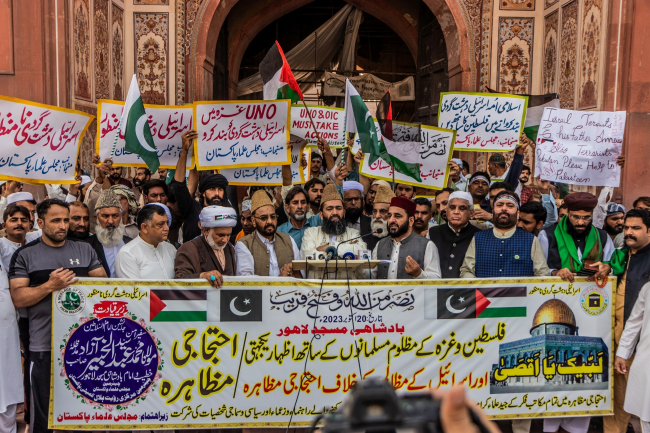
Pakistan and the Israel-Palestine Conflict: Transformation in Pakistan’s Approach After the War in Gaza
Pakistan has long combined vocal support for the Palestinian cause with covert engagement with Israel. Since the war in Gaza, this balance has become untenable: public opinion is united against Israel, joining Trump’s Board of Peace has drawn rare cross-party criticism, and new regional alignments put normalization out of reach.
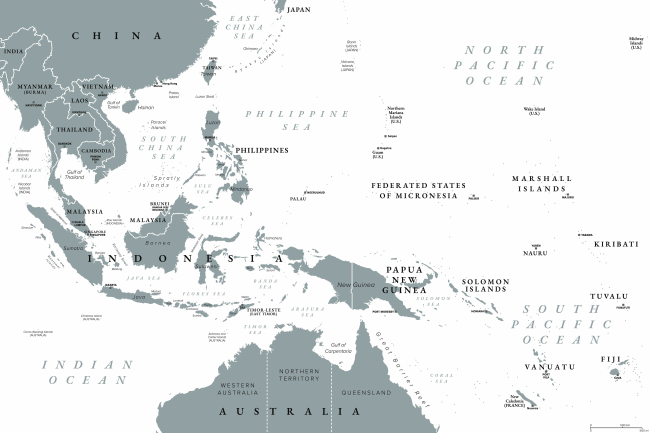
The Oceania Factor in France’s Evolving Indo-Pacific Strategy
This paper examines the two-way relationship between France’s Indo-Pacific strategy and developments in Oceania. Oceania was not a priority in the initial years of France’s Indo-Pacific strategy, as the region was largely treated as secondary to major strategic hotspots and key partnerships, while overseas territories were primarily handled as domestic issues and recipients of a top-down strategy.

France’s View: From Diplomacy to Public-Private Action
France has emerged as the EU’s IMEC forerunner, combining port infrastructure, diplomatic alliances and public-private cooperation. With Marseille Fos at its core, the country brings a strategic hub for logistics, energy and digital connectivity to the corridor.
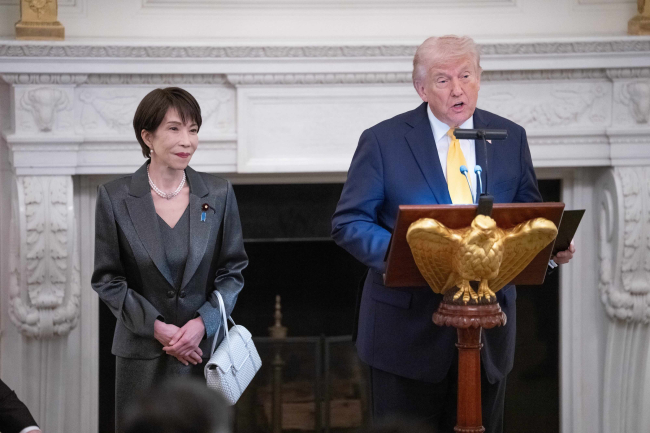
Trump II, the Crisis of the Rules-Based Order and Europe’s Indo-Pacific Strategy
This article examines the implications of Trump II for Europe’s engagement in the Indo-Pacific. The piece contends that Trump II is accelerating the erosion of the rules-based order and undermining the relevance of the Free and Open Indo-Pacific (FOIP) concept, while forcing Europe to refocus on its own continental security amid US retrenchment. Paradoxically, these very constraints create conditions for a more autonomous, pragmatic, and explicitly interest-driven European engagement in the Indo-Pacific, rather than outright withdrawal.