
Politique étrangère
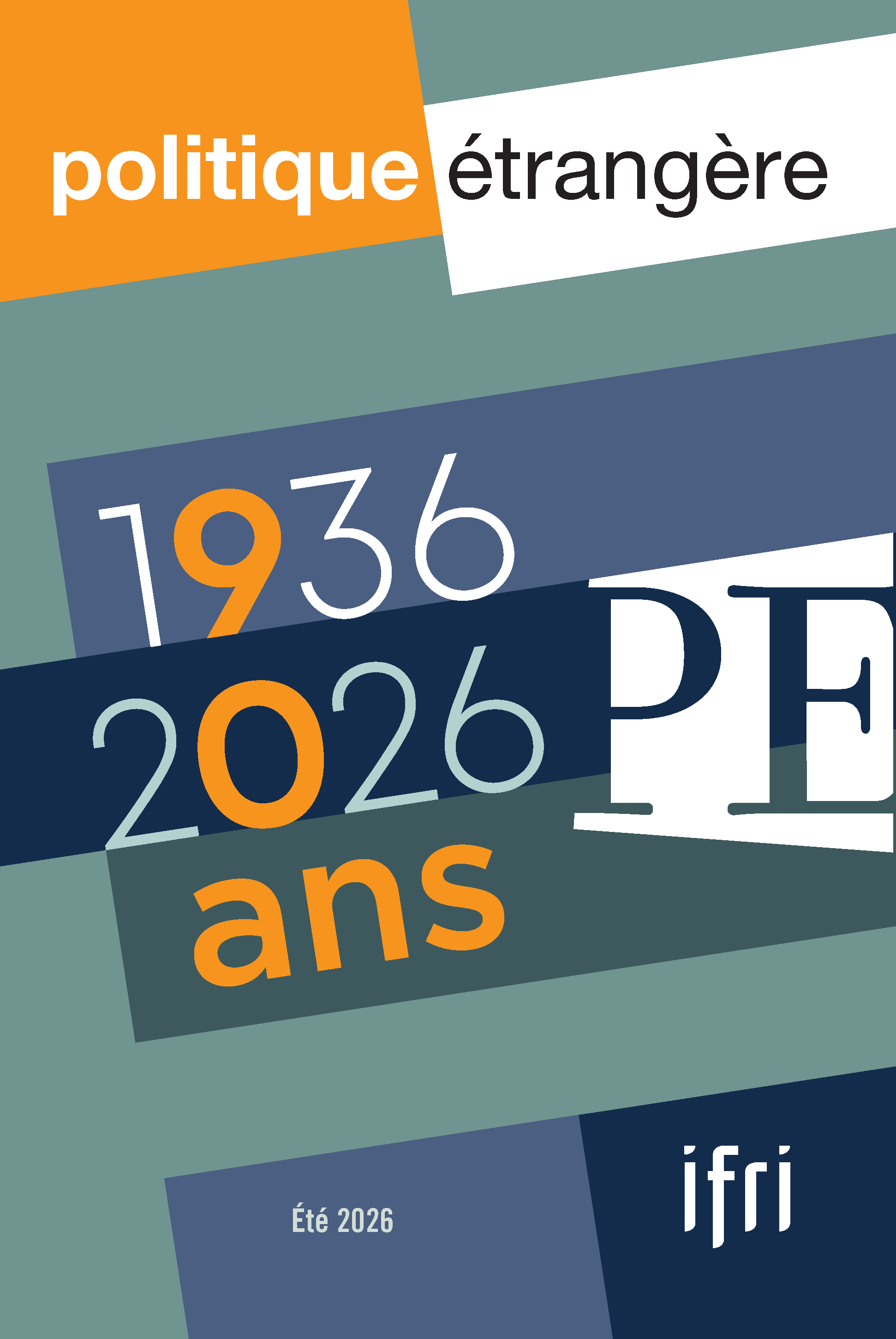
1936-2026: 90th Anniversary of the Journal
Founded in 1936, Politique étrangère, France’s longest-running journal of international relations, is set to publish a special issue in early June 2026. Bringing together leading contributors from France and abroad, this issue aims to offer a panorama of an uncertain world and its possible futures. In an unprecedented initiative, Politique étrangère will bring together a broad range of international contributions in an effort to capture an international scene that is at once open and fragmented in all its diversity and dynamism.
Reflections on A Darkening World
The system that emerged after the Second World War to regulate international relations is now moribund. Russia and China may have weakened it, but it seems that Donald Trump’s United States may deliver the fatal blow. The prevailing atmosphere is one of power struggles, and the rise of nationalisms is fraught with danger. The artificial intelligence revolution also needs to be factored into this equation, as it has a strong bearing on how much power different players can exert. In this respect, Europe must ensure it does not get left behind.
How Technology Is Reshaping the World Order
The central role of technology in the competition between the major powers is fueling an ever-more intense rivalry. Artificial intelligence is enabling large corporations to accrue unprecedented power, with consequences for states and even for international conflict. However, states do have tools at their disposal to regulate these developments. In this international competition, Europe has a strong hand, but must be prepared to play its cards in order to create a new kind of international cooperation.
A New Path for Europe
The construction of the European Union is historically inseparable from the emergence, at the end of World War II, of an Atlantic world dominated by the United States. Successive enlargements and the revision of U.S. policy are undermining the concepts upon which the European Union has been built since the fall of the USSR. It is undoubtedly time to return to a path of more diverse groupings, corresponding to the levels of commitment and the interests of the states of the Old Continent.
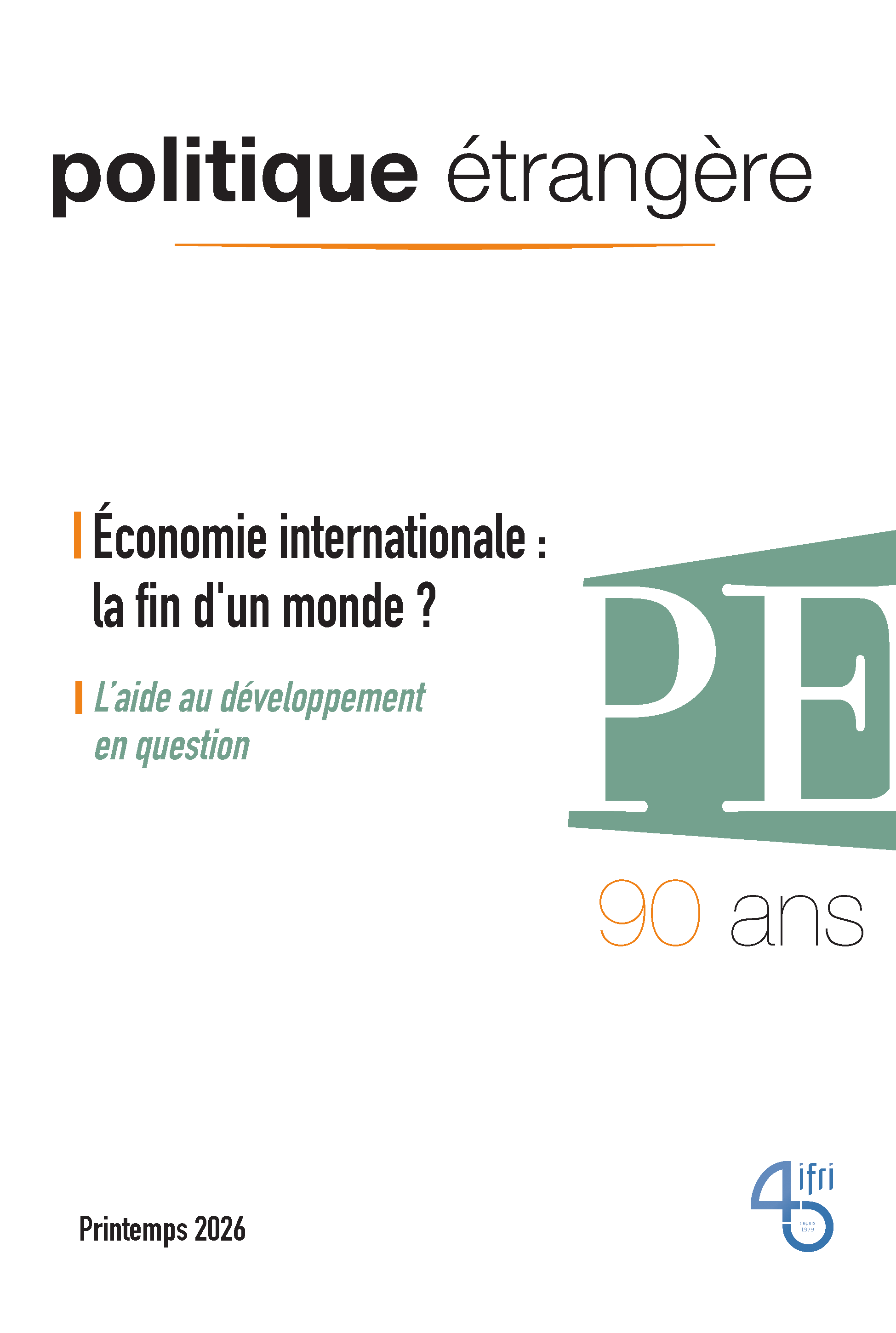
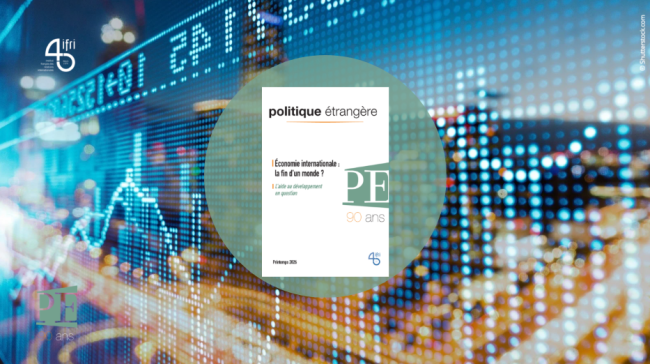
The Global Economy: Caught in the Storm / Politique étrangère, Vol. 91, No. 1, 2026
The global economy has become the primary arena for the clash of power ambitions in a world where understanding, coordination, and concerted multilateralism seem to have been permanently marginalized. In this fragmented landscape, how will American and Chinese strategies interact? Will the European Union manage to break out of its decades-old framework in order to face new competition? And will it be able, like others, to integrate the announced shift from a production economy to a digital, information economy? And what role will financial institutions, and central banks in particular, play in this transitioning international economy?
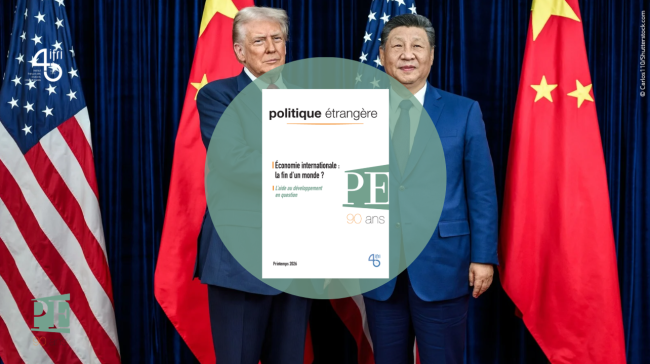
From Trump to Xi Jinping: Globalization's Great Rupture
The second Trump administration’s trade policy represents a rupture with the United States’ international commitments and a seismic shock for the multilateral trade system. Its destabilizing impact has been exacerbated by China’s disproportionate trade surplus, which has doubled since the 2020 pandemic. We are entering a new era marked by the erosion of norms and their replacement by a more transactional logic. For Europe, the challenge is enormous.
Digital Revolution, Economic Upheaval
The digital revolution is profoundly shaking up the economy, with the impact felt well beyond the digital sector itself. Indeed, it is transforming the very concept of value creation. Artificial intelligence represents a new phase that requires a colossal investment in physical infrastructure like data centers. Europe failed to grasp the scale of these changes in time, but it does have certain advantages.
Support independent French research
Ifri, a foundation recognized as being of public utility, relies largely on private donors – companies and individuals – to guarantee its sustainability and intellectual independence. Through their funding, donors help maintain the Institute's position among the world's leading think tanks. By benefiting from an internationally recognized network and expertise, donors refine their understanding of geopolitical risk and its consequences on global politics and the economy. In 2026, Ifri partners with over 90 French and international companies and organizations.