







United States of America
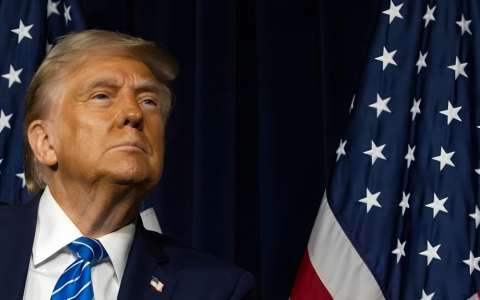
Despite polarized domestic politics and social tensions, the United States remains a major player in international relations, on the economic, military and diplomatic levels.
Related Subjects


Russia-Germany: the Special Relationship and the European Union Presidency
RAMSES 2006 - Etats-Unis / Politique étrangère, Maxime Lefebvre
The Californian Recall and Direct Democracy in the US: a New Political Pattern?
Shoulder-fired Missiles and Civil Aviation: The U.S. Response to a "New" Terrorist Threat

A Guide to the International Leadership of the 108th Congress of the United States

Superpower on the Cheap? The Difficulty of Funding US Foreign Relations

The American Perception of France: Thoughts on French Bashing in Washington DC
Four Pathways of Power: The Dynamics of Contemporary U.S. Federal Policy Making

The Rehnquist Court and Contemporary Federalism: The Challenge of Dual Sovereignty
Ifri, a foundation recognized as being of public utility, relies largely on private donors – companies and individuals – to guarantee its sustainability and intellectual independence. Through their funding, donors help maintain the Institute's position among the world's leading think tanks. By benefiting from an internationally recognized network and expertise, donors refine their understanding of geopolitical risk and its consequences on global politics and the economy. In 2026, Ifri partners with over 90 French and international companies and organizations.


Ifri's work on the Americas region focuses mainly on the United States. Indeed, for more than 20 years, Ifri's Americas Program has provided keys to understanding American society and domestic policy while shedding light on developments in the country's foreign policy, including transatlantic relations and trade issues.
Since 2023, a specific axis on Latin America structures more actively Ifri's research on this region.
Ifri's Canada program was active in 2015 and 2016.