





Mind the Deterrence Gap: Assessing Europe’s Nuclear Options
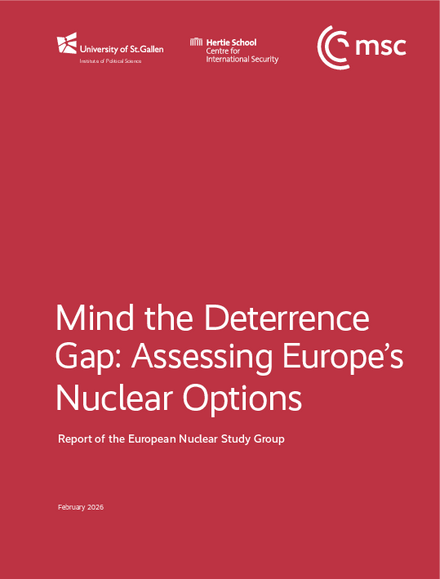
Europe must urgently confront a new nuclear reality. In recent years, Russia’s nuclear-backed revisionism has reintroduced nuclear coercion and the threat of nuclear escalation to the continent, underscoring the importance of credible nuclear deterrence. At the same time, Europe’s traditional reliance on US extended nuclear deterrence appears politically more fragile than at any point since the Cold War. Together, these developments require Europeans to think about their nuclear options.
Drawing on in-depth discussions at a series of workshops since February 2024, this report from the European Nuclear Study Group, of which Héloïse Fayet, research fellow at Ifri's Security Studies Center, is a member, evaluates five policy options discussed in European defense and security circles:
- continued reliance on US extended nuclear deterrence (Option A)
- strengthening the role of British and French nuclear forces in European deterrence (Option B)
- developing a common European deterrent (Option C)
- pursuing new, independent national nuclear deterrents (Option D)
- investing in conventional deterrence without a nuclear component (Option E)
Each option reflects a distinct way of distributing the costs and risks of nuclear deterrence between the United States, existing European nuclear powers, and nonnuclear European Allies, and each entails specific trade-offs between credibility, feasibility, legal aspects, and political risk.
None of these options is a good one: There is no deterrence ex machina, no low-cost or risk-free way out of Europe’s nuclear predicament. In the short term, continued reliance on US extended nuclear deterrence remains the most credible and feasible option available. It rests on unmatched military capabilities, deeply institutionalized cooperation within NATO, and decades of shared operational practice. Yet Europeans can no longer treat this option as a guaranteed baseline. Despite their efforts, Europeans may find themselves in a situation where the United States is no longer willing to provide nuclear deterrence. They must thus move beyond declaratory ambitions and engage seriously with the trade-offs, constraints, and risks of all options on the table.
Above all, Europeans can no longer outsource their thinking about nuclear deterrence to the United States. The era in which Europe could afford strategic complacency has ended. However uncomfortable the debate may be, the new security environment requires European policymakers to confront the role of nuclear weapons in the defense of the continent directly and without delay – and to invest the resources needed to do so competently. Thinking seriously about these questions today is the price of avoiding strategic failure tomorrow.
This report is available on the website of the Munich Security Conference.

Available in:
Themes and regions
Share

Héloïse FAYET
Research Fellow and Head of the Deterrence and Proliferation program, Security Studies Center, Ifri

Deterrence and Proliferation
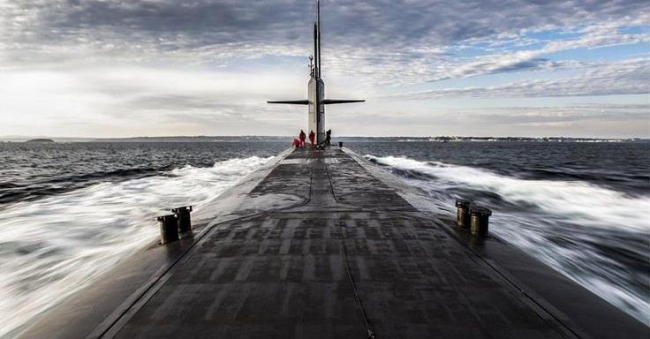
The conflicts in Europe, Asia and the Middle East demonstrate a return of nuclear power to the balance of power. Arsenals are being modernized and expanded, while arms control is collapsing. This research program aims to analyze these phenomena.
Stability under Pressure. A Pakistani View on Nuclear Deterrence after Pahalgam
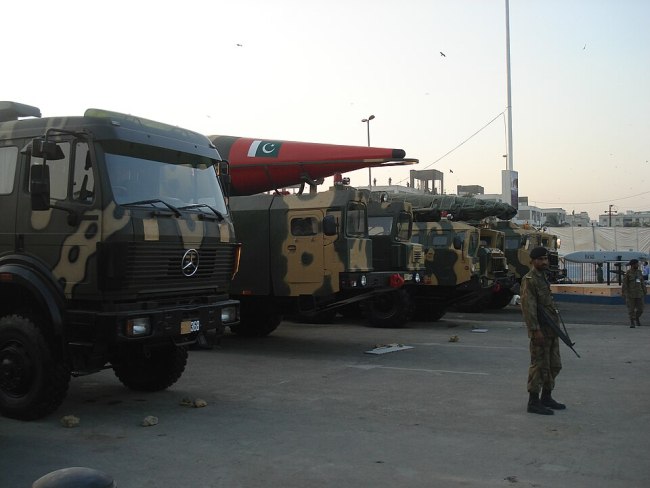
The May 2025 India-Pakistan crisis after the Pahalgam attack has generated a familiar but incomplete debate: did nuclear deterrence work, or did it merely allow both sides to fight a limited war under the nuclear shadow? The better answer is that deterrence worked at the level at which it was designed to work. It prevented a general war and an uncontrolled vertical escalation, and kept nuclear weapons in the background. But it did not prevent India from attempting to carve out space for conventional action, nor did it prevent Pakistan from responding conventionally to restore deterrence credibility.
French Forward Deterrence: What Is in It for the Baltic States?
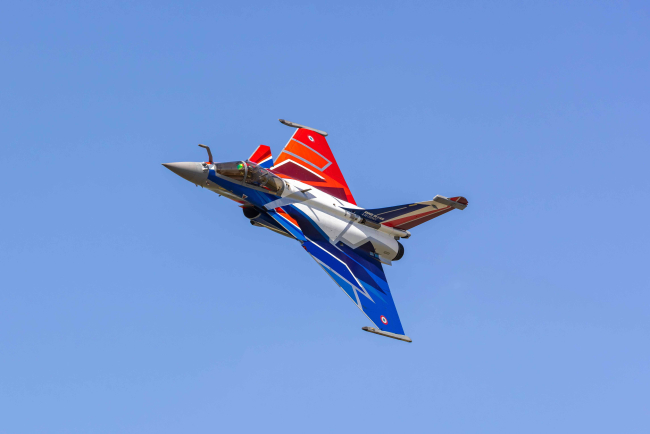
For what may be its most significant stress test since the end of the Cold War, European deterrence is under strain. Russia’s war against Ukraine has demonstrated Moscow’s willingness to use force and its ability to combine conventional operations with nuclear signalling, coercive rhetoric, and hybrid actions. At the same time, the gradual deterioration of transatlantic relations has revived concerns about the reliability of extended deterrence.
Taking the Pulse: Is France’s New Nuclear Doctrine Ambitious Enough?
French President Emmanuel Macron has unveiled his country’s new nuclear doctrine. Are the changes he has made enough to reassure France’s European partners in the current geopolitical context?
Macron Offers a Promising Vision for Nuclear Deterrence in Europe
Macron’s concept of ‘forward deterrence’ offers a distinctly European approach to nuclear deterrence.