




Europe
Europe is described here in a geographical sense. It is not limited to the European Union, and includes, for example, the United Kingdom and the Balkans. It remains central to international relations.
Related Subjects
A New Era for the European Council ?
Donald Tusk is set to make his mark as the new president of the European council. How will this be felt across the other institutions that make up the EU?
From 2020 to 2030, from Copenhagen to Paris: a mindset change for the European Climate Policy?
The European Councils of March 2007 and October 2014 have defined the major guidelines of the European climate policy for the 2010-2020 and 2020-2030 decades. These commitments have then been used as negotiation roadmaps for two major conferences on climate held under the United-Nations umbrella, in Copenhagen in 2009 and in Paris in December 2015. In both cases, the aim was, and still is, to reach a global agreement to take over the Kyoto Protocol. The first one was a failure for the European diplomacy and all hopes are now placed in the second, which may well be the last chance for the international climate talks.

The Netherlands and the Multicultural Crisis
For several decades, there has been general consensus bridging the Dutch political class regarding the notion of a multicultural society. This consensus is now being challenged.
Juncker's 'last chance' Commission: Can he deliver?
Jean-Claude Juncker has made a surprisingly strong start. But behind the clear priorities and the innovative team set-up, his ability to restore trust in the EU remains to be seen.
L'échiquier numérique américain : Quelle place pour l'Europe ?
The United States has established itself as the indisputable global leader in the digital market followed by more interventionist actors such as Russia and China. Europe has fallen behind as it struggles to find its place in this crucial sector. The new European Commission must respond and provide Europe with tools to compete with the market's more dominant actors.
Greenland and Iceland: Meeting Place of Global Powers in the Arctic
At the crossroads of American, European and Asian interests in the Arctic, Greenland and Iceland, the importance of which had for too long been underestimated, are set to play a central role in future regional developments. In order to exploit the potential of their growing economic ties with Asia, without becoming the Arctic “weak links”, Greenland and Iceland need to secure their economy on a long-term basis.
The European Union to Ukraine’s Rescue
Recent events have provided the opportunity for the rekindling of relations between Ukraine and the European Union.
Peace as War’s Goal: A Slow Rediscovery
According to the traditional notion of the just war, an armed conflict should lead to conditions of durable peace.
The European Union's Development Aid : from Development to Security, the Example of the European Development Fund
In the course of its institutional development and the expansion of its activities, the European Union (EU) has tended to pile up rather than to rationalize its policies, creating a financial tool per objective. As a result, the European funds have become a labyrinth, for which management costs are high.
The European Energy Policy: Building New Perspectives
“After 17 years of supranationality, we are still seeking how to define a common energy policy and what it might be. [...] Could we have done more in one generation? Or were goals only established to achieve a political balance which it was explicitly agreed to ignore, once the machinery began to operate? Historians will have a hard task to distinguish between excessive ambitions and national hypocrisies”.
Quelles perspectives pour l'industrie européenne des armements terrestres ?
Over the last decade, the European land armament industry developed into a thriving market driven by growing demand from the BRICS, a new wave of emerging countries and the wars in Iraq and Afghanistan.
The United States and the ‘Demilitarization’ of Europe: Myth or Reality?
The criticism leveled by Americans at Europe’s neglect of its commitment to defense is not new, and is often exaggerated.
The "War to End All Wars": Total War, Total Peace?
The Paris Peace Conference of 1919-1920 marked the end of the First World War whose purpose was to establish the conditions for enduring, if not perpetual peace.
Will Europe’s Past be East Asia’s Future?
There are some disturbing similarities between present-day Asia and pre-1914 Europe.
Europe's Place in the World: from 1914 to 2014
The first wave of globalization in the 20th century triggered deep upheaval of the organization of power and an overall depreciation of European nations.
The Impact of the First World War on Strategy
The First World War helped redefine the notion of strategy, giving it a political dimension that it previously lacked.
The First World War and the Balkanization of the Middle-East
The First World War had tragic consequences for the Middle-East. It led to the partitioning of the Ottoman Empire and the balkanization of the region.
Ifri, a foundation recognized as being of public utility, relies largely on private donors – companies and individuals – to guarantee its sustainability and intellectual independence. Through their funding, donors help maintain the Institute's position among the world's leading think tanks. By benefiting from an internationally recognized network and expertise, donors refine their understanding of geopolitical risk and its consequences on global politics and the economy. In 2026, Ifri partners with over 90 French and international companies and organizations.

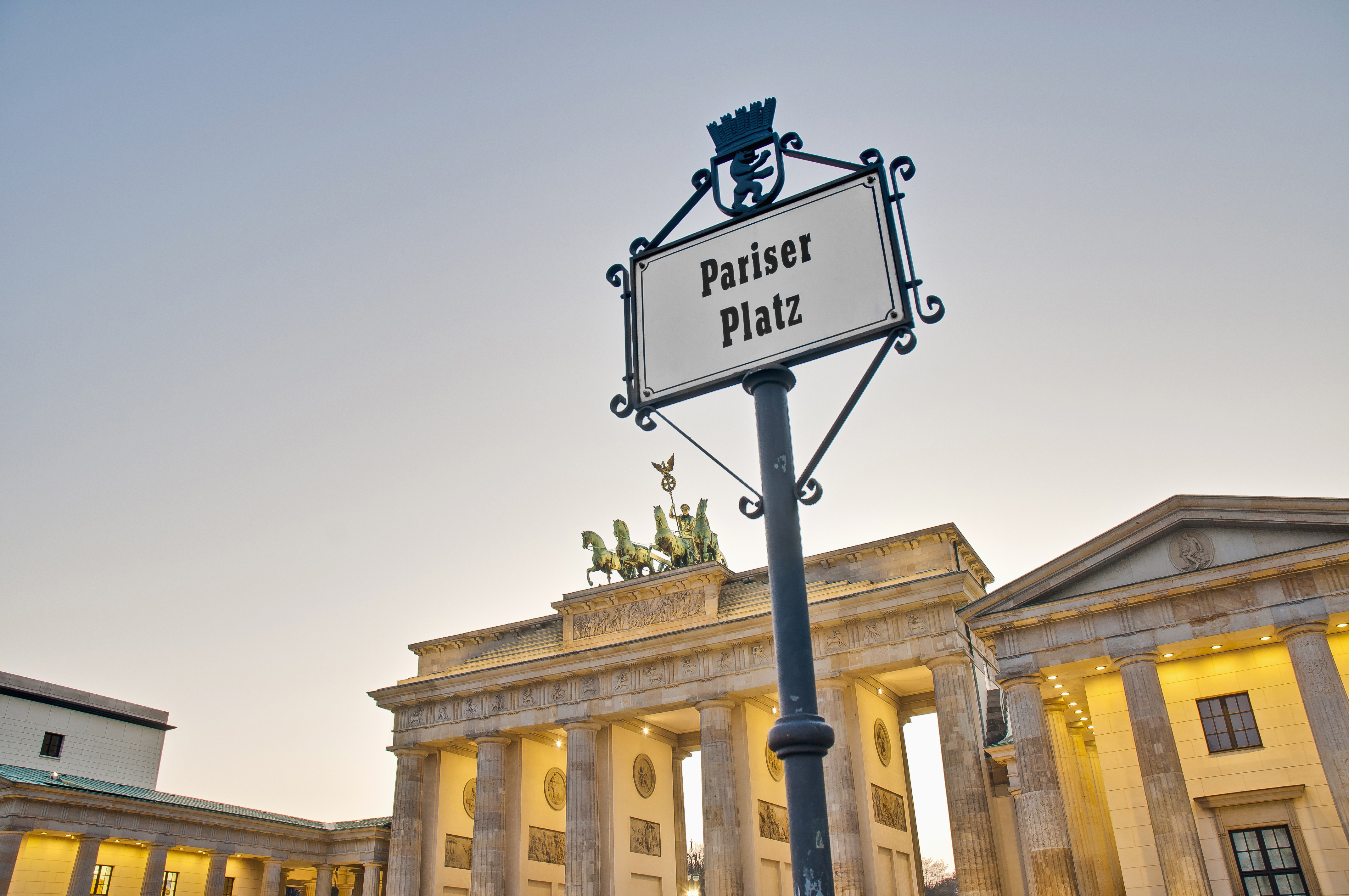
The Study Committee on Franco-German Relations (Cerfa) was created in 1954 by an inter-governmental agreement between the Federal Republic of Germany and France, in order to raise awareness of Germany in France and analyze Franco-German relations, including in their European and international dimensions. In its conferences and seminars, which bring together experts, political leaders, senior decision-makers and representatives of civil society from both countries, Cerfa develops the Franco-German debate and stimulates political proposals. It regularly publishes studies through two collections: Cerfa notes and studies as well as Franco-German visions.
Cerfa maintains close relations with the network of German foundations and think tanks. In addition to its research and debate activities, Cerfa promotes the emergence of a new Franco-German generation through original cooperation programs. This is how in 2021-2022, Cerfa led a program on multilateralism with the Konrad Adenauer Foundation in Paris. This program is aimed at young professionals from both countries interested in the issues of multilateralism in the context of their activities. It covered a wide range of themes relating to multilateralism, such as international trade, health, human rights and migration, non-proliferation and disarmament. Previously, Cerfa had participated in the Franco-German future dialogue, co-led with the DGAP from 2007 to 2020, and supported by the Robert Bosch Foundation and the Daniel Vernet group (formerly the Franco-German Reflection Group) which was founded in 2014 upon the initiative of the Genshagen Foundation.
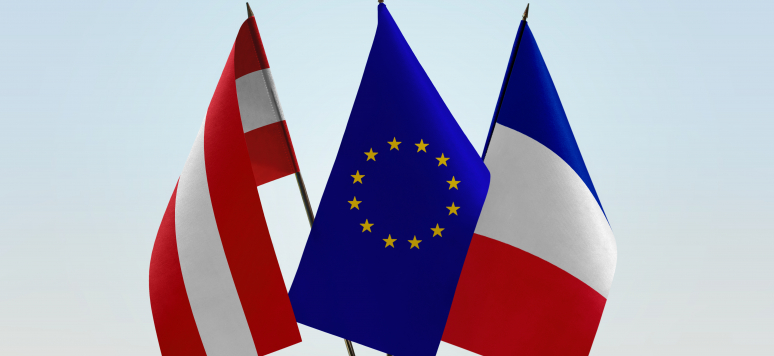
The Austro-French Centre for Rapprochement in Europe (ÖFZ/CFA) is a Franco-Austrian intergovernmental organization, initiated in 1976 by Prime Minister Jacques Chirac and Federal Chancellor Bruno Kreisky, in order to develop economic relations between Western and Eastern Europe, contributing to the creation of a Europe of peace.
After the fall of the Berlin Wall, the ÖFZ/CFA refocused its action on the problems following the enlargement of the European Union, and integrated the following countries in its field of activities : Hungary, Poland, Czech Republic, Slovak Republic, Slovenia, the Baltic countries, Romania and Bulgaria. ÖFZ/CFA's vocation, as a space for reflection and exchange, is in fact reinforced by the need to support the new member countries of the Union in their integration process. Since 2004, the ÖFZ/CFA has also turned towards the Union's new neighbors, in particular towards the countries of the Western Balkans, which perceive their future from a European perspective.
The ÖFZ/CFA strives to place all of its exchanges in a global perspective concerning the future of our continent. Today it centers its activities around three directions: the Franco-Austrian bilateral dialogue, the future of the European Union, the future recomposition of the continent.
Reports of all events organized by the ÖFZ/CFA are available on its website (http://oefz.at). The ÖFZ/CFA's budget is provided by the French and Austrian foreign ministries. Depending on the themes addressed, the ÖFZ/CFA calls on European public and private institutions to help finance its meetings. The CFA's orientations benefit from the recommendations of an Orientation Council, approved by a Board of Directors, which elects from among its members a president and a secretary general.