




International Trade
International trade has risen sharply in the era of globalization. The Covid-19 pandemic, the war in Ukraine and rising geopolitical tensions are leading to a reconfirguation of value chains.
Related Subjects
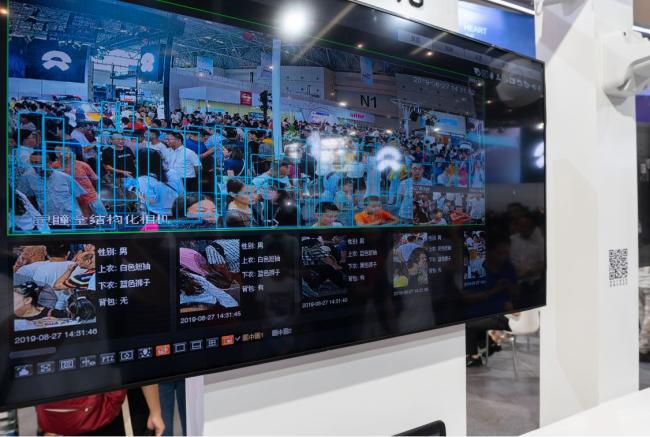
China’s Smart Cities: The New Geopolitical Battleground
“Smart city” development has become a fashionable policy and research topic. A growing number of central and local governments in Europe, Asia, Africa and Latin America, in partnership with companies from diverse sectors (construction, transport, energy, water, etc), consulting firms, NGOs and experts, are now developing smart-city-related projects.
Russia’s Energy Strategy-2035: Struggling to Remain Relevant
Russia’s Energy Strategy to 2035 (ES-2035) enters, finally, the home stretch. The Ministry of Energy submitted its version of the document to the Russian Government in early October 2019.
China’s Ambiguous Positions on Climate and Coal
China’s 2018 energy consumption data capture the ambiguity of Beijing’s attitude toward climate change. Energy demand rose by 3.5% to 3,155 million tonnes of oil equivalent (Mtoe), with an increase of coal consumption (though its share in the overall energy mix is decreasing) and an expected greenhouse gas (GHG) emission surge of 2.3%, to 9.5 gigatonnes (Gt) for the same year.
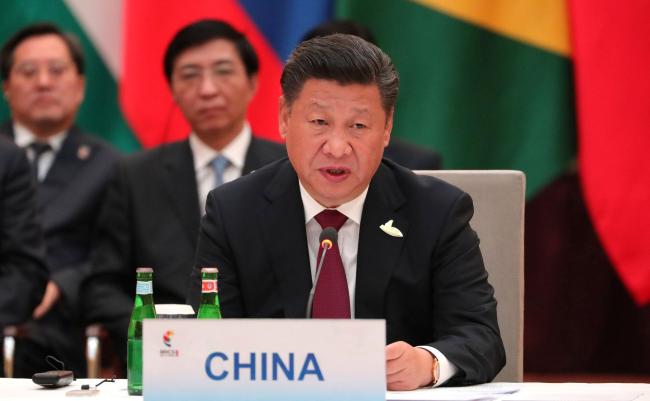
China’s Belt & Road and the World: Competing Forms of Globalization
China increasingly sees its flagship foreign policy project as a tool for restructuring global governance and a vector for promoting a new form of globalization.
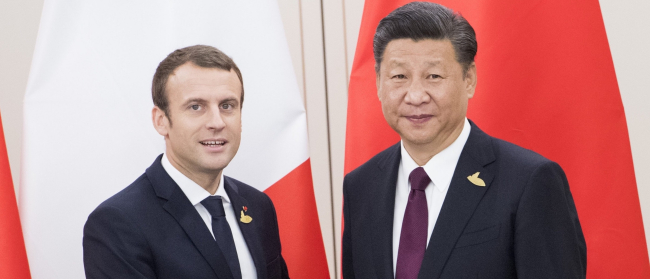
France and China's Belt and Road Initiative
Under President Macron, France has staked out a positive but principled position towards China's BRI.
International trade disagreements: Beyond Trump
The trade war between the United States and China is not only due to Donald Trump’s impulsiveness. Its roots are in fact profound and follow three structural changes in the multilateral trading system: the reversal of comparative advantages, the now central role of certain developing countries, and the re-balancing of power that makes coordination between states difficult. In this context, the future of world trade has yet to be written.
Trump’s Trade Wars: The Outcry Against Multilateralism
The aim of multilateral trade as established after the Second World War was to prevent trade wars.
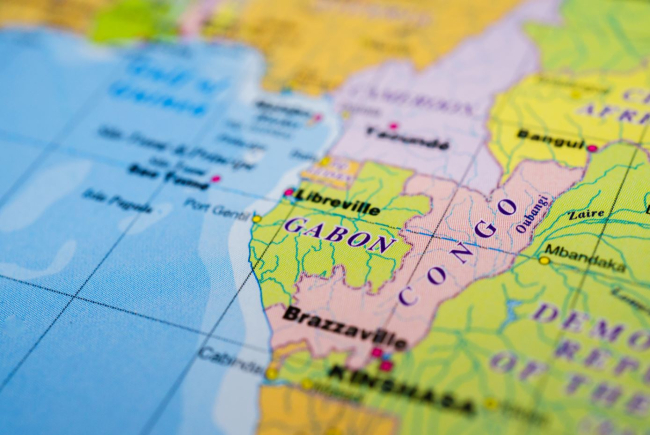
Adjustment Is Back: The Political and Financial Crisis in Central African Oil-Producing Countries. Gabon and Congo-Brazzaville
This paper aims to highlight both the financial, economic and political adjustment cycle, affecting two Central African petro-states, Gabon and the Republic of Congo (Congo-Brazzaville).

"One Belt One Road". Asean Plenum 2018
China’s ambitious One Belt One Road (OBOR) Initiative is redefining China’s role in the world economy. With over $900 billion in investments covering more than 65% of the world’s population, OBOR aims to develop new markets, integrate far flung regions, and stabilize China’s borders. But as Chinese influence rises, critics argue that OBOR challenges the liberal international.
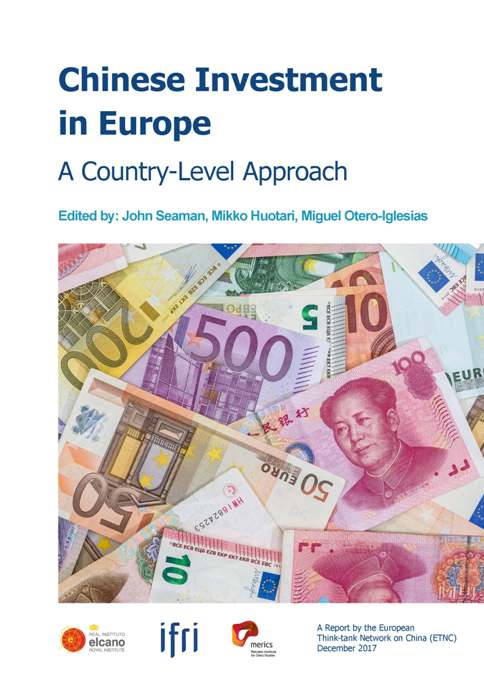
Chinese Investment in Europe. A Country-Level Approach
Chinese investments in Europe have surged in recent years, becoming both a source of hope and growing concern across the continent.
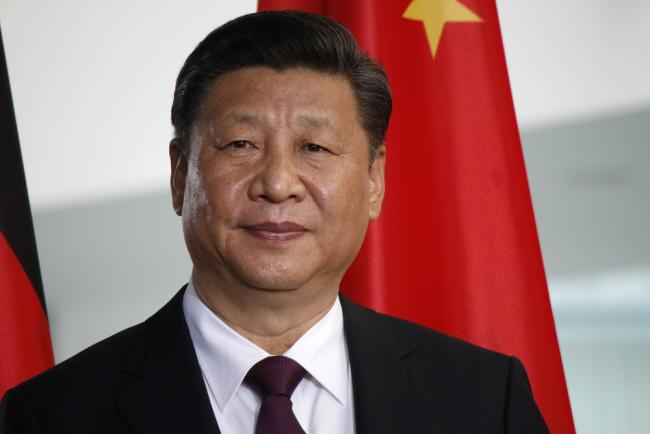
China and the “Definition Gap”: Shaping Global Governance in Words
Increasingly, China’s diplomacy is using key words commonly used by liberal democracies, but the meaning differs greatly. This evolution is changing the terms of the debate without changing a single term.

The China-Pakistan Economic Corridor and the New Regional Geopolitics
The China-Pakistan Economic Corridor (CPEC) brings a dimensional shift in the two countries' relations at a time of significant geopolitical change. But while it promises wide-ranging benefits for infrastructure development and economic growth in Pakistan, a number of important challenges remain to be overcome if the project is to be sustainable and produce long-term benefits for Pakistanis.
La politique française de soutien aux exportations d'armement : raisons et limites d'un succès
During François Hollande’s five-year term French defense exports have reached quite spectacular results. Arms sales abroad have increased at least fourfold since 2012, when the former presidential team came to power.
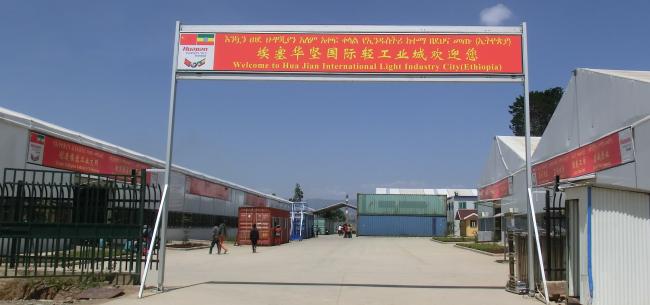
Chinese Investors in Ethiopia: The Perfect Match?
Since the fall of the Derg regime in 1991, cordial relations have developed between China and Ethiopia, forming a positive political backdrop in front of which the two countries’ interests have increasingly converged.
With Trump, Time to Reinvent the European Trade Policy
The new American administration’s protectionist tendencies need to be taken seriously.

Three Years of China’s New Silk Roads: From Words to (Re)action?
More than three years have already passed since China’s new silk roads were launched by President Xi Jinping. When he first mentioned the idea in an autumn 2013 speech in Kazakhstan, questions quickly emerged on the meaning of this general concept, which soon became widely promoted through a large-scale and well-coordinated public diplomacy strategy both in and outside China.
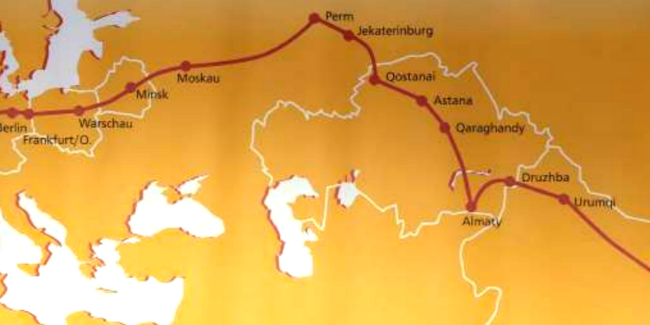
Europe and China's New Silk Roads
As China elaborates on the design of its "Belt and Road Initiative" (OBOR), the place of Europe within this project is slowly but surely taking shape.
New Chinese Activism in the Mediterranean
Chinese presence in the Mediterranean is increasing: propositions for cooperation forums with various southern European countries, investment in port terminals, military maneuvering, evacuation of citizens, etc.
Does Russia still have an "energy weapon"?
What are the Current Challenges for Gazprom and Russia’s Energy Policy? What are the Gas Risks for Europe? Is the Nord Stream-II a Risk or an Opportunity for Europe?
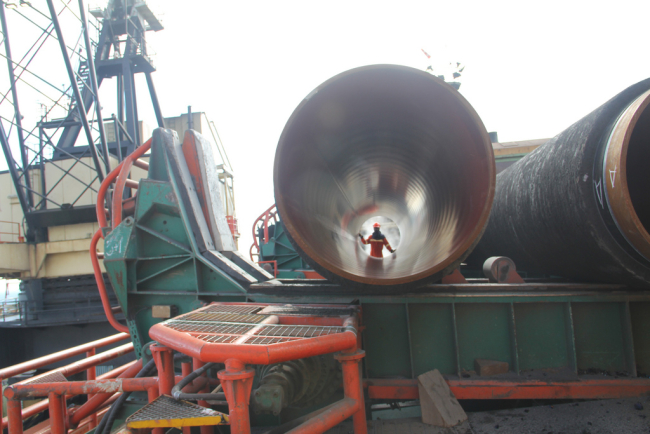
Nord Stream 2: May Cooler Heads Prevail
Since the announcement of the Nord Stream 2 project in June 2015, the debate around the benefits of this project for Europe is raging, putting forward political, economic and commercial arguments.
The Belt and Road: China's "Community of Destiny" for Southeast Asia?
As a frontline zone and a pivot, Southeast Asia is both a testing ground and a showcase of China’s ambitions in developing a grand cooperative scheme. Creating mutually positive linkages is crucial for both partners, if not for the same reasons.
Industry Response to New Protectionism
In this special issue of Politique étrangère devoted to the proceedings of the conference organized by Ifri on April 10, 2019, in the Grand Amphitheater of the Sorbonne, on the occasion of its fortieth anniversary, discover the debate moderated by Thierry de Montbrial between Jean-Paul Agon and Patrick Pouyané.
Russia’s Energy Strategy-2035: Struggling to Remain Relevant
Russia’s Energy Strategy to 2035 (ES-2035) enters, finally, the home stretch. The Ministry of Energy submitted its version of the document to the Russian Government in early October 2019.
China’s Ambiguous Positions on Climate and Coal
China’s 2018 energy consumption data capture the ambiguity of Beijing’s attitude toward climate change. Energy demand rose by 3.5% to 3,155 million tonnes of oil equivalent (Mtoe), with an increase of coal consumption (though its share in the overall energy mix is decreasing) and an expected greenhouse gas (GHG) emission surge of 2.3%, to 9.5 gigatonnes (Gt) for the same year.
China’s Belt & Road and the World: Competing Forms of Globalization
China increasingly sees its flagship foreign policy project as a tool for restructuring global governance and a vector for promoting a new form of globalization.
France and China's Belt and Road Initiative
Under President Macron, France has staked out a positive but principled position towards China's BRI.
International trade disagreements: Beyond Trump
The trade war between the United States and China is not only due to Donald Trump’s impulsiveness. Its roots are in fact profound and follow three structural changes in the multilateral trading system: the reversal of comparative advantages, the now central role of certain developing countries, and the re-balancing of power that makes coordination between states difficult. In this context, the future of world trade has yet to be written.
Chinese Investment in Europe. A Country-Level Approach
Chinese investments in Europe have surged in recent years, becoming both a source of hope and growing concern across the continent.
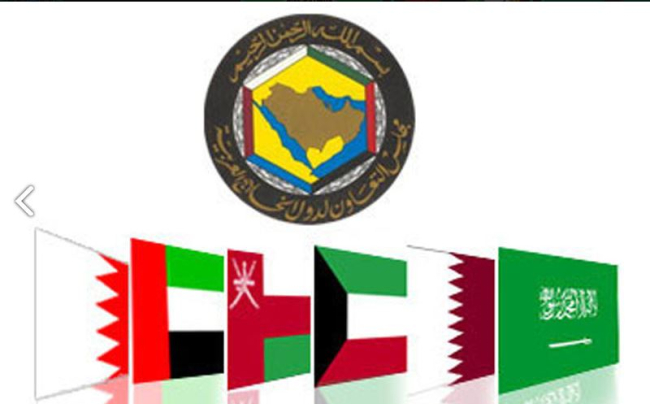
Persistence and Evolutions of the Rentier State Model in Gulf Countries
A general economic model of understanding Middle Eastern states was elaborated by political scientists around the 1980’s, based on the concept of rent as a factor of wealth around which the economic model as much as the governance of energy-rich countries was re-organized. The particular case of GCC’s countries as rentier state has been at the cornerstone of this concept since they own the most important share of energy resources in the world.
Ifri, a foundation recognized as being of public utility, relies largely on private donors – companies and individuals – to guarantee its sustainability and intellectual independence. Through their funding, donors help maintain the Institute's position among the world's leading think tanks. By benefiting from an internationally recognized network and expertise, donors refine their understanding of geopolitical risk and its consequences on global politics and the economy. In 2026, Ifri partners with over 90 French and international companies and organizations.
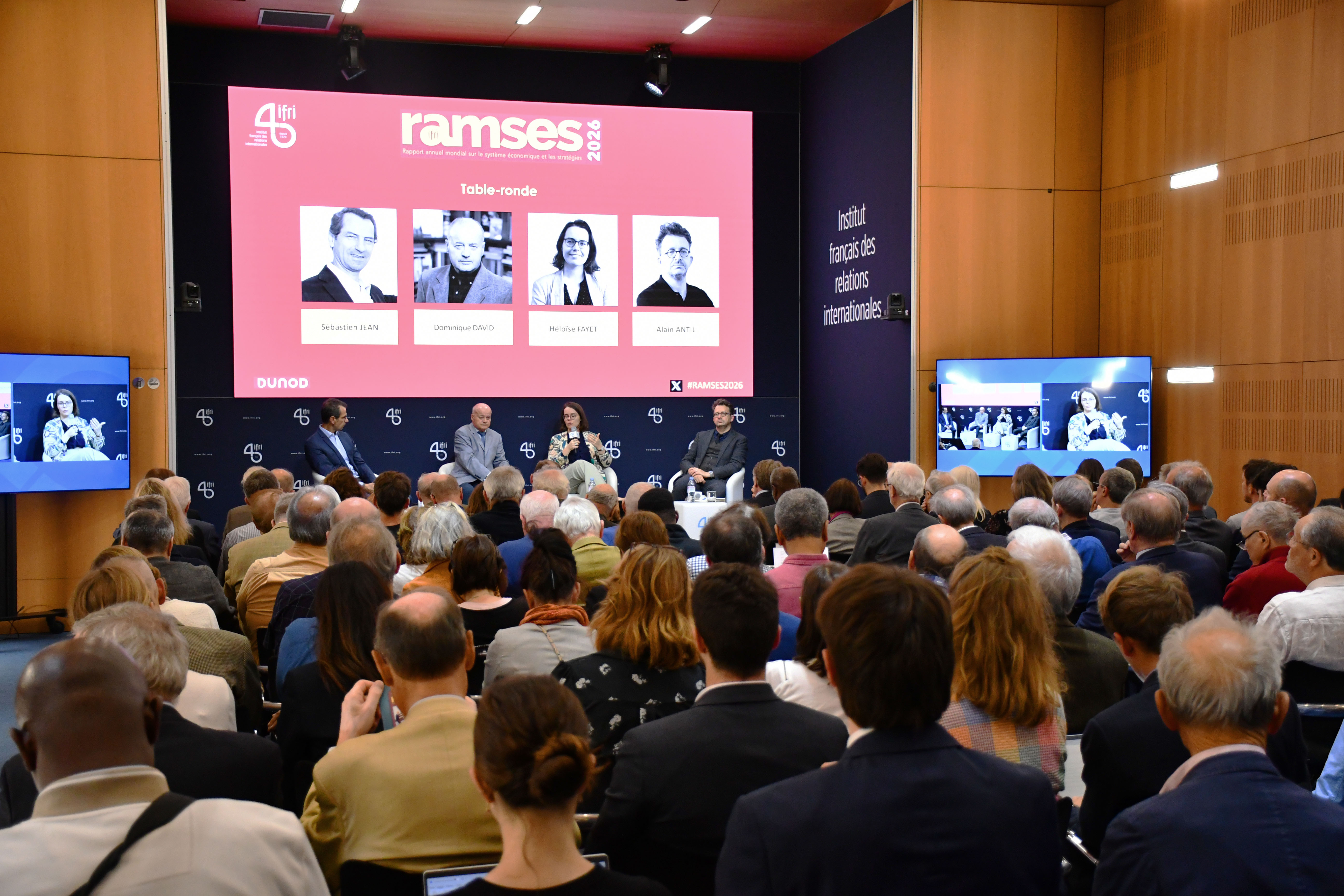

To analyze the impact of power rivalries and tensions on globalization, this initiative combines economic and political expertise. In the face of growing geopolitical risk, the goal is to decipher the dynamics of reconfiguration: protectionist pressures, sanctions, restrictions, industrial policies, and economic security concerns are redefining the rules of international trade. These tensions are also transforming international financial relations by undermining the foundations of trust and reshaping the global monetary system. They raise questions about the role of several key players: sovereign wealth funds, central banks, digital platforms, multilateral institutions, and financial infrastructure operators. In a context of profound disruption, simply refining existing approaches is no longer sufficient. The initiative is designed as a flexible model, drawing on diverse expertise to offer both broad overviews and targeted analyses. It also provides a platform for stakeholders and experts from various backgrounds to debate these issues freely.