







International Trade
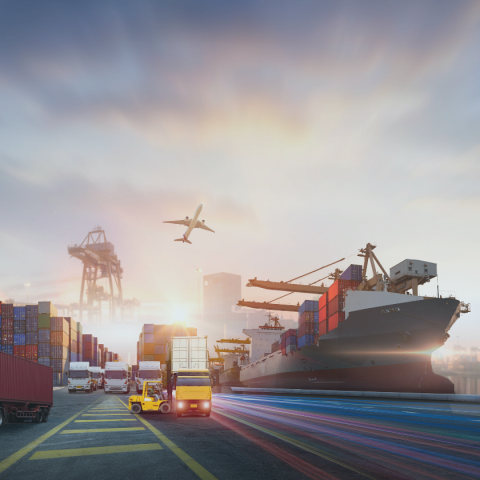
International trade has risen sharply in the era of globalization. The Covid-19 pandemic, the war in Ukraine and rising geopolitical tensions are leading to a reconfirguation of value chains.
Related Subjects
Impossible Decoupling, Improbable Cooperation: Economic Interdependencies in the Face of Power Rivalries
Export restrictions, economic and financial sanctions, politicization of monetary and financial choices, screening of inward and outward foreign direct investments, exceptional customs duties, and state interventions in sectors deemed strategic: the political vise is tightening around international economic and financial relations.
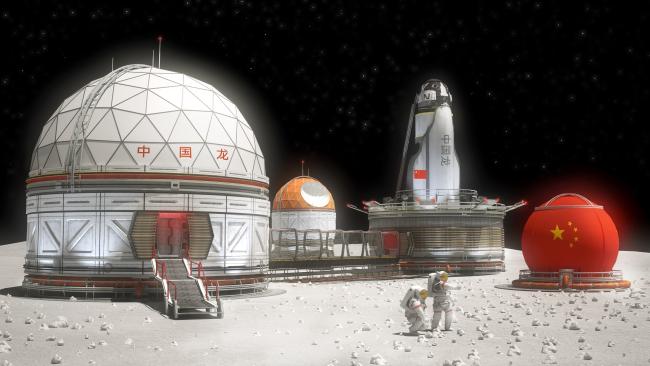
Racing to the Moon: China's Lunar exploration program in competition with the United States
A new Cold War-style race to the moon seems to be in the making. The People’s Republic of China and the United States are both investing in moon exploration with manned lunar scientific stations as the ultimate goal.
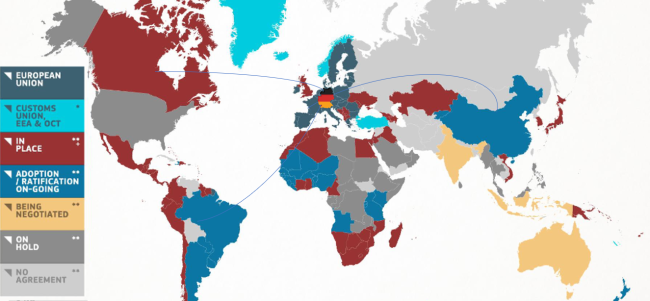
Towards a New European Trade Strategy in Times of Geopolitical Upheaval: The German Perspective
As one of the most successful trading blocs, the EU sees itself confronted with the erosion of the global rules-based trading system and trade becoming increasingly weaponized.
EU-Mercosur: An Unsolvable Trilemma Between Competition Rules, Normative Ambitions and Supply Chain Diversification
The EU-Mercosur trade deal was believed to be heading toward the finish. The election of Luiz Inácio Lula da Silva as the president of Brazil, as successor to the right-wing populist Jair Bolsonaro, and the Spanish presidency of the European Union (EU), raised hopes for its conclusion. But the reservations expressed by several EU member states and some Latin American countries have dashed hopes.

When the chips are down: China threatens to cut supply on rare minerals
China has just announced controls on exports of rare minerals - gallium and germanium - whose production it dominates and which are essential for the manufacture of electronic components.

Türkiye’s Stifled Ambitions
As its elections have unfolded this spring, Türkiye has again shown itself to be symptomatic of the times. Across the world, numerous political regimes oscillate between democratic forms of government and an authoritarian concentration of power; impressive periods of growth give way to inflation and recession; and international deregulation gives rise to widespread diplomacy in an effort to juggle a myriad of shifting political loyalties. Faced with the war in Ukraine, Ankara is playing a strong hand by enlarging its areas of presence and intervention. Türkiye is more important to its partners than ever, independent of its eventual domestic trajectory.
Western discourse predicted the advent of Chinese dominance in the very short term, but events have taken a rather different turn. The drivers that enabled the unprecedented growth of recent decades seem to have run out of steam. Moreover, the outcome of Beijing’s economic strategies is still uncertain, in a context shaped primarily by U.S. policies. China’s influence in the future will be considerable, but the direction its rebound will take remains unclear.
For Europeans, the events in Ukraine and the thorny issue of the Sino-American rivalry cannot paper over the other security problems we face: On what common vision of our history and future will we build the Europe of tomorrow? Has drug trafficking already changed the nature of our societies? Can we afford to turn away from instances of destabilization in Africa, from the Horn to the Sahel?
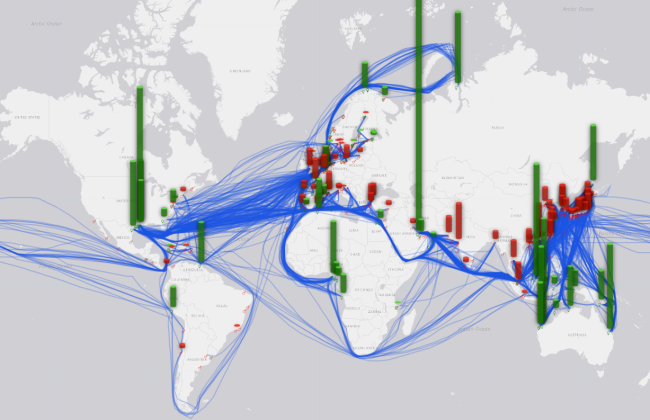
The Strategic Repositioning of LNG: Implications for Key Trade Routes and Choke Points
2022 saw the climax so far of the weaponization of energy. Following its geopolitical demise, Russia has undertaken its own gas amputation, moving from a super energy power status to a diminished role with uncertain prospects and only hard options left.

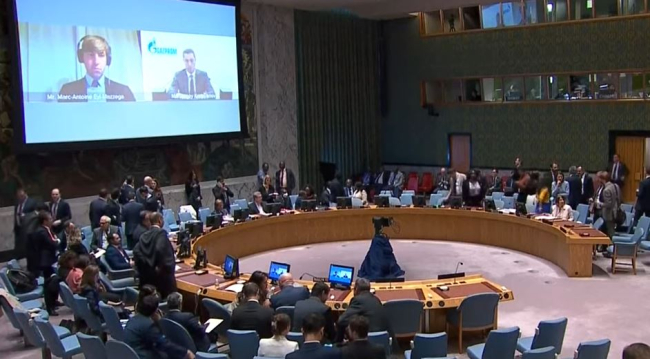
U.N. Security Council meets on Nord Stream at Russia's request
Remarks by Marc-Antoine Eyl-Mazzega, director of Ifri's Center for Energy & Climate, on the occasion of the meeting of the U.N. Security Council on Nord Stream at Russia's request, on September 30, 2022.
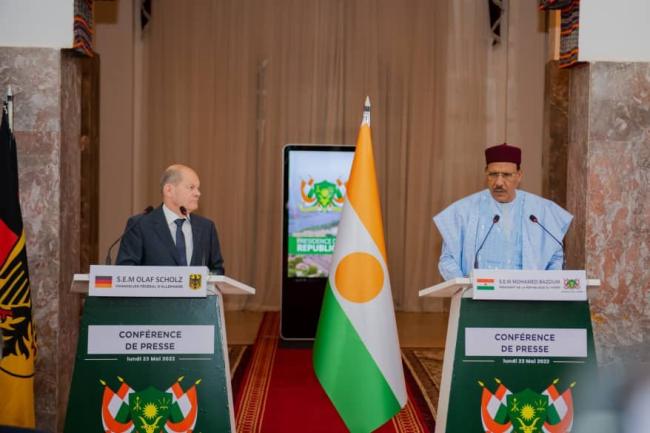
After Mali, what Commitment from Germany in the Sahel?
Germany, despite the reluctance of its public opinion, is committed to supporting security in the Sahel, notably through its participation in the European Union Training Mission in Mali (EUTM) and recently in Niger, and in the United Nations Multidimensional Integrated Stabilization Mission in Mali (MINUSMA).

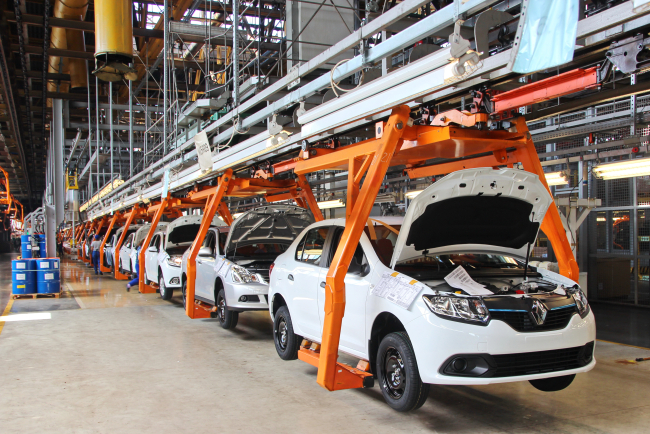
Renault’s Russia dilemma
Renault had for months been plotting to export a newfangled version of the Lada to the reste of the world. although realising that ambition remained some way off, it would have capped the revival of a brand arguably more synonymous with the Soviet Union than any other and which Renault first took a punt on in 2007 after then chief Carlos Ghosn identified Russia as a promising market.
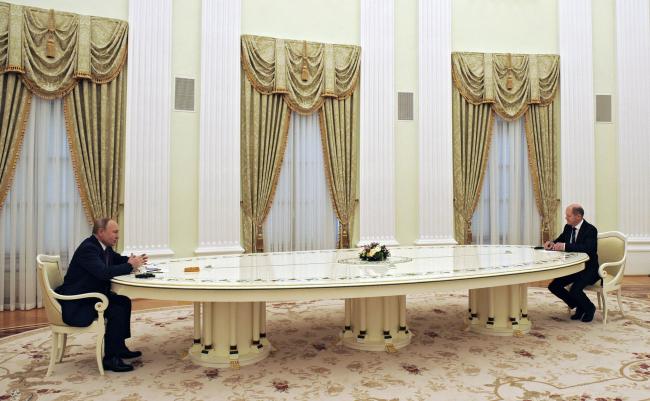
The Shock of Reality: The Traffic Light Coalition in the Russian-Ukrainian Crisis
The Russian-Ukrainian crisis puts to the test the cohesion of the new traffic light coalition, the authority of Chancellor Scholz and the ambition to adapt the post-Merkel German foreign policy.
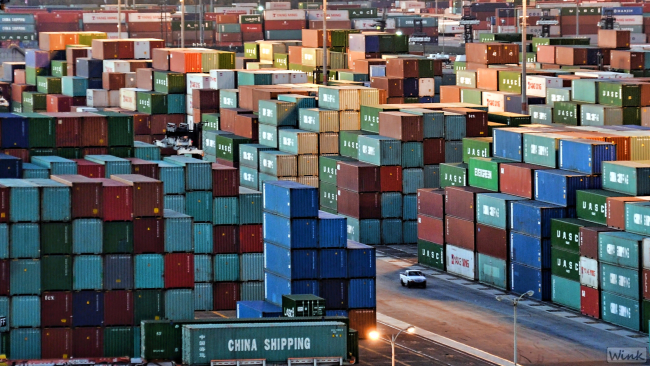
Strengthening Sovereignty in the Era of Global Value Chains
How to reduce the vulnerabilities induced by these global value chains to be more independent, while taking into account the reality of these productive processes which precisely generate interdependencies?
Climate and International Trade: The Clash of Powers
The fight against climate change has a major economic dimension. With climate neutrality as their new objective, the major powers are counting on green industrial policy, and trying to contain the emissions related to their imports.
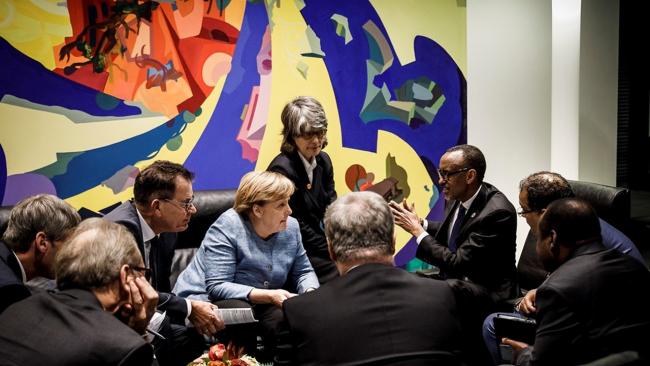
Germany’s Africa Politics: Renewal of an Unequal Cooperation?
In recent years, Germany’s Africa politics have been characterized by proactive international initiatives and the claim for a "partnership at eye level". However, a look at the power constellations of its cooperation indicates that inequalities are – contrary to Germany’s own claims – rather reproduced than reduced.
Towards Geopolitical German Development Cooperation? Recent History, Current Trends, and Future Prospects
German development cooperation (GDC) in a post-Merkel era can be expected to become more geopolitical. Recently adopted German policy documents like the Indo-Pacific guidelines as well as the support to the geopolitical ambition of the European Commission suggest such a tendency for future German policy making.

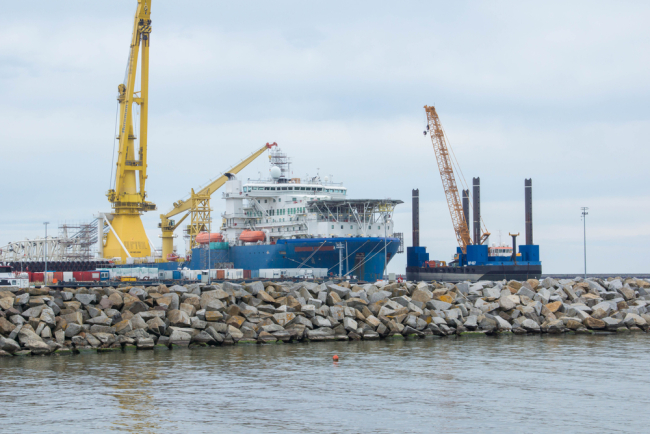
Navalny Poisoning Raises Pressure on Merkel to Cancel Russian Pipeline
Evidence that the Russian opposition leader was attacked with a military-grade nerve agent has placed new pressures on the German chancellor.
The Belt and Road: China's "Community of Destiny" for Southeast Asia?
As a frontline zone and a pivot, Southeast Asia is both a testing ground and a showcase of China’s ambitions in developing a grand cooperative scheme. Creating mutually positive linkages is crucial for both partners, if not for the same reasons.

The Middle East: The Economy in The Race for Power
Middle Eastern geopolitics is currently undergoing structural changes: the regional order is in transition in the aftermath of the Arab Spring that undermined authoritarian governance, and triggered the competition for power against a backdrop of American withdrawal.
Industry Response to New Protectionism
In this special issue of Politique étrangère devoted to the proceedings of the conference organized by Ifri on April 10, 2019, in the Grand Amphitheater of the Sorbonne, on the occasion of its fortieth anniversary, discover the debate moderated by Thierry de Montbrial between Jean-Paul Agon and Patrick Pouyané.
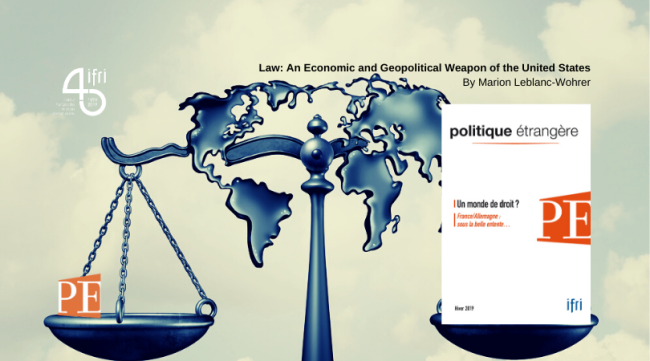
Law: An Economic and Geopolitical Weapon of the United States
From the 2000s, the United States has developed an extraterritorial legal policy that began with fighting corruption but has since broadened considerably.
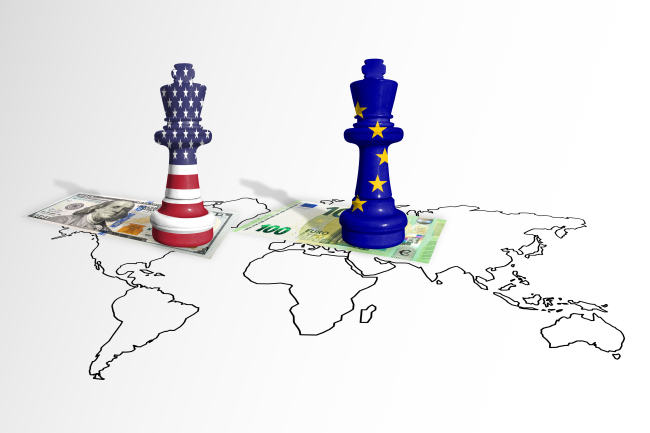
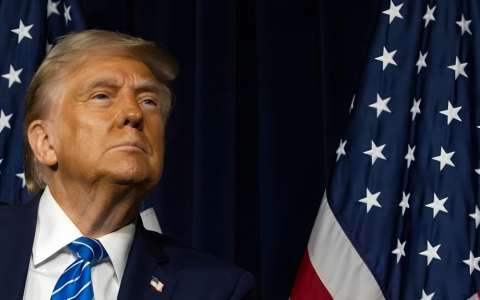
Trump’s Second Term: Laying the Groundwork for a New Trade War
In a statement released on February 1, 2025, President Trump announced the implementation of a 10% tariff on Chinese goods and a 25% tariff on imports from Canada and Mexico. While the former took effect via executive order on February 4, the latter were granted a 30-day reprieve. Sanctions targeting European Union (EU) products are said to be imminent.
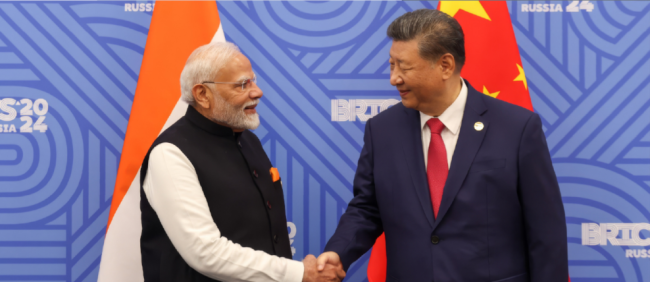
India’s Quest for Economic Emancipation from China
In October 2024, the meeting between Chinese President Xi Jinping and Indian Prime Minister Narendra Modi initiated a thaw in relations between the two Asian powers. Has India's high level of economic dependence on China played an important role in bringing about this diplomatic shift?
How Geopolitical Tensions Reshape Trade Patterns: Geoeconomic Fragmentation, or China’s Big Manufacturing Push?
A data-based analysis shows that widespread geoeconomic fragmentation of world trade is not visible, at least so far. In contrast, the geopolitically-motivated challenges to international coordination are striking, notably in relation with China's surging surplus in manufactured goods trade.

Multi-alignment and De-risking: The Global South Response to World Fragmentation
Turbulences and conflicts threaten the stability of the global order. What is the Global South’s response to these risks?
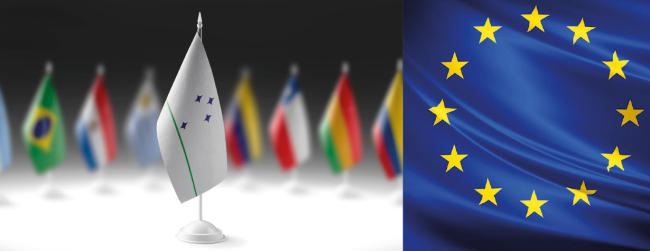
Between „Strategic Autonomy” and „Zeitenwende”: The Importance of Trade Between The EU and Mercosur
This policy paper analyses the geopolitical and economic significance of the EU-Mercosur agreement for the European Union (EU) in the context of the EU’s new European Economic Security Strategy.
Nigeria’s Oil Wealth and International Relations: Multilateral and Bilateral Lending and Decolonial Therapies
Before Angola surpassed Nigeria as Africa’s top oil producer in April 2023, Nigeria was Africa’s main oil exporter even before the country gained independence in 1960.
China, technical standardization, and the future of globalization
As the global economy sits at a crossroad between connectivity-driven globalization and strategic decoupling, technical standardization provides a valuable measure of where we are headed.
Towards a New European Trade Strategy in Times of Geopolitical Upheaval: The German Perspective
As one of the most successful trading blocs, the EU sees itself confronted with the erosion of the global rules-based trading system and trade becoming increasingly weaponized.
The Strategic Repositioning of LNG: Implications for Key Trade Routes and Choke Points
2022 saw the climax so far of the weaponization of energy. Following its geopolitical demise, Russia has undertaken its own gas amputation, moving from a super energy power status to a diminished role with uncertain prospects and only hard options left.
Strengthening Sovereignty in the Era of Global Value Chains
How to reduce the vulnerabilities induced by these global value chains to be more independent, while taking into account the reality of these productive processes which precisely generate interdependencies?
Ifri, a foundation recognized as being of public utility, relies largely on private donors – companies and individuals – to guarantee its sustainability and intellectual independence. Through their funding, donors help maintain the Institute's position among the world's leading think tanks. By benefiting from an internationally recognized network and expertise, donors refine their understanding of geopolitical risk and its consequences on global politics and the economy. In 2026, Ifri partners with over 90 French and international companies and organizations.

To analyze the impact of power rivalries and tensions on globalization, this initiative combines economic and political expertise. In the face of growing geopolitical risk, the goal is to decipher the dynamics of reconfiguration: protectionist pressures, sanctions, restrictions, industrial policies, and economic security concerns are redefining the rules of international trade. These tensions are also transforming international financial relations by undermining the foundations of trust and reshaping the global monetary system. They raise questions about the role of several key players: sovereign wealth funds, central banks, digital platforms, multilateral institutions, and financial infrastructure operators. In a context of profound disruption, simply refining existing approaches is no longer sufficient. The initiative is designed as a flexible model, drawing on diverse expertise to offer both broad overviews and targeted analyses. It also provides a platform for stakeholders and experts from various backgrounds to debate these issues freely.