



International Trade
International trade has risen sharply in the era of globalization. The Covid-19 pandemic, the war in Ukraine and rising geopolitical tensions are leading to a reconfirguation of value chains.
Related Subjects

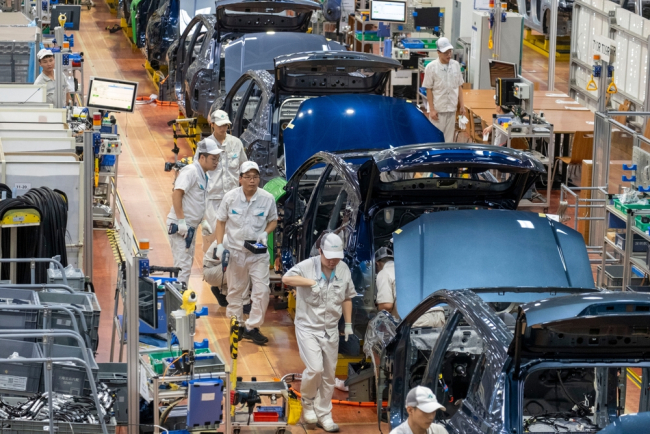
Volkswagen, Mercedes, and BMW Face Off Against Donald Trump
The German automotive industry faces a threefold challenge: competition from China; a difficult transition to electric vehicles; and US tariffs.
Recalibrating Europe’s Security: Building Partnerships in an Era of ‘Wrecking-Ball Politics
The 2026 Munich Security Conference report observes that “the world has entered a period of wrecking-ball politics.” Indeed, the era of Western predominance, dependable alliances and capable multilateral institutions has given way to shifting balances of power and deepening uncertainty.
Rethinking Global Imbalances
Today’s global imbalances, starting with China's massive trade surplus, are not simply the result of poor macroeconomic coordination. Rather, they reflect long-term strategic thinking and a departure from the bias toward openness on which the postwar trade order was built.

The Transfer Paradox. Rethinking Global Imbalances
Global imbalances have come back to the top of the policy agenda. Many analyses and reports have been produced over recent months. The standard prescription involves better coordination of macroeconomic policies, with three familiar recommendations: higher consumption in China, higher investment in Europe, and fiscal consolidation in the United States.
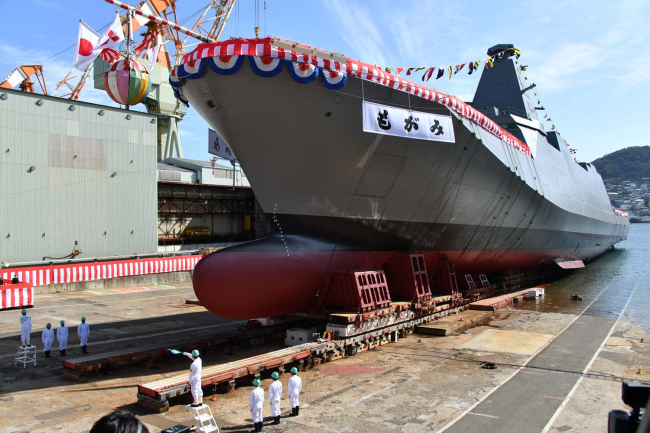
Japan’s Defense Industry Goes Global: Ambitions and Challenges

Democratic Anchor, Pragmatic Reach
Despite facing their own democratic challenges, including political fragmentation, rising populism, and electoral uncertainty, European countries retain valuable experience in democratic resilience.
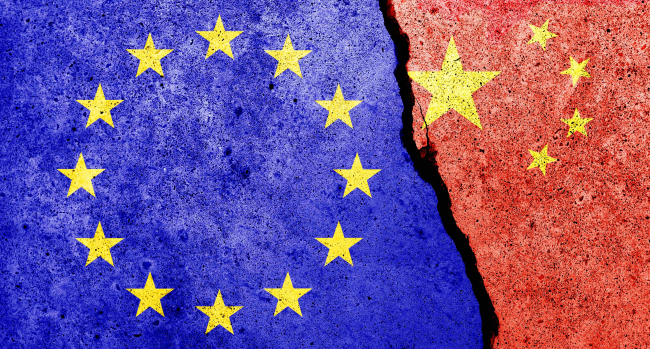
Fragmented Europe: Dealing with China as a technology and innovation power
How is Europe navigating China’s ascension as a technological power? The latest report by the European Think-tank Network on China (ETNC) provides a nuanced account of a converging, yet still fragmented approach across 22 countries.

What Do Companies Fear? The New Geography of Geopolitical Risk
Geopolitical risk has established itself, within the space of a few years, as a central variable in corporate strategy.
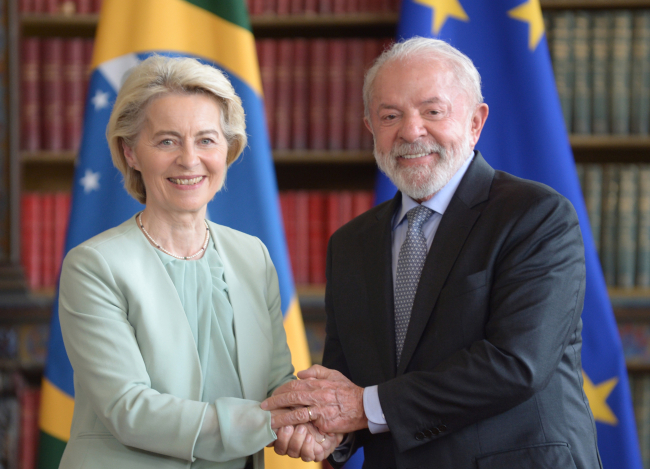
Entry into force of the EU-Mercosur agreement: last act of an endless drama for Germany?
At the World Economic Forum in Davos on January 20, 2026, Ursula von der Leyen, the President of the European Commission, stated that "geopolitical shocks can and must serve as opportunity for Europe".
The United States: Internal and External Perspectives
Plenary session of the 2026 World Policy Conference dedicated to analyzing the continuities and discontinuities of American policy under the presidency of Donald Trump.

Crisis in the Strait of Hormuz. A Stress Test for Taiwan with Global Implications
The large-scale military operation carried out by the United States (US) and Israel against Iran triggered an Iranian retaliation that resulted in the partial destruction of natural gas liquefaction infrastructure and severe disruption of maritime traffic in the Strait of Hormuz. The economies of East Asia—South Korea, Japan, and Taiwan in particular—are highly exposed to this crisis due to their reliance on liquefied natural gas (LNG) imports for electricity generation.
Global imbalances, industrial policies, and the challenge of surging Chinese trade surpluses
The analysis of global imbalances faces a paradox: while the analytical focus has for decades been on the sustainability of current account deficits, out of concerns about their financial consequences, international political tensions stem mainly from enduring trade surpluses and their industrial impacts. Beyond President Trump’s outbursts, fears about the consequences of China’s trade surpluses are increasingly widespread.

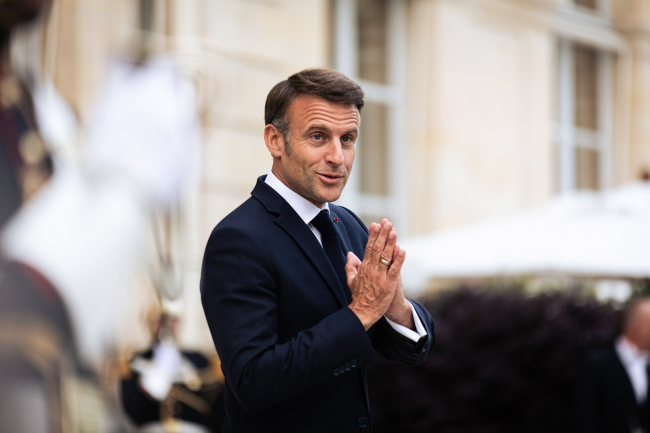
Japan seeks French backing as Macron begins Asia trip in Iran war’s shadow
Emmanuel Macron touched down in Tokyo on Tuesday with a packed agenda and a receptive audience in a Japanese government anxious about a choked oil route and looking for support amid its diplomatic falling-out with Beijing.
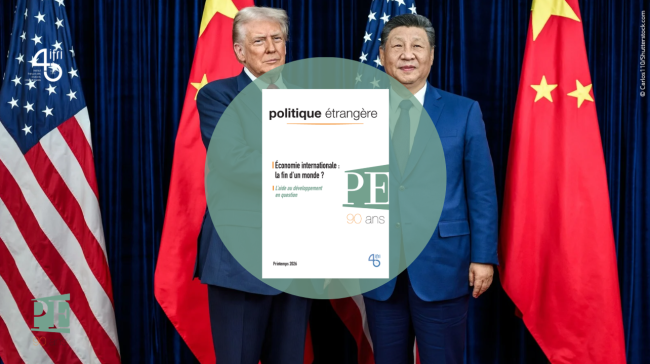
From Trump to Xi Jinping: Globalization's Great Rupture
The second Trump administration’s trade policy represents a rupture with the United States’ international commitments and a seismic shock for the multilateral trade system. Its destabilizing impact has been exacerbated by China’s disproportionate trade surplus, which has doubled since the 2020 pandemic. We are entering a new era marked by the erosion of norms and their replacement by a more transactional logic. For Europe, the challenge is enormous.
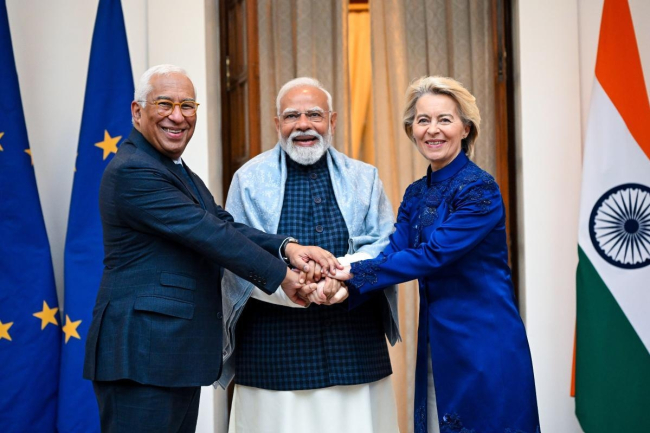
European Union-India: Lasting Rapprochement or Partnership of Convenience?
The partnership between the European Union (EU) and India has long been limited to economic exchanges. Its political dimension has gradually developed, culminating in its elevation to the status of a “strategic partnership” in 2004. However, the failure of negotiations for a free-trade agreement in 2013 slowed this momentum. Since the early 2020s, in an uncertain geopolitical context, bilateral rapprochement has gained new momentum.
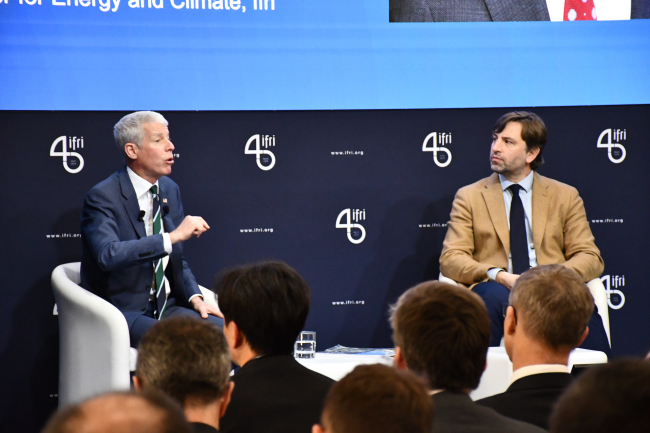
Replay - Conference with Chris Wright, Secretary, U.S. Department of Energy
Welcomed at the French Institute of International Relations (Ifri), Chris Wright outlined his vision of American energy policy built around two core axes: the human reality of energy access, and a data-driven approach. For the Secretary, energy is the foundation of prosperity, health, and longer life expectancy on a global scale. His doctrine rests on an ambition of American "energy dominance" — not merely independence, but the capacity to produce at scale in order to lower domestic costs, reindustrialize the country, and support U.S. allies.
New Cold War? What New Cold War? Confronting the Geoeconomic Fragmentation Narrative with the Data
It has become widely accepted that the world economy should be seen as increasingly shaped by forces of fragmentation, resulting from geopolitical tensions. This article takes another look at this narrative, using international trade data. While an aggregate analysis is consistent with a new Cold War narrative, whereby international trade is increasingly seen as split into two blocs, this is only a mix of very different outcomes. Far from being a widespread trend, geoeconomic fragmentation of trade flows is only significant in “hotspots”: Russia's foreign trade and China-US bilateral exchanges, and the impact is massive in these cases. Outside these “hotspots”, there is no tangible sign that geopolitical tensions have been shaping international trade patterns in terms of blocs, nor is there any hint of a trend toward nearshoring – to the contrary, in fact.
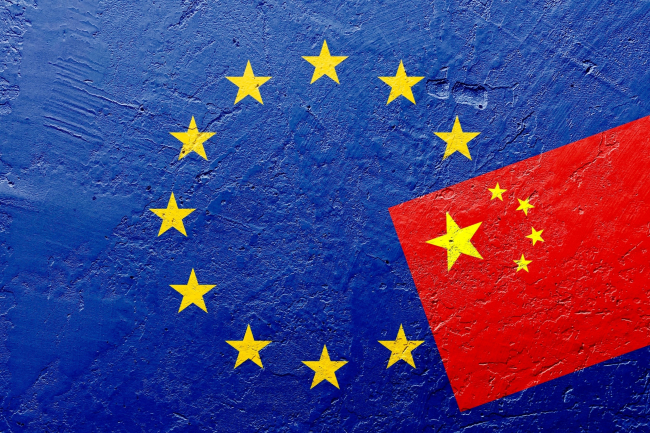
EU’s Derisking From China: A Daunting Task
With economic security as a major concern, the EU has recently turned to “derisking” from China. The EU strategy entails reducing critical dependencies and vulnerabilities, including in EU supply chains, and diversifying where necessary, while recognizing the importance and need to maintain open channels of communication.
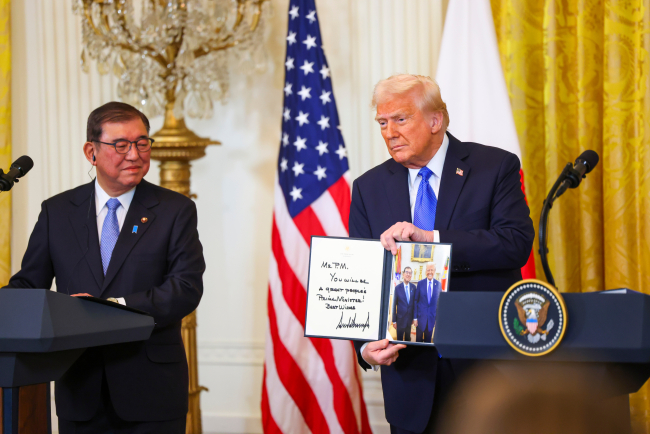
Japan Under Trump: Alliance Strains, the Push for Autonomy and Essential Partnerships
Japan is under pressure from the United States (US) on punitive tariffs and demands for increased defence spending. This has sparked deep concern over US credibility and triggered growing domestic calls for greater autonomy.

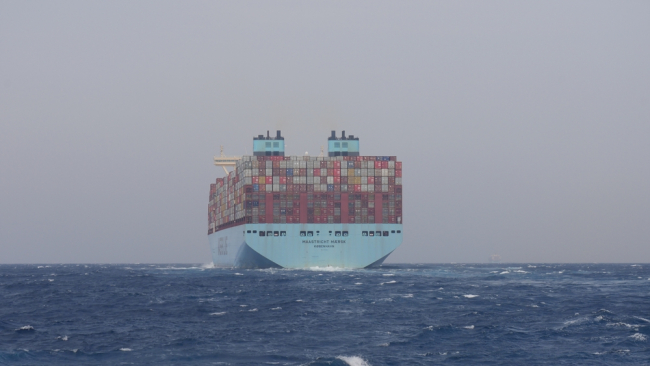
The Global Battle for Control of the Seas Continues to Rage in the 21st Century
Just as the Greek cities in the Mediterranean did over two thousand years ago, today the United States and China are seeking to control the sea lanes. Europe is watching the ships go by. On July 6, off the coast of Yemen, not far from Djibouti and the Bab al-Mandab Strait, the Greek and Liberian bulk carrier Magic Seas, loaded with fertilizer and steel, sank after being attacked by drone boats and rocket launchers. The next day, the Eternity C, hit by missile fire, sank, killing some of the crew.
Volkswagen, Mercedes, and BMW Face Off Against Donald Trump
The German automotive industry faces a threefold challenge: competition from China; a difficult transition to electric vehicles; and US tariffs.
Recalibrating Europe’s Security: Building Partnerships in an Era of ‘Wrecking-Ball Politics
The 2026 Munich Security Conference report observes that “the world has entered a period of wrecking-ball politics.” Indeed, the era of Western predominance, dependable alliances and capable multilateral institutions has given way to shifting balances of power and deepening uncertainty.
The Transfer Paradox. Rethinking Global Imbalances
Global imbalances have come back to the top of the policy agenda. Many analyses and reports have been produced over recent months. The standard prescription involves better coordination of macroeconomic policies, with three familiar recommendations: higher consumption in China, higher investment in Europe, and fiscal consolidation in the United States.
Japan’s Defense Industry Goes Global: Ambitions and Challenges
Fragmented Europe: Dealing with China as a technology and innovation power
How is Europe navigating China’s ascension as a technological power? The latest report by the European Think-tank Network on China (ETNC) provides a nuanced account of a converging, yet still fragmented approach across 22 countries.
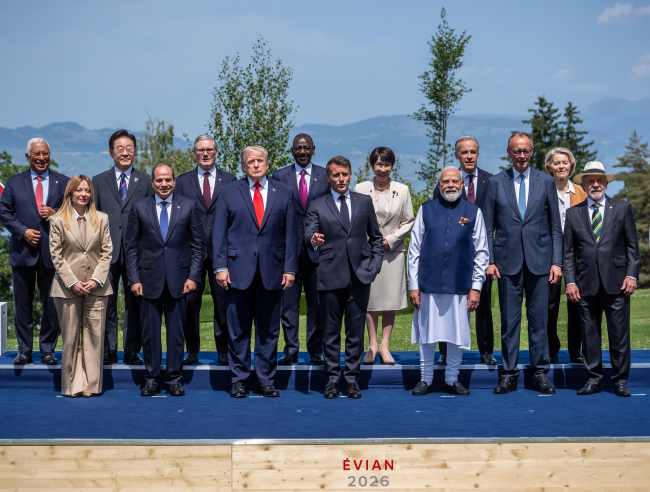
The G7 Leaders’ Summit in France: An Unexpected Success
Overall, it was a successful summit for President Macron. However, caution is warranted regarding the 2026 G7’s lasting legacy, as the unpredictability of the U.S. president could affect the durability of commitments made.
What Do Companies Fear? The New Geography of Geopolitical Risk
Geopolitical risk has established itself, within the space of a few years, as a central variable in corporate strategy.
Entry into force of the EU-Mercosur agreement: last act of an endless drama for Germany?
At the World Economic Forum in Davos on January 20, 2026, Ursula von der Leyen, the President of the European Commission, stated that "geopolitical shocks can and must serve as opportunity for Europe".
Crisis in the Strait of Hormuz. A Stress Test for Taiwan with Global Implications
The large-scale military operation carried out by the United States (US) and Israel against Iran triggered an Iranian retaliation that resulted in the partial destruction of natural gas liquefaction infrastructure and severe disruption of maritime traffic in the Strait of Hormuz. The economies of East Asia—South Korea, Japan, and Taiwan in particular—are highly exposed to this crisis due to their reliance on liquefied natural gas (LNG) imports for electricity generation.
Global imbalances, industrial policies, and the challenge of surging Chinese trade surpluses
The analysis of global imbalances faces a paradox: while the analytical focus has for decades been on the sustainability of current account deficits, out of concerns about their financial consequences, international political tensions stem mainly from enduring trade surpluses and their industrial impacts. Beyond President Trump’s outbursts, fears about the consequences of China’s trade surpluses are increasingly widespread.
Rethinking Global Imbalances
Today’s global imbalances, starting with China's massive trade surplus, are not simply the result of poor macroeconomic coordination. Rather, they reflect long-term strategic thinking and a departure from the bias toward openness on which the postwar trade order was built.
Democratic Anchor, Pragmatic Reach
Despite facing their own democratic challenges, including political fragmentation, rising populism, and electoral uncertainty, European countries retain valuable experience in democratic resilience.
Japan seeks French backing as Macron begins Asia trip in Iran war’s shadow
Emmanuel Macron touched down in Tokyo on Tuesday with a packed agenda and a receptive audience in a Japanese government anxious about a choked oil route and looking for support amid its diplomatic falling-out with Beijing.
Replay - Conference with Chris Wright, Secretary, U.S. Department of Energy
Welcomed at the French Institute of International Relations (Ifri), Chris Wright outlined his vision of American energy policy built around two core axes: the human reality of energy access, and a data-driven approach. For the Secretary, energy is the foundation of prosperity, health, and longer life expectancy on a global scale. His doctrine rests on an ambition of American "energy dominance" — not merely independence, but the capacity to produce at scale in order to lower domestic costs, reindustrialize the country, and support U.S. allies.
The Global Battle for Control of the Seas Continues to Rage in the 21st Century
Just as the Greek cities in the Mediterranean did over two thousand years ago, today the United States and China are seeking to control the sea lanes. Europe is watching the ships go by. On July 6, off the coast of Yemen, not far from Djibouti and the Bab al-Mandab Strait, the Greek and Liberian bulk carrier Magic Seas, loaded with fertilizer and steel, sank after being attacked by drone boats and rocket launchers. The next day, the Eternity C, hit by missile fire, sank, killing some of the crew.

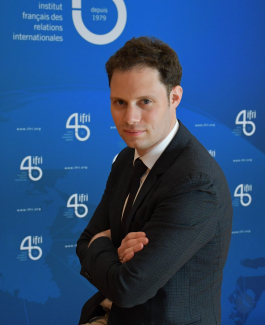
quoted by Leila Abboud in the Financial Times

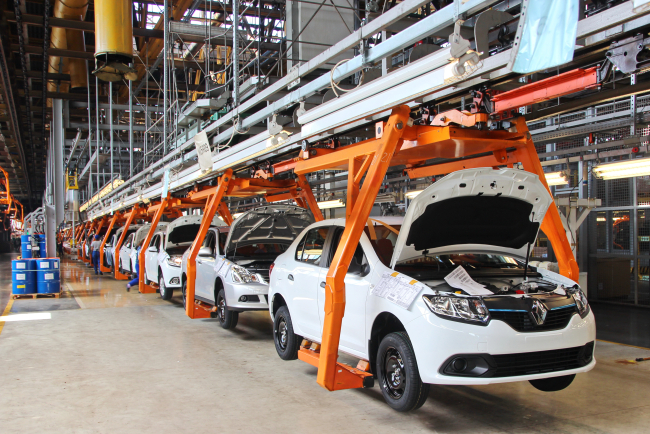
Renault’s Russia dilemma
Renault had for months been plotting to export a newfangled version of the Lada to the reste of the world. although realising that ambition remained some way off, it would have capped the revival of a brand arguably more synonymous with the Soviet Union than any other and which Renault first took a punt on in 2007 after then chief Carlos Ghosn identified Russia as a promising market.
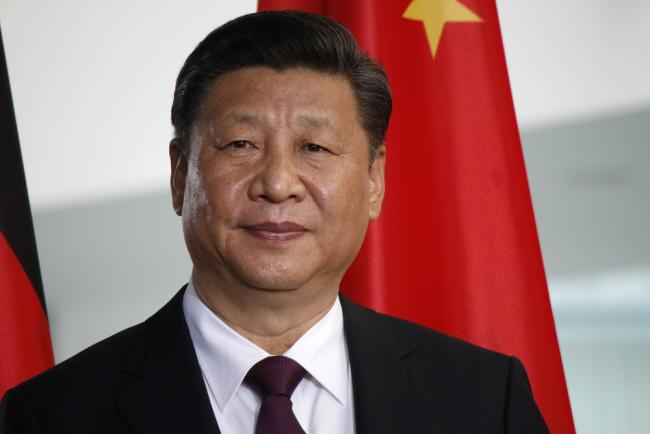
China and the “Definition Gap”: Shaping Global Governance in Words
Increasingly, China’s diplomacy is using key words commonly used by liberal democracies, but the meaning differs greatly. This evolution is changing the terms of the debate without changing a single term.
The United States: Internal and External Perspectives
Plenary session of the 2026 World Policy Conference dedicated to analyzing the continuities and discontinuities of American policy under the presidency of Donald Trump.
Replay - Conference with Chris Wright, Secretary, U.S. Department of Energy
Welcomed at the French Institute of International Relations (Ifri), Chris Wright outlined his vision of American energy policy built around two core axes: the human reality of energy access, and a data-driven approach. For the Secretary, energy is the foundation of prosperity, health, and longer life expectancy on a global scale. His doctrine rests on an ambition of American "energy dominance" — not merely independence, but the capacity to produce at scale in order to lower domestic costs, reindustrialize the country, and support U.S. allies.
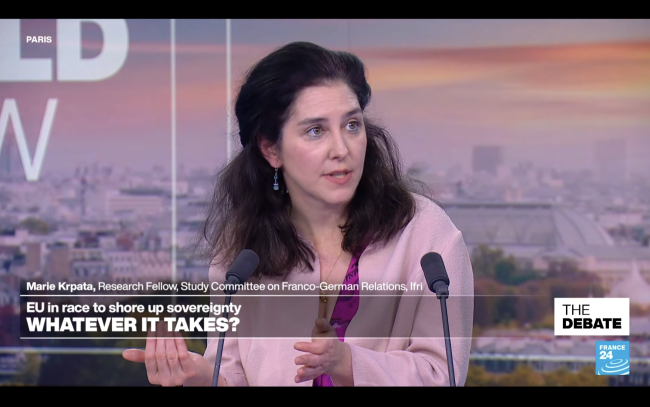
Whatever it takes? EU in race to shore up sovereignty
Can Europe man the ramparts on its own? As the US war secretary snubbed a NATO defence ministers' meeting in Brussels, EU leaders converged on the 16th-century Alden Biesen castle in Belgium's Limburg province to answer former Italian prime minister Mario Draghi's call for a "big bazooka" approach to reform and competitiveness.
How do maritime companies cooperate with the navies? An interview with Evan FUERY, EQUINOR
On the sidelines of the Paris Naval Conference 2025, on February 4, 2025, organized by Ifri and the French Navy (Marine nationale), Evan FUERY, Senior Vice-President for Corporate Security and Crisis Management, EQUINOR, shares insights on how maritime companies collaborate with the navies to secure maritime economy.
How do maritime companies cooperate with the navies? An interview with Christine Cabau (CMA-CGM)
On the sidelines of the Paris Naval Conference 2025, on February 4, 2025, organized by Ifri and the French Navy (Marine nationale), Christine Cabau, Executive Vice-President in Charge of Assets and Operations, CMA-CGM, shares insights on how maritime companies collaborate with the navies to secure maritime economy.
How do maritime companies cooperate with the navies? An interview with Simon Bergulf, MÆRSK
On the sidelines of the Paris Naval Conference 2025, on February 4, 2025, organized by Ifri and the French Navy (Marine nationale), Simon BERGULF, Group Representative Europe Public and Regulatory Affairs, Head of Energy transition and Operations, Maersk, shares insights on how maritime companies collaborate with the navies to secure maritime economy.
De-globalization or Re-globalization? (World Policy Conference 2024 - Plenary Session)
Saturday, December 14, 2024 - 17th edition of the World Policy Conference in Abu Dhabi, United Arab Emirates. Plenary session 3: De-globalization or Re-globalization?
Replay - The European Union in Competition with the United States and China. How to Balance Free Trade, Competitiveness and Economic Security?
Video replay from Ifri's conference, on December 3, 2024. As the geopolitical context has changed, so has the approach to international economic relations and the rules-based multilateral framework. Covid and Russia’s war against Ukraine have exposed the risks of extended supply chains and of having become dependent on a single supplier.
Does Russia still have an "energy weapon"?
What are the Current Challenges for Gazprom and Russia’s Energy Policy? What are the Gas Risks for Europe? Is the Nord Stream-II a Risk or an Opportunity for Europe?
Ifri, a foundation recognized as being of public utility, relies largely on private donors – companies and individuals – to guarantee its sustainability and intellectual independence. Through their funding, donors help maintain the Institute's position among the world's leading think tanks. By benefiting from an internationally recognized network and expertise, donors refine their understanding of geopolitical risk and its consequences on global politics and the economy. In 2026, Ifri partners with over 90 French and international companies and organizations.


quoted by Leila Abboud in the Financial Times

To analyze the impact of power rivalries and tensions on globalization, this initiative combines economic and political expertise. In the face of growing geopolitical risk, the goal is to decipher the dynamics of reconfiguration: protectionist pressures, sanctions, restrictions, industrial policies, and economic security concerns are redefining the rules of international trade. These tensions are also transforming international financial relations by undermining the foundations of trust and reshaping the global monetary system. They raise questions about the role of several key players: sovereign wealth funds, central banks, digital platforms, multilateral institutions, and financial infrastructure operators. In a context of profound disruption, simply refining existing approaches is no longer sufficient. The initiative is designed as a flexible model, drawing on diverse expertise to offer both broad overviews and targeted analyses. It also provides a platform for stakeholders and experts from various backgrounds to debate these issues freely.