



Economy
The economy is an essential attribute of power and a major component of international relations. While geopolitical tensions are on the rise, economic interdependence remains strong.
Related Subjects
2024 Election: What's Next for U.S. International Economic Policy?
An interview with Emily Blanchard, Tuck School of Business at Dartmouth College and CEPR.
How does she see the prospects for U.S. international economic policy, depending on who wins the election in November 2024?
Global Financial Shifts: The Impact of Dollar Sanctions and Frozen Russian Assets
An interview with Brad Setser, Whitney Shepardson Senior Fellow (Council on Foreign Relations) led at Ifri on September 24, 2024.
Dollar-based financial sanctions have been increasing, particularly since the beginning of the century. Is this phenomenon likely to significantly alter the international role of the dollar?
There is a lot of controversy about the in which way frozen assets from Russia’s central bank should be treated, regarding both the assets themselves and the associated revenues. What consequences do you foresee for the international financial system?

Europe faces up to China's EV dominance as carbon-zero targets loom
As Xi travels through EU this week, automakers weigh whether to fight or team up with cheaper Chinese rivals.

Without a Pact with Mercosur, the EU risks leaving China free in South America
The agreement EU-Mercosur It has been a banner of the recent protest by French farmers, who denounced unfair competition on the part of South Americans. However, if Paris closes the door to this pact, the way will be left clear to China, warn politicians and analysts consulted by EFE.
Iran’s allies are attacking the West. What happens next?
From Jordan to Lebanon to the Red Sea, attacks on U.S. and European interests are increasing.Tensions are rising in the Middle East after Washington vowed to respond to the drone attack that killed three American soldiers on the 28th of January, sponsored by Iranian-backed militants.
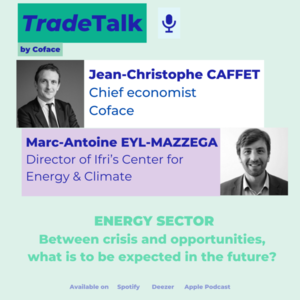

Energy sector: outlook and opportunities
The recent energy crisis has highlighted our economies' dependence on energy resources. With fossil fuels becoming less available, and a necessary transition to more decarbonised alternatives, could tomorrow's energy not become more expensive and less certain in availability?


In the middle of the race, the Franco-German motor seems to be breaking down
Faced with the risk of losing investments in the technologies of the future, due to subsidies that its global competitors are pumping into their economies, the European Union is forced to rethink its industrial policy.
The United States and Europe risk entering into a subsidy war, each trying to support the competitiveness of their economies… their market economies… with public money. Meanwhile, member states expect from Brussels solutions that will allow them to remain relevant in a world where interventionism is the order of the day.

Europe-US resolve on China proves short-lived ahead of key meetings in Beijing and Washington
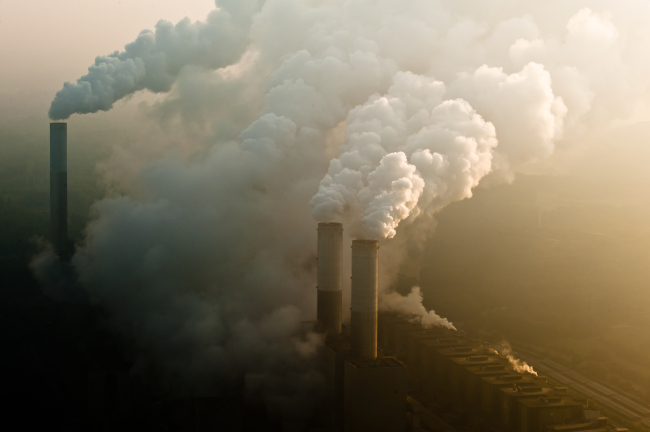
European Green Deal, Three Years Later
The European Green Deal (EGD) is the single most defining policy initiative of the Von der Leyen Commission. Since its publication in December 2019, it has become the European Union’s (EU) new raison d’être.
Japan's upgraded economic security strategy
An interview with Kazuto SUZUKI, Professor, Graduate School of Public Policy, University of Tokyo.
Support independent French research
Ifri, a foundation recognized as being of public utility, relies largely on private donors – companies and individuals – to guarantee its sustainability and intellectual independence. Through their funding, donors help maintain the Institute's position among the world's leading think tanks. By benefiting from an internationally recognized network and expertise, donors refine their understanding of geopolitical risk and its consequences on global politics and the economy. In 2025, Ifri supports more than 80 French and foreign companies and organizations.
Related centers and programs

Geoeconomics and Geofinance Initiative
To analyze the impact of power rivalries and tensions on globalization, this initiative combines economic and political expertise. In the face of growing geopolitical risk, the goal is to decipher the dynamics of reconfiguration: protectionist pressures, sanctions, restrictions, industrial policies, and economic security concerns are redefining the rules of international trade. These tensions are also transforming international financial relations by undermining the foundations of trust and reshaping the global monetary system. They raise questions about the role of several key players: sovereign wealth funds, central banks, digital platforms, multilateral institutions, and financial infrastructure operators. In a context of profound disruption, simply refining existing approaches is no longer sufficient. The initiative is designed as a flexible model, drawing on diverse expertise to offer both broad overviews and targeted analyses. It also provides a platform for stakeholders and experts from various backgrounds to debate these issues freely.