The Energy Union is Paving the Way for Energy Transition
2015 Ifri Center for Energy Annual Conference, Brussels
"Europe and the New Frontiers of Energy: Turning Grand Strategy into Effective Policy - Proposing Sustainable, Efficient and Field-Relevant Solutions"
Sharing Military Capabilities: Dead-End or Future of Defense?
The framework nations concept, elaborated in Germany, was endorsed at the North Atlantic Treaty Organization (NATO) Summit in Wales in 2014. It attempts to organize defense cooperation between a limited number of countries which share a certain cultural proximity.
Could Differentiated Integration Unblock the CSDP?
Differentiated integration, which brings some member states together on common means and strategies, appears to be the only route possible to circumvent obstructions to a Common Security and Defense Policy (CSDP) for the 28 member states.
The Western Balkans and the Failure of European Enlargement
The process of European enlargement has been officially suspended for five years. Yet in the western Balkans it is rapprochement with Europe that publicly underpins the majority of political policy.
“Minilateralism”: A New Form of Defense Cooperation
Multilateralism has played a significant role in international cooperation.
Finally Something New in European Defense
The European defense debate is stepping away from the classical opposition between zealots of “Europe of Defense” and supporters of the North Atlantic Treaty Organization (NATO).
European Energy Security Challenges and Global Energy Trends: Old Wine in New Bottles?
Paper produced within the framework of the IAI-OCP Policy Center partnership and presented at the international seminar "Morocco's Role in Fostering Euro-Mediterranean Energy Cooperation" organised in Rabat on 26 September 2014.
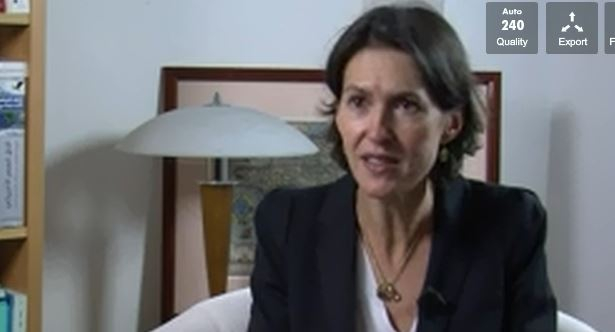
A New Era for the European Council ?
Donald Tusk is set to make his mark as the new president of the European council. How will this be felt across the other institutions that make up the EU?
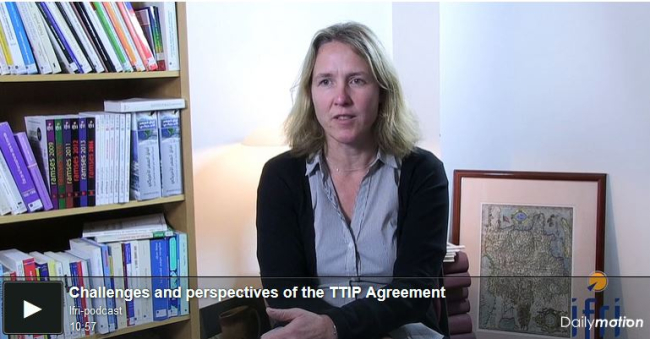
Juncker's 'last chance' Commission: Can he deliver?
Jean-Claude Juncker has made a surprisingly strong start. But behind the clear priorities and the innovative team set-up, his ability to restore trust in the EU remains to be seen.
The European Union to Ukraine’s Rescue
Recent events have provided the opportunity for the rekindling of relations between Ukraine and the European Union.
The Ukrainian Crisis or the European Misunderstanding
The crisis in Ukraine seems at first to be the result of the impact of two misunderstandings of Russian and Western approaches.
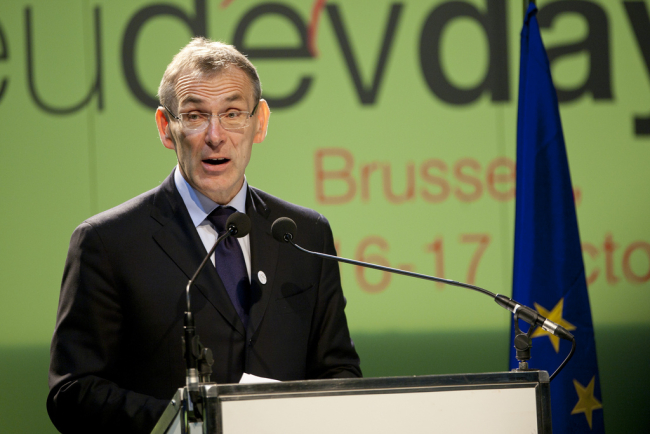
The European Union's Development Aid : from Development to Security, the Example of the European Development Fund
In the course of its institutional development and the expansion of its activities, the European Union (EU) has tended to pile up rather than to rationalize its policies, creating a financial tool per objective. As a result, the European funds have become a labyrinth, for which management costs are high.
The European Energy Policy: Building New Perspectives
“After 17 years of supranationality, we are still seeking how to define a common energy policy and what it might be. [...] Could we have done more in one generation? Or were goals only established to achieve a political balance which it was explicitly agreed to ignore, once the machinery began to operate? Historians will have a hard task to distinguish between excessive ambitions and national hypocrisies”.
Challenges ahead for Global Europe
The year ahead will be critical in determining the European Union’s standing on the global stage.
The Lisbon Treaty and the Evolution of European Space Governance
Until the adoption of the Lisbon treaty in December 2007, there was no explicit reference to space in the EU’s constitutive documents. While the European Space Agency has been active in space since the mid-1970s, the Union’s policy remained without a legal basis for space activities. Parallel to the treaties’ evolution however, the EU’s competences never stopped expanding to new fields, bringing it ever closer to space and its various applications. Creativity and dynamic uses of these existing competences have allowed the EU to progressively interfere with the space sector and to get closer to ESA.
The European Commission Energy Green Paper: A Draft to Be Revised
The European Commission has just made public a green paper devoted to its energy and climate policies until 2030.
The European Refining Crisis: What is at stake for Europe?
The European Refining sector is in crisis. The wave of refineries closures has spared no EU Member States.
Ifri, a foundation recognized as being of public utility, relies largely on private donors – companies and individuals – to guarantee its sustainability and intellectual independence. Through their funding, donors help maintain the Institute's position among the world's leading think tanks. By benefiting from an internationally recognized network and expertise, donors refine their understanding of geopolitical risk and its consequences on global politics and the economy. In 2026, Ifri partners with over 90 French and international companies and organizations.