





Security - Defense
As a result of global strategic competition, security and defense issues are marked by the return of major wars and nuclear deterrence, the transformation of terrorism and the race for military technologies.
Related Subjects
Chinese Perceptions of the Utility of Nuclear Weapons: Prospects and Potential Problems in Disarmament
This paper takes a careful look at China's perceptions of the role of nuclear weapons in its national security policy and defense posture.
North Korea's Nuclear Weapons Development: Implications for Future Policy
Despite the resumption of high-level diplomatic contact between Washington and Pyongyang in late 2009, realization of a non-nuclear Korean Peninsula remains a very remote prospect, with the DPRK insisting that a peace agreement between the U.S. and North Korea and hence the cessation of "hostile DPRK-U.S. relations" are necessary before any consideration of denuclearization.

Russia, China and the United States: From Strategic Triangularism to the Postmodern Triangle
Over the past decade, there has been much talk about a new world order, in which American "unipolarity" would be superseded by more equal arrangements between the great powers. One such idea is a return to the Russia-China-US triangle. In truth, however, the time for such geopolitical schemes has long passed.
Russia, China and the United States: From Strategic Triangularism to the Postmodern Triangle
Over the past decade, there has been much talk about a new world order, in which American "unipolarity" would be superseded by more equal arrangements between the great powers. One such idea is a return to the Russia-China-US triangle.
In Search of the Nuclear Taboo: Past, Present, and Future
One of the most puzzling - if positive - phenomena of the past half century is the non-use of nuclear weapons.
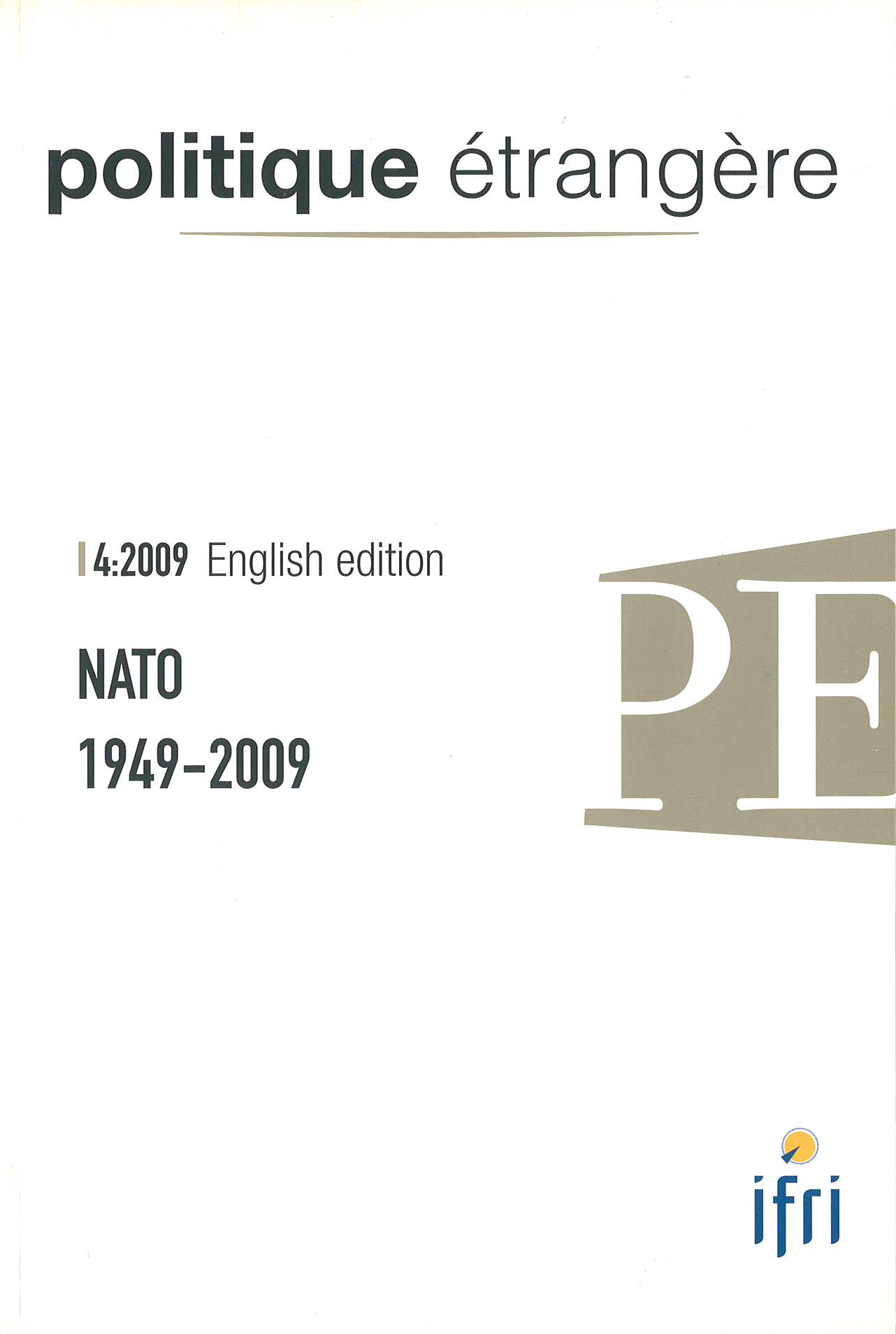
NATO 1949-2009
A little more than 60 years after its creation, questions about the future of the Alliance emerge at the intersection of three observations. First, the complexity of the world, which makes the Alliance ‘inevitable,' since it is a rare source of stability and solidarity in a world marked by uncertainty. Second, American doubt. If the United States was the global policeman for some simple minds at the start of the 1990s, others see the US as having used up its power in the adventurism of the Bush Administration. The future will wipe out these two caricatures. For members of the Alliance, the US will long continue to be a necessary friend, whose power and possible abandonment are feared. The third observation is, obviously, Europe's incurable ethnocentricity: if Europeans knew how to look at the world and their place in it, they would rapidly give up their mediocre powerlessness. History is moving on elsewhere and raises questions on its chaotic path to which others are replying more quickly. In the years ahead, therefore, the Alliance may lorge ahead without Europe or nearly without it, despite the fact that Europeans' specific know-how could be useful.
The Evolution of Communication in Overseas Operational Deployments
The Path to Deep Nuclear Reductions: Dealing with American Conventional Superiority
The Apotheosis of Maneuver Warfare ? Putting into Perspective the Roots and Limits of "blitzkrieg"
Dangerous Weapons in Dangerous Hands: Responding to the Challenges of Chemical and Biological Terrorism
Virtueller Erfolg. Terrorismus- und Aufstandsbekämpfung im 21. Jahrhundert
The World After: Proliferation, Deterrence and Disarmament if the Nuclear Taboo is Broken

Candide in Congo. The Expected Failure of Security Sector Reform (SSR)
Strategic Stability Reconsidered: Prospects for Escalation and Nuclear War in the Middle East
Pakistan : du désordre à la guerre civile ?
While the Pakistani state is on the decline, the militarization of the society increases. By arming the Pashtun tribes so that they stand up to the local Taliban, the Pakistani state fully contributes to its own process of marginalization. That strategy could easily lead to an escalation of the civil war which already rages in the Pashtun belt. Yet, the Taliban challenge only represents one of the threats hanging over Pakistan's future. The decline of the state can be witnessed everywhere.
This content is published in French - Pakistan : du désordre à la guerre civile ?
Ifri, a foundation recognized as being of public utility, relies largely on private donors – companies and individuals – to guarantee its sustainability and intellectual independence. Through their funding, donors help maintain the Institute's position among the world's leading think tanks. By benefiting from an internationally recognized network and expertise, donors refine their understanding of geopolitical risk and its consequences on global politics and the economy. In 2026, Ifri partners with over 90 French and international companies and organizations.

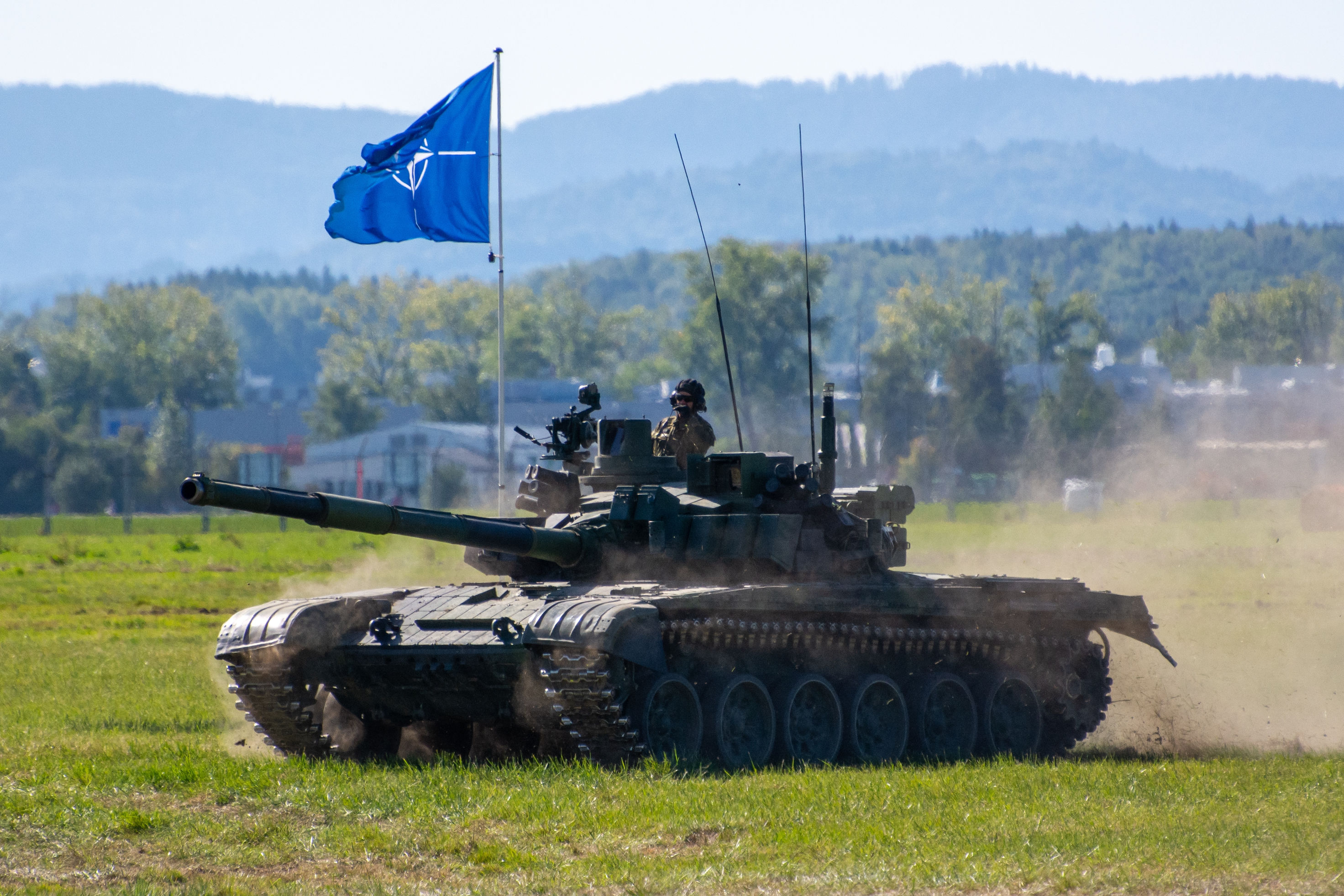
The European & Transatlantic Security Program aims to contribute to the strategic debate by developing analyses around three main axes: European defense and the security architecture of the European continent, institutional and strategic links between the Treaty Organization of North Atlantic (NATO) and the European Union (EU), as well as the evolution of the transatlantic relationship.
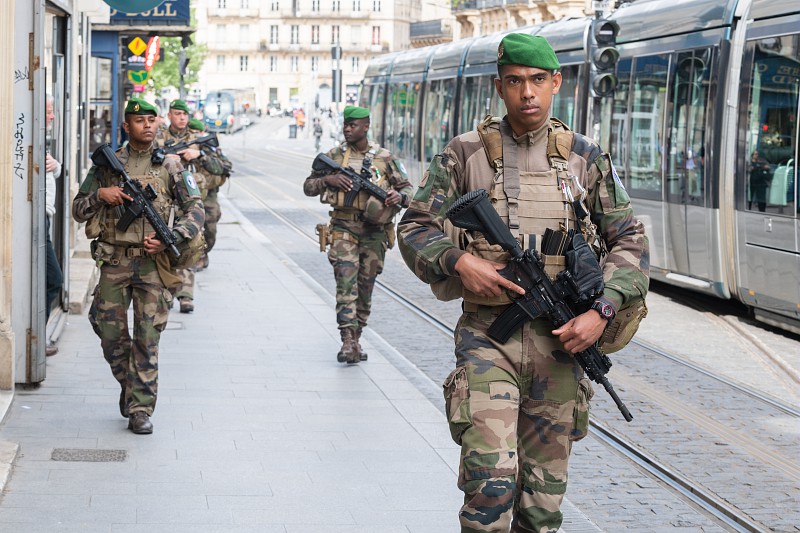
The distinction between internal and external threats is often exaggerated, as the borders are so porous. Conflicts taking place thousands of kilometers from France can have tragic resonances on national territory. Radicalization, terrorism and even organized crime have an international dimension that cannot be ignored.
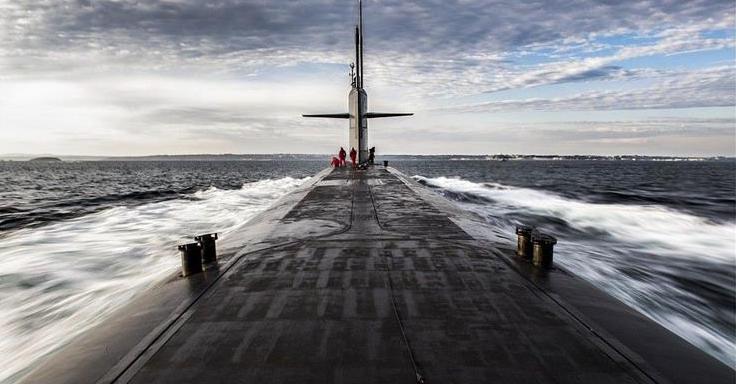
The conflicts in Europe, Asia and the Middle East demonstrate a return of nuclear power to the balance of power. Arsenals are being modernized and expanded, while arms control is collapsing. This research program aims to analyze these phenomena.
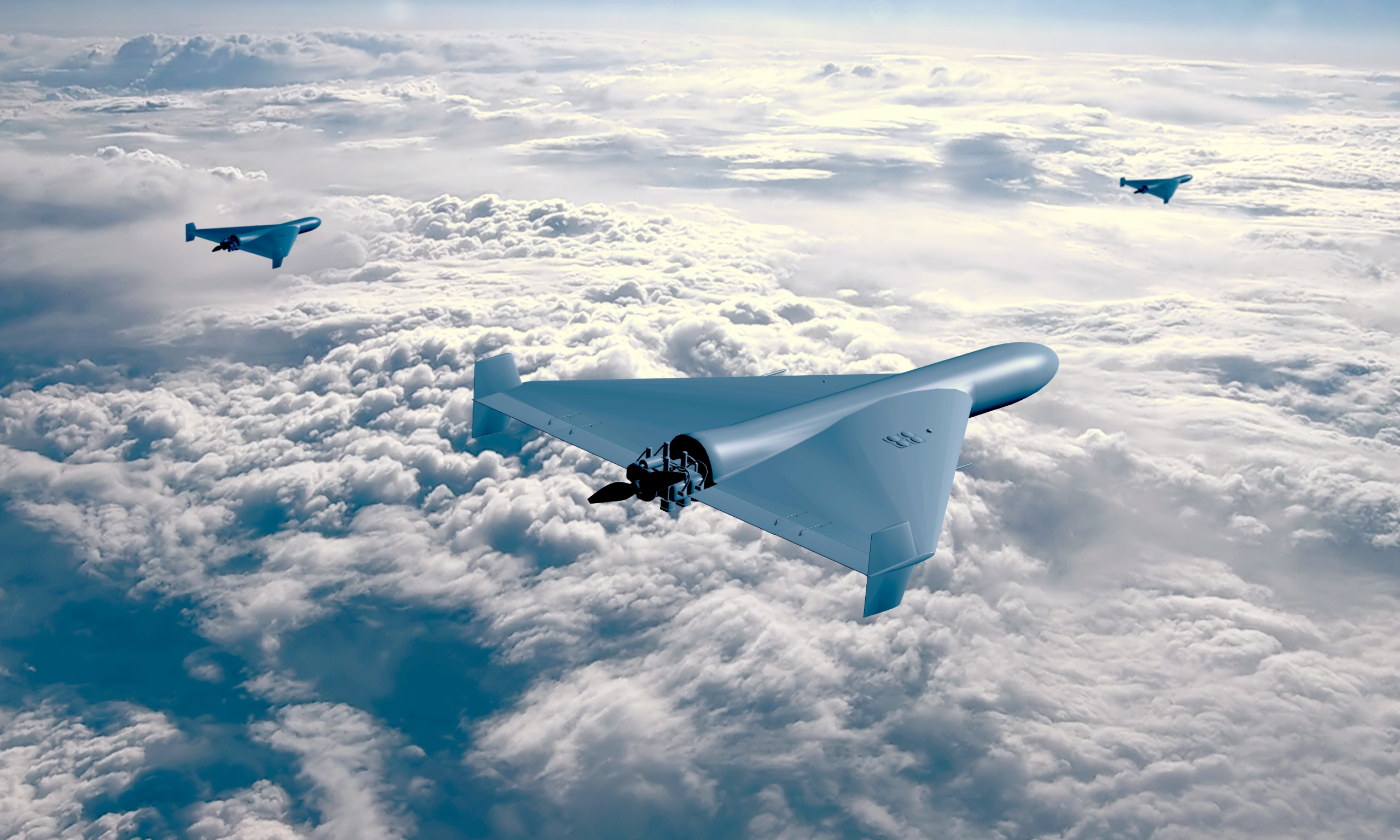
The Observatory of Future Conflicts is a research program carried out by the French Institute of International Relations and the Foundation for Strategic Research on behalf of the three army headquarters aimed at studying developments in tensions and armaments at the horizon 2040 in a transversal perspective, taking into account the issues of each army.
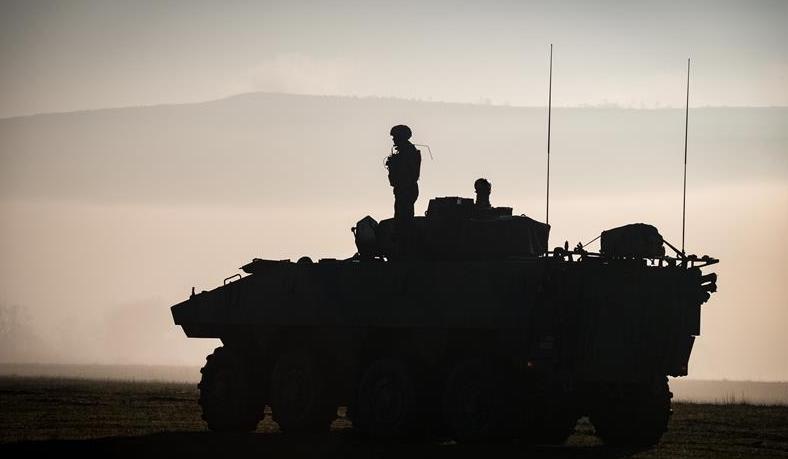
Heir to a tradition dating back to the founding of Ifri, the Security Studies Center provides public and private decision-makers as well as the general public with the keys to understanding power relations and contemporary modes of conflict as well as those to come. Through its positioning at the juncture of politics and operations, the credibility of its civil-military team and the wide distribution of its publications in French and English, the Center for Security Studies constitutes in the French landscape of think tanks a unique center of research and influence on the national and international defense debate.
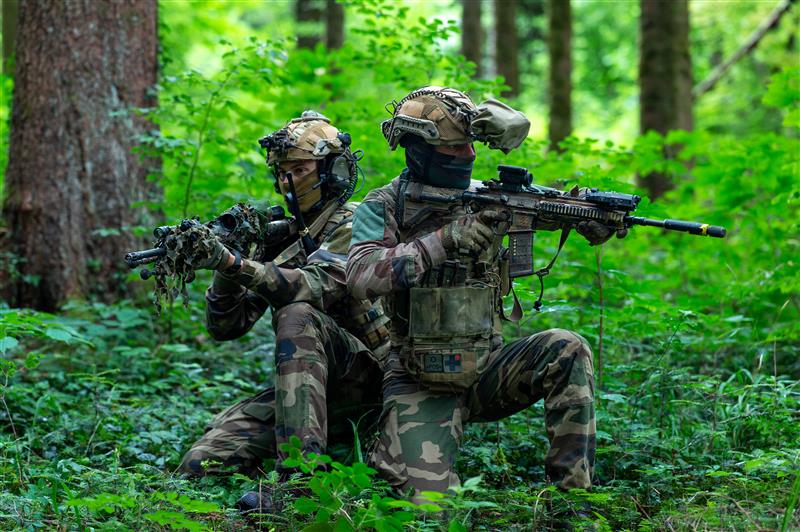
The Defense Research Unit is a program that aims at stimulating the strategic debate by dealing with subjects at the junction of the “technico-operational” and the “political-strategic”. A unique structure in France, it brings together civilian researchers and “military fellows” from each of the three armies to produce work on defense policies, the capability and strategic adaptation of armies, and foresight on tomorrow's conflicts.