





Space
Satellite constellations, new launchers, lunar programs... Innovations in the space sector are shaking up global political, industrial and strategic dynamics.
Related Subjects

China in the Race to Low Earth Orbit: Perspectives on the Future Internet Constellation Guowang
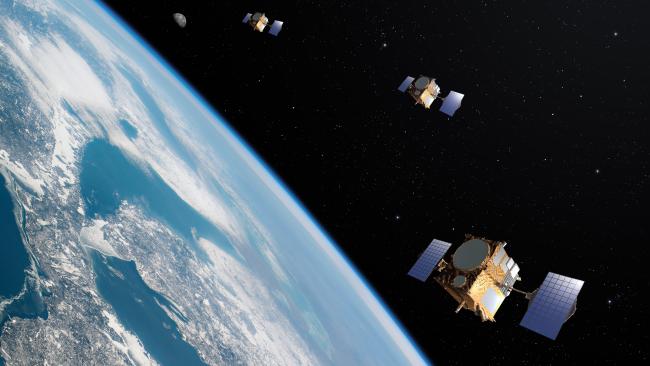
In April 2021, the Chinese government officially, but rather quietly, established a new state-owned enterprise (SOE) named China SatNet. Its mission: build out China’s “mega-constellation” program for low Earth orbiting internet satellites, known as Guowang (“national network”).
How the War in Ukraine is Changing the Space Game
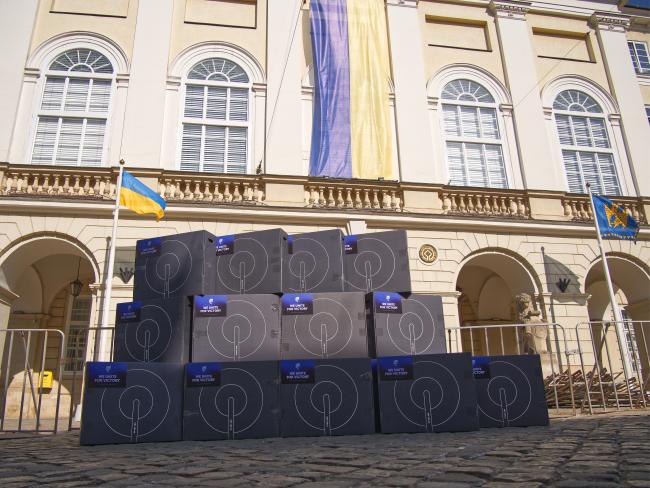
The war in Ukraine has become a showcase for the new commercial paradigm emerging in the space sector (New Space). As such, it seems to confirm the relevance of adaptation efforts led by the United States – more specifically the Pentagon – since the mid-2010s.
China-Russia Cooperation in Space: The Reality behind the Speeches
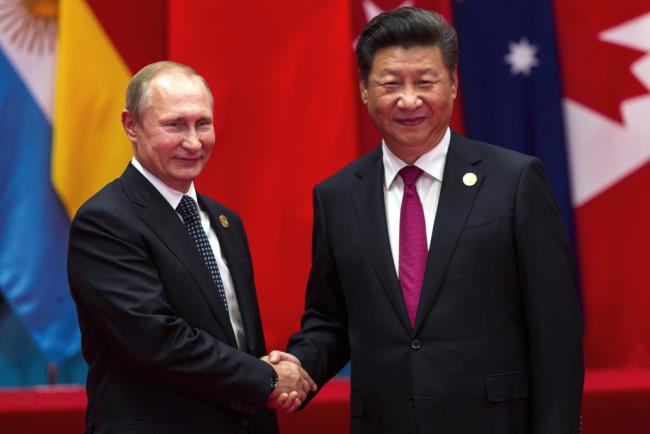
China-Russia cooperation in space has been increasing for the past two decades. This cooperation accelerated after the Crimea crisis in 2014 and culminated with the announcement in 2021 of the joint construction of the International Lunar Research Station (ILRS).

The Space Downstream Sector: Challenges for the Emergence of a European Space Economy
As the commercial anchor of the space sector, the downstream sector plays an essential role in Europe where industry focuses mainly on application markets and where socio-economic considerations have become the main driver of space policy.
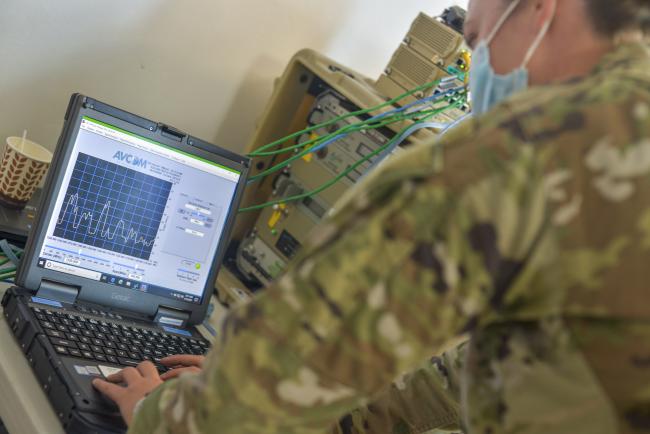
The Military Use of Small Satellites in Orbit
The number of small satellites in orbit has increased rapidly over the last decade, and the growth of this sector is expected to accelerate even more in coming years.
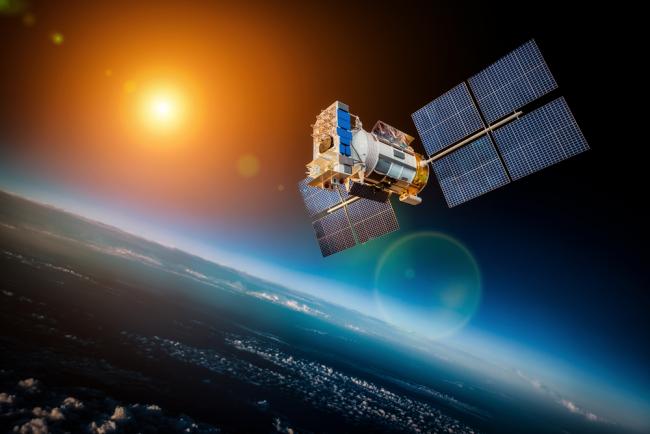
Crowded and Dangerous Orbits: European Space Governance at a Time of Potentially Saturating Programs
The unprecedented growth of space activities, the multiplication as well as diversification of players involved in the exploitation of outer space, and even, more generally, the dependence of all sectors of activity on space infrastructures are some of the main phenomena that have led to a progressive overuse of orbits and to saturation in the frequency spectrum.

China's Quantum Dream: A Giant's Aspirations in the Infinitely Small
Quantum physics, a field little known to the general public and relatively difficult to grasp as its laws are counter-intuitive, constitutes nevertheless a critical field of international strategic competition.
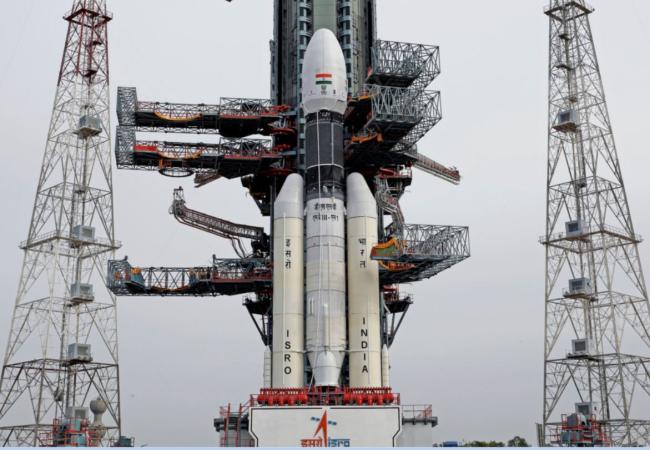
Indian Space Program and its Drivers: Possible Implications for the Global Space Market
India has one of the oldest space programs in the world with space playing a critical role in India’s national development and external power projection capability.

Helium‑3 from the lunar surface for nuclear fusion?
Since 1969, the return of a human mission to the Moon has never seemed so close. Although scientific interest continued to flourish, space programmes had for many decades abandoned it in favour of the International Space Station and missions to explore the solar system.

Video replay - Space and Quantum Technologies: What Strategies and Industrial Models for Europe?
Watch the video replay of the conference organized by Ifri's Geopolitics of Technology program on November 18, 2021.


China Space Station First Step in Country's Plans to Colonize Space
China's far-reaching ambition for a permanent presence in outer space began in earnest on Thursday with the launch of its first crew bound for a new space station.
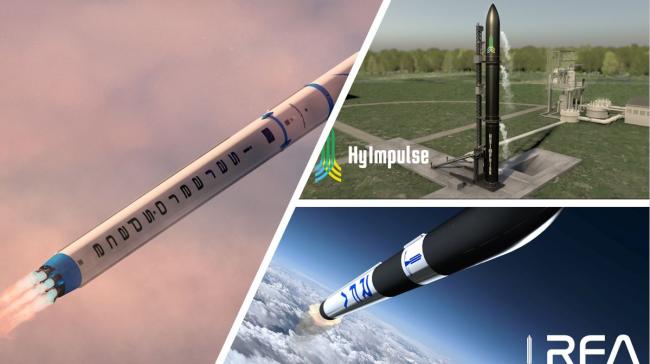
Commercial Space in Europe: A Balancing Act between Physics, Politics and Profession
Satellite constellations have become core elements of the digital transition. Over the next decade, several thousand satellites will have to be launched, to build these constellations. For positioning satellites, preferably in Low Earth Orbit (LEO), reliable and affordable launch services are essential.

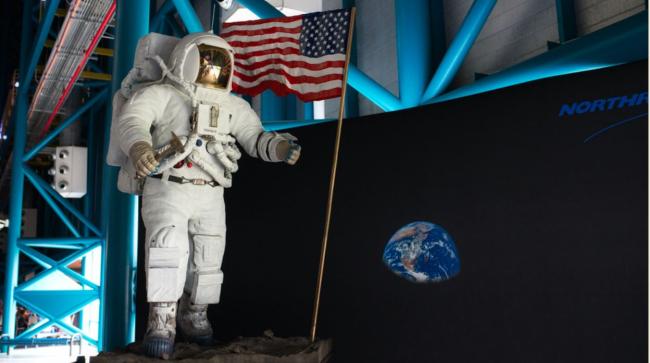
Destination Moon: is it time for us to send astronauts back?
The series For All Mankind (2019) is a fictional alternate history that imagines a world where the Soviet Union was the first power to send an astronaut to the moon. From that starting point, the two rival superpowers compete to establish their own lunar station.

Towards a strategic agenda for the E3. Opportunities and risks for France, Germany and the UK
This paper explores how the E3 format – involving France, Germany and the UK – might develop in response to the challenges presented by the UK’s departure from the EU. The paper outlines how the trilateral format has supported policymaking to date, most notably in dialogue on Iran’s nuclear programme.
New research initiative : European space governance
Eric André Martin, coordinator of the research initiative on European space governance associating Ifri, Deutsche Gesellschaft für Auswärtige Politik (DGAP) and Istituto Affari Internazionali (IAI), presents the European project. The video also looks at China's rise as an international space power. The report was written by researcher Marc Julienne.
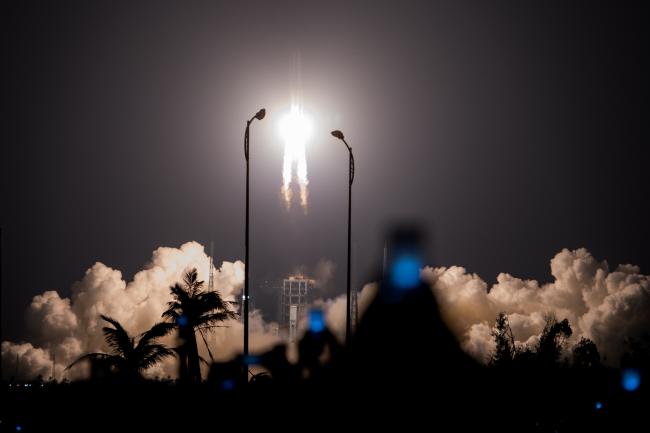
China's Ambitions in Space: The Sky's the Limit
From the dawn of China’s space program in the mid-1950s to the ability to build, launch and operate satellites in low Earth and geosynchronous orbits from the 1980s, the People’s Republic of China (PRC) is in 2021 a complete space power with autonomous access to outer space and to deep-space exploration.
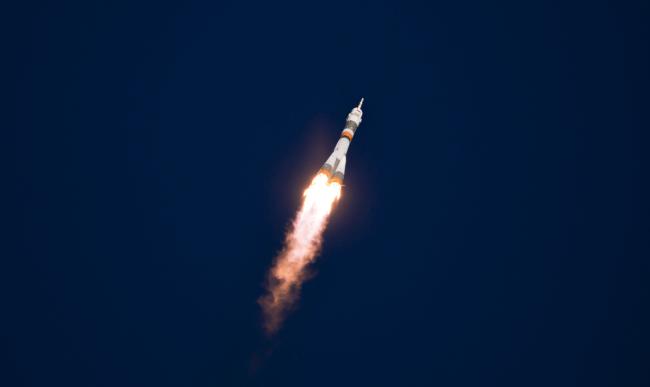
Russia’s Space Policy: The Path of Decline?
With the advent of New Space, Russia is engaged in a race against time to preserve one of its major industrial assets.
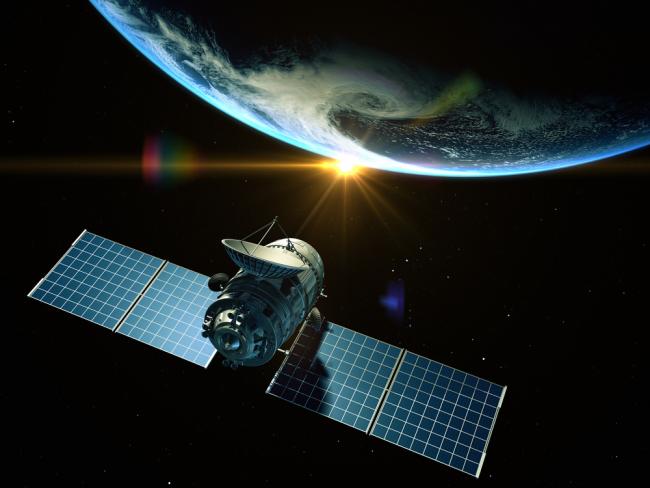
Space as a Key Element of Europe's Digital Sovereignty
At the end of year 2020, the European space sector finds itself at a crossroads between challenges and opportunities. While the 2019 European Space Agency (ESA) Ministerial Conference marked a progression in terms of budgets, a sign of renewed space ambitions, the technological and financial acceleration from the United States represents a disruptive scenario that poses threats to the continuity of European space capabilities.
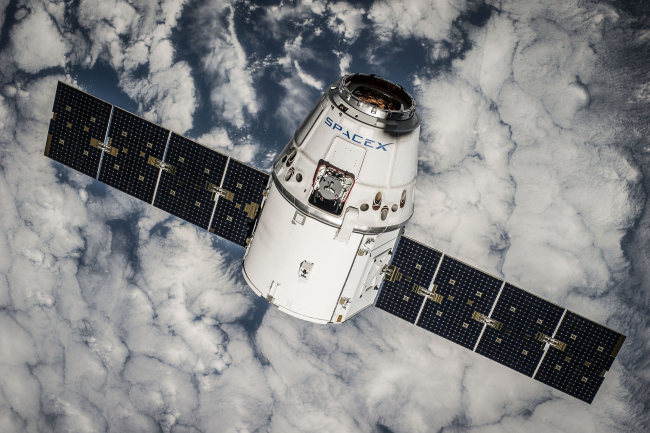
Revolutionary by Design: The US National Security State and Commercialization in the US Space Sector
The US space sector, comprised of its government organizations and its commercial industry, is leading the revolution in space, often called "new space".
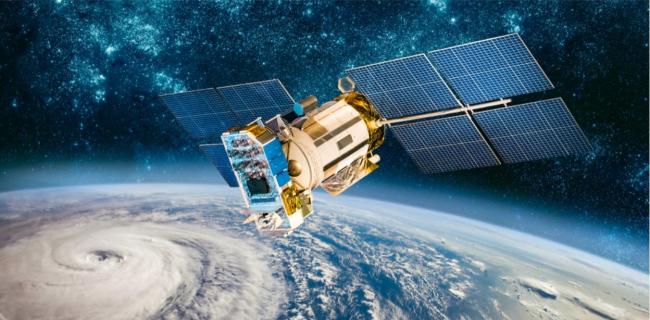
Current and Future Trends in Chinese Counterspace Capabilities
China is in the midst of a long-term effort to develop a world-class space program with a strong military and national security component.
China-Russia Cooperation in Space: The Reality behind the Speeches
China-Russia cooperation in space has been increasing for the past two decades. This cooperation accelerated after the Crimea crisis in 2014 and culminated with the announcement in 2021 of the joint construction of the International Lunar Research Station (ILRS).
Indian Space Program and its Drivers: Possible Implications for the Global Space Market
India has one of the oldest space programs in the world with space playing a critical role in India’s national development and external power projection capability.
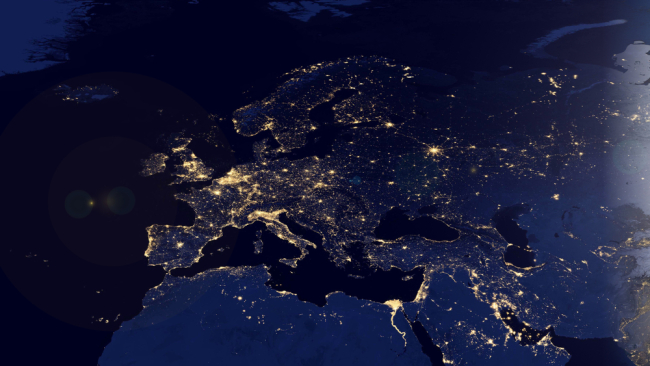
Assessing Europe's Space Dependency and Its Implications
It is a classic exercise to imagine what today’s world would be like if all satellites were shut down. The exact consequences of such a scenario, which is not unlikely given the inherent vulnerability of space systems to natural, accidental and deliberate interferences, are however difficult to appreciate, even for specialists.

European Space Programs and the Digital Challenge
The exploration of space and the use of digital tools and systems have in common to be quite recent in human history but to have changed the world, society and economy by connecting people and things, breaking down borders, and redistributing knowledge, power and control.
Japan's New Dual-Use Space Policy: The Long Road to the 21st Century
Japan’s latest space policy is designed to support a more proactive US-Japan alliance role in containing China, and robustly defend Japan against North Korean ballistic missile threats.
Space in a Changing Environment: a European Point of View
The development of European space activities has long been pursued under the framework of the European Space Agency and other national space agencies. More recently, the emergence of the European Union as a new actor for space has paved the way for a series of initiatives and opportunities.
Development of the Northern Sea Route: How great is the need for satellite observation?
The sea route between Europe and Asia is significantly shorter via Arctic waters than via the Suez Canal. Changes in global climate have resulted in a diminishing of ice in Arctic waters. This has resulted in the Northern Sea Route establishing itself as a viable commercial alternative, which is expected to expand in the years ahead. Satellite observation is one of the methods employed to gather information about ice conditions, weather and oil spills, and is a prerequisite for ensuring the continued development of the new traffic.
Governing the Geostationary Orbit: Orbital Slots and Spectrum Use in an Era of Interference
Outer space, particularly in the telecommunication sector, is benefiting and becoming accessible to more and more actors. But with this trend comes also a reality that is every day more compelling: no meaningful development can be achieved without a clear, stable and predictable interference-free environment for the use and control of all satellites that depend upon ready access to radio frequencies and appropriate geostationary orbital slots to function properly.
The Vegetation Programme
Under human pressure, many changes are taking place in the resources and the environment of Earth. An increasing global population fuels the need for food, natural resources and land. Consequently, the need for maintaining a capacity to observe and understand the Earth system and the biophysical processes has become a key element for the sustainable management of the planet’s natural resources. The SPOT-Vegetation instruments have significantly contributed to reach this goal.
The Lisbon Treaty and the Evolution of European Space Governance
Until the adoption of the Lisbon treaty in December 2007, there was no explicit reference to space in the EU’s constitutive documents. While the European Space Agency has been active in space since the mid-1970s, the Union’s policy remained without a legal basis for space activities. Parallel to the treaties’ evolution however, the EU’s competences never stopped expanding to new fields, bringing it ever closer to space and its various applications. Creativity and dynamic uses of these existing competences have allowed the EU to progressively interfere with the space sector and to get closer to ESA.
Ifri, a foundation recognized as being of public utility, relies largely on private donors – companies and individuals – to guarantee its sustainability and intellectual independence. Through their funding, donors help maintain the Institute's position among the world's leading think tanks. By benefiting from an internationally recognized network and expertise, donors refine their understanding of geopolitical risk and its consequences on global politics and the economy. In 2026, Ifri partners with over 90 French and international companies and organizations.


Space has become a crucial theme in the main international think tanks’ research activities as it entails important strategic, economic, and technological issues.
Since 2001, Ifri has integrated space in its research, notably by ensuring that the political dimension of scientific and human exploration programs is emphasized, and by supporting reflections on the Code of Conduct for Outter Space Activities.
Today, as part of its research agenda, Ifri mobilizes several of its centers and programs to transversally tackle the theme of space, through three main inputs:
- the competition of powers, driven by the Sino-American rivalry;
- critical points related to mastery of space, such as the issue of autonomous access to space or the mega-constellations necessary for the digital revolution;
- these developments’ challenges for Europe and its status as a space power.
Since the Summer 2020, Ifri has been coordinating a tripartite European Space Governance Initiative, together with two other renowned European think tanks: the Deutsche Gesellschaft für Auswärtige Politik (DGAP) in Germany and the Istituto Affari Internazionali (IAI) in Italy.