




Space
Satellite constellations, new launchers, lunar programs... Innovations in the space sector are shaking up global political, industrial and strategic dynamics.
Related Subjects

India’s Space Program - International Competition and Evolution
India’s space program has grown and evolved significantly in the last five decades. The program originally focused on developing space assets that provided direct developmental benefits, for example telecommunications and remote sensing satellites that helped both in improving communication facilities and giving direct assistance to India’s farmers. But over time, India has shifted a part of its focus towards space exploration and other high-profile missions that do not have as clear a developmental purpose as earlier. This includes, for example, India’s Mars and Moon exploratory missions. Overall, India has been fairly successful in these efforts and its space program has become a comprehensive one that includes not only a robust launch capacity and very large remote sensing satellite systems, but also a very well rounded scientific and deep space exploratory program.
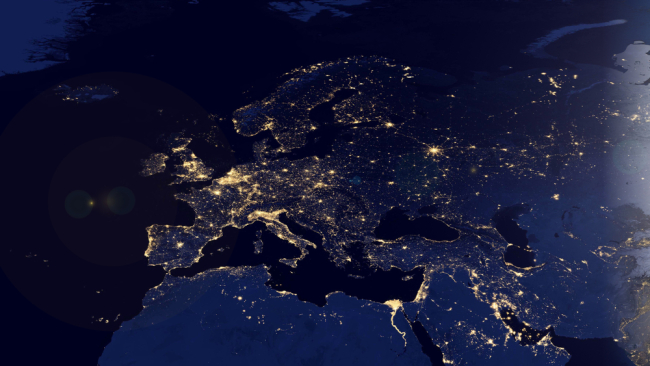
Assessing Europe's Space Dependency and Its Implications
It is a classic exercise to imagine what today’s world would be like if all satellites were shut down. The exact consequences of such a scenario, which is not unlikely given the inherent vulnerability of space systems to natural, accidental and deliberate interferences, are however difficult to appreciate, even for specialists.

European Space Programs and the Digital Challenge
The exploration of space and the use of digital tools and systems have in common to be quite recent in human history but to have changed the world, society and economy by connecting people and things, breaking down borders, and redistributing knowledge, power and control.
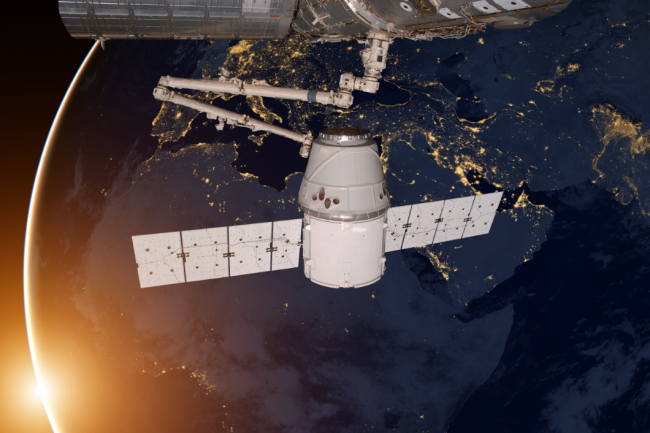
New Space: The Impact of the Digital Revolution on Space Actors and Policies in Europe
Like most “traditional” industries, for several years the space industry has been faced with the challenges of digital technology. So, the European space industry is dealing with new actors from digital technology, which are mainly American start-ups or Silicon Valley giants such as GAFA (Google, Amazon, Facebook and Apple)
Japan's New Dual-Use Space Policy: The Long Road to the 21st Century
Japan’s latest space policy is designed to support a more proactive US-Japan alliance role in containing China, and robustly defend Japan against North Korean ballistic missile threats.
Space Collaboration between India and France: Towards a New Era
In the sphere of space research, France-India collaboration began in the early 1960s, with France providing assistance to India’s Rohini sounding rockets programme. Over the years, France has played a constructive role in helping India to develop its ground and space infrastructure, as well as its launching platforms and human resources. In point of fact, France has emerged as one of India’s most dependable partner in the realm of space.
Space in a Changing Environment: a European Point of View
The development of European space activities has long been pursued under the framework of the European Space Agency and other national space agencies. More recently, the emergence of the European Union as a new actor for space has paved the way for a series of initiatives and opportunities.
Development of the Northern Sea Route: How great is the need for satellite observation?
The sea route between Europe and Asia is significantly shorter via Arctic waters than via the Suez Canal. Changes in global climate have resulted in a diminishing of ice in Arctic waters. This has resulted in the Northern Sea Route establishing itself as a viable commercial alternative, which is expected to expand in the years ahead. Satellite observation is one of the methods employed to gather information about ice conditions, weather and oil spills, and is a prerequisite for ensuring the continued development of the new traffic.
Governing the Geostationary Orbit: Orbital Slots and Spectrum Use in an Era of Interference
Outer space, particularly in the telecommunication sector, is benefiting and becoming accessible to more and more actors. But with this trend comes also a reality that is every day more compelling: no meaningful development can be achieved without a clear, stable and predictable interference-free environment for the use and control of all satellites that depend upon ready access to radio frequencies and appropriate geostationary orbital slots to function properly.
The Vegetation Programme
Under human pressure, many changes are taking place in the resources and the environment of Earth. An increasing global population fuels the need for food, natural resources and land. Consequently, the need for maintaining a capacity to observe and understand the Earth system and the biophysical processes has become a key element for the sustainable management of the planet’s natural resources. The SPOT-Vegetation instruments have significantly contributed to reach this goal.
The Lisbon Treaty and the Evolution of European Space Governance
Until the adoption of the Lisbon treaty in December 2007, there was no explicit reference to space in the EU’s constitutive documents. While the European Space Agency has been active in space since the mid-1970s, the Union’s policy remained without a legal basis for space activities. Parallel to the treaties’ evolution however, the EU’s competences never stopped expanding to new fields, bringing it ever closer to space and its various applications. Creativity and dynamic uses of these existing competences have allowed the EU to progressively interfere with the space sector and to get closer to ESA.
Launcher policy in Europe: from symbol to the market?
Launcher policy will be one of the major issues discussed at the upcoming ESA Council at Ministerial Level. Europe is at the crossroads, as it needs to find the adequate balance between political necessities (ensuring an autonomous access to space) and economic realities (reducing costs).

2012, a turning point for Europe in space
In 2012, several crucial decisions lie ahead, most notably at the ESA Ministerial Council next fall and regarding the status of space within the next MFF of the EU. These will reveal the degree of political will to pursue an ambitious ESP in times of economic and financial constraint.
Key Trends in the European Earth Observation Sector
An ambitious Earth Observation (EO) policy could bring significant benefits to Europe both regarding the fight against climate change and the competitiveness of its EO industry and service sectors.
European Space Governance: The Outlook
The Ifri/SWF conference of 13 September 2011 provided an overview of the evolution of European space governance. It was convened almost two years after the adoption of the Lisbon Treaty and five months after the release of the European Commission (EC) Communication on a future European space strategy.
2012, a turning point for Europe in space
In 2012, several crucial decisions lie ahead, most notably at the ESA Ministerial Council next fall and regarding the status of space within the next MFF of the EU. These will reveal the degree of political will to pursue an ambitious ESP in times of economic and financial constraint.
Key Trends in the European Earth Observation Sector
An ambitious Earth Observation (EO) policy could bring significant benefits to Europe both regarding the fight against climate change and the competitiveness of its EO industry and service sectors.
Space Weather and NEOs in the European Space Policy
Although often overshadowed by a focus on security concerns, Space weather and NEOs are important elements of Europe’s SSA program.
The Use of Space for Maritime Security in Europe
The EU is currently developing a Maritime Security Strategy. Space should be integrated in that effort, given its potential for maritime surveillance.
The Development of Public-Private Partnerships in the European Satcom Sector
Public-Private Partnerships (PPPs) could help to enhance the societal benefits of communication satellites. However, European public entities must avoid the mistakes made during the Galileo concession negotiations.
GMES, the Second Flagship
The Global Monitoring for Environment and Security (GMES) Program is often overshadowed by what is perceived to be the flagship program of European space, Galileo. As a matter of fact, GMES is just as important and faces many similar challenges.
Final Call for a European Space Strategy
Space poses both an opportunity and a challenge for Europe. And so does the new provision of the Lisbon Treaty - article 189 TFEU - that awards the EU an explicit competency on space.
Galileo, the Long Road to European Autonomy
Galileo is one of the most ambitious programs ever managed by the EU. As such, it illustrates the challenges and the opportunities offered by the development of a European Space Policy at the political, industrial, economic and international level.
The Evolving Architecture of Space and Security
Today, Europe is taking initiatives both to prevent space weaponization and to develop space militarization. While national States remain the central players in this regard, the intergovernmental European Space Agency is increasingly involved in security-related activities and the European Union is showing growing political ambitions in this area.
Ifri, a foundation recognized as being of public utility, relies largely on private donors – companies and individuals – to guarantee its sustainability and intellectual independence. Through their funding, donors help maintain the Institute's position among the world's leading think tanks. By benefiting from an internationally recognized network and expertise, donors refine their understanding of geopolitical risk and its consequences on global politics and the economy. In 2026, Ifri partners with over 90 French and international companies and organizations.


Space has become a crucial theme in the main international think tanks’ research activities as it entails important strategic, economic, and technological issues.
Since 2001, Ifri has integrated space in its research, notably by ensuring that the political dimension of scientific and human exploration programs is emphasized, and by supporting reflections on the Code of Conduct for Outter Space Activities.
Today, as part of its research agenda, Ifri mobilizes several of its centers and programs to transversally tackle the theme of space, through three main inputs:
- the competition of powers, driven by the Sino-American rivalry;
- critical points related to mastery of space, such as the issue of autonomous access to space or the mega-constellations necessary for the digital revolution;
- these developments’ challenges for Europe and its status as a space power.
Since the Summer 2020, Ifri has been coordinating a tripartite European Space Governance Initiative, together with two other renowned European think tanks: the Deutsche Gesellschaft für Auswärtige Politik (DGAP) in Germany and the Istituto Affari Internazionali (IAI) in Italy.