


Has the European Union risen up to the challenges of geopolitics? Europe after the Czech Presidency of the Council

Informations pratiques
Thématiques et régions
Centres et programmes liés
The invasion of Ukraine by the Russian Federation last year has completely overhauled the geopolitical situation on the European continent in 2022. It has exposed critical vulnerabilities in the European Union but also demonstrated that Europeans are able to act quickly, effectively, and in a united way.
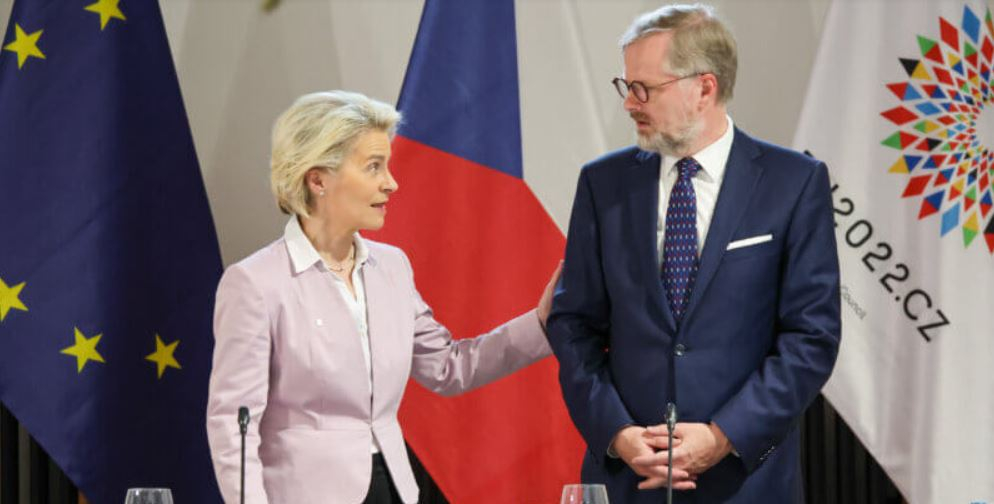
The EU’s response has been far-reaching, with measures focusing both on the short-term, e.g. on refugees, sanctions, energy, defense, etc., and the long-run, e.g. on Ukraine’s post-war recovery, European political community, etc.. After Paris in the first semester 2022, the Czech Presidency of the Council has played a key-role in advancing this strategic agenda.
The EU’s response has been far-reaching, with measures focusing both on the short-term, e.g. on refugees, sanctions, energy, defense, etc., and the long-run, e.g. on Ukraine’s post-war recovery, European political community, etc.. After Paris in the first semester 2022, the Czech Presidency of the Council has played a key-role in advancing this strategic agenda. What assessment can be done of this Presidency of the Council and Prague’s diplomatic efforts in turbulent times? What course has the EU set for itself in the new geopolitical context? What common horizon do France and the Czech Republic draw, together with Austria and Slovakia, for EU’s global role in the age of uncertainty?
14h00 Introduction
Dietmar Schweisgut, Secretary General of the Austro-French Centre for Rapprochement in Europe, Vienna
14h05 Panel discussion
Martin Vokálek, Executive Director of the EUROPEUM Institute for European Policy, Prague
Georgina Wright, Senior Fellow and Director of Institut Montaigne´s Europe Programme, Paris
Vladislava Gubalova, Senior Research Fellow at the Globsec Policy Institute, Bratislava
Paul Schmidt, Secretary General, Austrian Society for European Politics, Vienna
Lívia Benko, Research Fellow, Austrian Institute for European and Security Policy, Vienna
Moderation
Dietmar Schweisgut, Secretary General of the Austro-French Centre for Rapprochement in Europe, Vienna
15h15 End of the discussion
Cette visioconférence se tiendra en anglais, sans traduction.
Inscriptions : https://form.jotform.com/230093311603341
Les personnes inscrites recevront le lien Zoom avant l'évènement

Sujets liés
Autres événements
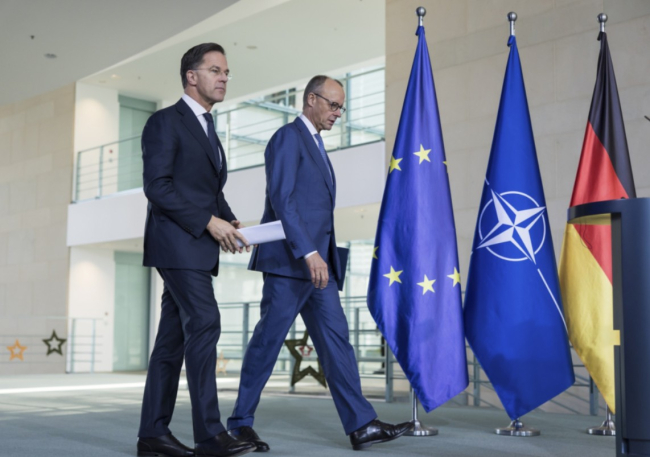
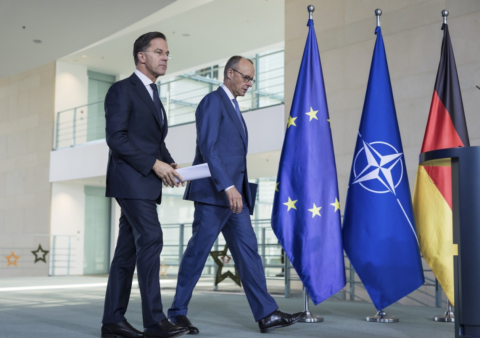
Merz, an I. Quelle diplomatie pour l’Allemagne ?
Qualifié de « chancelier des affaires étrangères », Friedrich Merz imprime une nouvelle dynamique à la diplomatie allemande. Son approche, plus directe et assumée, vise à affirmer la crédibilité stratégique de l’Allemagne, à sécuriser ses intérêts économiques dans un contexte de rivalités géoéconomiques accrues, et à redéfinir ses partenariats au-delà du seul cadre européen.
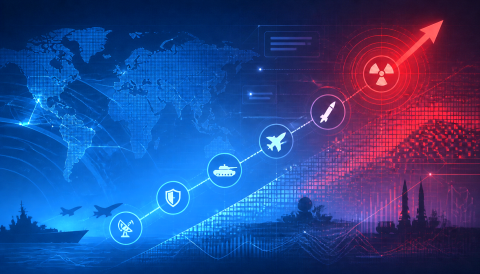
Dissuader pendant la guerre : quelle pertinence de l'intrawar deterrence ?
Depuis le retour de la guerre de haute intensité en Europe et la montée des tensions stratégiques en Indo-Pacifique, la question de la gestion de l’escalade entre puissances nucléaires s’est imposée au cœur des réflexions stratégiques américaines et, dans une moindre mesure, européennes.
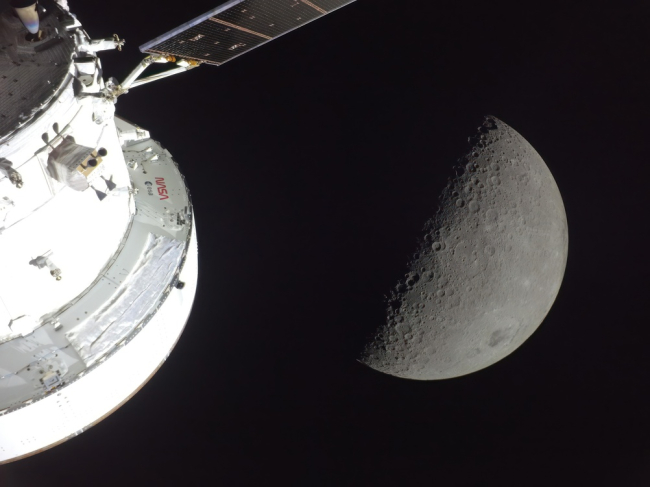
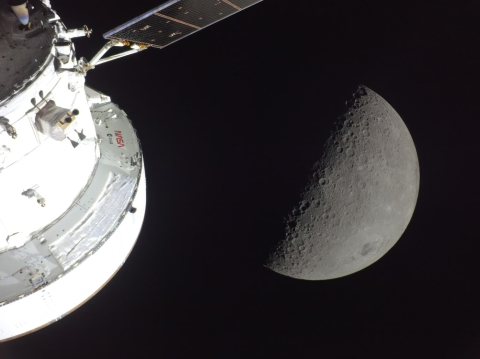
La nouvelle course à la Lune : quels enjeux géopolitiques ?
Alors que les États-Unis, la Chine et l'Inde concrétisent leurs ambitions lunaires, l'Europe cherche encore à définir sa position : doit-elle être un partenaire fiable ou un acteur stratégique autonome ? Cette conférence examinera les enjeux de cette nouvelle course à la Lune et l'intérêt pour l'Europe de s'affirmer comme une puissance lunaire à travers ses partenariats et ses ambitions industrielles.