



NATO-Russia: Is the ‘Russian Question’ European?
The proliferation of theaters (in Europe, the Caucasus, Central Asia, the Far East, the Middle East and the Arctic) and cross-cutting issues (proliferation, disarmament, energy, arms sales) demonstrate the overall importance of the NATO/Russia relationship.
Since 1991, the relationship between the North Atlantic Treaty Organization (NATO) and the Russian Federation has been the main barometer of Russo-Western relations. During the Cold War, the Alliance served primarily to deal with the ‘German question’ and to ward off the ‘Soviet threat.’ Following German reunification and the disappearance of the Soviet bloc, NATO lost a priori its justification. But the Alliance managed to transform itself by redefining its missions and making enlargement its new raison d’être . During the Clinton years, Washington used the Alliance as an instrument for the democratization, reunification and stabilization of Europe, as Russia’s geopolitical status declined. The view from Moscow was that this policy deliberately ignored Russia’s interests. Now, Russia’s resurgence is changing the balance of power, in the wake of transatlantic differences over Iraq and as the NATO countries are bogged down in Afghanistan. This renewed influence is variously interpreted in Washington, and hence within the Alliance. It is obliging the Americans and the Europeans to reconsider the strategic framework in which they view the ‘Russian question,’ while the US/Europe/Russia triangle has not yet stabilized. In this perspective, it can be said that Kabul and Tehran are much more important than Kyiv and Tbilisi for the future of NATO.
The causes of misunderstanding
Three fractures: 1999, 1997 and 2004
The campaign in Kosovo in 1999 is generally held to be the turning-point in Russo-Western relations. This fracture is most often explained by Russia’s feeling of military decline, with the Pristina episode being interpreted as an illustration of Russia’s capacity to make trouble. This campaign did not just hurt NATO’s image in Russia, but also in Belarus and Ukraine. For Moscow, the lesson was threefold and contributed to explaining its subsequent inflexibility.
First, for Vladimir Putin, Kosovo revealed the necessity of reconsidering Russia’s security policy. The Russian elites became aware of their strategic marginalization, leading to a strong feeling of humiliation and great resentment. Subsequently, this was often exaggerated. Nevertheless, this is all that NATO understood, exaggerating its own politico-military potential and downplaying the strictly Russian aspect of the issue. […]
OUTLINE
- The causes of misunderstanding
- Three fractures: 1999, 1997 and 2004
- The grandeur and misery of public diplomacy
- Confrontations and lessons - Outline of the ‘Russian Question’
- Russia as a source of security or insecurity
- European security at the heart of the US/Europe/Russia triangle
- The US/Europe/Russian triangle at the center of world security
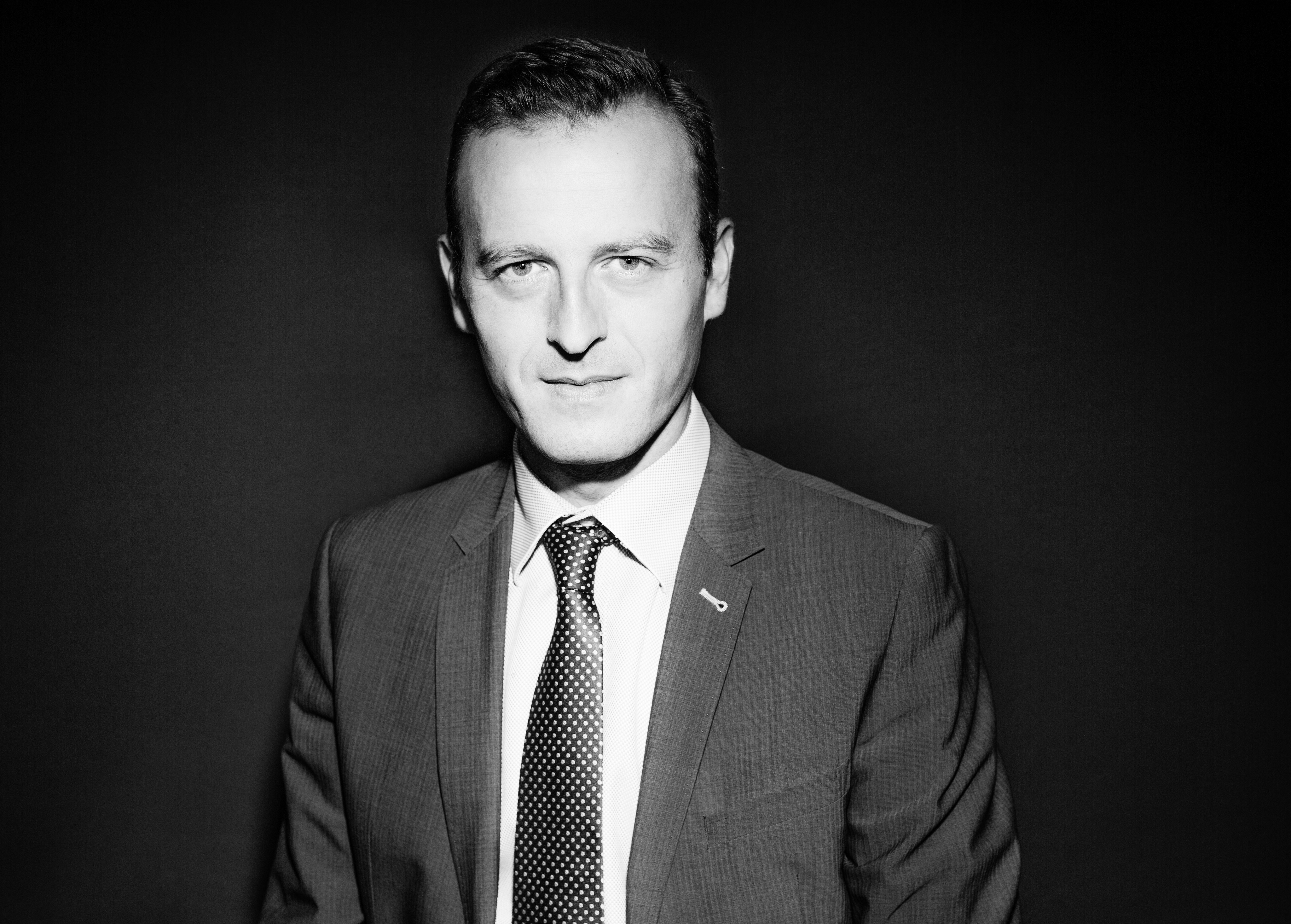
Thomas Gomart is Director of the French Institute of International Relations (Ifri).
This paper has been translated into English by Nicholas Sowels.

Available in:
Themes and regions
Share
This page contains only a summary of our work. If you would like to have access to all the information from our research on the subject, you can download the full version in PDF format.
NATO-Russia: Is the ‘Russian Question’ European?

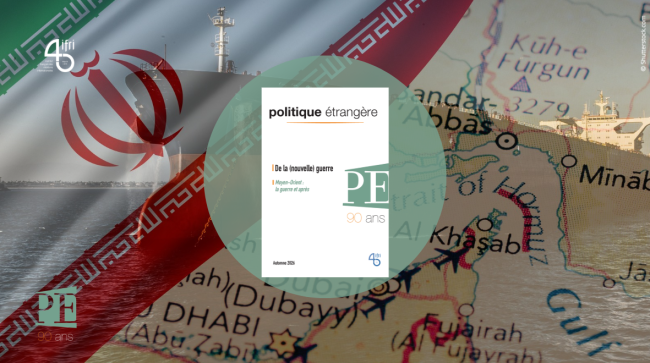
Iran: Anatomy of a Power at War
The elimination of Supreme Leader Ali Khamenei and several high-ranking officials at the outset of the 2026 American-Israeli operation did not succeed in bringing down the Iranian regime. The regime had prepared for such a scenario, notably by decentralizing its structures. Moreover, it continues to adapt to war. The power of the Islamic Revolutionary Guard Corps is growing at the expense of the Shiite clergy. The security apparatus defends the country’s sovereignty and justifies its actions in the name of raison d’état.
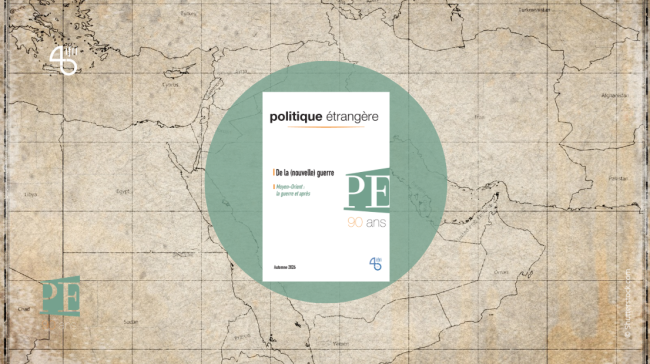
“Remodeling” the Middle East?
Chaos continues to spread, seemingly without end, across the Middle East. The Israeli-American attack on Iran has resulted in a clear military and diplomatic failure, but it is paving the way for a regional realignment, the consequences of which remain uncertain. New regional groupings are taking shape, either centered around Israel or built on the prospect of coexistence with Tehran, alongside a decline in American influence and the marginalization of Europe, while China maintains a low-key presence.
Silicon Valley and War: Lessons from Ukraine
Over the course of international conflicts, and particularly in Ukraine, major tech companies have emerged as central actors. Initially subject to wartime maneuvering, they have since become decisive actors in their own right, privatizing a significant share of wartime exchanges, shaping the information flows of societies, and presenting themselves as providers of security. This situation raises important questions about states’ autonomy in making decisions and taking action.
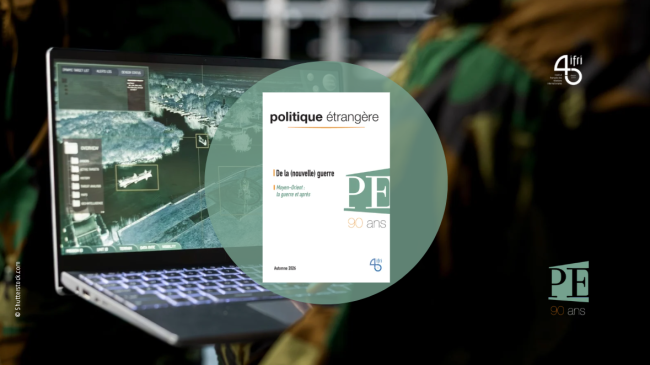
Does Artificial Intelligence Change the Nature of War?
From Gaza to Ukraine and Iran, current conflicts are being shaped by the arrival of artificial intelligence and robots on the battlefield. The changes under way are so profound that humans risk rapidly losing control over entire aspects of the conduct of military operations. While these technological developments are altering the character of war, their impact on the very nature of war itself remains a matter of debate.