



Capacity Mechanisms : EU or National Issue? Are Capacity Remuneration Mechanisms Helping to Build the Market or Just a Symptom of What Does Not Work ?
In a competitive energy system, generation investment choices are let to investors. It is then the responsibility of the market actors to invest and ensure peak, medium and base load generation, based on market perspectives and trends. If through actors" investments the stability of the system cannot be ensured (because, for example, peak generation is not sufficient to satisfy demand), some measures have to be taken. These can have economic and system integrity impacts on neighboring systems, especially if they are connected. This is precisely what is happening in the European electricity market.
While the internal electricity market should be completed by 2014, the adoption by Member States of capacity remuneration mechanisms in an uncoordinated way may lead to new market distortions. Whereas national capacity remuneration mechanisms (CRMs) already exist in several European countries (e.g. Italy, Spain, Sweden), others have taken steps in the past months to implement CRMs (France, UK) or contemplated to introduce them (Germany). After the puzzle of more than 27 different regimes for incentivizing renewables, the same heterogeneity will appear in the capacity markets if no coherent and Europe-wide framework is proposed. While increased interconnections and market coupling will lead to more efficient and liquid markets at regional and EU levels, the opposite will happen if Member States adopt national solutions without looking beyond their borders.
In order to understand why we have come this point, it is essential to start from the roots of the problem and to throw light on some false beliefs.
It would be much easier to blame market liberalization and unbundling or RES integration into the market. The truth is that both measures were important. Timing showed that the RES production is developing very fast and creates local over capacity in some national systems, while when there is no wind or sun, the conventional plants are still needed to supply the customers, ensuring thus a backup function for variable RES.
(Download the pdf to read the full text)
This page contains only a summary of our work. If you would like to have access to all the information from our research on the subject, you can download the full version in PDF format.
Capacity Mechanisms : EU or National Issue? Are Capacity Remuneration Mechanisms Helping to Build the Market or Just a Symptom of What Does Not Work ?


Center for Energy & Climate
Ifri's Energy and Climate Center carries out activities and research on the geopolitical and geoeconomic issues of energy transitions such as energy security, competitiveness, control of value chains, and acceptability. Specialized in the study of European energy/climate policies as well as energy markets in Europe and around the world, its work also focuses on the energy and climate strategies of major powers such as the United States, China or India. It offers recognized expertise, enriched by international collaborations and events, particularly in Paris and Brussels.
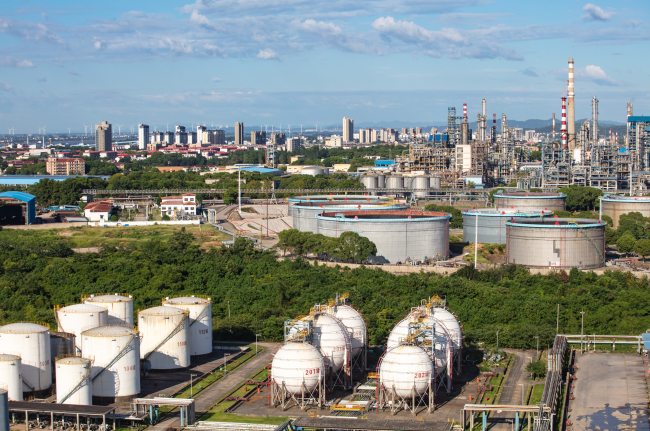
China’s Hydrogen Economy Five Years On
China’s hydrogen sector is not new. It is the world’s largest industrial hydrogen system, rooted in ammonia, methanol, refining, coal chemicals and by-product gas streams.
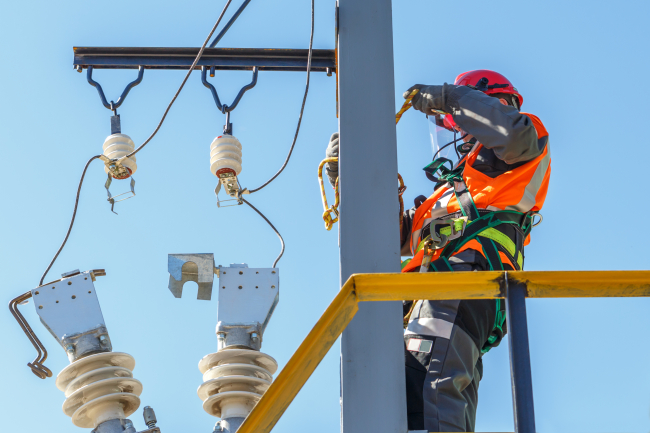
27 Plans for 2027: Turning the Electrification Action Plan into National Action
With the aim of structurally reducing the European economy’s dependence on fossil fuel imports and accelerating the energy transition, the European Commission has opted for electrification.
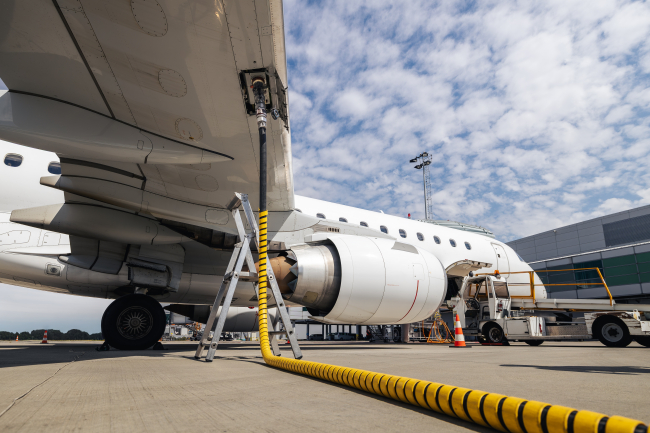
How to Make European e-SAF Production under RefuelEU Aviation Fly?
Three and a half years before the scheduled entry into force of the European regulation ReFuelEU Aviation (RFEUA), which requires aviation fuel suppliers at Union airports to offer a sustainable synthetic alternative (e-SAF), no sizeable commercial production unit (greater than 10,000 tons per year) is active within Europe yet, nor has it even passed the Final Investment Decision (FID). Is a major step in the European Union (EU) plans for decarbonizing air transport at risk of not happening, or at least being postponed for several years? Is Europe losing its bet to create a market for e-SAF? Under what conditions can this bet still be won? Could sovereignty and energy security preoccupations unlock necessary public support and help to overcome economic, financial, logistical or administrative obstacles?
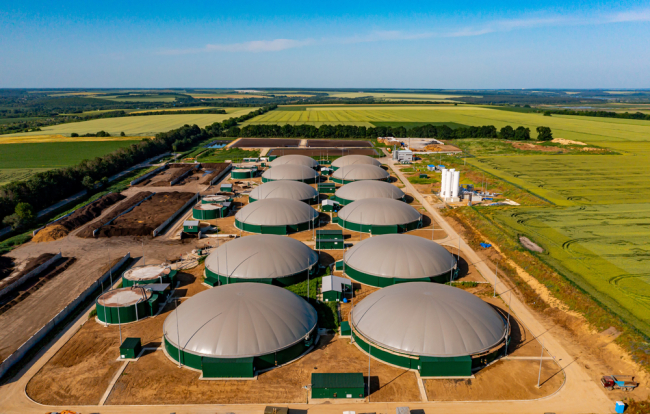
The European Biomethane Sector at a Critical Juncture: Stronger Policy Alignment Will Matter
The European biomethane sector is at a critical juncture.