

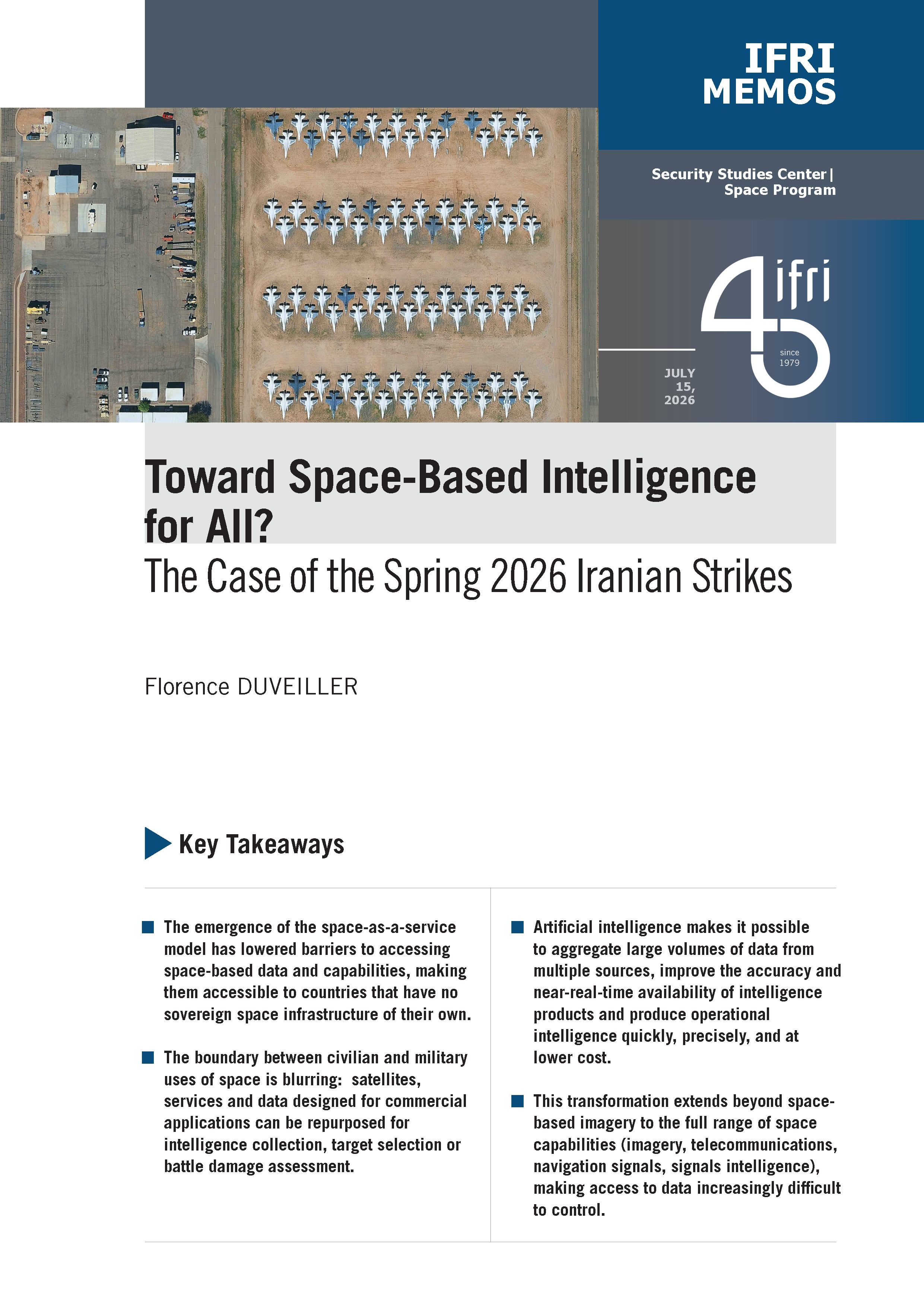

Solar Radiation Management: A Climate Tool with Geopolitical Implications
The Paris Agreement (2015) aims to keep global warming below 2 °C, preferably 1.5 °C, above pre-industrial levels. Mitigation (reducing greenhouse gas emissions) remains the core tool for reaching net carbon neutrality by mid-century. However, a temperature overshoot is anticipated. The United Nations Environment Programme (UNEP) forecasts that the 1.5 °C threshold will be exceeded in the coming years, with warming potentially peaking between 2.2 °C and 3.6 °C this century. Against this backdrop, three trends characterize the climate policy debate.

First, while initially viewed as distracting from mitigation, adaptation measures—such as building seawalls, selecting heat-resistant crops, or greening urban areas—are now fully integrated into the policy toolbox.
Second, carbon dioxide removal (CDR) has emerged as a contentious complement to mitigation and adaptation. Since 2007, the Intergovernmental Panel on Climate Change (IPCC) has included CDR methods in most scenarios that meet the 2 °C target. Forestry, bioenergy with carbon capture and storage (BECCS), or direct air capture and storage (DACS) could hasten carbon neutrality by compensating for residual emissions from hard-to-abate sectors like cement production and aviation. This could lead to negative emissions (where sequestered CO2 exceeds emitted CO2), causing atmospheric concentrations to decline.
Third, solar radiation management (SRM)—techniques that aim to stimulate Earth’s albedo, reflect part of solar radiation and induce artificial cooling—are garnering significant attention.
This Memo is devoted to SRM, specifically stratospheric aerosol injection (SAI), which seeks to mimic the cooling effect of particles released during volcanic eruptions. Since Nobel laureate Paul Crutzen warned in 2006 that SAI should be investigated if mitigation falls short, SAI has dominated SRM discussions. This prominence stems from a lack of major technological hurdles, modest projected costs, and the promise of rapid cooling with immediate benefits against heatwaves, droughts, hurricanes, and coral bleaching. Yet SAI also carries potentially deleterious side effects, including acid rain, ozone layer depletion, hydrological disruption, and the risk of termination shock.
Titre
Key Takeaways
Solar radiation management (SRM) could help cushion a climate overshoot, buying time to scale up mitigation and carbon dioxide removal (CDR).
Weak governance and low awareness may precipitate climate dominance by major powers, particularly at the expense of the Global South and marginalized communities.
Stratospheric aerosol injection (SAI) in particular could be rapidly deployed at scale despite high risks, with the Arctic region as a likely testing ground.
France and the European Union should adopt a clear stance on SRM, establishing common institutions and regulations.

Available in:
Themes and regions
ISBN / ISSN
Share
This page contains only a summary of our work. If you would like to have access to all the information from our research on the subject, you can download the full version in PDF format.
Solar Radiation Management: A Climate Tool with Geopolitical Implications

Center for Energy & Climate
Ifri's Energy and Climate Center carries out activities and research on the geopolitical and geoeconomic issues of energy transitions such as energy security, competitiveness, control of value chains, and acceptability. Specialized in the study of European energy/climate policies as well as energy markets in Europe and around the world, its work also focuses on the energy and climate strategies of major powers such as the United States, China or India. It offers recognized expertise, enriched by international collaborations and events, particularly in Paris and Brussels.

Strategic Redundancy beyond Hormuz: Alternative Oil and Gas Corridors and Türkiye’s Emerging Role
The central question raised by the present crisis in the Gulf and the disruption of navigation through the Strait of Hormuz is not simply how quickly and lastingly normal flows can be restored, but whether the regional energy architecture can continue to rely so heavily upon a single maritime corridor.

Mining Nationalism and Export Restrictions: The Challenges of Economic Development
Since the end of the 2000s and especially the 2010s, resource nationalism has been on the rise.

China’s Hydrogen Economy Five Years On
China’s hydrogen sector is not new. It is the world’s largest industrial hydrogen system, rooted in ammonia, methanol, refining, coal chemicals and by-product gas streams.

27 Plans for 2027: Turning the Electrification Action Plan into National Action
With the aim of structurally reducing the European economy’s dependence on fossil fuel imports and accelerating the energy transition, the European Commission has opted for electrification.