


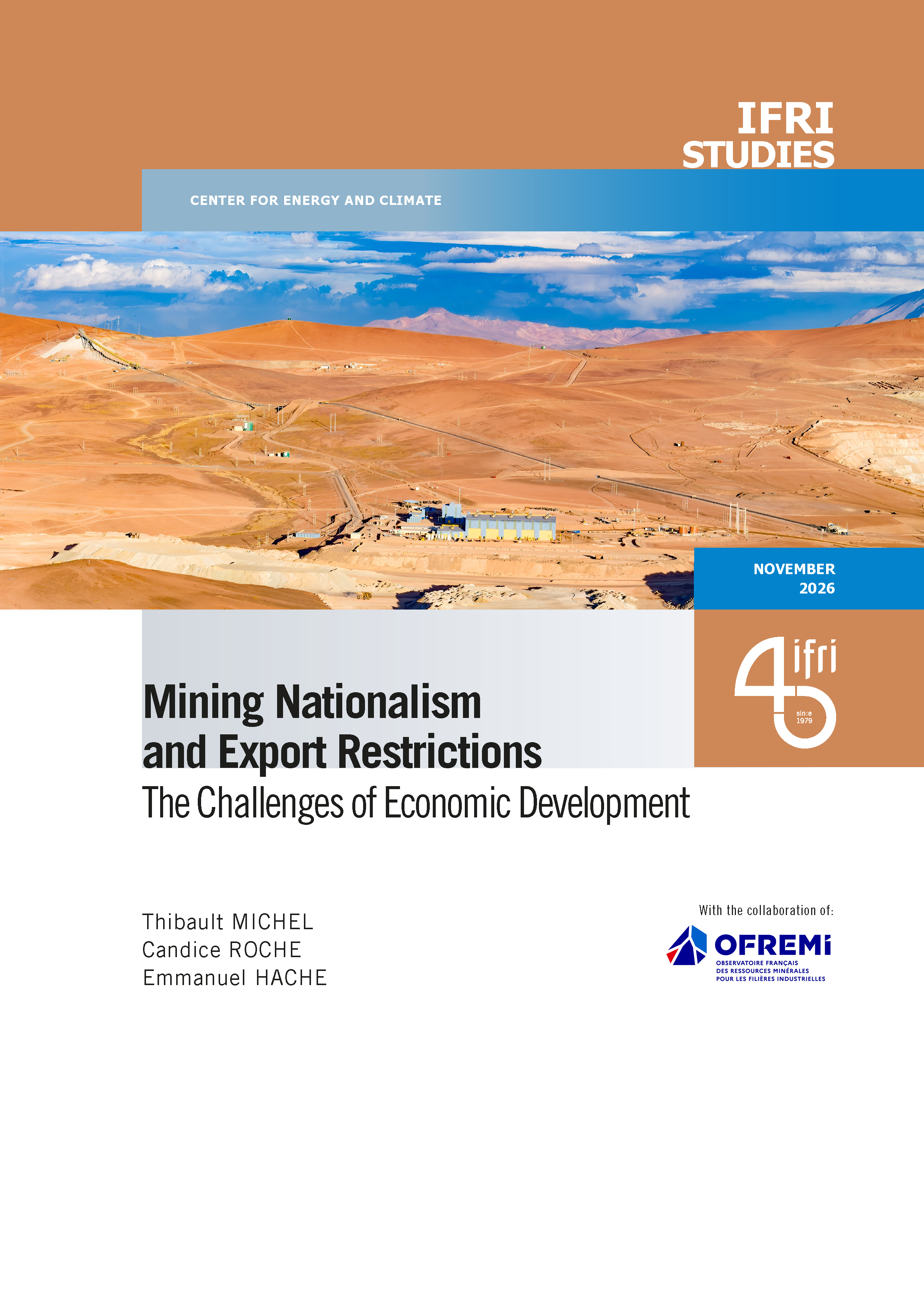
Mining Nationalism and Export Restrictions: The Challenges of Economic Development
Since the end of the 2000s and especially the 2010s, resource nationalism has been on the rise.
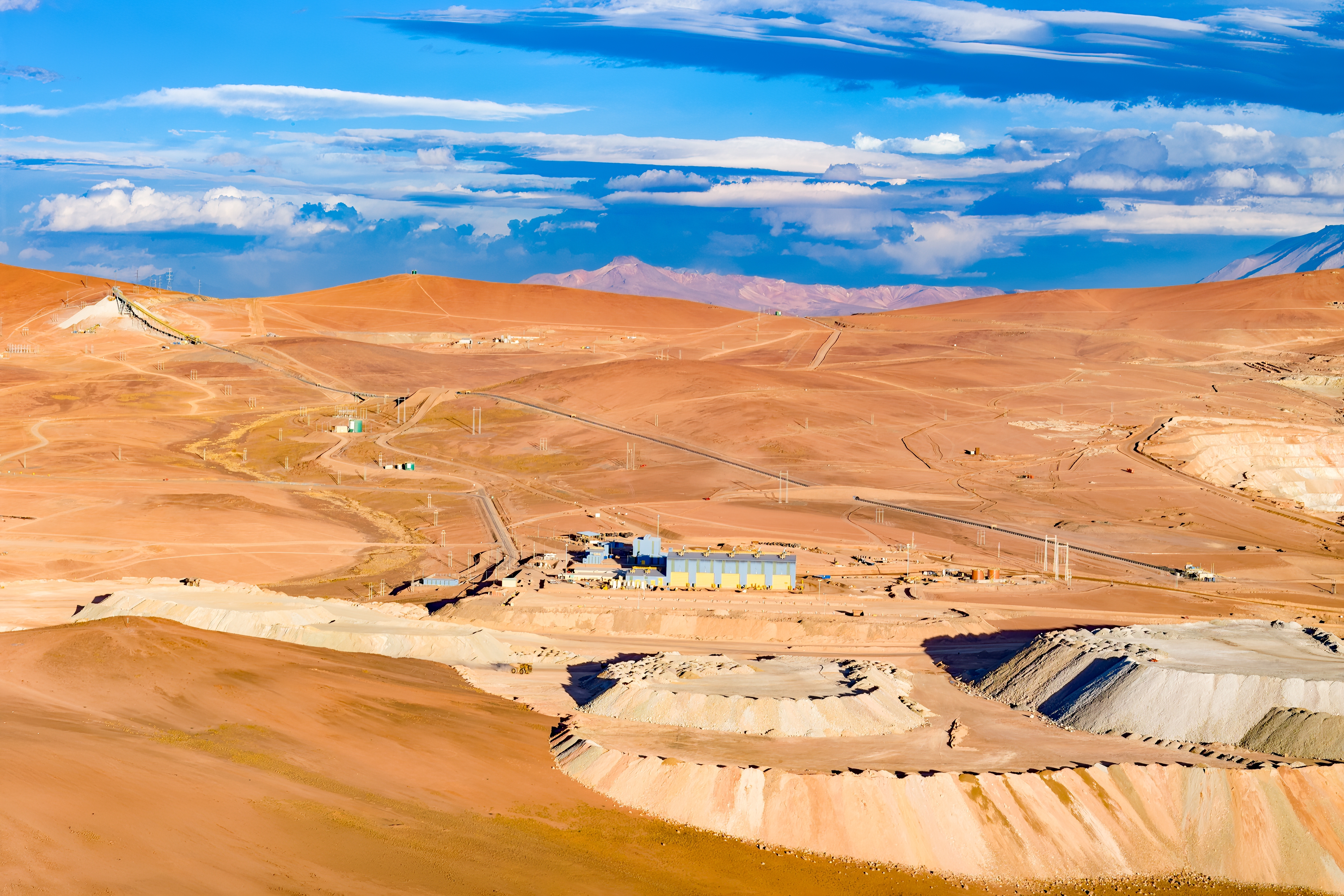
Resource nationalism refers to policies aimed at maximizing the value a state derives from the production and export of resources within its territory, including through higher taxes on mining operations, restrictions on mineral exports, nationalizations, or seizures of infrastructure. This can also take the form of cartelization measures—similar to the Organization of Petroleum Exporting Countries (OPEC)’s model for oil—by bringing together several producers to act in concert on resource availability and pricing. However, cartelization attempts involving copper, bauxite, or tin have not succeeded, as the associations in question proved unable to establish discipline similar to that of OPEC, for materials with more substitutes than oil and reserves often more widely dispersed across the globe.
Examples such as the Democratic Republic of the Congo’s (DRC) recent policy on cobalt illustrate the aspiration of many resource-extracting countries to move down the value chain to capture more added value. This strategy involves, in particular, export restrictions aimed at promoting local mineral processing. These policies also allow influence over prices, either by stabilizing them or increasing them, especially when local production accounts for a large share of global supply, as is the case for cobalt production in the DRC. The case of South American lithium, meanwhile, highlights the different strategies that states may employ in exploiting the same resource—strategies that are shaped, in particular, by institutional legacies.
The objective of capturing more value-added raises the issue of export restrictions and their effectiveness in promoting local mineral processing. The five case studies analyzed (chromium in Zimbabwe; copper in Zambia; nickel in Indonesia; lead in Mexico; phosphates in Morocco) reveal that the success of policies to develop refining industries depends less on the type of measures taken than on a country’s possession of attractiveness factors: access to sufficient and affordable energy; adequate water resources; logistics suited to the creation of industrial infrastructure; presence of a downstream market capable of absorbing potential refined output; a skilled workforce; and financing capacity to support investment dynamics.
Analyzing costs and benefits of resource nationalism thus remains complex, particularly because states’ motivations are not solely financial but may also be political or social. Nevertheless, nationalistic mining policies must be paired with concrete, well-funded strategies to deliver tangible benefits and transformations.
The key factor remains the extent to which a country controls global reserves of a raw material, provided global demand is sufficient. However, the level of reserves required to achieve the status of a virtually indispensable player—and thus compensate for the potential absence of the factors mentioned above—may prove to be relatively high.
The effectiveness of export restrictions in promoting local mineral processing has therefore not been demonstrated: while such measures may play a role in this development, this role is limited to acting as a catalyst for existing dynamics (see the case of Indonesia and nickel) rather than as an enabler of those dynamics.
Mining nationalism and export restrictions are therefore not a silver bullet for ensuring the economic and industrial development of resource-rich countries. Such development requires overcoming structural obstacles and can only take place through an approach that extends beyond the sole mining sector (infrastructure development, training of a skilled workforce, etc.). For Europe, which aims to secure its supplies upstream in the value chains, understanding the aspirations of resource-extracting countries is therefore key to developing effective partnerships and establishing a win-win model.

Available in:
Themes and regions
ISBN / ISSN
Share
This page contains only a summary of our work. If you would like to have access to all the information from our research on the subject, you can download the full version in PDF format.
Mining Nationalism and Export Restrictions: The Challenges of Economic Development


Thibault MICHEL
Research Fellow, Center for Energy & Climate, Ifri

Center for Energy & Climate
Ifri's Energy and Climate Center carries out activities and research on the geopolitical and geoeconomic issues of energy transitions such as energy security, competitiveness, control of value chains, and acceptability. Specialized in the study of European energy/climate policies as well as energy markets in Europe and around the world, its work also focuses on the energy and climate strategies of major powers such as the United States, China or India. It offers recognized expertise, enriched by international collaborations and events, particularly in Paris and Brussels.

Solar Radiation Management: A Climate Tool with Geopolitical Implications
The Paris Agreement (2015) aims to keep global warming below 2 °C, preferably 1.5 °C, above pre-industrial levels. Mitigation (reducing greenhouse gas emissions) remains the core tool for reaching net carbon neutrality by mid-century. However, a temperature overshoot is anticipated. The United Nations Environment Programme (UNEP) forecasts that the 1.5 °C threshold will be exceeded in the coming years, with warming potentially peaking between 2.2 °C and 3.6 °C this century. Against this backdrop, three trends characterize the climate policy debate.
China’s Hydrogen Economy Five Years On
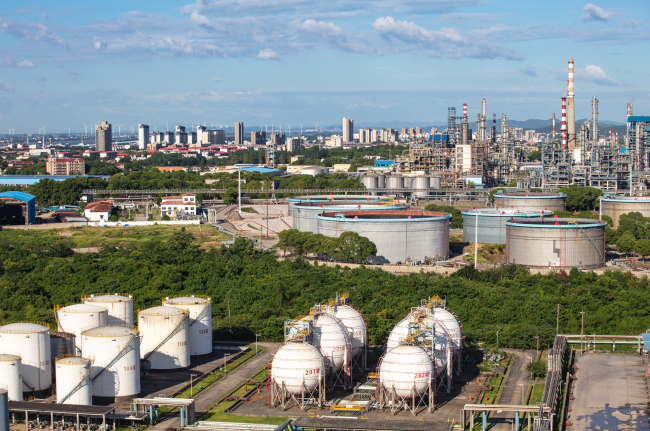
China’s hydrogen sector is not new. It is the world’s largest industrial hydrogen system, rooted in ammonia, methanol, refining, coal chemicals and by-product gas streams.
27 Plans for 2027: Turning the Electrification Action Plan into National Action
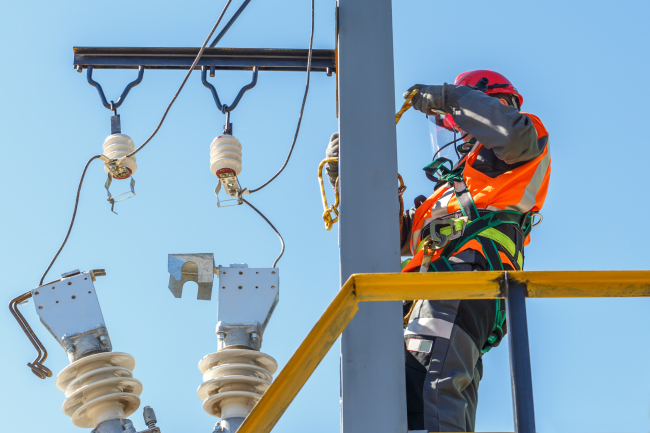
With the aim of structurally reducing the European economy’s dependence on fossil fuel imports and accelerating the energy transition, the European Commission has opted for electrification.
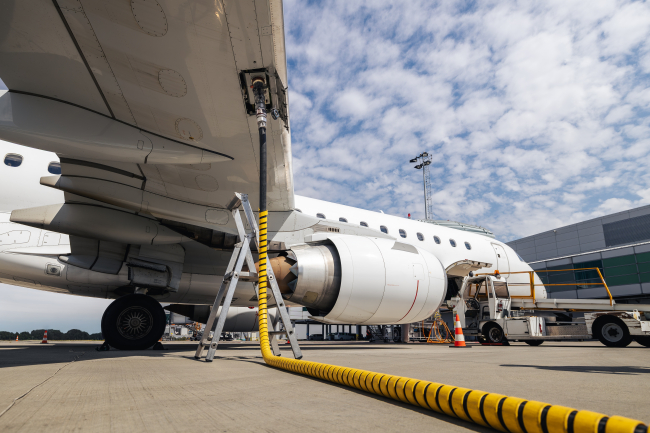
How to Make European e-SAF Production under RefuelEU Aviation Fly?
Three and a half years before the scheduled entry into force of the European regulation ReFuelEU Aviation (RFEUA), which requires aviation fuel suppliers at Union airports to offer a sustainable synthetic alternative (e-SAF), no sizeable commercial production unit (greater than 10,000 tons per year) is active within Europe yet, nor has it even passed the Final Investment Decision (FID). Is a major step in the European Union (EU) plans for decarbonizing air transport at risk of not happening, or at least being postponed for several years? Is Europe losing its bet to create a market for e-SAF? Under what conditions can this bet still be won? Could sovereignty and energy security preoccupations unlock necessary public support and help to overcome economic, financial, logistical or administrative obstacles?