




Rushing to a deal on the UK could be ill-thought-out for the EU
European capitals have now woken up to the situation, but they have always considered that “Brexit” was highly unlikely and altogether an ancillary issue compared to other more pressing ones (Eurozone crisis, refugee crisis etc.). The risk is that they rush to get the British question out of the way. However, the draft deal poses serious questions over the consequences on the functioning of the EU, not just the relationship between the UK and the EU.
First, the section of the deal related to the relations between the Eurozone and the non-Eurozone members remains blurry. The core matter is that the UK has held a debate on one side of the relationship (how to avoid non-Eurozone members being discriminated against) without the debate on the future of the Eurozone taking place in parallel. This led, for instance, to the very vague wording regarding the possibility of the “single rulebook”, which should apply to all financial institutions across the EU, to contain exceptions for institutions located outside the Eurozone. In other words, it could create distortions within the single market in favour of British-based institutions – precisely of the kind the UK wanted to avoid from the Eurozone.
The section on “ever closer union” offers some creative language but, in essence, it would institutionalize the existence of second-class members, something which in a way exists in practice, but not in law. Many member states have opt outs – the UK has a few of its own. But opt outs serve two main purposes: to allow for further integration among participating countries and to allow for the others to join in when they want. Moreover, opt-outs are limited to sectorial policies or parts of a deal. The settlement on the table would condone that some member states, such as the UK, could simply opt out of further integration altogether. Can the EU really handle this when 26 out of 28 member states are bound to enter the Eurozone at some stage? This is not a short-term consideration for sure, but the UK has already thought about it – the rest of the EU has turned a blind eye to this prospect and its consequences.
Lastly, the free movement of labour is put in jeopardy. The deal would provide for an emergency brake to any member state whose public finances cannot withstand a hike of intra-EU migrants and the associated social security costs. The mechanism to trigger this “emergency brake” looks intricate enough to let us think that it is an empty concession to the UK government as it is actually unusable. The fact is that in an annex discussing this Safeguard Mechanism, the European Commission considers that the UK would today legitimately be able to claim for the implementation of this “emergency brake”. These would represent the first two – out of three – steps for a country to put in place the mechanism. On what grounds, benchmarks, and with what information can the Commission make this claim is unknown. Those criteria should actually be debated, agreed upon and communicated across the EU. It may take time, but the decision to restrict the freedom of movement for European citizens – an EU fundamental pillar – is of too great importance to be handled lightly.
European and national leaders keep on saying that they want the UK to remain within the EU, but not at all costs. This is an empty phrase, because they have never actually weighed the costs of Britain remaining or leaving. If agreed in a hurry, several aspects of the deal as available today could come to haunt the Europeans in the future. And they will not be allowed to say that they did not see it coming – they just did not think it through.
This article was first published on E!Sharp.

Available in:
Regions and themes
Share
This page contains only a summary of our work. If you would like to have access to all the information from our research on the subject, you can download the full version in PDF format.
Rushing to a deal on the UK could be ill-thought-out for the EU

Center for Asian Studies
Asia is a nerve center for multiple global economic, political and security challenges. The Center for Asian Studies provides documented expertise and a platform for discussion on Asian issues to accompany decision makers and explain and contextualize developments in the region for the sake of a larger public dialogue.
The Center's research is organized along two major axes: relations between Asia's major powers and the rest of the world; and internal economic and social dynamics of Asian countries. The Center's research focuses primarily on China, Japan, India, Taiwan and the Indo-Pacific, but also covers Southeast Asia, the Korean peninsula and the Pacific Islands.
The Centre for Asian Studies maintains close institutional links with counterpart research institutes in Europe and Asia, and its researchers regularly carry out fieldwork in the region.
The Center organizes closed-door roundtables, expert-level seminars and a number of public events, including an Annual Conference, that welcome experts from Asia, Europe and the United States. The work of Center’s researchers, as well as that of their partners, is regularly published in the Center’s electronic journal Asie.Visions.
The Oceania Factor in France’s Evolving Indo-Pacific Strategy
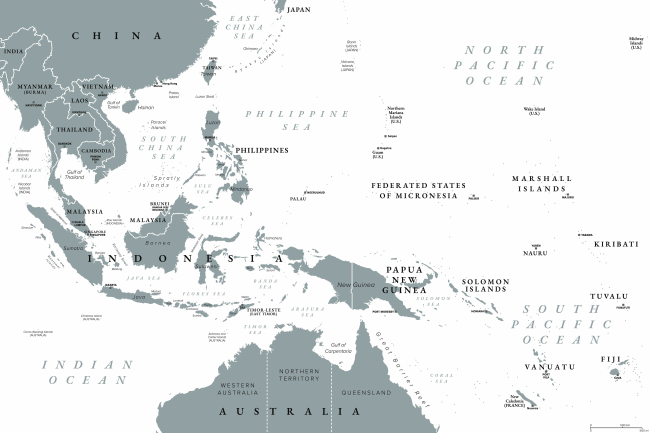
This paper examines the two-way relationship between France’s Indo-Pacific strategy and developments in Oceania. Oceania was not a priority in the initial years of France’s Indo-Pacific strategy, as the region was largely treated as secondary to major strategic hotspots and key partnerships, while overseas territories were primarily handled as domestic issues and recipients of a top-down strategy.

France’s View: From Diplomacy to Public-Private Action
France has emerged as the EU’s IMEC forerunner, combining port infrastructure, diplomatic alliances and public-private cooperation. With Marseille Fos at its core, the country brings a strategic hub for logistics, energy and digital connectivity to the corridor.
Trump II, the Crisis of the Rules-Based Order and Europe’s Indo-Pacific Strategy
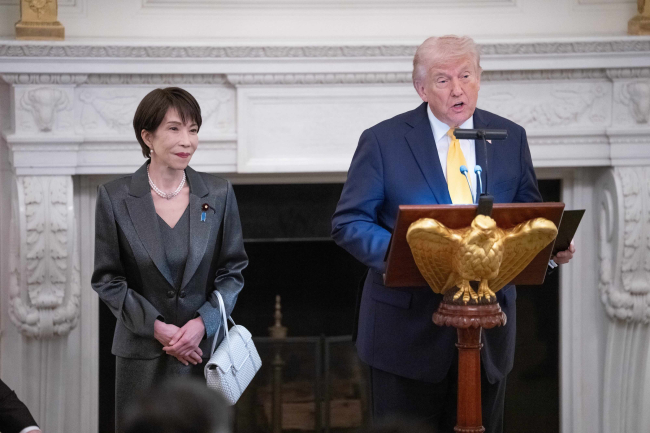
This article examines the implications of Trump II for Europe’s engagement in the Indo-Pacific. The piece contends that Trump II is accelerating the erosion of the rules-based order and undermining the relevance of the Free and Open Indo-Pacific (FOIP) concept, while forcing Europe to refocus on its own continental security amid US retrenchment. Paradoxically, these very constraints create conditions for a more autonomous, pragmatic, and explicitly interest-driven European engagement in the Indo-Pacific, rather than outright withdrawal.
China and Trade in Critical Raw Materials (CRMs)
Critical raw materials (CRMs) have become central features of a new dynamic in global power politics, with China now wielding considerable leverage. Amid rising regional and global uncertainty, resource security is back in the spotlight as a key determinant of sovereignty and national security for Europe, its allies and its partners. The very survival of key, even vital industries, from automotive to aerospace to health to energy to defense, is at stake.