



The War on Terrorism: Global Experts Reflect on Lessons Learned Twenty-Five Years After 9/11
Twenty-five years ago, the September 11 attacks prompted the invention of new security architectures that shaped the war on terrorism. Sixteen think tank experts from fifteen countries reflect on the successes, failures, and missed opportunities in the fight against terrorism—a fight that is still ongoing.
Twenty years ago, in 2006, the French government published a white paper on homeland security in the face of terrorism. One section of the document explained why France rejected the American concept of the “global war on terror,” even though French troops had been deployed to Afghanistan as early as 2001 as part of the U.S.-led military coalition. The primary reason for this explanation was legal: in France, a declaration of war can trigger emergency legislation that may endanger democracy by concentrating power in the hands of the president. But the rationale was also strategic. To the extent that nationals of Western countries join jihadi groups, recognizing a state of war could put countries on the slippery slope toward civil war.
[...]
Assessing Terrorist Threats With Objectivity and Nuance
Twenty years ago, in 2006, the French government published a white paper on homeland security in the face of terrorism. One section of the document explained why France rejected the American concept of the “global war on terror,” even though French troops had been deployed to Afghanistan as early as 2001 as part of the U.S.-led military coalition. The primary reason for this explanation was legal: in France, a declaration of war can trigger emergency legislation that may endanger democracy by concentrating power in the hands of the president. But the rationale was also strategic. To the extent that nationals of Western countries join jihadi groups, recognizing a state of war could put countries on the slippery slope toward civil war.
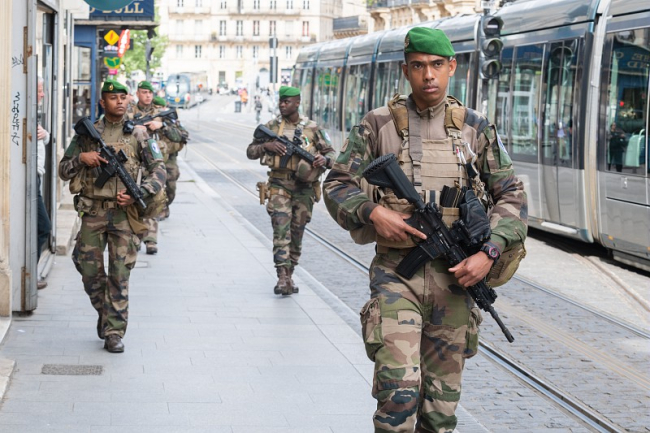
Yet ten years after that publication, the term “war” had become widely used across the French political class. During that period, France deployed its armed forces in Operation Serval (later Operation Barkhane) in the Sahel, joined the international coalition against the self-proclaimed Islamic State in Iraq and Syria, and launched Operation Sentinelle on French territory following the terrorist attacks of January 2015.
Today, the terrorist threat has evolved, but it is still regarded by the French authorities as highly dangerous. The 2025 National Strategic Review devotes significant attention to terrorism, even though, since 2022, the predominant threat has been Russia and the return of interstate warfare to European soil.
If there is one lesson to be drawn from this decades-long war that began on September 11, 2001, it is the need to identify the terrorist threat with objectivity and nuance. Underestimating the threat can lead to a form of blindness that paves the way for tragic attacks. Conversely, exaggerating the threat can trigger an overreaction that risks creating a vicious cycle beneficial to terrorists. The 2003 invasion of Iraq, which France refused to join, is a case in point.
The risk of underestimation or overreaction stems from the inherent difficulty of assessing the capabilities of groups operating clandestinely, but it may also result from political or ideological bias. It is rather striking that the 2026 United States Counterterrorism Strategy completely sidesteps far-right white supremacist extremism, which was considered a significant threat during the Biden administration. When politics contaminates threat assessments, it bodes ill for what lies ahead.
[...]
Read the full article on the Council of Foreign Relation's website.

Available in:
Themes and regions
Share

Marc HECKER
Executive Director of Ifri, Editor-in-Chief of Politique étrangère, and Research Fellow at the Security Studies Center, Ifri
Internal Security
The distinction between internal and external threats is often exaggerated, as the borders are so porous. Conflicts taking place thousands of kilometers from France can have tragic resonances on national territory. Radicalization, terrorism and even organized crime have an international dimension that cannot be ignored.
Security Studies Center
Heir to a tradition dating back to the founding of Ifri, the Security Studies Center provides public and private decision-makers as well as the general public with the keys to understanding power relations and contemporary modes of conflict as well as those to come. Through its positioning at the juncture of politics and operations, the credibility of its civil-military team and the wide distribution of its publications in French and English, the Center for Security Studies constitutes in the French landscape of think tanks a unique center of research and influence on the national and international defense debate.

The French Approach to Female Violent Extremist Offenders
How are women jihadists prosecuted and sentenced in different European countries? What happens when they are incarcerated? What reintegration programs are in place for women formerly detained for terrorism-related offenses?
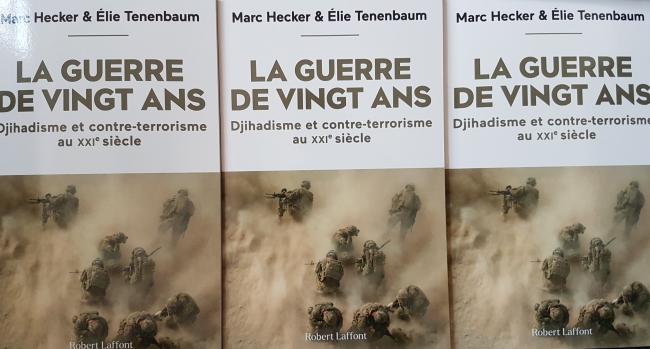
La Guerre de vingt ans. Djihadisme et contre-terrorisme au XXIe siècle
La Guerre de vingt ans was awarded the Prize for the best book on geopolitics in 2021.

Les guerres contre la drogue. Armées, sécurité intérieure et narcotrafic en Amérique latine
In the context of a persistent impunity enjoyed by organized crime and drug trafficking groups, many countries in Latin America, and especially Mexico and Colombia, have opted to assign military personnel to internal security tasks.
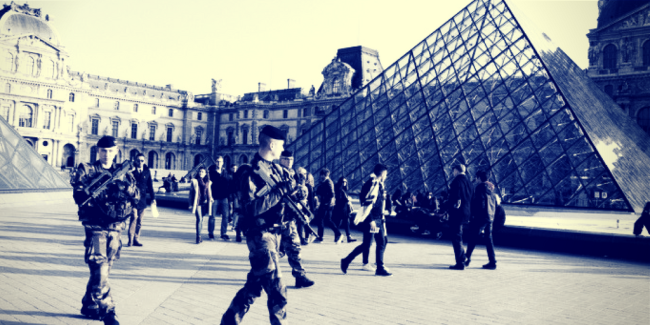
France vs. Jihadism: The Republic in a New Age of Terror
This paper assesses the current state of the jihadist threat to France, as well as the French authorities’ security response. With the upcoming presidential election, 2017 will be a decisive year for the country. Terrorism will be at the heart of the campaign and ISIS will most likely try to strike again.