



China's Soft Power in Europe: Falling on Hard Times

Analysis from 17 countries and EU institutions reveals that Chinese soft power in Europe – defined as the ability to influence preferences through attraction or persuasion – has seen better days.
This report, which brings together experts from across the continent, is a collaborative effort of the 20 research institutes that make up the European Think-tank Network on China (ETNC), of which Ifri is a founding member.
Developing soft power has been a pillar of Chinese foreign policy since 2007 and remains a stated goal of China’s long-term policy orientation to 2035. The country-level analysis from the report identifies three prominent Chinese approaches to developing soft power in Europe:
- - promoting Chinese language and culture;
- - shaping China’s image through the media;
- - and using the secondary soft-power effects of economic prowess.
Recently, and over the last year in particular, China has become more assertive in attempting to shape its image by expanding its toolkit, particularly to enhance its political messaging. This includes the systematic use of social media.
On the importance of China’s economy, the lines can often be blurred between the attractiveness of economic cooperation and the pressures of economic coercion. Withholding market access for European firms and products has long been an observed practice of reactive Chinese diplomacy, but an increasingly formalized development of sanctioning mechanisms, including “unreliable entity lists” and export control legislation, is a cause for growing concern. In other words, market access, trade and investment opportunities are perhaps the single largest factor determining China’s appeal in Europe, but also a major source of its coercive power.
Different patterns of Chinese soft power projections can be seen across four groups of countries analysed in the report:
- In the first group (Austria, Hungary, Poland, Portugal and Slovakia), China does not appear compelled to actively project its soft power, mostly because of the lack of public interest in these countries.
- In Italy and Greece, China’s soft power approach aims to arrest the trend of a deteriorating image and is geared towards damage containment.
- In Germany, Latvia, the Netherlands, Romania, Spain and the UK, perceptions of China are clearly becoming less favourable, and Beijing is struggling with growing vigilance.
- Finally, in Czechia, Denmark, France, and Sweden, China’s soft power is clearly in a state of free fall. In turn, EU institutions appear to follow the trend described in the third group of growing vigilance, as the risks posed by China’s geopolitical ambitions are increasingly underlined.
A number of factors have driven these trends, from the fallout of COVID-19 to Chinese domestic developments (including in Xinjiang and Hong Kong) and the impact of growing US-China rivalry. These factors ultimately appear to be more substantive drivers of European perceptions and attitudes towards China today than the traditional sources of soft power.
In response, the Chinese government’s public messaging in Europe has become increasingly proactive, even aggressive, including through the imposition of sanctions. The report explains that these new methods, though deployed differently across the continent and aimed in part at a Chinese political audience, point to Beijing’s objective to increase its sway over Europe by influencing related discourse. They are presumably designed to prevent negative publicity and criticism, rather than achieve likeability. An open question can thus be raised: has China become less interested in growing its appeal than in exercising its influence?
China’s waning soft power in France
In the report, Ifri’s John Seaman and Marc Julienne delve more deeply into the case of France.
They explain that China has sought to build its attractiveness and soft power in the country over the years through a number of channels, which include deepening linguistic and cultural connections, expanding its presence in French media, developing a network of elite connections, underlining the pull factors of its economy and, more recently, crafting a political narrative to suit rising discontent with the United States.
Despite these efforts, China’s soft power in France has been in steep decline, notably in the context of its aggressive public diplomacy in the country during the COVID-19 crisis and the broader attention this has drawn to China on other fronts, including human rights, and Xinjiang and Hong Kong in particular. This has been made particularly visible through recent data on public opinion, analyzed elsewhere for Ifri by Marc Julienne.
Amid a wave of criticism directed at China, building soft power no longer appears a prominent part of Beijing’s country-specific strategy in France, and while France’s political elite has been slow to respond to worsening public opinion, changes are afoot.
Discover this and all ETNC reports on the network's website: www.etnc.info.
This page contains only a summary of our work. If you would like to have access to all the information from our research on the subject, you can download the full version in PDF format.
China's Soft Power in Europe: Falling on Hard Times



John SEAMAN
Research Fellow, Center for Asian Studies, Ifri

Marc JULIENNE
Director, Center for Asian Studies, Ifri


Center for Asian Studies
Asia is a nerve center for multiple global economic, political and security challenges. The Center for Asian Studies provides documented expertise and a platform for discussion on Asian issues to accompany decision makers and explain and contextualize developments in the region for the sake of a larger public dialogue.
The Center's research is organized along two major axes: relations between Asia's major powers and the rest of the world; and internal economic and social dynamics of Asian countries. The Center's research focuses primarily on China, Japan, India, Taiwan and the Indo-Pacific, but also covers Southeast Asia, the Korean peninsula and the Pacific Islands.
The Centre for Asian Studies maintains close institutional links with counterpart research institutes in Europe and Asia, and its researchers regularly carry out fieldwork in the region.
The Center organizes closed-door roundtables, expert-level seminars and a number of public events, including an Annual Conference, that welcome experts from Asia, Europe and the United States. The work of Center’s researchers, as well as that of their partners, is regularly published in the Center’s electronic journal Asie.Visions.
European Think-tank Network on China (ETNC)
The European Think-tank Network on China (ETNC) is a gathering of China experts from a selection of European research institutes. It is devoted to the policy-oriented study of Chinese foreign policy and relations between China and European countries as well as China and the EU. It facilitates regular exchanges among participating researchers with a view to deepening the understanding within the European policy and research community and the broader public of how Europe, as a complex set of actors, relates with China and how China’s development and evolving global role is likely to impact the future of Europe. The network’s discussions and analyses take a decidedly ‘bottom-up’ approach, accounting for the various aspects of bilateral relations between European countries and China, and the points of convergence and divergence among EU member states in order to examine EU-China relations in a realistic and comprehensive way. The views presented in ETNC reports are the sole responsibility of the signed authors and do not in any way represent the views of all members of the ETNC, its participating institutions, nor the institutions with which the authors are affiliated.

Pakistan and the Israel-Palestine Conflict: Transformation in Pakistan’s Approach After the War in Gaza
Pakistan has long combined vocal support for the Palestinian cause with covert engagement with Israel. Since the war in Gaza, this balance has become untenable: public opinion is united against Israel, joining Trump’s Board of Peace has drawn rare cross-party criticism, and new regional alignments put normalization out of reach.
The Oceania Factor in France’s Evolving Indo-Pacific Strategy
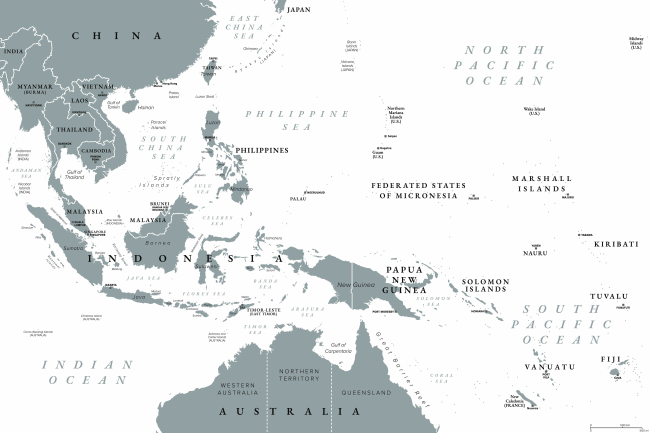
This paper examines the two-way relationship between France’s Indo-Pacific strategy and developments in Oceania. Oceania was not a priority in the initial years of France’s Indo-Pacific strategy, as the region was largely treated as secondary to major strategic hotspots and key partnerships, while overseas territories were primarily handled as domestic issues and recipients of a top-down strategy.

France’s View: From Diplomacy to Public-Private Action
France has emerged as the EU’s IMEC forerunner, combining port infrastructure, diplomatic alliances and public-private cooperation. With Marseille Fos at its core, the country brings a strategic hub for logistics, energy and digital connectivity to the corridor.
Trump II, the Crisis of the Rules-Based Order and Europe’s Indo-Pacific Strategy
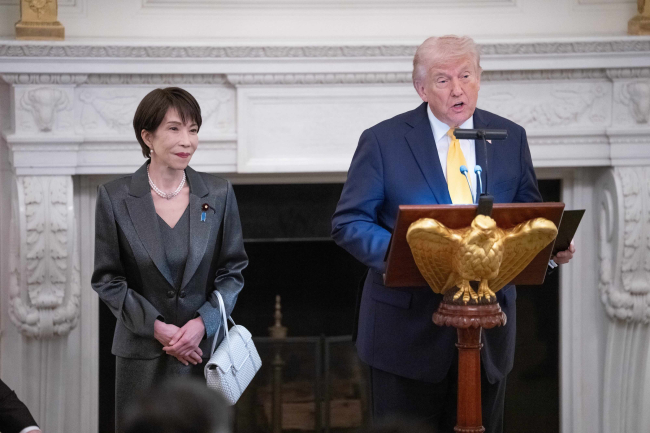
This article examines the implications of Trump II for Europe’s engagement in the Indo-Pacific. The piece contends that Trump II is accelerating the erosion of the rules-based order and undermining the relevance of the Free and Open Indo-Pacific (FOIP) concept, while forcing Europe to refocus on its own continental security amid US retrenchment. Paradoxically, these very constraints create conditions for a more autonomous, pragmatic, and explicitly interest-driven European engagement in the Indo-Pacific, rather than outright withdrawal.