




Japan and Russia’s Small Steps Strategy
On the eve of the Vladivostok Summit, should we expect any significant progress in the laborious rapprochement between Japan and Russia?
If the December 2016 Summit did not generate decisive progress on the territorial issues between the two countries, it nevertheless heralded a new approach: faced by an adverse geostrategic environment since the Ukraine crisis, Russia and Japan are no longer seeking the quick conclusion of a peace treaty. They now favour an improvement in relations that is gradual, pragmatic and wide-ranging.
Struck by Western sanctions since its annexation of Crimea in March 2014 and fearing diplomatic isolation, Moscow had been trying to reinforce economic and political ties with its Asian partners.
Expectations regarding Japan were initially high: Abe was keen on improving relations with Russia and imposed belated and mostly symbolic sanctions while maintaining favourable conditions for dialogue with Moscow. Moreover, Russia saw Japan as an intermediary that could help the country be reintegrated into the G7 Summit.
Russian hopes in Japan were soon disappointed, however, when Tokyo failed to prevent the G7 from adopting new sanctions, an outcome that was interpreted in Moscow as proof of Japan’s subordination to the United States.
In reality, the acceleration of Russia’s pivot to Asia since 2014 has basically amounted to a strengthening of Russia-China relations, resulting in a greater dependency of Moscow in relation to Beijing.
Since the end of 2016, the return of security concerns to the negotiations has been very clear. This is first because the strategic significance of the Kuril islands has grown for Moscow in recent years, particularly as Russia looks to install a protection and anti-access system along the country’s northern coast and around the Arctic, from the Kola Peninsula to the Kuril Islands.
At the same time, the Russian attitude towards western powers, especially the US, has considerably hardened. That explains why Vladimir Putin said in June that if the Kuril Islands were returned to Japan, the installation of American bases there would be “absolutely unacceptable to Russia” – this position further dwindling the prospect of a territorial deal.
Against this deteriorating background, domestic support for a territorial compromise appears shallow in both countries. In Russia, there are few advocates of a rapprochement with Japan besides Vladimir Putin himself. In recent years, the Russians have come to realise than an agreement over the islands would not necessarily entail a large influx of investment from Japan, whose private sector shows scant interest in the Russian market. Russian leaders have also stated on several occasions that it would be unthinkable to ‘sell’ Russian territory. On the contrary, there are numerous interest groups in Russia – political, economic and administrative – that argue in favour of closer relations with China.
Japan, for its part, appears to be more supportive of a rapprochement, even if its proponents remain in a minority. Until December 2016, it was officials in the Ministry for Economy and Trade (METI) who handled the Russian question on behalf of Shinzo Abe. For METI, the goal has been to push forward with economic and energy-related cooperation without necessarily linking it to the territorial dispute. The Ministry of Foreign Affairs (MOFA), by contrast, is less willing to deepen a relationship that might harm Japanese interests over the territorial question, and which places Tokyo in an awkward position with its American ally.
Japanese business, meanwhile has little inclination to invest in Russia, while Japanese defence circles distrust Moscow and do not believe that any agreement would cause Russia to cease military activity around Japan.
Considering the hurdles on the road for a Peace Treaty, Russia and Japan turned to another approach that would allow more tangible and functional results. The two countries’ strategic objectives would be achieved by improving economic cooperation – mainly by working together to develop the Southern Kuril Islands – as well as by building up confidence on security issues.
This approach has a number of benefits: it encourages dialogue and regular visits; it offers tangible proof, with each ‘mini-victory’, that the partnership is advancing; and it allows both governments to feed their populations stage-managed stories of diplomatic triumph. In its early stages, it should allow Japan to return to the islands, rather than the islands to return to Japan.
Read the full article on the APPS website.

Available in:
Regions and themes
Share

Céline PAJON
Chercheuse, responsable de la recherche Japon et Indo-Pacifique, Centre Asie de l'Ifri

Center for Asian Studies
Asia is a nerve center for multiple global economic, political and security challenges. The Center for Asian Studies provides documented expertise and a platform for discussion on Asian issues to accompany decision makers and explain and contextualize developments in the region for the sake of a larger public dialogue.
The Center's research is organized along two major axes: relations between Asia's major powers and the rest of the world; and internal economic and social dynamics of Asian countries. The Center's research focuses primarily on China, Japan, India, Taiwan and the Indo-Pacific, but also covers Southeast Asia, the Korean peninsula and the Pacific Islands.
The Centre for Asian Studies maintains close institutional links with counterpart research institutes in Europe and Asia, and its researchers regularly carry out fieldwork in the region.
The Center organizes closed-door roundtables, expert-level seminars and a number of public events, including an Annual Conference, that welcome experts from Asia, Europe and the United States. The work of Center’s researchers, as well as that of their partners, is regularly published in the Center’s electronic journal Asie.Visions.
The Oceania Factor in France’s Evolving Indo-Pacific Strategy
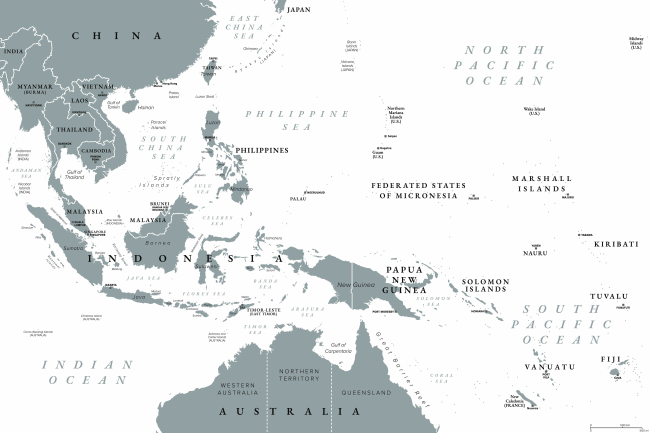
This paper examines the two-way relationship between France’s Indo-Pacific strategy and developments in Oceania. Oceania was not a priority in the initial years of France’s Indo-Pacific strategy, as the region was largely treated as secondary to major strategic hotspots and key partnerships, while overseas territories were primarily handled as domestic issues and recipients of a top-down strategy.

France’s View: From Diplomacy to Public-Private Action
France has emerged as the EU’s IMEC forerunner, combining port infrastructure, diplomatic alliances and public-private cooperation. With Marseille Fos at its core, the country brings a strategic hub for logistics, energy and digital connectivity to the corridor.
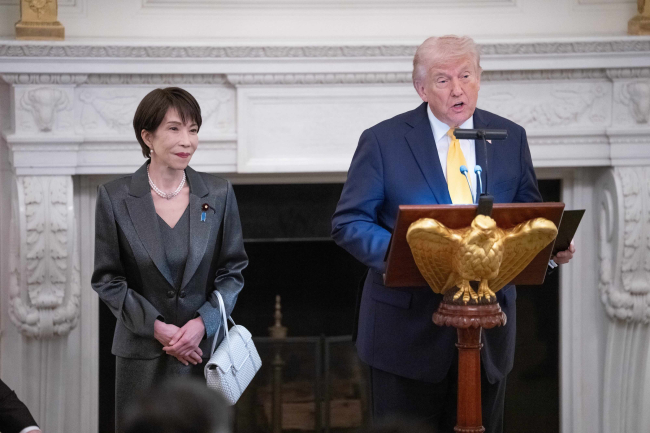
Trump II, the Crisis of the Rules-Based Order and Europe’s Indo-Pacific Strategy
This article examines the implications of Trump II for Europe’s engagement in the Indo-Pacific. The piece contends that Trump II is accelerating the erosion of the rules-based order and undermining the relevance of the Free and Open Indo-Pacific (FOIP) concept, while forcing Europe to refocus on its own continental security amid US retrenchment. Paradoxically, these very constraints create conditions for a more autonomous, pragmatic, and explicitly interest-driven European engagement in the Indo-Pacific, rather than outright withdrawal.
China and Trade in Critical Raw Materials (CRMs)
Critical raw materials (CRMs) have become central features of a new dynamic in global power politics, with China now wielding considerable leverage. Amid rising regional and global uncertainty, resource security is back in the spotlight as a key determinant of sovereignty and national security for Europe, its allies and its partners. The very survival of key, even vital industries, from automotive to aerospace to health to energy to defense, is at stake.