




Historic Meeting between Obama and Raul Castro
The thaw between Cuba and the United States reaches a head at the Summit of the Americas in Panama and the normalization of relations has begun as the White House removed Cuba from the state-sponsored terrorism list. Laurence Nardon, head of the United States program at IFRI comments on U.S.-Cuba relations as well as Hillary Clinton's presidential campaign kickoff.
Hillary Clinton et les radicaux du Parti démocrate
Hillary Clinton should announce very soon that she is running for president in 2016. On the Republican side, candidates' abundance promises a long and wild primary campaign. On the Democratic side, Clinton should not face any serious rivalry. The Democrats' (most to the left) champion, the senator of Massachussetts, Elizabeth Warren, repeated many times that she would not run for primaries. Clinton nevertheless has to take into account a radicals' fringe susceptible to play up her in her own party. What is their capacity of nuisance on the American political scene?

The United States - South Korea Military Alliance in Question
The alliance born of the Korean War trades the assurance of security for Seoul with a certain alignment with Washington.
The US Shale Oil Revolution: The Test of the Business Model is Underway
Since 2010, the United States has been undergoing a second shale revolution with the very rapid development of Light Tight Oil (LTO) or shale oil, following the revolution in shale gas. This development has allowed the production of oil and liquids to increase, so that the US is the world’s largest producer today, ahead of Saudi Arabia and Russia.
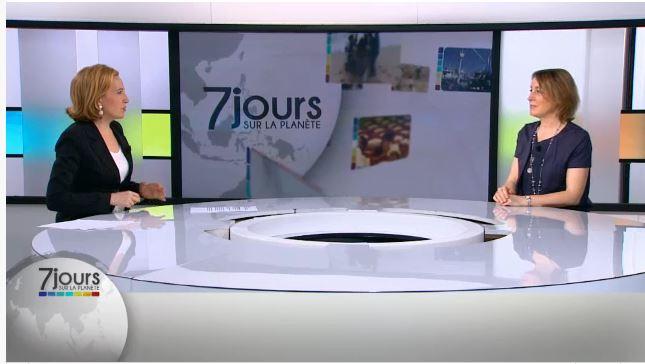
Le rôle de l'Inde de Modi dans la politique américaine en Asie
As President Obama makes an official visit to India, Martin Quencez, expert from the GMF Paris office reflects on the current administration's policy toward Asia and notably the "pivot to Asia". The celebrated Indo-American relationship does not appear to have held much promise until now. Could it grow significantly during Narenda Modi's presidency to constitute a key element of the American presence in the region?
Hillary Clinton et la presse : vers une réconciliation ?
Since her departure from the State Department in 2013, Hillary Rhodam Clinton continues to fascinate the press which scrutinizes her slightest actions, looking forward to an announcement of her candidacy for the 2016 presidential elections. For years nevertheless, the former First Lady kept her distances with the journalists. This notorious mistrust could turn out problematic if she confirms her candidacy.
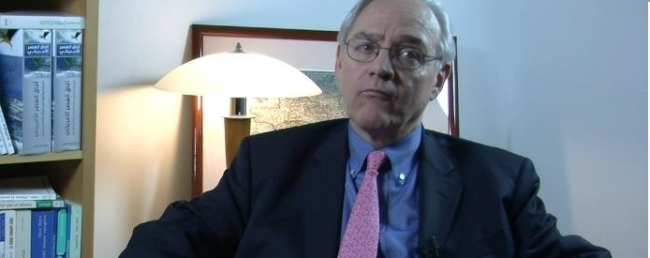
Who are the candidates for 2016?
The speakers from the Annual Conference on the United States summarize their talks in short videos. Here, E.J. Dionne discusses Barack Obama's presidency and evaluates potential candidates for the 2016 presidential election.
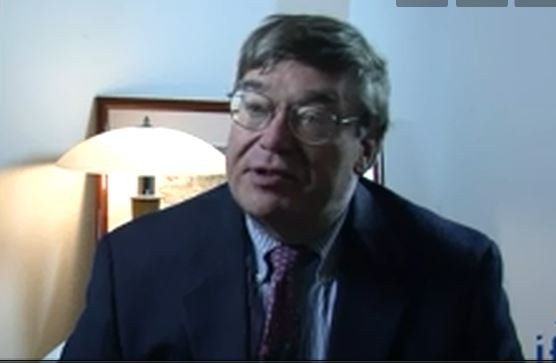
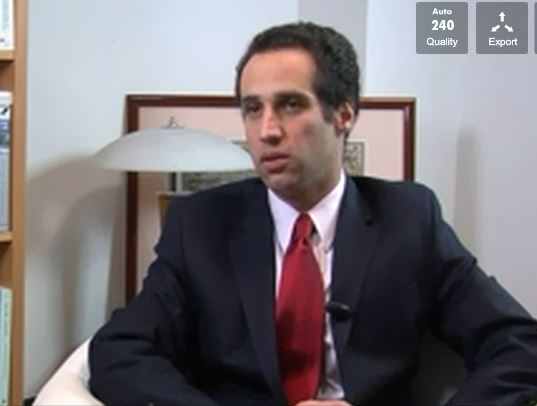
"U.S. Foreign Policy and the Ukrainian Turmoil"
The speakers from the Annual Conference on the United States summarize their talks in short videos. Here, Jeff Mankoff analyzes the strategies put in place by the United States with hopes of containing the situation in Ukraine.
La Californie : laboratoire de la dépolarisation ?
California benefits from a long-time extraordinarily positive image. Because of its climate, its cultural diversity, its size, its population and its energy wealth, California itself represents the essence of the American dream, every day attracting new hopeful migrants.
U.S.-Russian Relations: The Path Ahead after the Crisis
CSIS expert Jeff Mankoff explains the reasons of the crisis in Ukraine, and how the U.S. should try to reestablish a more stable situation in central Europe, mixing containment and engagement of the Russian partner.
The United States: the Black Question
We all wanted to believe that Barack Obama's dazzling election in 2008 would accelerate history's forward trajectory in a good way for once. Barack Obama, would lead the United States into a post-racial era and serve as an example for all democracies. Six years later we see that we were wrong: the American president did not perform any of the expected miracles.
Last August in Missouri, a white police officer shot Michael Brown, a young African-American male. After courts found the officer not guilty, riots broke out in Ferguson and a number of large American cities. This anger demonstrates that 50 years after civil rights legislation race continues to deeply divide the United States. Are events in Ferguson emblematic of a larger problem? What impact will racial tensions have on American politics just two years from the next presidential election?
What major trends in US politics or party ideology do you see happening over the next generation ?
Michael Lind, Policy Director of the Economic Growth Program at the New America Foundation in Washington, D.C, was the guest of the French Institute for International Relations (IFRI) on September 29th 2014. In this video, he discusses the evolution of US politics and party ideology.
The end of globalization ?
Michael Lind, Policy Director of the Economic Growth Program at the New America Foundation in Washington, D.C, was the guest of the French Institute for International Relations (IFRI) on September 29th 2014. In this video, he analyzes the major economic trends post-2008, and forecasts the end of globalization.
Homeland : une série de l'ère Obama
Once widely praised as one of the best shows on television, Homeland will be back for a fourth season starting next week. The show was originally intended as a breaking point with the one-sided and trigger-happy foreign policy of the Bush administration. However, Homeland is sadly turning out to be the reflection of Obama’s foreign policy, itself rather disappointing up to now. What will the new episodes tell us?
The Difficult Issue of College Rape in America
Cette Actuelle est la quatrième d'une série de quatre Chroniques américaines sur l'éducation aux Etats-Unis, publiées cette semaine.
MOOCs: Re-Creating Affordable Education
This piece is the thrid in a series of four Chroniques américaines on education in the United States, published this week.
L'échiquier numérique américain : Quelle place pour l'Europe ?
The United States has established itself as the indisputable global leader in the digital market followed by more interventionist actors such as Russia and China. Europe has fallen behind as it struggles to find its place in this crucial sector. The new European Commission must respond and provide Europe with tools to compete with the market's more dominant actors.
Sixty Years after Brown: Resegregation in America
This piece is the second in a series of four Chroniques américaines on education in the United States, published this week.
American Student Loans: Debt, Reform, and the True Cost of Higher Education
This piece is the first in a series of four Chroniques américaines on education in the United States, published this week.
Ifri, a foundation recognized as being of public utility, relies largely on private donors – companies and individuals – to guarantee its sustainability and intellectual independence. Through their funding, donors help maintain the Institute's position among the world's leading think tanks. By benefiting from an internationally recognized network and expertise, donors refine their understanding of geopolitical risk and its consequences on global politics and the economy. In 2026, Ifri partners with over 90 French and international companies and organizations.
