




Trump II vs. Digital Governance: A Crusade in the United States and Europe
Since taking office, the Trump II administration has waged a systematic deregulation campaign targeting the tech sector in both the United States and Europe. How can Europe maintain dialogue while preserving its governance framework?

European Startups and Generative AI: Overcoming Big Tech Dominance
Europe is at a crossroads. Faced with the domination of American Big Tech across the entire generative Artificial Intelligence (AI) value chain, from foundation models to cloud infrastructure, distribution channels, and open source, it risks long-term technological and economic decline. Yet generative AI also represents a major opportunity for economic transformation, with a potential value estimated at 1.5 times France’s gross domestic product (GDP). To turn it into a driver of renewal, Europe must move beyond the illusion of total technological independence and instead build an ecosystem that leverages Big Tech resources while strengthening its own innovation capabilities.
Groundbreaking Chip Sovereignty: Europe’s Strategic Push in the Semiconductor Race
The EU Chips Act’s enactment in September 2023 marks a major policy shift that revitalizes industrial policy in Europe. By allowing state subsidies for semiconductor projects, it has the potential to secure Europe’s supply chain security and technological autonomy in an industry dominated by the US and East Asia.

Critical Raw Materials: What Chinese Dependencies, What European Strengths?
In adapting to growing geopolitical competition over digital technology, the EU and the UK are striving for economic security and technological sovereignty. European policies focus on reducing critical over-dependencies on China. This de-risking is a necessary process of adaptation to the new geopolitical realities.

A Splintered Internet? Internet Fragmentation and the Strategies of China, Russia, India and the European Union
From the Covid-19 pandemic to the ramifications of Russia’s full-scale invasion of Ukraine, international events are fueling fears of an accelerated fragmentation of the global Internet.

Balancing Security and Innovation: Opposition's View on Turkey's Digital Policies
The upcoming presidential and parliamentary elections in Turkey on May 14, 2023, are expected to be closely contested. Polls suggest that the ruling AK Party-led People’s Alliance will lose its majority in parliament, resulting in a hung lower house.

It’s not just TikTok: French also warn against WhatsApp, Instagram
In a typically French move, France's top lawmakers are refusing to side with the United States and single out China's TikTok.
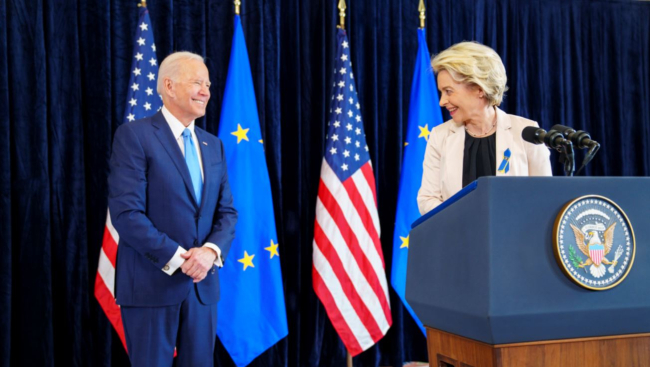
Digital Sovereignty: European Policies, American Dilemmas
European digital sovereignty has been made a priority by Ursula von der Leyen’s European Commission. Due to the privileged position of American companies in the European market, Brussels’ efforts towards digital sovereignty (on privacy, antitrust, data sovereignty, etc.) are closely scrutinized by American policymakers.
The Political Economy of the Metaverse
The "metaverse", at the heart of the strategy of large digital companies such as Facebook (Meta), does not yet exist and it will take decades to build it. This briefing provides an overview of the issues.

Digital Sovereignty Review of Macron’s Term and Debates in the 2022 Presidential Campaign
One month before the French presidential election, this briefing assesses the actions undertaken during Macron's term as well as the presidential candidates' proposals concerning France's digital sovereignty.
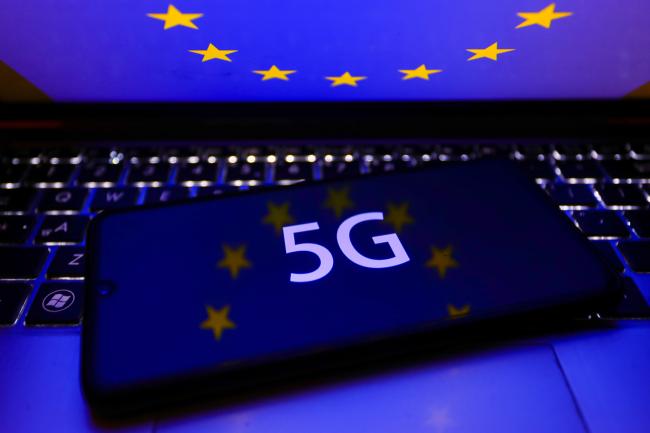
Europe and the Geopolitics of 5G: Walking a Technological Tightrope
The acute Sino-American tensions which started in 2018 have been coupled with controversies around 5G technology, exemplified by the spotlight placed on Chinese equipment manufacturer Huawei and the security risks associated with its use. For Europe, the 5G challenge at the international level is drawing a very complex landscape.

Strengthening Sovereignty in the Era of Global Value Chains
How to reduce the vulnerabilities induced by these global value chains to be more independent, while taking into account the reality of these productive processes which precisely generate interdependencies?

Strategic Calculation: High-Performance Computing and Quantum Computing in Europe’s Quest for Technological Power
Computing power plays a key role in enabling machine learning, for scientific research, and in the military domain. Therefore, the race for computing power has become a key element of the US-China technological competition, and it is also a strategic priority for Europe.
Is Europe a “Digital Colony” of the United States?
Edward Snowden’s revelations, the Cambridge Analytica affair and the digital transformation accelerated by the Covid-19 crisis have all shown Europe's technological dependence on foreign powers.
Europe/United States: 50 Shades of Dependence
Is Joe Biden’s United States (US) returning to multilateral, traditional diplomacy? This more open stance does not eliminate either its domestic problems or the divergence in interests separating the US from the Europeans: how will open diplomacy fit in with the priority of defending US interests? Will Washington organize a broad anti-Chinese coalition that the Europeans are opposed to? Will sanctions with their resulting effects remain at the heart of US strategy? Will the Europeans be able to assert their sovereignty in the key area of new technologies against the US giants?

The Changing Landscape of European Cloud Computing: Gaia-X, the French National Strategy, and EU Plans
Non-European cloud service providers host the vast majority of European data, which is viewed as an economic as well as a political problem. Gaia-X, European governments and the European Union aim to bolster the European cloud market while responding to data privacy and cybersecurity concerns.

Digitalization in the (post) COVID World: Views from Japan and Europe
The COVID-19 crisis has highlighted the importance of accelerating the digital transformation of both the industry and the society.
Trump II vs. Digital Governance: A Crusade in the United States and Europe
Since taking office, the Trump II administration has waged a systematic deregulation campaign targeting the tech sector in both the United States and Europe. How can Europe maintain dialogue while preserving its governance framework?
European Startups and Generative AI: Overcoming Big Tech Dominance
Europe is at a crossroads. Faced with the domination of American Big Tech across the entire generative Artificial Intelligence (AI) value chain, from foundation models to cloud infrastructure, distribution channels, and open source, it risks long-term technological and economic decline. Yet generative AI also represents a major opportunity for economic transformation, with a potential value estimated at 1.5 times France’s gross domestic product (GDP). To turn it into a driver of renewal, Europe must move beyond the illusion of total technological independence and instead build an ecosystem that leverages Big Tech resources while strengthening its own innovation capabilities.
Groundbreaking Chip Sovereignty: Europe’s Strategic Push in the Semiconductor Race
The EU Chips Act’s enactment in September 2023 marks a major policy shift that revitalizes industrial policy in Europe. By allowing state subsidies for semiconductor projects, it has the potential to secure Europe’s supply chain security and technological autonomy in an industry dominated by the US and East Asia.
Critical Raw Materials: What Chinese Dependencies, What European Strengths?
In adapting to growing geopolitical competition over digital technology, the EU and the UK are striving for economic security and technological sovereignty. European policies focus on reducing critical over-dependencies on China. This de-risking is a necessary process of adaptation to the new geopolitical realities.
Balancing Security and Innovation: Opposition's View on Turkey's Digital Policies
The upcoming presidential and parliamentary elections in Turkey on May 14, 2023, are expected to be closely contested. Polls suggest that the ruling AK Party-led People’s Alliance will lose its majority in parliament, resulting in a hung lower house.
Ifri, a foundation recognized as being of public utility, relies largely on private donors – companies and individuals – to guarantee its sustainability and intellectual independence. Through their funding, donors help maintain the Institute's position among the world's leading think tanks. By benefiting from an internationally recognized network and expertise, donors refine their understanding of geopolitical risk and its consequences on global politics and the economy. In 2026, Ifri partners with over 90 French and international companies and organizations.
