Geoeconomics: 'All dependencies, minerals, currencies and semiconductors, are now being weaponized'
According to geopolitics expert Marc-Antoine Eyl-Mazzega, the competition for control over minerals, logistics and the flow of raw materials is benefiting the US and China. Europe lags behind in this geoeconomic race, with a tangible impact on how major powers are reshaping their defense capabilities.
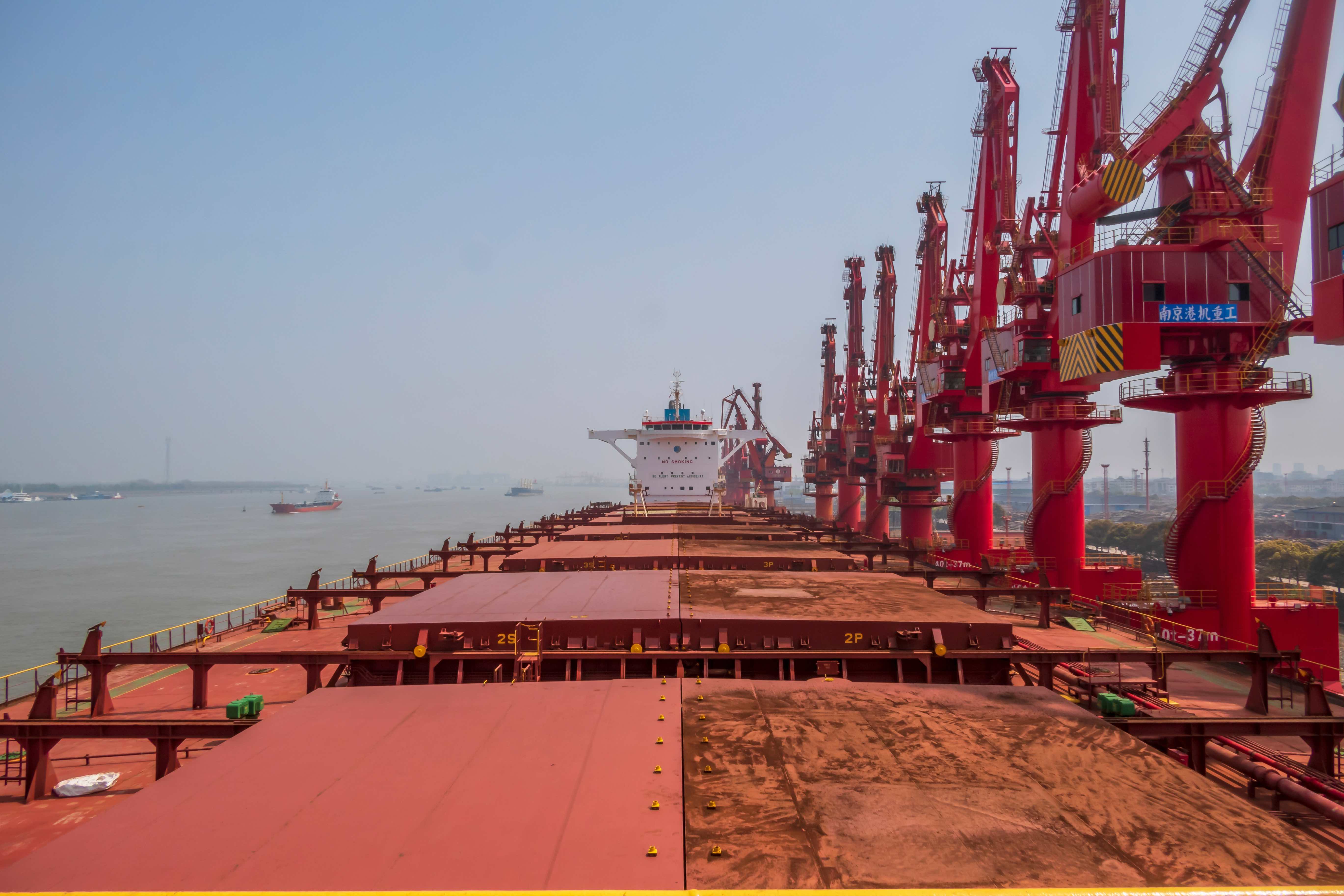
Marc-Antoine Eyl-Mazzega heads the Center for Energy and Climate at the French Institute of International Relations (IFRI). He is an expert in the geopolitics of energy and minerals.
The race for access to mineral resources, especially critical minerals, shows no sign of slowing. Less dramatic than the conflict in the Middle East, it is nonetheless shaped by the same fierce geopolitical rivalry.
Absolutely, and this tension is extremely important globally because we find ourselves at the intersection of several trends. The first is a growing need for minerals, especially those required for the energy transition, which represent the largest volume. However, this sector is also vital for defense, batteries, weaponry and even artificial intelligence. It involves many sectors that will be crucial in the future. And this is the sector where demand is rising the fastest. The other intersection is the widening gap between the timescale of mining and the pace of economic and technological change.
Is the machinery consuming minerals spinning out of control?
To put it another way, the global rollout of all these technologies, and therefore the increase in demand for the materials they require, has been much faster than the pace of mining and the production cycles of their own production. For example, within three or four years, there could be a huge boom in electric mobility or stationary batteries, or a surge in demand for certain types of steel for entirely new uses. In contrast, mining operates on a timeframe closer to 10 to 15 years – the time it takes to identify new projects, develop them and bring minerals to market.
Has competition among world powers for access to resources intensified?
The latest force at work in this sector is geopolitics. The economic confrontation between major powers now also plays out in the supply of mineral raw materials. In this regard, China has established a remarkable position.
China, with a 20-year head start, laid the groundwork for a policy aimed at securing access to resources, particularly critical minerals and rare earths. In seeking global dominance, was Beijing already anticipating the end of the era of frictionless globalization before the rest of the world?
First, China has a strategic vision based on the long term. This is a significant advantage over our societies, which are more shaped by the short term. Investing in projects that will take 10 to 20 years to materialize is acceptable for China. Second, Beijing can design and implement a policy that integrates value chains.
In practical terms, this means investing in mining resources that do not generate any profit, or even operate at a loss, for several years, because they are a key link in a value chain that they will build and fully control. It starts with controlling cobalt resources and leads to manufacturing electric vehicles. The next step is disrupting the global automobile market. That is the advantage of thinking in terms of integrated value chains. That is the key. Conversely, in the West, our value chains are fragmented, and each link must be profitable in order to attract investment. That is what excludes part of the mining sector.
So, one could imagine operating mines at a loss in order to build future dominance in an industrial sector.
If, during a certain period, there are metals that are not profitable to extract, it does not matter as long as everything else is. The real added value does not lie in mining or extraction, but in the ability to manufacture innovative, high-performing products. And to produce them at a scale that becomes highly competitive compared to rivals. That is where you will generate your revenues and profits.
In China, these raw materials are not considered commodities. A commodity is something that is perfectly interchangeable, whose origin holds no particular value. By contrast, in the West, we tend to view these metals precisely as commodities, assuming that supply will be guaranteed under all circumstances within a global market.
The Chinese also decided to take control of entire value chains and technologies that Western countries had not yet mastered. They believed there was no point in trying to replicate or improve on what was already being done. Instead, they focused on new technologies in order to gain a decisive advantage.
Is this a victory for China in an undeclared war?
In a way. In any case, the Chinese were right. Their system has worked out extremely well. It was conceived as a way to establish dominance in several sectors, but also as part of a global struggle for influence with Western countries. China does not control the extraction of all metals. For example, it imports a large amount of copper. It relies on imports for many products, including those coming from non-Chinese countries or companies.
China has moved to create a strategic position in the field of refining and, therefore, metal processing, equipping itself with the most advanced industries. Whatever the metals and wherever they are extracted in the world, it is now highly likely that you will have to turn to Chinese industrial companies to refine and process them. That is where they have, in effect, created a global bottleneck and a way to control a significant share of critical metals markets.
This could be seen as part of a strategy to build global power.
Absolutely. The Chinese have understood very well that, fundamentally, Western countries were no longer able to implement long-term strategic industrial policies. They were able to take advantage of our own weaknesses and our own relinquishing of economic sovereignty. They were also willing to bear the environmental costs of these industries and to produce at low or even zero profit margins, sometimes at a loss. They mobilized substantial public subsidies to achieve this.
How do you interpret the evolution of the US position on this subject? It feels as though a relentless behind-the-scenes battle is underway to regain access to critical minerals.
The US policy of mining sovereignty began during Donald Trump's first term. He was the one who started all of this. It was under President Bill Clinton (1993-2001) that the dismantling of American sovereignty in this sector took place. At the time, a number of industries were sold to China, which subsequently seized the technologies and transferred them there. Trump's first term had already started to address the issue. The second administration further intensified this strategy, mobilizing the entire US government apparatus with a single aim: to urgently make up for decades of underinvestment and neglect.
This is part of the power struggle with China. China faced American aggression through tariffs, and it struck back by leveraging its dependence on metals. Nevertheless, the US now finds itself entangled in this situation. Even though it is mobilizing on all fronts, using every government tool at its disposal to control mineral resources, that does not mean it can break free from China's grip overnight.
Is this tension between the two powers pushing the US to open new fronts of confrontation with China?
I think they need to step up threats and confrontations toward China in order to intimidate it and try to discourage it from disrupting US supply lines.
This situation does not just concern Washington and Beijing.
The additional challenge that has emerged over the past four or five years is that, beyond China's dominance over supply chains, a phenomenon of resource nationalism, or mining nationalism, has appeared. There are historical precedents for this. We saw the same thing happen with oil in the 1960s and 1970s. A number of mining countries want to industrialize, move up the value chain and generate more value added within their own borders. This is entirely legitimate; we want all countries to industrialize, but it is also a problem.
Why is that a problem?
Most of the countries that want to move in this direction face problems with their electricity, road, rail and port infrastructure. It is not technically possible to install additional industrial capacity in systems with these disadvantages. In several countries where extraction occurs, governance frameworks are often weak and unpredictable.
When you set up processing plants worth $1 billion, that is problematic. The third issue is labor. To operate this type of infrastructure, you need a highly skilled workforce. If it is already difficult to find such workers in wealthy countries, it is even more so in countries that mainly extract raw materials. As a result, this slows down and discourages investment.
A number of countries where extraction takes place are currently trying to process minerals within their own borders. This is the case for the Democratic Republic of the Congo, which has restricted cobalt exports, as well as Indonesia with nickel and Gabon with manganese. Zimbabwe is blocking its lithium exports until they are processed locally with the help of buyer countries, in this case, China.
In reality, countries establish export quotas in order to influence global prices. However, this may not be the best time to hinder extractivism, which the entire planet needs. Ultimately, another trend has also emerged: Countries are no longer thinking in terms of blocs or allies, but rather in terms of sovereignty and national interests.
To the point of causing geopolitical fragmentation? Every country for itself in the race for resources.
Under the Biden administration, there was a genuine willingness to seek solutions among the G7 countries. The Trump administration did not abandon this effort. And in early February, there was a ministerial meeting in Washington where the US administration emphasized the need to move forward with its partners because the problems are too significant to be solved by a single country. The Americans are very active with Japan, the European Union, Canada and Australia in order to make progress.
But in doing so, they have also been extremely active in seeking solutions on their own. That is not absurd, because in reality, the two approaches can be complementary. But how sincere is the United States in its stated desire to cooperate? Does that not, deep down, conceal a willingness to take advantage of certain assets or players in the name of partnership, but that would in fact be led for the benefit of Washington?
In this context, can Europe manage to hold its own?
The major problem for Europeans is that they lack two very powerful tools that the US deploys. First, equity investment – in other words, acquiring stakes in assets. Americans make use of this on a large scale. The US has also established the equivalent of a sovereign wealth fund to acquire stakes in projects, with support from public funding bodies abroad, such as American multilateral development banks, which lend vast sums to numerous mining projects.
The second thing Europeans lack, and that the Americans are deploying everywhere, is a policy capable of pushing up metal prices to justify investment decisions in projects. China can set the prices of several metals and ensure these prices always remain below the cost of developing other projects. When you go to see your banks, they tell you that you will never be profitable because prices are too low, and so they do not lend you money.
The US circumvents this problem, or tries to, by committing to buying entire volumes of production at a higher price over long periods of time so that these projects can be funded based on a profitable extraction cost. Another major US strength is its ability to act very quickly. When an opportunity arises, they can move forward within days or weeks, whereas Europeans would take months, even years, to act and let such opportunities slip by.
Is the US prepared to go to war to further increase its advantages in this competition?
The Americans have the ability to resort to intimidation or violence, as they did with Venezuelan oil, by mobilizing the machinery of the state. With its tools of power and coercion, it is clear that when the US wants a mining asset, it is far more persuasive than the Europeans. But the fundamental difference between the US and Europe lies primarily in its ability to identify the assets it absolutely needs and act accordingly. I am not sure that Europeans have that strength. We have established a framework that emphasizes regulation. We have supported recycling by imposing requirements to recycle products, to purchase recycled materials and to incorporate them into semi-finished and finished goods.
But a number of mechanisms to facilitate the development of mining projects have been put in place. There are financial support systems, but they are more complicated to operate than their American equivalents. Perhaps there is also a problem with risk aversion and very high standards.
The problem is that mining activity, by its very nature, has serious environmental consequences. However, among EU member states, some countries, such as Sweden and Finland, have extensive experience in mining. Then there are countries that are major importers, like France, but are nevertheless taking action through a real policy of interministerial coordination, a genuine understanding of resources and the related challenges and instruments such as tax credits and active support for projects. However, what is lacking is real clout, a willingness to take risks. When the EU invests €1 to secure mining value chains, the Americans invest €10.
The other aspect is the weaponization of logistics and supply chains on a global scale. What is your view on this?
Logistics are absolutely essential in mining value chains. It is not enough to extract metals; they also have to be transported to ports, often by rail, and so on. Then, it is necessary to be able to process them, store them in different locations around the world and deliver them to customers. This requires an exceptional command of logistics, which very few players are capable of handling all these steps. There is, therefore, a significant underlying issue linked to the geoeconomics of supply chains. In practical terms, this has resulted in the growing influence of Middle Eastern players, alongside Americans, in providing financial support for extraction and processing projects, with resource-sharing as the guiding principle. This is quite unprecedented.
Finally, major oil and gas companies are also looking into opportunities in the metals sector. Some major oil companies are studying the possibility of exploring for lithium because brine brought up from oil industry operations contains lithium, so it would be possible to extract it, for example.
Is the weaponization of the economy lurking behind these concepts?
It has become a central fact. All dependencies are now being weaponized. Mineral dependency is one example, since minerals are at the foundation of everything. If we go back a little further, we see that semiconductors are as well, as are power electronics, investments, financial flows, currencies and exchange rates. We are in an escalating global confrontation, and nothing escapes it.
[...]
> Read the full article on Le Monde's website.

Media:

Reporter(s):
Format
Share
Authors

Marc-Antoine EYL-MAZZEGA
Director, Center for Energy & Climate, Ifri