




Chinese Economy
China's economy is facing structural challenges such as the housing crisis, youth unemployment, debt, declining global demand and foreign investment, and population decline.
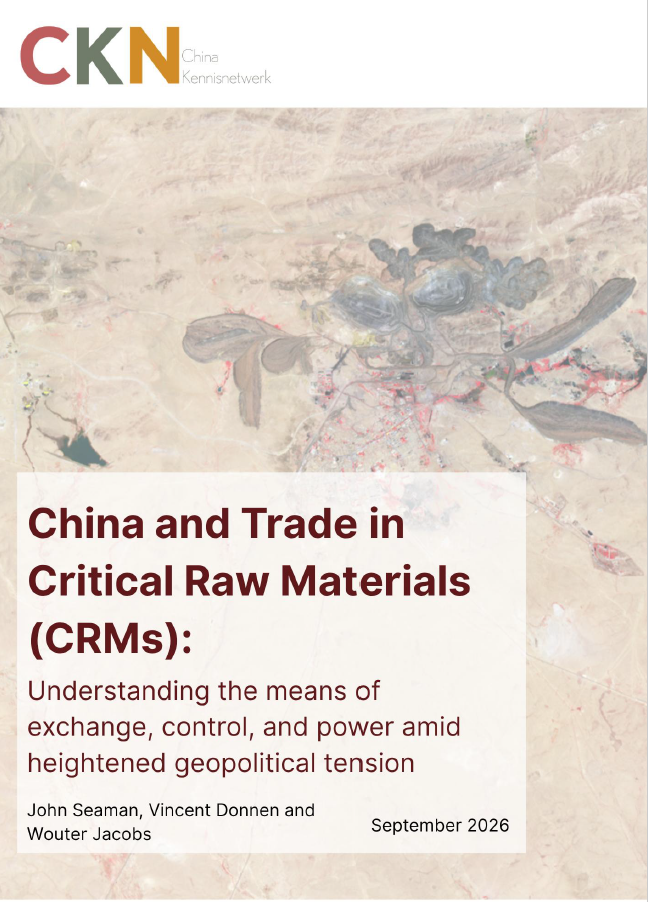
China and Trade in Critical Raw Materials (CRMs)
Critical raw materials (CRMs) have become central features of a new dynamic in global power politics, with China now wielding considerable leverage. Amid rising regional and global uncertainty, resource security is back in the spotlight as a key determinant of sovereignty and national security for Europe, its allies and its partners. The very survival of key, even vital industries, from automotive to aerospace to health to energy to defense, is at stake.

Rethinking Global Imbalances
Today’s global imbalances, starting with China's massive trade surplus, are not simply the result of poor macroeconomic coordination. Rather, they reflect long-term strategic thinking and a departure from the bias toward openness on which the postwar trade order was built.

The Transfer Paradox. Rethinking Global Imbalances
Global imbalances have come back to the top of the policy agenda. Many analyses and reports have been produced over recent months. The standard prescription involves better coordination of macroeconomic policies, with three familiar recommendations: higher consumption in China, higher investment in Europe, and fiscal consolidation in the United States.
Fragmented Europe: Dealing with China as a technology and innovation power
How is Europe navigating China’s ascension as a technological power? The latest report by the European Think-tank Network on China (ETNC) provides a nuanced account of a converging, yet still fragmented approach across 22 countries.

What Do Companies Fear? The New Geography of Geopolitical Risk
Geopolitical risk has established itself, within the space of a few years, as a central variable in corporate strategy.

Geoeconomics: 'All dependencies, minerals, currencies and semiconductors, are now being weaponized'
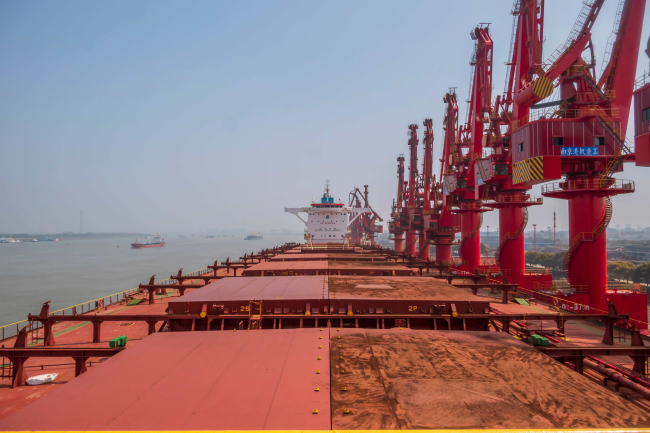
According to geopolitics expert Marc-Antoine Eyl-Mazzega, the competition for control over minerals, logistics and the flow of raw materials is benefiting the US and China. Europe lags behind in this geoeconomic race, with a tangible impact on how major powers are reshaping their defense capabilities.
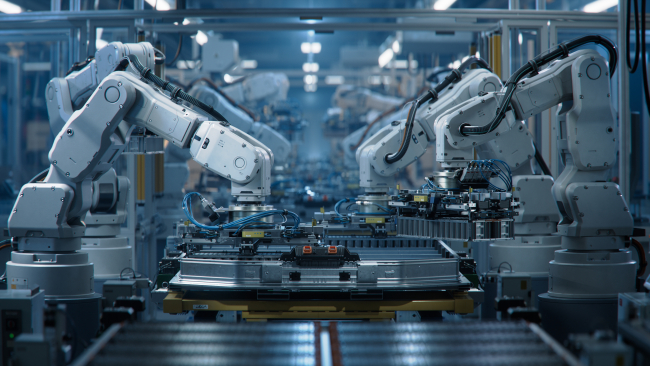
China’s EV Rise and the Strategic Challenge for Japan’s Automotive Industry
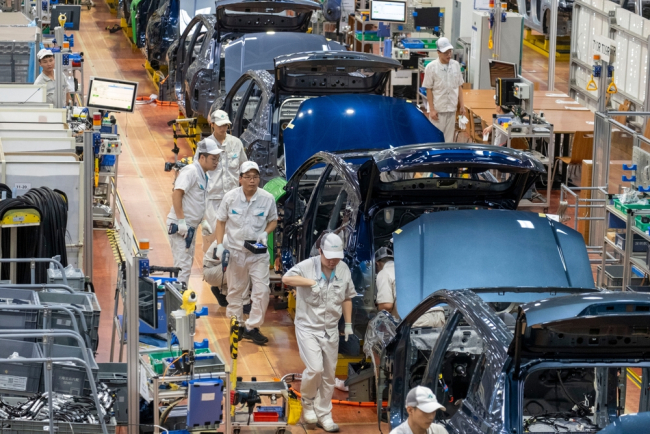
China’s rapid expansion in electric vehicle production is reshaping global automotive competition for both European and Japanese automakers. Japan —a pioneer in hybrid vehicles— is struggling to translate this leadership into battery electric vehicles (BEVs), as Chinese manufacturers rapidly scale production and exports. At the same time, China’s dominance in battery manufacturing and critical mineral processing exposes upstream vulnerabilities for Japan’s automotive industry. Together, these developments create a dual challenge: intensifying downstream competition in electric vehicle (EV) markets and continued dependence on Chinese-controlled supply chains.

Global imbalances, industrial policies, and the challenge of surging Chinese trade surpluses
The analysis of global imbalances faces a paradox: while the analytical focus has for decades been on the sustainability of current account deficits, out of concerns about their financial consequences, international political tensions stem mainly from enduring trade surpluses and their industrial impacts. Beyond President Trump’s outbursts, fears about the consequences of China’s trade surpluses are increasingly widespread.
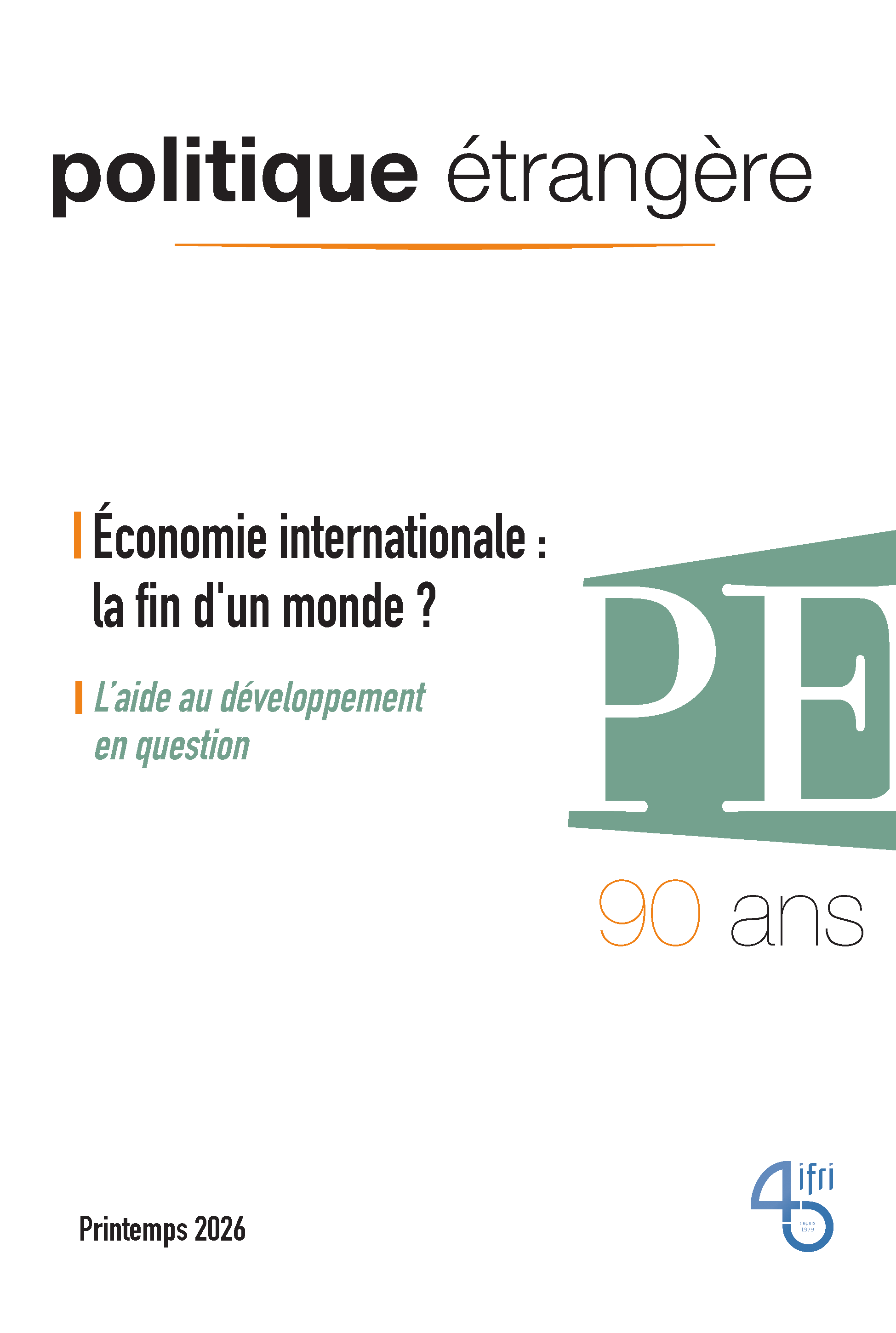
The Global Economy: Caught in the Storm / Politique étrangère, Vol. 91, No. 1, 2026
The global economy has become the primary arena for the clash of power ambitions in a world where understanding, coordination, and concerted multilateralism seem to have been permanently marginalized. In this fragmented landscape, how will American and Chinese strategies interact? Will the European Union manage to break out of its decades-old framework in order to face new competition? And will it be able, like others, to integrate the announced shift from a production economy to a digital, information economy? And what role will financial institutions, and central banks in particular, play in this transitioning international economy?
New Cold War? What New Cold War? Confronting the Geoeconomic Fragmentation Narrative with the Data
It has become widely accepted that the world economy should be seen as increasingly shaped by forces of fragmentation, resulting from geopolitical tensions. This article takes another look at this narrative, using international trade data. While an aggregate analysis is consistent with a new Cold War narrative, whereby international trade is increasingly seen as split into two blocs, this is only a mix of very different outcomes. Far from being a widespread trend, geoeconomic fragmentation of trade flows is only significant in “hotspots”: Russia's foreign trade and China-US bilateral exchanges, and the impact is massive in these cases. Outside these “hotspots”, there is no tangible sign that geopolitical tensions have been shaping international trade patterns in terms of blocs, nor is there any hint of a trend toward nearshoring – to the contrary, in fact.
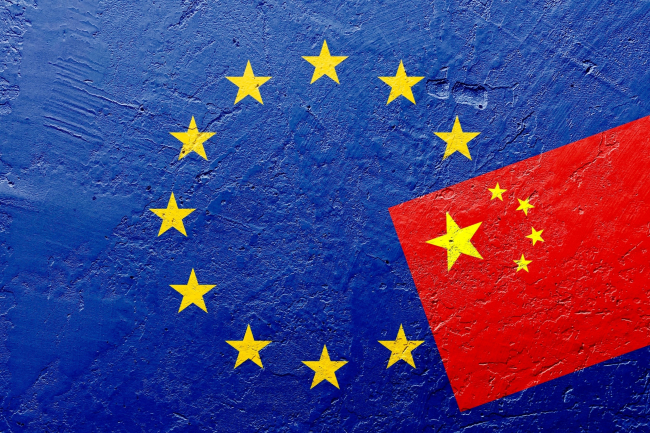
EU’s Derisking From China: A Daunting Task
With economic security as a major concern, the EU has recently turned to “derisking” from China. The EU strategy entails reducing critical dependencies and vulnerabilities, including in EU supply chains, and diversifying where necessary, while recognizing the importance and need to maintain open channels of communication.
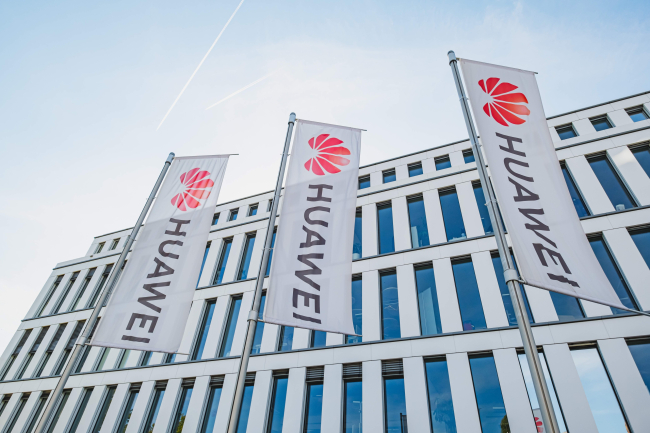
The “Huawei Saga” in Europe Revisited: German Lessons for the Rollout of 6G
While the European Union attempted to coordinate a collective response through its 5G Toolbox in Europe’s 5G infrastructure, member states diverged significantly in balancing political, economic, and technological considerations. Germany, despite its economic ties to China and status as Europe’s largest telecom market, only reached a tentative agreement in July 2024—one that appears largely symbolic.
Replay - The European Union in Competition with the United States and China. How to Balance Free Trade, Competitiveness and Economic Security?
Video replay from Ifri's conference, on December 3, 2024. As the geopolitical context has changed, so has the approach to international economic relations and the rules-based multilateral framework. Covid and Russia’s war against Ukraine have exposed the risks of extended supply chains and of having become dependent on a single supplier.
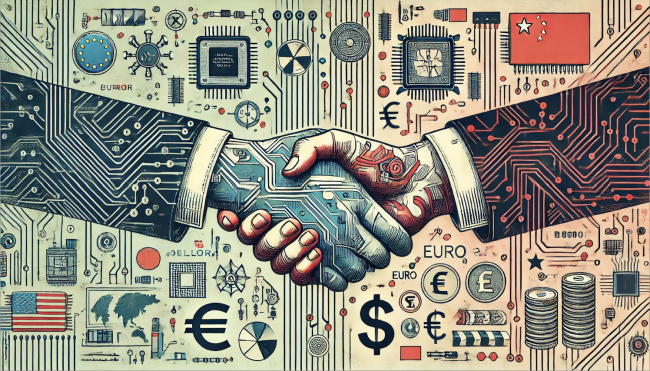
Funding A Rival: When the United States and Europe Invest in Chinese Tech
Outbound investments into rival powers are receiving increasing political attention on both sides of the Atlantic, as competition between the United States and China intensifies. The concern lies with American and European investments in certain Chinese technologies - such as artificial intelligence, biotechnology, semiconductors, or quantum computing - which could enable China to enhance its military capabilities and thus may pose risks to national and international security.
China, technical standardization, and the future of globalization
As the global economy sits at a crossroad between connectivity-driven globalization and strategic decoupling, technical standardization provides a valuable measure of where we are headed.

China in the Race to Low Earth Orbit: Perspectives on the Future Internet Constellation Guowang
In April 2021, the Chinese government officially, but rather quietly, established a new state-owned enterprise (SOE) named China SatNet. Its mission: build out China’s “mega-constellation” program for low Earth orbiting internet satellites, known as Guowang (“national network”).
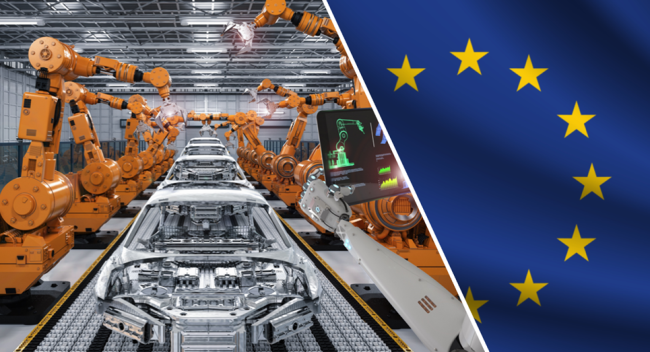
The European Union Industrial Strategy: Reconciling Competition and Geoeconomic Challenges
The EU’s basic assumptions, on which it grounds its economic and trade power, are being steadily cast into doubt. The EU’s main trade partners, the US and China, increasingly set their sights on securing their supply chains, which may further a potential decoupling.

France returns its ambassador to Australia, but years of antagonism lie ahead
France is eager to prevent the crisis from spiralling further as it recognises it is in its national interest, and President Macron’s favour, to end it. But damage has been done, writes Ahmed Aboudouh.
German Foreign Policy: Caught Between Multilateralism and Germany First
Underneath the rhetoric of commitment to a multilateral order, Germany's policy seems to be mainly structured around its national interests.
Climate and International Trade: The Clash of Powers
The fight against climate change has a major economic dimension. With climate neutrality as their new objective, the major powers are counting on green industrial policy, and trying to contain the emissions related to their imports.
China and Trade in Critical Raw Materials (CRMs)
Critical raw materials (CRMs) have become central features of a new dynamic in global power politics, with China now wielding considerable leverage. Amid rising regional and global uncertainty, resource security is back in the spotlight as a key determinant of sovereignty and national security for Europe, its allies and its partners. The very survival of key, even vital industries, from automotive to aerospace to health to energy to defense, is at stake.
The Transfer Paradox. Rethinking Global Imbalances
Global imbalances have come back to the top of the policy agenda. Many analyses and reports have been produced over recent months. The standard prescription involves better coordination of macroeconomic policies, with three familiar recommendations: higher consumption in China, higher investment in Europe, and fiscal consolidation in the United States.
Fragmented Europe: Dealing with China as a technology and innovation power
How is Europe navigating China’s ascension as a technological power? The latest report by the European Think-tank Network on China (ETNC) provides a nuanced account of a converging, yet still fragmented approach across 22 countries.
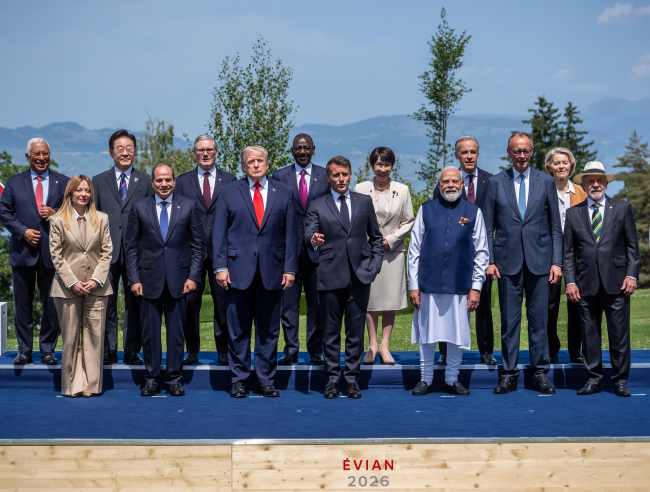
The G7 Leaders’ Summit in France: An Unexpected Success
Overall, it was a successful summit for President Macron. However, caution is warranted regarding the 2026 G7’s lasting legacy, as the unpredictability of the U.S. president could affect the durability of commitments made.
What Do Companies Fear? The New Geography of Geopolitical Risk
Geopolitical risk has established itself, within the space of a few years, as a central variable in corporate strategy.
China’s EV Rise and the Strategic Challenge for Japan’s Automotive Industry
China’s rapid expansion in electric vehicle production is reshaping global automotive competition for both European and Japanese automakers. Japan —a pioneer in hybrid vehicles— is struggling to translate this leadership into battery electric vehicles (BEVs), as Chinese manufacturers rapidly scale production and exports. At the same time, China’s dominance in battery manufacturing and critical mineral processing exposes upstream vulnerabilities for Japan’s automotive industry. Together, these developments create a dual challenge: intensifying downstream competition in electric vehicle (EV) markets and continued dependence on Chinese-controlled supply chains.
Global imbalances, industrial policies, and the challenge of surging Chinese trade surpluses
The analysis of global imbalances faces a paradox: while the analytical focus has for decades been on the sustainability of current account deficits, out of concerns about their financial consequences, international political tensions stem mainly from enduring trade surpluses and their industrial impacts. Beyond President Trump’s outbursts, fears about the consequences of China’s trade surpluses are increasingly widespread.
The Global Economy: Caught in the Storm / Politique étrangère, Vol. 91, No. 1, 2026
The global economy has become the primary arena for the clash of power ambitions in a world where understanding, coordination, and concerted multilateralism seem to have been permanently marginalized. In this fragmented landscape, how will American and Chinese strategies interact? Will the European Union manage to break out of its decades-old framework in order to face new competition? And will it be able, like others, to integrate the announced shift from a production economy to a digital, information economy? And what role will financial institutions, and central banks in particular, play in this transitioning international economy?
New Cold War? What New Cold War? Confronting the Geoeconomic Fragmentation Narrative with the Data
It has become widely accepted that the world economy should be seen as increasingly shaped by forces of fragmentation, resulting from geopolitical tensions. This article takes another look at this narrative, using international trade data. While an aggregate analysis is consistent with a new Cold War narrative, whereby international trade is increasingly seen as split into two blocs, this is only a mix of very different outcomes. Far from being a widespread trend, geoeconomic fragmentation of trade flows is only significant in “hotspots”: Russia's foreign trade and China-US bilateral exchanges, and the impact is massive in these cases. Outside these “hotspots”, there is no tangible sign that geopolitical tensions have been shaping international trade patterns in terms of blocs, nor is there any hint of a trend toward nearshoring – to the contrary, in fact.
EU’s Derisking From China: A Daunting Task
With economic security as a major concern, the EU has recently turned to “derisking” from China. The EU strategy entails reducing critical dependencies and vulnerabilities, including in EU supply chains, and diversifying where necessary, while recognizing the importance and need to maintain open channels of communication.
The “Huawei Saga” in Europe Revisited: German Lessons for the Rollout of 6G
While the European Union attempted to coordinate a collective response through its 5G Toolbox in Europe’s 5G infrastructure, member states diverged significantly in balancing political, economic, and technological considerations. Germany, despite its economic ties to China and status as Europe’s largest telecom market, only reached a tentative agreement in July 2024—one that appears largely symbolic.
Funding A Rival: When the United States and Europe Invest in Chinese Tech
Outbound investments into rival powers are receiving increasing political attention on both sides of the Atlantic, as competition between the United States and China intensifies. The concern lies with American and European investments in certain Chinese technologies - such as artificial intelligence, biotechnology, semiconductors, or quantum computing - which could enable China to enhance its military capabilities and thus may pose risks to national and international security.
China, technical standardization, and the future of globalization
As the global economy sits at a crossroad between connectivity-driven globalization and strategic decoupling, technical standardization provides a valuable measure of where we are headed.
China in the Race to Low Earth Orbit: Perspectives on the Future Internet Constellation Guowang
In April 2021, the Chinese government officially, but rather quietly, established a new state-owned enterprise (SOE) named China SatNet. Its mission: build out China’s “mega-constellation” program for low Earth orbiting internet satellites, known as Guowang (“national network”).
Industry Response to New Protectionism
In this special issue of Politique étrangère devoted to the proceedings of the conference organized by Ifri on April 10, 2019, in the Grand Amphitheater of the Sorbonne, on the occasion of its fortieth anniversary, discover the debate moderated by Thierry de Montbrial between Jean-Paul Agon and Patrick Pouyané.
Rethinking Global Imbalances
Today’s global imbalances, starting with China's massive trade surplus, are not simply the result of poor macroeconomic coordination. Rather, they reflect long-term strategic thinking and a departure from the bias toward openness on which the postwar trade order was built.
Geoeconomics: 'All dependencies, minerals, currencies and semiconductors, are now being weaponized'
According to geopolitics expert Marc-Antoine Eyl-Mazzega, the competition for control over minerals, logistics and the flow of raw materials is benefiting the US and China. Europe lags behind in this geoeconomic race, with a tangible impact on how major powers are reshaping their defense capabilities.
France returns its ambassador to Australia, but years of antagonism lie ahead
France is eager to prevent the crisis from spiralling further as it recognises it is in its national interest, and President Macron’s favour, to end it. But damage has been done, writes Ahmed Aboudouh.
Replay - The European Union in Competition with the United States and China. How to Balance Free Trade, Competitiveness and Economic Security?
Video replay from Ifri's conference, on December 3, 2024. As the geopolitical context has changed, so has the approach to international economic relations and the rules-based multilateral framework. Covid and Russia’s war against Ukraine have exposed the risks of extended supply chains and of having become dependent on a single supplier.
Ifri, a foundation recognized as being of public utility, relies largely on private donors – companies and individuals – to guarantee its sustainability and intellectual independence. Through their funding, donors help maintain the Institute's position among the world's leading think tanks. By benefiting from an internationally recognized network and expertise, donors refine their understanding of geopolitical risk and its consequences on global politics and the economy. In 2026, Ifri partners with over 90 French and international companies and organizations.

The European Think-tank Network on China (ETNC) is a gathering of China experts from a selection of European research institutes. It is devoted to the policy-oriented study of Chinese foreign policy and relations between China and European countries as well as China and the EU. It facilitates regular exchanges among participating researchers with a view to deepening the understanding within the European policy and research community and the broader public of how Europe, as a complex set of actors, relates with China and how China’s development and evolving global role is likely to impact the future of Europe. The network’s discussions and analyses take a decidedly ‘bottom-up’ approach, accounting for the various aspects of bilateral relations between European countries and China, and the points of convergence and divergence among EU member states in order to examine EU-China relations in a realistic and comprehensive way. The views presented in ETNC reports are the sole responsibility of the signed authors and do not in any way represent the views of all members of the ETNC, its participating institutions, nor the institutions with which the authors are affiliated.