




Practical information
Accessibility
Themes and regions
Related centers and programs
This is a private event.
Learn more about our corporate support packages
Since the end of the Cold War, the number of US nuclear weapons stationed in Europe has fallen more than seventy-fold, yet their presence in Belgium, Germany, Italy, the Netherlands, and Turkey remains a quiet pillar of NATO's deterrence posture. This "nuclear sharing" arrangement, central to the Alliance since its founding, has long been contested by public opinion, political parties, and civil society across Europe, without ever being abandoned by host governments. This paradox lies at the heart of the seminar: why does such an unpopular policy persist?
Drawing on a novel comparative study of all five host nations, the discussion will show how technocratic elites navigate the tension between responsiveness to domestic pressures and responsibility toward international and allied commitments. It will explore the sources of this domestic contestation - public opinion, parties, civil society mobilisation - and how political and administrative elites manage it, against a backdrop of collapsing arms control, the war in Ukraine, and renewed debate over the future of nuclear weapons in Europe.
Speaker : Dr. Michal Onderco, Professor of International Relations at Erasmus University Rotterdam and Author of Europe’s Nuclear Umbrella: Contesting Nuclear Sharing since 2010, Cambridge University Press, 2025.
Chair : Héloïse Fayet, Head of the Deterrence & Proliferation Research Program at Ifri.
Find out more
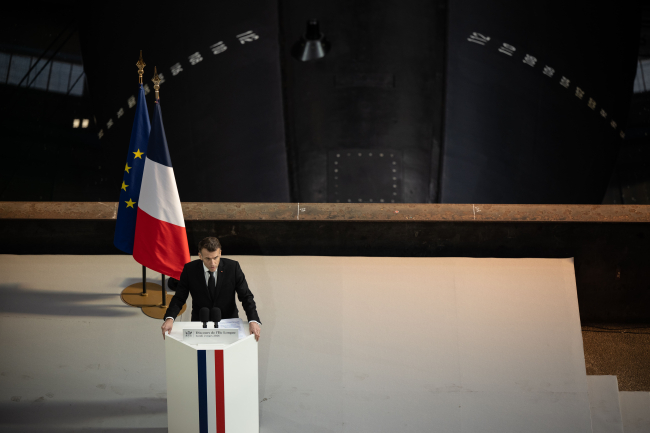
La dissuasion nucléaire française à l’épreuve d’un nouvel ordre européen – Analyse du discours présidentiel du 2 mars 2026
Le discours du 2 mars 2026 du président de la République sur la dissuasion nucléaire marque une inflexion stratégique importante dans un contexte international dégradé. Entre menace russe persistante et incertitudes sur les garanties de sécurité américaines, la France affirme une ambition renforcée pour la défense européenne. La notion de « dissuasion avancée » et les évolutions capacitaires annoncées par Emmanuel Macron esquissent ainsi une nouvelle étape, à la fois structurante et durable.
Related Subjects
Other events
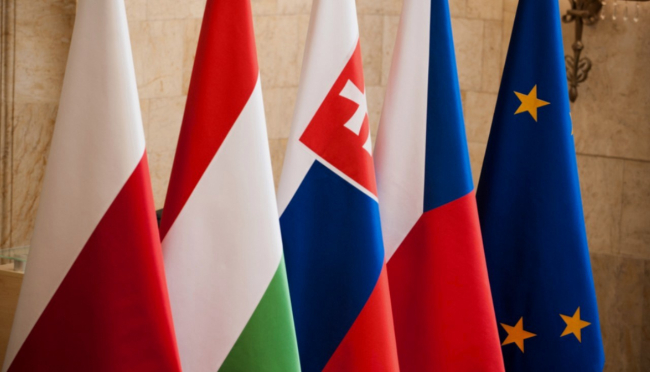
A New Moment for Central Europe? Regional Cooperation in a Time of European Strategic Choices
Recent political developments in Central Europe have revived the debate about the future of regional cooperation and the Visegrád Group. Changes in Hungary, Poland, the Czech Republic and Slovakia, together with Austria’s growing interest in closer cooperation with its neighbours, could create new opportunities for dialogue and coordination around shared priorities.

China’s Nuclear Buildup: Developments, Drivers, and Implications for Major-Power Relations and Arms Control
China has been steadily expanding its nuclear arsenal for several years amid levels of geopolitical tension unseen since the end of the Cold War, marked by a resurgence in nuclear proliferation and a broader, global arms race.

Reinventing Coordination in an Age of Fragmentation 3rd Paris Geoeconomic Dialogue
The world economy is being reordered. The certainties of the post-Cold War era, open trade, dollar centrality, predictable multilateral coordination, are giving way to a landscape shaped by rivalry between the United States and China, the weaponization of interdependence, and a scramble to secure supply chains, technologies and critical resources. What once looked like a stable architecture now appears fragile, contested, and in places actively being dismantled.