





Russia, the Palestinians and Gaza: Adjustments after October 7th
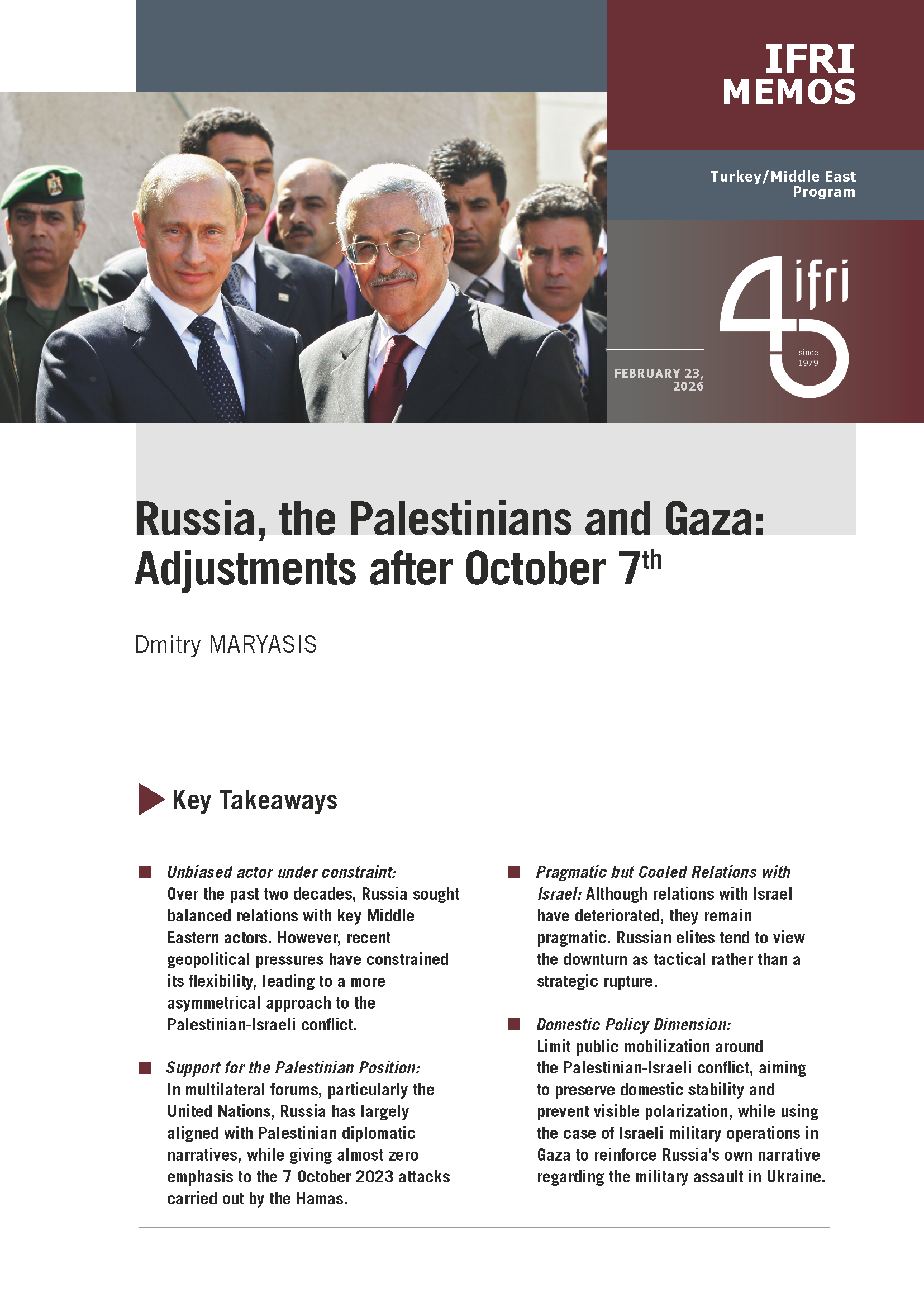
The Soviet Union (USSR), and subsequently the Russian Federation as its internationally recognized legal successor, has consistently sought to play a visible role in efforts to resolve the Israeli-Palestinian conflict.
Key Takeaways
- Unbiased actor under constraint: Over the past two decades, Russia sought balanced relations with key Middle Eastern actors. However, recent geopolitical pressures have constrained its flexibility, leading to a more asymmetrical approach to the Palestinian-Israeli conflict.
- Support for the Palestinian Position: In multilateral forums, particularly the United Nations, Russia has largely aligned with Palestinian diplomatic narratives, while giving almost zero emphasis to the 7 October 2023 attacks carried out by the Hamas.
- Pragmatic but Cooled Relations with Israel: Although relations with Israel have deteriorated, they remain pragmatic. Russian elites tend to view the downturn as tactical rather than a strategic rupture.
- Domestic Policy Dimension: Limit public mobilization around the Palestinian-Israeli conflict, aiming to preserve domestic stability and prevent visible polarization, while using the case of Israeli military operations in Gaza to reinforce Russia’s own narrative regarding the military assault in Ukraine.
President of the United States Donald Trump invited Russian President Vladimir Putin to join the Gaza Board of Peace. The Russian leader, on the one hand, reacted positively to the initiative and to the invitation itself, and the relevant governmental agencies were instructed to conduct a detailed assessment of the political and financial implications of participation in the proposed mechanism. On the other hand, Putin suggested that the required Russian contribution of $1 billion should be drawn from Russian sovereign assets that remain frozen in Western financial institutions. Importantly, the Russian president used this occasion to emphasize once again Moscow’s declared concern for the future of the Palestinian people and for the prospects of a comprehensive political settlement.
The Soviet Union (USSR), and subsequently the Russian Federation as its internationally recognized legal successor, has consistently sought to play a visible role in efforts to resolve the Israeli-Palestinian conflict. Over the decades, however, both the intensity of this involvement and the conceptual foundations that guided it have undergone significant change. These variations reflected broader shifts in Moscow’s foreign-policy priorities, in its understanding of global power dynamics, and in its perception of the Middle East’s place within the evolving international system. Different historical periods were characterized by distinct strategic assumptions regarding Russia’s regional role, its relations with key local actors, and the diplomatic instruments considered appropriate for advancing its interests.
This Memo examines the main factors that have shaped Russian policy toward Israel’s war with Hamas and the subsequent regional and international ramifications of this conflict. Rather than treating Moscow’s position after October 7, 2023, as an isolated and purely situational reaction, the analysis deliberately situates it within a longer trajectory of policy evolution. Particular attention is paid to structural constraints, accumulated diplomatic practices, and the changing geopolitical contexts that influenced Russian decision-making.
For analytical clarity, the evolution of the Russian Federation’s position on the Israeli-Palestinian conflict is divided into three broad chronological phases. The first phase encompasses the period from the early 2000s until February 2022. The second spans the period from the outbreak of the war in Ukraine in February 2022 to October 2023. The third phase begins after October 7, 2023, following the launch of Israel’s military operation “Iron Swords” in the Gaza Strip.

Available in:
Themes and regions
ISBN / ISSN
Share
This page contains only a summary of our work. If you would like to have access to all the information from our research on the subject, you can download the full version in PDF format.
Russia, the Palestinians and Gaza: Adjustments after October 7th

Turkey/Middle East Program
Ifri's Turkey/Middle East Program aims to provide expertise on the trends and developments in politics, societies and economies across the region.
The programme has the following objectives:
- Proposing a new approach towards the MENA region through an analysis of local, regional, and international dynamics with the potential to guide and influence new policies.
- Highlighting the role of foreign powers which have traditionally been present in the region and analyzing the new role taken on by emerging countries ;
- Anticipating new directions and outlooks in each country.
- Interpreting risks and potentials and putting forward new templates for analysis.
The programme has built a dense network of researchers and experts who provide expertise on the MENA region and working together on a range of crosscutting themes.
Russia/Eurasia Center
Founded in 2005 within Ifri, the Russia/Eurasia Center conducts research and organizes debates on Russia, Eastern Europe, Central Asia, and the South Caucasus. Its goal is to understand and anticipate the evolution of this complex and rapidly changing geographical area in order to enrich public discourse in France and Europe and to assist in strategic, political, and economic decision-making.
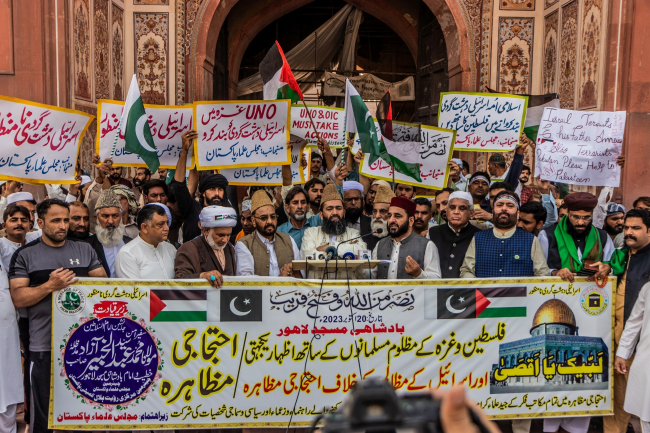
Pakistan and the Israel-Palestine Conflict: Transformation in Pakistan’s Approach After the War in Gaza
Pakistan has long combined vocal support for the Palestinian cause with covert engagement with Israel. Since the war in Gaza, this balance has become untenable: public opinion is united against Israel, joining Trump’s Board of Peace has drawn rare cross-party criticism, and new regional alignments put normalization out of reach.
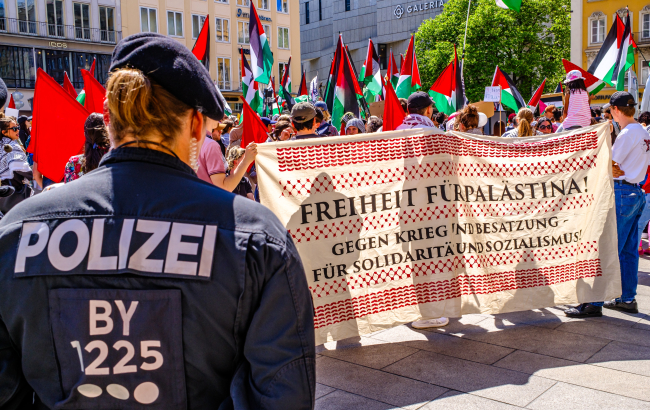
Overwhelmed: Germany’s Israel Policy after October 7th
Few countries have been as profoundly affected by the attacks of October 7th and the subsequent Gaza war as Germany. This is not merely a political controversy. It reflects a deeper structural problem: German-Israel policy has long rested on two guiding principles—a particular historical responsibility toward Israel derived from the Holocaust, and a firm commitment to universalist norms, above all international law and human rights.
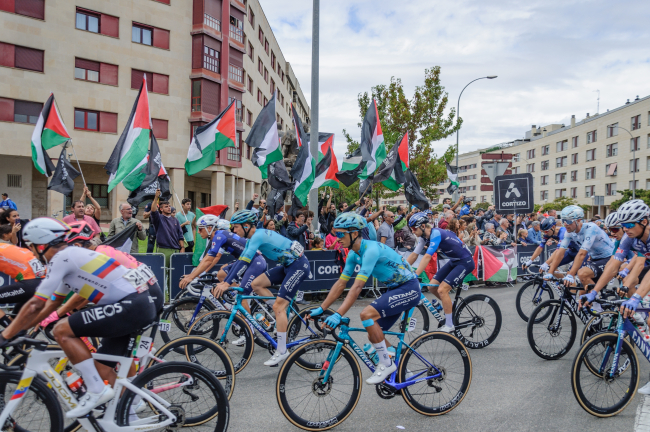
Escalation within Continuity: Spain’s Foreign Policy towards Israel and Palestine after October 7th
Over the past two years, Spain has emerged as one of the most vocal countries in supporting the Palestinian cause. While Madrid initially aligned with the prevailing European position, recognizing Israel’s right to self-defense after the 7 October attacks, it soon distinguished itself from most European Union (EU) Member States by questioning and later condemning Israel’s conduct of war in Gaza.
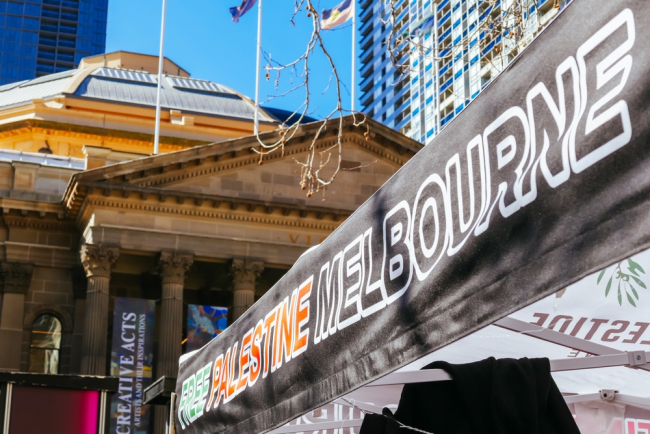
Australia’s Recognition of Palestine: A Case of Supporting the Status Quo over Accountability
Hamas’s terrorist attacks against Israel on October 7, 2023, killed over a thousand Israelis, altering irrevocably the way the Palestinian/Israeli conflict is viewed internationally. Australia’s government professed profound shock and disgust at Hamas’s attacks, together with its unwavering diplomatic and political support for Israel. But as Israel’s response became more concerned with exacting revenge and as the pretext to fulfill long-held ideological dreams of a Greater Israel, support from Australia became more muted and conditional. This culminated in Australia joining Britain, France, and Canada in formally recognizing a Palestinian state at the United Nations General Assembly meeting in September 2025.