



Japan's Challenges in Public Diplomacy, An American Vision
Japan’s public diplomacy (PD) profile rests almost exclusively on the promotion of its cultural soft power. Today, in the complex geopolitical setting of Asia, in which national rivalries are reviving competing wartime history narratives and territorial disputes, this approach is no longer sufficient to advance Japan’s own national interests and gain favorable opinion abroad. Under the Prime Minister Abe, Japan has begun to transform and upgrade its public diplomacy. However, the country is still facing a number of challenges.
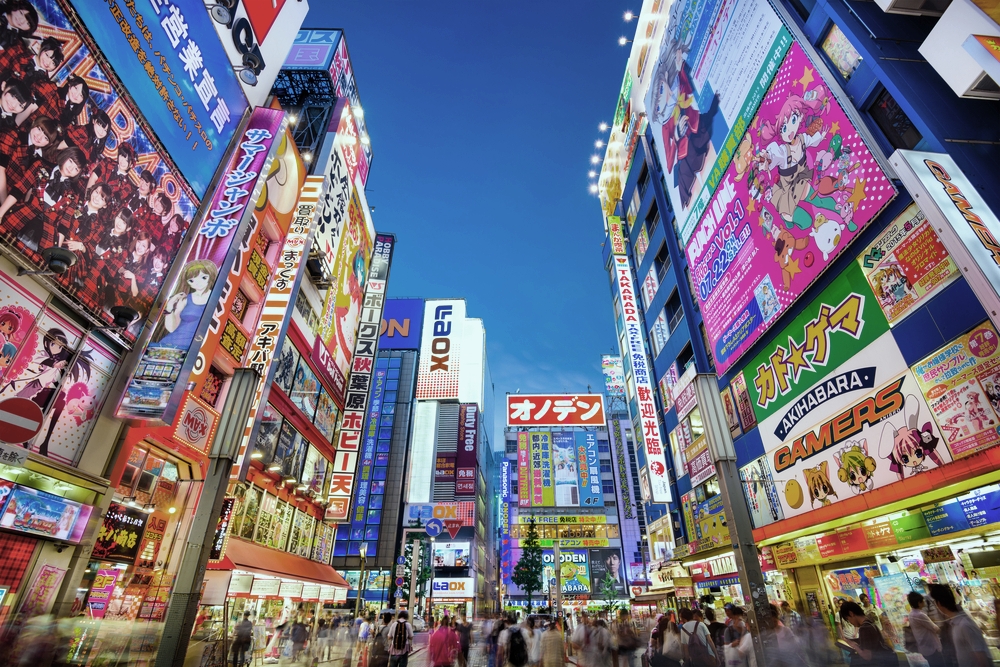
First, Northeast Asia is a complicated region to navigate: despite strong economic interdependence, countries are jockeying for influence, and the competition among national narratives is fierce. Second, Japan has a mixed image: the Cool Japan brand full of cute idols, anime and pop music has to coexist with the darker figure of a more nationalist Japan that aims to normalize its military status and reinterpret in a rosy way its war history. Third, Japan has yet to develop efficient tools to communicate with the world. If Shinzo Abe were successful in giving a new impetus to develop a truly global public diplomacy, developing new tools and narratives, his legacy is still mixed.
The paper suggests five paths Japan could follow to raise its international image and better communicate its story to the world. First, Japan should go beyond political personality in promoting its public diplomacy. Second, it should expand communication skills and public diplomacy study in its education system. Third, its PD should target not only foreign governments, but also people. Fourth, Japan should be careful to increase information sharing about itself. Fifth, national narrative and PD tools should be strengthened in a systemic manner.
Nancy Snow is the first public diplomacy professor in Japan, Pax Mundi Professor of Public Diplomacy, Kyoto University of Foreign Studies, where she is establishing Japan’s first academic initiative in global public diplomacy. She holds a Ph.D. in International Relations from the School of International Service, The American University in Washington, D.C. She has been a public diplomacy scholar-practitioner for over two decades, with two Fulbright fellowships (Germany, Japan) and an Abe Fellowship at Keio University. Snow worked in public diplomacy at both the State Department and the U.S. Information Agency as a Presidential Management Fellow.
This page contains only a summary of our work. If you would like to have access to all the information from our research on the subject, you can download the full version in PDF format.
Japan's Challenges in Public Diplomacy, An American Vision


Center for Asian Studies
Asia is a nerve center for multiple global economic, political and security challenges. The Center for Asian Studies provides documented expertise and a platform for discussion on Asian issues to accompany decision makers and explain and contextualize developments in the region for the sake of a larger public dialogue.
The Center's research is organized along two major axes: relations between Asia's major powers and the rest of the world; and internal economic and social dynamics of Asian countries. The Center's research focuses primarily on China, Japan, India, Taiwan and the Indo-Pacific, but also covers Southeast Asia, the Korean peninsula and the Pacific Islands.
The Centre for Asian Studies maintains close institutional links with counterpart research institutes in Europe and Asia, and its researchers regularly carry out fieldwork in the region.
The Center organizes closed-door roundtables, expert-level seminars and a number of public events, including an Annual Conference, that welcome experts from Asia, Europe and the United States. The work of Center’s researchers, as well as that of their partners, is regularly published in the Center’s electronic journal Asie.Visions.

China as an ambivalent supporter of the WTO and the multilateral trading system
Amid rising trade tensions between Europe and China and broader uncertainty in the international rules-based trade regime, Beijing has worked to preserve and bolster the multilateral trading system while at the same time failing to reform the domestic policies that have served to undermine that same system.

Pakistan and the Israel-Palestine Conflict: Transformation in Pakistan’s Approach After the War in Gaza
Pakistan has long combined vocal support for the Palestinian cause with covert engagement with Israel. Since the war in Gaza, this balance has become untenable: public opinion is united against Israel, joining Trump’s Board of Peace has drawn rare cross-party criticism, and new regional alignments put normalization out of reach.
The Oceania Factor in France’s Evolving Indo-Pacific Strategy
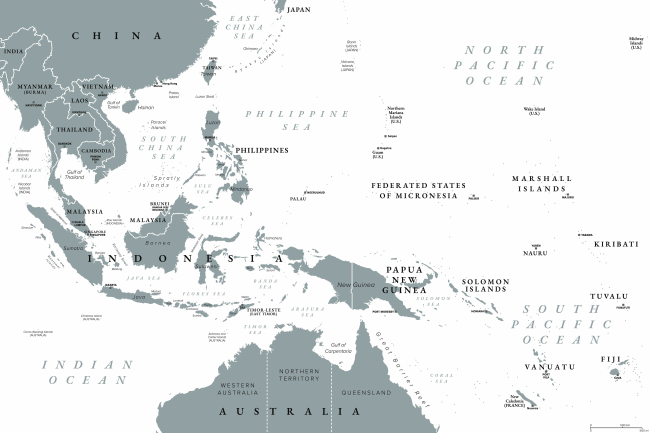
This paper examines the two-way relationship between France’s Indo-Pacific strategy and developments in Oceania. Oceania was not a priority in the initial years of France’s Indo-Pacific strategy, as the region was largely treated as secondary to major strategic hotspots and key partnerships, while overseas territories were primarily handled as domestic issues and recipients of a top-down strategy.
France’s View: From Diplomacy to Public-Private Action
France has emerged as the EU’s IMEC forerunner, combining port infrastructure, diplomatic alliances and public-private cooperation. With Marseille Fos at its core, the country brings a strategic hub for logistics, energy and digital connectivity to the corridor.