U.S. Foreign Policy
Recent presidencies have sought to restructure U.S. foreign policy around opposition to China. The Biden administration is seeking to revitalize alliances (AUKUS, European Union) and manage well the crises in Ukraine and the Middle East.

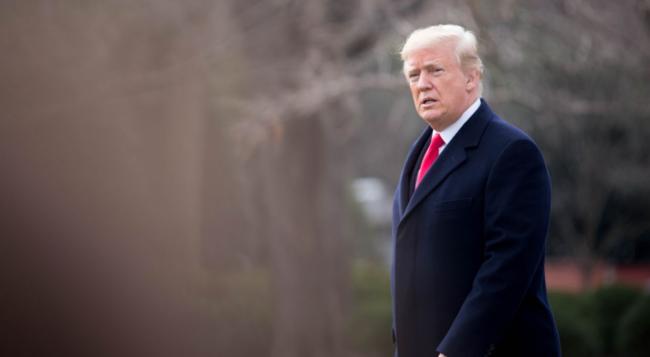
Embattled at Home, Trump Finds Himself Isolated Abroad, Too
With American cities burning and the coronavirus still raging, killing more people than in any other country, President Trump also has growing problems overseas. He has never before been so isolated and ignored, even mocked.
The Future of Europe in the Context of Sino-American Competition - Conclusions
In this special issue of Politique étrangère devoted to the proceedings of the conference organized by Ifri on April 10, 2019, at the Grand Amphitheater of the Sorbonne, on the occasion of its 40th anniversary, read the speech by Jean-Yves Le Drian, French Minister of Europe and Foreign Affairs.
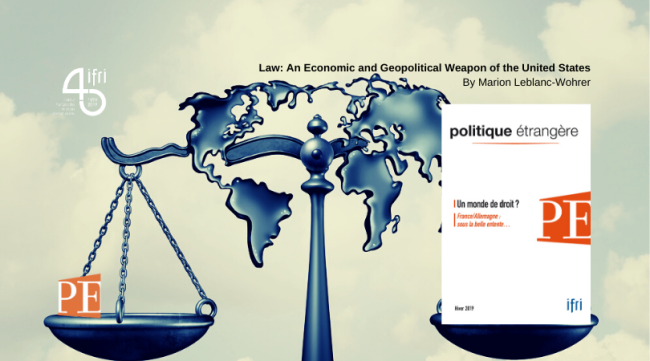
Law: An Economic and Geopolitical Weapon of the United States
From the 2000s, the United States has developed an extraterritorial legal policy that began with fighting corruption but has since broadened considerably.
U.S. foreign policy and the World's new power balance: an interview with Gordon Adams
Gordon Adams, Professor Emeritus of International Relations, School of International Service, American University speaks about U.S. foreign policy and the World's new power balance on the sidelines of Ifri's 18th annual U.S. conference held on December 6, 2019.
U.S. Foreign Policy in the Age of Trump
Despite a very particular style, the Trump administration's foreign policy continues on many points the American withdrawal from World affairs which had started under Barack Obama. The main trends of thought of American foreign policy show this evolution, with the resurgence of non-interventionist and even nationalist ideas amongs DC think-tankers.
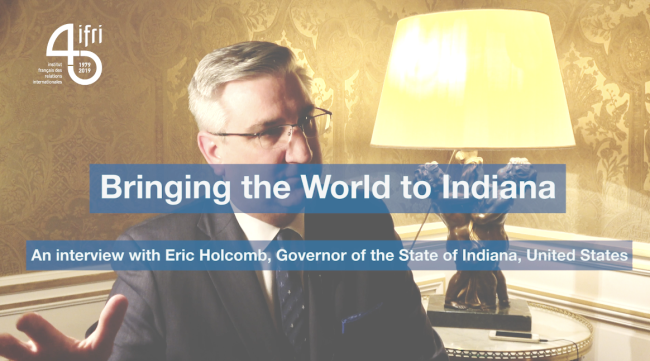
An interview with Eric Holcomb, Gouvernor of the State of Indiana
During his visit in France on March 7th, 2019, Ifri had the pleasure to realize this interview with Eric HOLCOMB, Governor of the State of Indiana, USA.
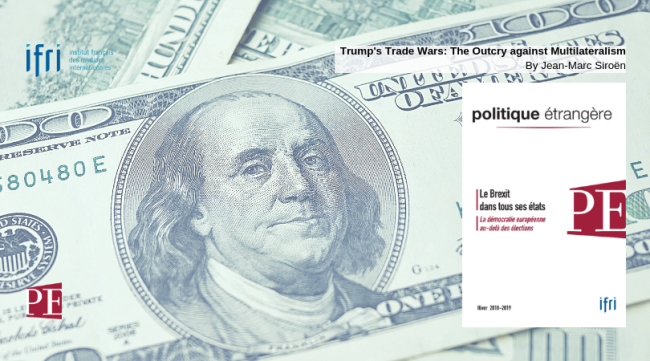
Trump’s Trade Wars: The Outcry Against Multilateralism
The aim of multilateral trade as established after the Second World War was to prevent trade wars.
Bad cop, Bad cop : la nomination de Mike Pompeo et John Bolton
Benjamin Haddad, a Research Fellow at the Hudson Institute in Washington D.C., reviews Mike Pompeo's appointment as the new U.S. Secretary of State and John Bolton's recent nomination as National Security Advisor. According to Haddad, U.S. President Donald Trump has appointed two lawyers known for their hawkish and interventionist stands on foreign policy and security matters. He thus explains what official policies are to be expected on Iran, North Korea and Russia.

US Foreign Policy: Mr. Trump's Foreboding Vision
Since Donald Trump’s rise to power, American foreign policy has become more unpredictable. Nonetheless, several coherent strategies stand out, in particular those that advocate a nationalist approach. An examination of Trump’s entourage also reveals some more conventional figures, who may exert some degree of influence. However, there may yet be surprises to come.

International Order and Trump’s America
Donald Trump is disrupting the established world order. But, despite his provocative declarations, is he really looking to challenge it?
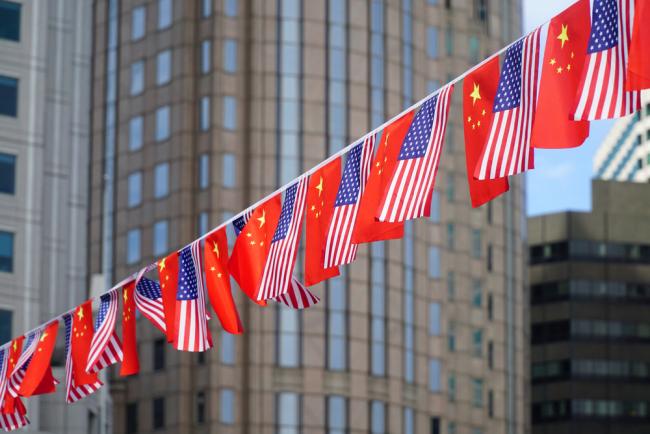
U.S. Visions of China: From Henry Kissinger to Donald Trump
Chinese power continues to grow both militarily and economically: its disputed territorial gains in the South China Sea are complemented by its extensive investment initiative in the New Silk Roads through the Eurasian continent.
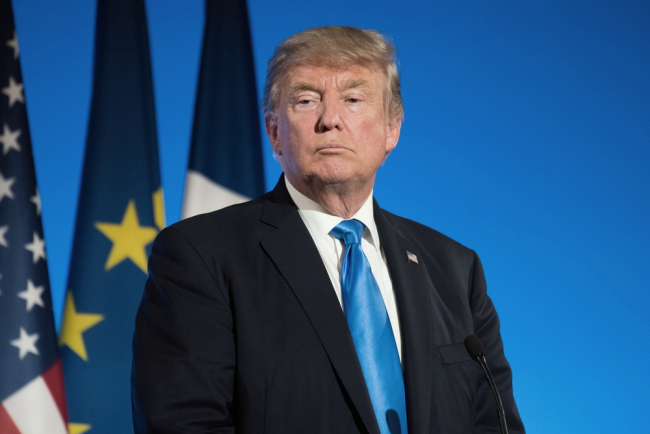
Trump, un an après. Un monde à l'état de nature ?
In the week following Trump’s election, Ifri published a study to identify the likely changes in U.S. foreign policy. From the outset, this election appeared as a change in the U.S.’ trajectory, with consequences on the power relations and functioning of the international system.
Donald Trump's challenge to American democracy and the western alliance
On April 27, 2017, Ifri hosted David FRUM (former speechwriter for President George W. Bush, senior editor for The Atlantic magazine) to discuss Donald Trump's challenge to American democracy and the western alliance.
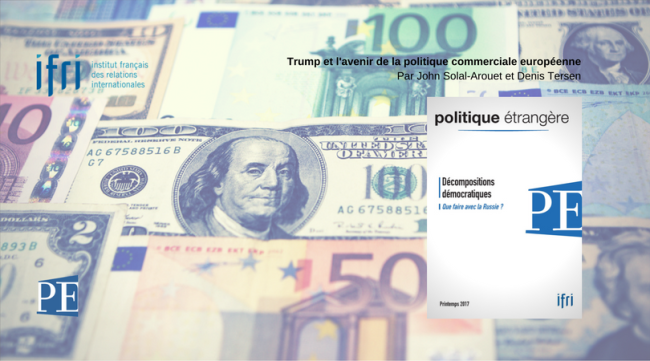
With Trump, Time to Reinvent the European Trade Policy
The new American administration’s protectionist tendencies need to be taken seriously.
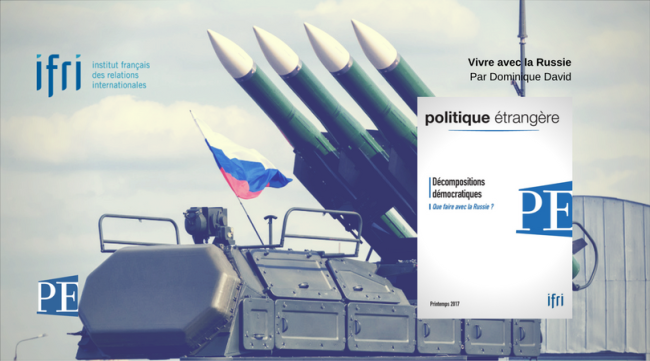
Living with Russia
Russia’s power comes, in part, from the West’s errors and illusions in the wake of the Cold War.
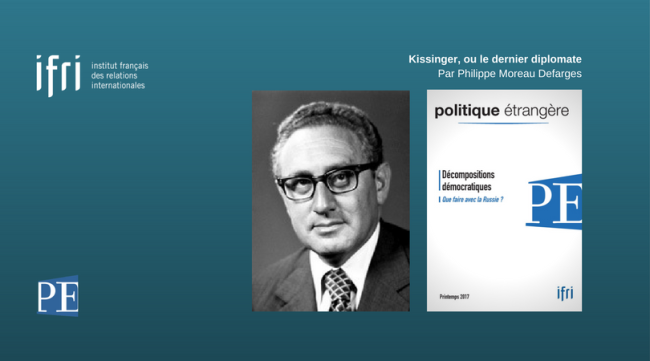
Kissinger, or the Last Diplomat
In the second half of the 20th century, Kissinger evokes the fundamental choices underpinning American diplomacy.
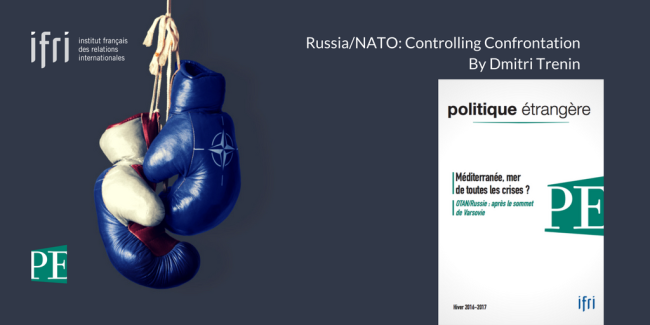
Russia/NATO: Controlling Confrontation
Current hostilities between the United States, NATO and Russia, though they might not be at Cold War levels, do indicate real danger. NATO’s continued expansion toward the east and the deployment of defensive American antimissiles in Europe constitute serious strategic problems for Moscow.
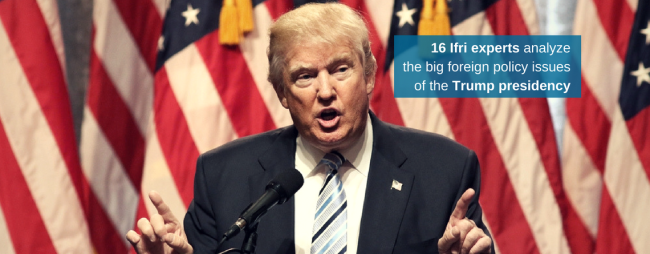
Le monde selon Trump. Anticiper la nouvelle politique étrangère américaine
What will become of US foreign policy under Donald Trump? A selection of Ifri researchers has come together to offer their thoughts on this question. Our experts cover an array of topics through 14 contributions, ranging from the future Sino-American relations, through US engagement in the Middle East, to the prospects of a renewed transatlantic relationship. This analysis intends to help readers anticipate the outcomes of this election in order to facilitate decision-making.

Hillary Clinton et le leadership américain
Hillary Clinton, the frontrunner in the U.S. presidential election, has plans for American foreign policy. Clinton wants ISIS and Bashar Al-Assad out of Syria and to focus on human rights in trade negotiations with China. Now, Clinton and her campaign hope that voters will believe in her vision and her ability to make it happen.
The Middle East that Awaits a New US Administration
Along with a history marked by intervention from external powers, the Middle East is now confronting conflicts which combine political, ethnic and religious dimensions. The United States can not withdraw its “leadership” in the area. Aside from the Syrian question, the next American administration will have to redefine the network of partnerships and alliances in the region and grapple with a multitude of problems, none of which have simple solutions.
Ifri, a foundation recognized as being of public utility, relies largely on private donors – companies and individuals – to guarantee its sustainability and intellectual independence. Through their funding, donors help maintain the Institute's position among the world's leading think tanks. By benefiting from an internationally recognized network and expertise, donors refine their understanding of geopolitical risk and its consequences on global politics and the economy. In 2026, Ifri partners with over 90 French and international companies and organizations.