




U.S. Foreign Policy
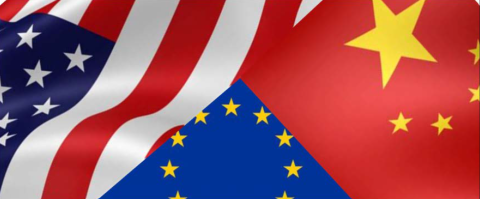
Recent presidencies have sought to restructure U.S. foreign policy around opposition to China. The Biden administration is seeking to revitalize alliances (AUKUS, European Union) and manage well the crises in Ukraine and the Middle East.
The United States: Internal and External Perspectives
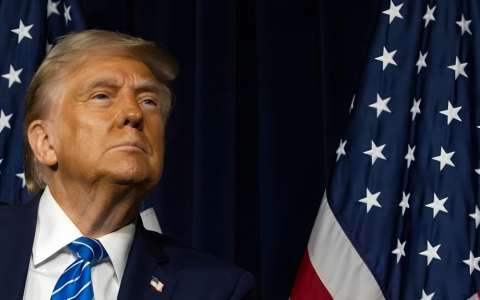
Plenary session of the 2026 World Policy Conference dedicated to analyzing the continuities and discontinuities of American policy under the presidency of Donald Trump.
Both sides of the Atlantic | Warsaw European Conversation 2026
This episode discusses the future of transatlantic relations and the evolution of security policy on both sides of the Atlantic. It examines France’s strategic stance and the implications of potential leadership change. It also looks at the dynamics of U.S. domestic politics – the role of political parties and civil society in curbing Donald Trump’s power, and the significance of the midterm elections. It considers what these processes mean for Europe, especially in the context of Article 5. Joining Marta Prochwicz-Jazowska, Deputy Head of the ECFR Warsaw office, in the discussion will be Thomas Gomart, director of the French Institute of International Relations, and Amanda Sloat, professor at the School of Politics, Economics, and Global Affairs at IE University.
Replay - Conference with Chris Wright, Secretary, U.S. Department of Energy
Welcomed at the French Institute of International Relations (Ifri), Chris Wright outlined his vision of American energy policy built around two core axes: the human reality of energy access, and a data-driven approach. For the Secretary, energy is the foundation of prosperity, health, and longer life expectancy on a global scale. His doctrine rests on an ambition of American "energy dominance" — not merely independence, but the capacity to produce at scale in order to lower domestic costs, reindustrialize the country, and support U.S. allies.
The European Pillar of Security
Leo Litra and Lesia Ogryzko are joined by Élie Tenenbaum and Oleksandr Sushko to discuss June’s NATO summit—and what Europe’s security step up means for Ukraine.
Thomas Gomart, director of the French Institute of International Relations: 'Trump reasserts the US' strategic centrality'
By bombing Iran alongside Israel, Donald Trump has performed a show of force aimed at China and Russia, explains the director of the French Institute of International Relations in an interview.
Trump's Indo-Pacific Vision & Japan's Strategic Autonomy
Satoru Mori, Senior Fellow at the Nakasone Peace Institute, explores key insights into President Trump's likely priorities for the Indo-Pacific region. His primary concerns include addressing economic trade imbalances with countries like China, Japan, and South Korea. Additionally, he aims to deter regional conflicts, particularly over Taiwan, and wishes to advance the denuclearization of North Korea.
Kremlin Is Top Destination For Spooked European Leaders
Rarely in recent years has the Kremlin been so popular with European visitors. French President Emmanuel Macron arrives Monday. The Hungarian prime minister visited last week. And in days to come, the German chancellor will be there, too. All are hoping to get through to President Vladimir Putin, the man who singlehandedly shapes Russia’s course amid its military buildup near Ukraine and whose designs are a mystery even for his own narrow inner circle.
The Biden administration in turmoil (video replay)
Celebrating its 20th edition, Ifri's Annual Conference on the United States convened a first panel on national politics and a second on the evolution of U.S. trade. An exchange between Thierry de Montbrial and Henry Kissinger, 56th Secretary of State, concluded the day. Videos of all interventions are below.
Sub snub just one symptom of longtime French unease with US
Born of a revolution fought for liberty, ties between the United States and its oldest ally, France, have long been fraternal, but they've also been marked by deep French unease over their equality.
Support independent French research
Ifri, a foundation recognized as being of public utility, relies largely on private donors – companies and individuals – to guarantee its sustainability and intellectual independence. Through their funding, donors help maintain the Institute's position among the world's leading think tanks. By benefiting from an internationally recognized network and expertise, donors refine their understanding of geopolitical risk and its consequences on global politics and the economy. In 2026, Ifri partners with over 90 French and international companies and organizations.
