




German Economy
Germany is the leading economic power in Europe with a highly internationalized system. It is currently compelled to adapt to a declining globalization and a transition in its energy model.

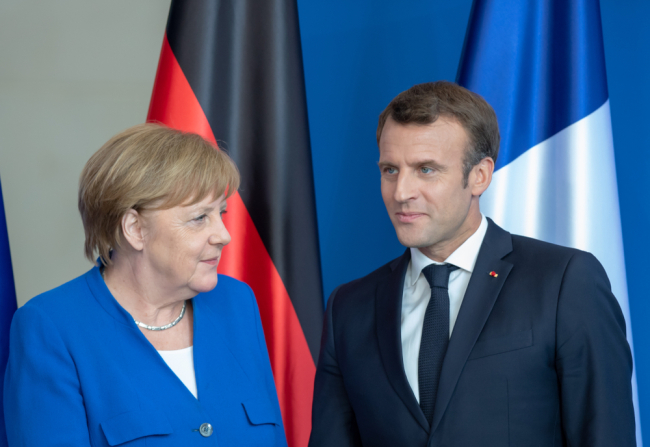
France prepares for Departure of Sometimes Reluctant Partner and Rival Merkel
Macron set to become the uncontested leader of Europe with German chancellor’s exit. Chancellor Angela Merkel was not naturally inclined to focus on Franco-German relations. “She comes from the former East Germany, and her experience was of east bloc countries, especially Russia, ” says Sabine Rau, Paris bureau chief for the German public television network WRD.

Towards Geopolitical German Development Cooperation? Recent History, Current Trends, and Future Prospects
German development cooperation (GDC) in a post-Merkel era can be expected to become more geopolitical. Recently adopted German policy documents like the Indo-Pacific guidelines as well as the support to the geopolitical ambition of the European Commission suggest such a tendency for future German policy making.
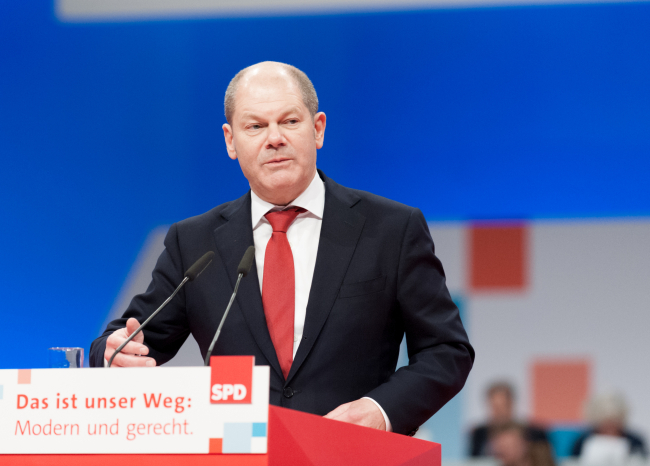
The SPD Between Programmatic Reorientations and Political Continuity?
Just like most of the European Social-Democratic parties, the Social Democratic Party of Germany (SPD) has been going through a major crisis for several decades. Its centrism that got Gerhard Schröder elected in 1998 and 2002 is seen as a betrayal by the party's traditional electoral base.
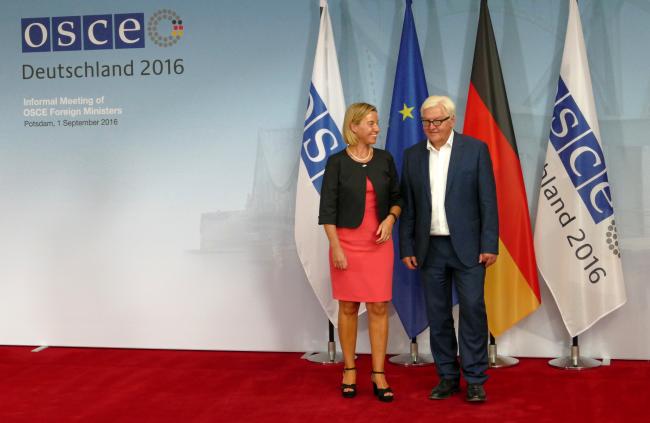
The Importance of the OSCE in German Diplomacy
As an essential platform for multilateralism, the Organization for Security and Co-operation in Europe (OSCE) has always been important to German diplomacy, although in varying degrees. Historically, Germany’s support for the Conference on Security and Co-operation in Europe (CSCE) process was motivated by the aim of mitigating and ultimately overcoming the division of Germany.
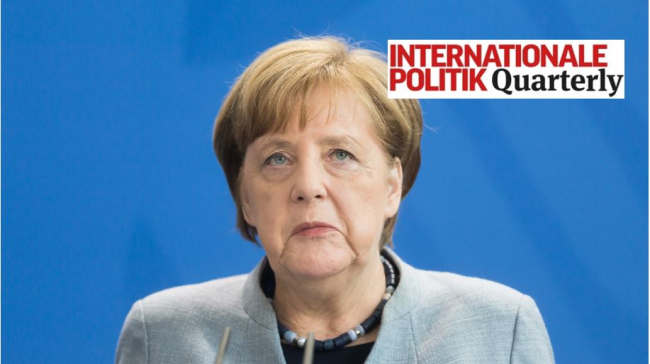
Advancing Europe: Green for Danger?
In France, the prospect of the Greens entering the German government this fall raises both hopes and fears.
The German Presidency of the EU Council 2020. What Role for Paris and Berlin?
The German EU presidency in the second half of 2020 was Angela Merkel’s last presidency, shortly before her chancellorship ends in 2021. It was therefore expected that the Chancellor would use all her experience and influence to achieve positive results.
A “Coronavirus Presidency”: The Consequences of the Health Crisis for the German Presidency of the Council of the EU
On July 1, 2020, Germany assumed the six-month EU Council Presidency, at a time of global pandemic crisis. This presidency has thus quickly become a “corona presidency” in its objectives and functioning, itself a victim of the pandemic.
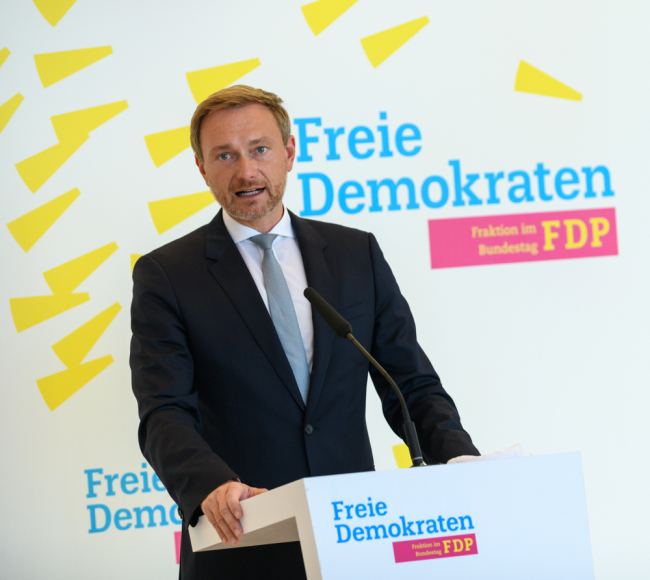
The Free Democratic Party (FDP): Liberal Corrective Again After the 2021 Bundestag Election?
After the regional elections in Rhineland-Palatinate and Baden-Württemberg in March 2021, the FDP is attracting more attention again, mainly because of its traditional role as a coalition party.
What Is Left and to Whom? Germany’s Left-wing Party Die Linke and the Search for Its Identity
In late February 2021, Germany’s left-wing party Die Linke gave themselves a new party executive. The new team is supposed to lead the party into the federal elections in September and, if possible, into a national center-left government.
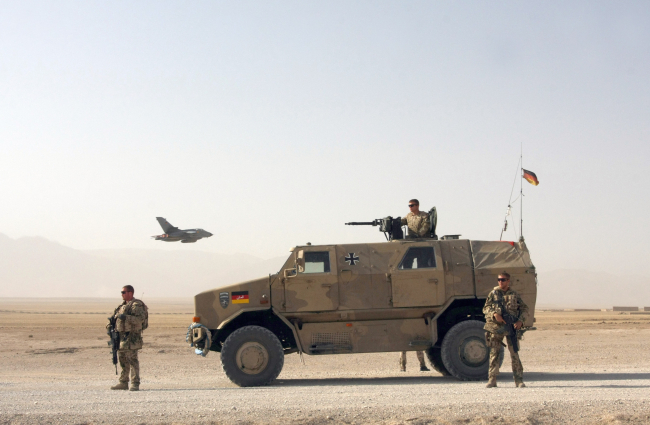
Circumstantial Pacifism: Political Parties and the Participation of the Bundeswehr in Foreign Operations
In Germany's parliamentary democracy, political parties play an important role in mandating Bundeswehr missions abroad and in overseeing their deployment. The political debate on these deployments is polarized between opponents, who are called “pacifists”, and supporters, who are called “militarists”.
Baden-Württemberg under Green Leadership – Balance Sheet of Two Government Periods under Winfried Kretschmann
Baden-Württemberg's economic and social structure offered good starting conditions for center-right parties from the beginning, which the Christian Democratic Union of Germany (CDU) initially knew how to use for itself. From 1953 to 2011 the Prime Minister belonged to the CDU. In 2011 the Greens and the Social Democratic Party of Germany (SPD) won an election over the CDU for the first time. Winfried Kretschmann was elected the first Green Prime Minister in a German state.
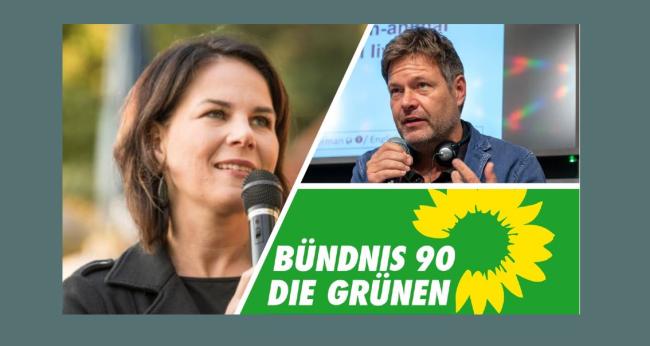
The German Green Party, a new People's Party?
In the context of increasing awareness of the climate crisis, environmental parties across the EU obtained high scores in the European elections of May 2019, reaching 20% in Germany, 17% in Ireland, 16% in Finland and 13 % in France. Meanwhile, far-right parties gained strength.
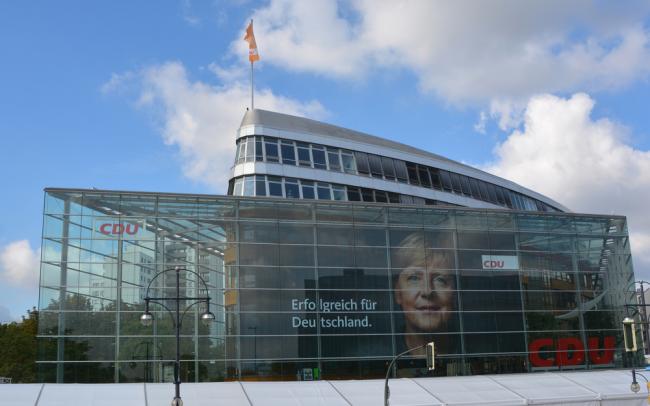
Uncertain Times Lie Ahead. The CDU at the End of the Merkel Era
Since 2018, the Christian Democratic Union (CDU - Christlich Demokratische Union) has been confronted with a long-lasting leadership crisis. Annegret Kramp-Karrenbauer, Merkel’s favorite candidate for the position of party leader, was not able to maintain herself at the top of the party and resigned after only 15 months.
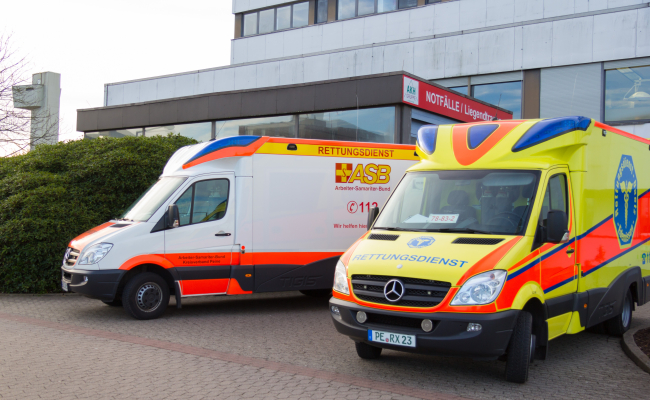
The German Health care System in the Face of the Coronavirus Crisis
The handling of the COVID-19 pandemic by the German government and health system has globally been perceived as a success because of a relatively low death rate.
The Karlsruhe Court Judgment: A Thunderclap from a Clear Sky?
In its judgment of 5 May 2020, the German Federal Constitutional Court in Karlsruhe questioned the conditions under which the European Central Bank (ECB) had adopted a Public Sector Purchase Programme (PSPP), thus contradicting the position taken by the Court of Justice of the European Union in the same case.
German Economic Policy during the Corona-crisis. How Germany Intends to Support its Economy
Compared with other European countries, Germany’s management of the COVID-19 crisis has been efficient. Its health system has successfully coped with the challenge of the fight against the pandemic, the impact on employees has been mitigated thanks to allowances dedicated to furlough leave, business aids were important and quickly available, the government has been responsive.
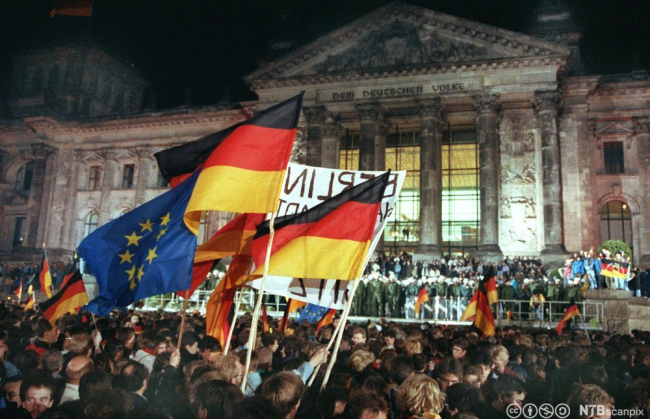
Thirty Years after its Reunification, Germany's “European Moment”?
On October 3, 1990, after forty years of division, Germany once again became one state. Less than a year after the fall of the Berlin Wall, on November 9, 1989, the territories of the German Democratic Republic (GDR) became part of the Federal Republic of Germany (FRG) under Article 23 of its Basic Law.
Germany and the Economic and Monetary Union. Between the Search for Deeper European Integration and the Assertion of National Interests
Germany joined the creation of Economic and Monetary Union only with great hesitation and has tried to dictate the spirit and rules of operation of the Union.
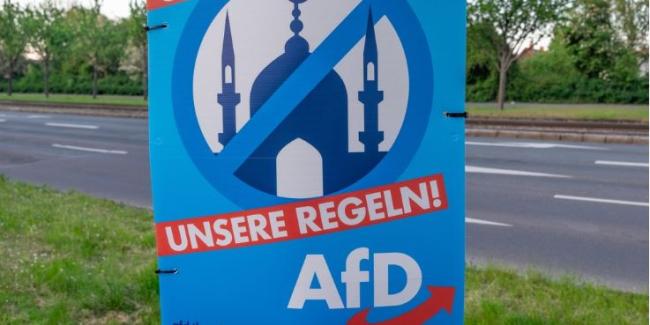
Alternative for Germany (AfD): An Extreme Right-Wing Party?
The AfD - Alternative for Germany - was founded in 2013 to protest the Euro rescue policy. Originally conservative-liberal, but to the right of the CDU/CSU, the party presented itself after 2015 as the main opponent to Angela Merkel's migration policy. It subsequently achieved electoral success, including its entry into the Bundestag in 2017.
The Right-wing Extremism in Germany. An Underestimated Threat?
In 2018, the Federal Office for the Protection of the Constitution classified 24,100 people in Germany as right-wing extremists. More than one out of two right-wing extremists is described as “violence-oriented”. These figures demonstrate the high level of threat in the German constitutional democracy, which has already manifested itself in the form of various terrorist attacks against foreigners, religious communities and more recently politicians.
Ifri, a foundation recognized as being of public utility, relies largely on private donors – companies and individuals – to guarantee its sustainability and intellectual independence. Through their funding, donors help maintain the Institute's position among the world's leading think tanks. By benefiting from an internationally recognized network and expertise, donors refine their understanding of geopolitical risk and its consequences on global politics and the economy. In 2026, Ifri partners with over 90 French and international companies and organizations.

The Study Committee on Franco-German Relations (Cerfa) was created in 1954 by an inter-governmental agreement between the Federal Republic of Germany and France, in order to raise awareness of Germany in France and analyze Franco-German relations, including in their European and international dimensions. In its conferences and seminars, which bring together experts, political leaders, senior decision-makers and representatives of civil society from both countries, Cerfa develops the Franco-German debate and stimulates political proposals. It regularly publishes studies through two collections: Cerfa notes and studies as well as Franco-German visions.
Cerfa maintains close relations with the network of German foundations and think tanks. In addition to its research and debate activities, Cerfa promotes the emergence of a new Franco-German generation through original cooperation programs. This is how in 2021-2022, Cerfa led a program on multilateralism with the Konrad Adenauer Foundation in Paris. This program is aimed at young professionals from both countries interested in the issues of multilateralism in the context of their activities. It covered a wide range of themes relating to multilateralism, such as international trade, health, human rights and migration, non-proliferation and disarmament. Previously, Cerfa had participated in the Franco-German future dialogue, co-led with the DGAP from 2007 to 2020, and supported by the Robert Bosch Foundation and the Daniel Vernet group (formerly the Franco-German Reflection Group) which was founded in 2014 upon the initiative of the Genshagen Foundation.