




Europe
Europe is described here in a geographical sense. It is not limited to the European Union, and includes, for example, the United Kingdom and the Balkans. It remains central to international relations.
Related Subjects
The European Neighbourhood Policy: A Bureaucratic Phoenix?
Facing turmoil on its eastern and southern borders, the European Union has sought some answers by revising its European Neighbourhood Policy and releasing a reviewed Global Strategy on Foreign and Security Policy. Beyond these documents, what is the real impact of the EU in its neighbourhood?

The EU and Innovation: When Business Meets Politics
Innovation, entrepreneurship, growth and competitiveness go hand in hand. This short paper looks at two areas where the EU plays a role to help drive innovation: regulation and financing.
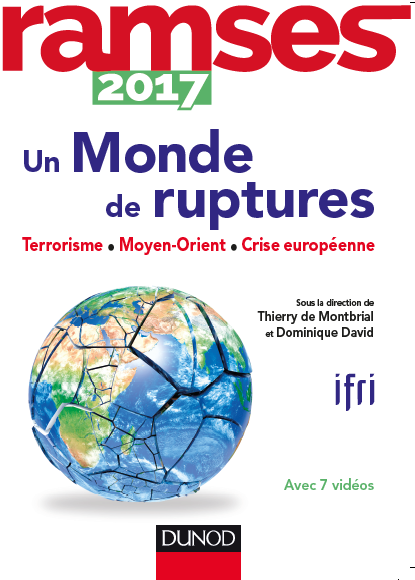
RAMSES 2017. A Fragmented World
RAMSES 2017. A Fragmented World, prepared by IFRI’s research team and selected external experts, offers an in-depth and up to date analysis of global geopolitics.
This 35th edition focuses on three key issues: the spread of jihadist terrorism, the Middle East’s disintegration, and doubts about the European project. With the world’s balance of power and economic foundations shifting, the next few months are likely to be decisive for our future. The growing diversity and complexity of our world is startling, which is why it is important to rethink our analyses and means of action.

France: the tale of disenchantment, ambiguity and ambition on the EU
France may be ready to take the initiative again in the EU, but it does not know where to press on.
EU Security of Gas Supplies : Solidarity Runs Through the Pipeline
Given the tensions between the EU and its main gas supplier, Russia, the European Commission has been revisiting since 2014 its energy security strategy.
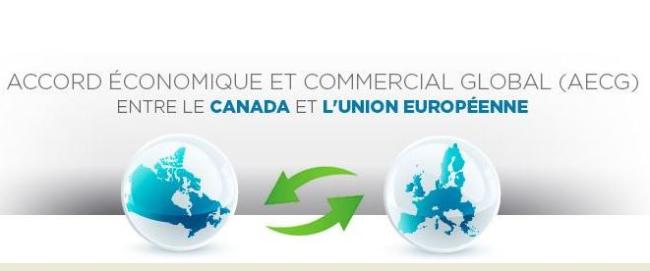
CETA: the Making of the Comprehensive Economic and Trade Agreement Between Canada and the EU
Once ratified, the Comprehensive and Economic Trade Agreement (CETA) could ultimately eliminate all tariff barriers between the European Union and Canada. CETA is also a new generation Free-Trade Agreement: it includes the opening of public procurement, the facilitation of cross investments and cooperation in the area of regulation. Its long negotiation process illustrated important changes that are happening in the way trade agreements are negotiated, both in Canada and in the EU.
The European Union in the Fog: Building Bridges between National Perspectives on the European Union
The Building Bridges project looks at the national perspectives on the European Union. This publication gathers contributions from across the EU. It sheds light on Member States’ motivations to participate in the EU and views on its future. Accessible and analytical, this volume is an ideal reference guide for practitioners, experts, students and European citizens.
Brexit: The Risks of Referendum
The British Prime Minister has announced that a referendum will be held to decide whether the UK will remain in the European Union. David Cameron’s announcement has prompted analysis of the risks it would pose for the balance among UK political parties, for British cohesion, and for the future of the European project. In England, the rise of euroscepticism and nationalist sentiment is real. The possibility of a “Brexit” should not be ignored.
Migrations in Africa: Another Look
Migration in Africa is a major concern, but largely for Africans alone. To adequately study the question of international migration, one must look beyond Europe’s current predicament. Through its dossier on “Migrations in Africa: Another Look”, this issue of Politique étrangère examines a number of factors that determine migration movements, how states in Africa attempt to manage the significant problem of internal migration, the difficulties of integrating migrant workers into their host societies, and the false pretenses of Euro-African agreements on readmission.

France: Disenchantment in Slow Motion
In France, Europe basically expresses four objectives: peace, parity with Germany, economic development, and leveraging French power. But today, the feeling abounds that none of these objectives are really being achieved.
Support independent French research
Ifri, a foundation recognized as being of public utility, relies largely on private donors – companies and individuals – to guarantee its sustainability and intellectual independence. Through their funding, donors help maintain the Institute's position among the world's leading think tanks. By benefiting from an internationally recognized network and expertise, donors refine their understanding of geopolitical risk and its consequences on global politics and the economy. In 2026, Ifri partners with over 90 French and international companies and organizations.

Related centers and programs
The Study Committee on Franco-German Relations (Cerfa)
The Study Committee on Franco-German Relations (Cerfa) was created in 1954 by an inter-governmental agreement between the Federal Republic of Germany and France, in order to raise awareness of Germany in France and analyze Franco-German relations, including in their European and international dimensions. In its conferences and seminars, which bring together experts, political leaders, senior decision-makers and representatives of civil society from both countries, Cerfa develops the Franco-German debate and stimulates political proposals. It regularly publishes studies through two collections: Cerfa notes and studies as well as Franco-German visions.
Cerfa maintains close relations with the network of German foundations and think tanks. In addition to its research and debate activities, Cerfa promotes the emergence of a new Franco-German generation through original cooperation programs. This is how in 2021-2022, Cerfa led a program on multilateralism with the Konrad Adenauer Foundation in Paris. This program is aimed at young professionals from both countries interested in the issues of multilateralism in the context of their activities. It covered a wide range of themes relating to multilateralism, such as international trade, health, human rights and migration, non-proliferation and disarmament. Previously, Cerfa had participated in the Franco-German future dialogue, co-led with the DGAP from 2007 to 2020, and supported by the Robert Bosch Foundation and the Daniel Vernet group (formerly the Franco-German Reflection Group) which was founded in 2014 upon the initiative of the Genshagen Foundation.
Austro-French Centre for Rapprochement in Europe (ÖFZ)
The Austro-French Centre for Rapprochement in Europe (ÖFZ/CFA) is a Franco-Austrian intergovernmental organization, initiated in 1976 by Prime Minister Jacques Chirac and Federal Chancellor Bruno Kreisky, in order to develop economic relations between Western and Eastern Europe, contributing to the creation of a Europe of peace.
After the fall of the Berlin Wall, the ÖFZ/CFA refocused its action on the problems following the enlargement of the European Union, and integrated the following countries in its field of activities : Hungary, Poland, Czech Republic, Slovak Republic, Slovenia, the Baltic countries, Romania and Bulgaria. ÖFZ/CFA's vocation, as a space for reflection and exchange, is in fact reinforced by the need to support the new member countries of the Union in their integration process. Since 2004, the ÖFZ/CFA has also turned towards the Union's new neighbors, in particular towards the countries of the Western Balkans, which perceive their future from a European perspective.
The ÖFZ/CFA strives to place all of its exchanges in a global perspective concerning the future of our continent. Today it centers its activities around three directions: the Franco-Austrian bilateral dialogue, the future of the European Union, the future recomposition of the continent.
Reports of all events organized by the ÖFZ/CFA are available on its website (http://oefz.at). The ÖFZ/CFA's budget is provided by the French and Austrian foreign ministries. Depending on the themes addressed, the ÖFZ/CFA calls on European public and private institutions to help finance its meetings. The CFA's orientations benefit from the recommendations of an Orientation Council, approved by a Board of Directors, which elects from among its members a president and a secretary general.