




Sub-Saharan Africa
Sub-Saharan Africa is not monolithic. While crises in the Sahel have attracted a great deal of attention, other regions also need to be monitored, and not just through the prism of security.
Related Subjects
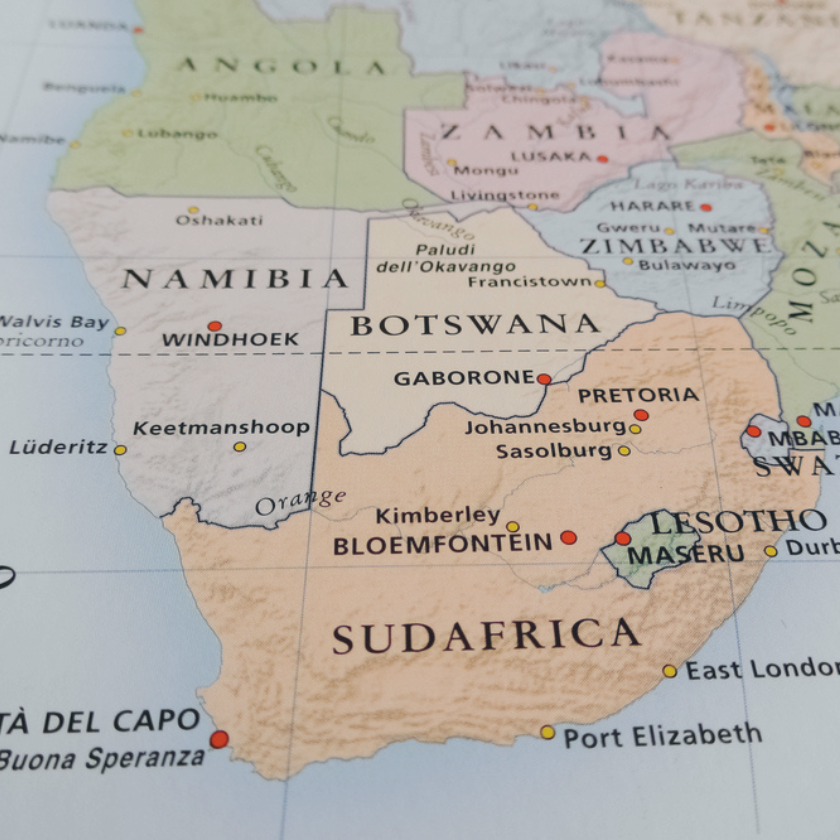
A Victorious Anti-insurrection Strategy? The Insurrections of 2010 in the Jonglei State of South Sudan
On May 16 2010, a few weeks after its first elections, the government of the semi-autonomous province of South Sudan (GoSS) had to confront two rebellions in the Jonglei Province. South Sudan may appear unified behind the banner of the SPLM/A, but in fact it is nothing of the kind.
Consumption in an Uncertain Environment: The Paradox of the African Middle Classes
Three hundred million people belonging to the middle classes of Africa; three hundred million of potential consumers: an image of this kind is enough to make many an entrepreneur start dreaming. In fact, whereas for many years Afro-pessimism has dominated public opinion in the West, what seems to be the new trend in fashion, in both the media and economic circles, is now an exaggerated Afro-optimism.
The Recent Blossoming in Relations between China and Madagascar
The question of the Chinese presence in Madagascar is very accurate. It is an opportunity for us to portray the sino-madagarscan relations.
The Architect and Fragile States: Development Assistance's Contribution to Global Security
Up to Europe’s threshold in the middle of Sahara and Sahel region, a growing insecurity led beyond mere reconsideration of field practice to a whole change of paradigm for multilateral and bilateral aid institutions.

Beyond Racial Dynamics in the South African Political Space, The Constrained Ambition of the Democratic Alliance
Since 1994 and the first democratic elections, the ANC has been dominating the South African political scene, although this should not hide the existence of a sizeable opposition among political parties and civil society.
The Politics of Amnesty in the Niger Delta : Challenges Ahead
Armed groups, many affiliated to the Niger Delta-wide political organisation MEND, the Movement for the Emancipation of the Niger Delta, proliferated throughout the oil producing states, particularly from early 2006 onwards. In January 2006, MEND declared war on the oil industry pending the resolution of long term political grievances relating to poverty and underdevelopment, the poor regulation of an environmentally polluting oil industry, and the alienation of local people from rights to land and resources in the Niger Delta.
Involving ʺNeo-Urbansʺ in the Political Game: The Example of Senegal
A paper brought out last year treating the “Hunger Riots had made it possible, among other things, to point out the extreme difficulties encountered by the authorities in power when trying to control urban populations. Current demographic forecasts relating to sub-Saharan Africa all predict an extremely rapid increase in population and at the same time an even more dramatic rise in the size of urban populations.
Tuaregs' Relations to States: The Case of Algeria and Libya
The industrial revolution underwent by Europe in the 18th century has triggered the need for the major colonial powers to find new markets for their manufactured products. It is in this colonial competitive framework that European explorers delivered information about the different access roads, as well as the Tuareg tribes, notably the Kel Ajjer and the Kel Ahaggar.
Arabs and Tuaregs in Colonial and Malian Armed Forces: A Story in Trompe-l'Oeil
This contribution consists in analyzing the unifying or opposing relations between the central State-power and the southern part of central-Saharan populations, mainly Arabs and Tuaregs, within the relational framework of colonial and Malian armed forces. The French Colonial State and the Malian independent State (from the 1960 independence movement) are both considered by Arabs and Tuaregs as external entities, whatever the form of their relation, good or bad.
The Financial Challenges of the Sub-Saharan Africa Telecoms Boom
Telecom industry has taken a significant place within of the economy of most African countries. In this aspect, it is an undeniable source of economic growth and development. It impacts on the financial sphere at three levels.
ICT and Health Systems in Africa
An increasing number of projects in the health sector in Africa draw on Information and Communication Technologies (ICT).

Towards A New Type of Regime In Sub-Saharan Africa: Democratic Transitions but no Democracy
Sub-Saharan African hopes of democratization raised by the end of the cold war and the decline in the number of single party states are giving way to disillusionment. Today, even countries such as Senegal and South Africa, reputed for their democratic nature, are threatening to veer towards authoritarianism.
"Hunger Riots" in Senegal: A Pointer to the Current Governance Failure
"Hunger riots", a stock phrase used to describe protests at the end of 2007 / beginning 2008 in around thirty countries world-wide, mostly African States, places different phenomena into one group. In this paper, we will focus on the case of Senegal, a country in which "Hunger riots" were numerous.
Violence in the Bush: How International Peacebuilding Faces Land-use Conflicts
Following the conflict in Ituri (1999-2003), the International Community deployed different peacebuilding programs in this north-eastern district of the Democratic Republic of Congo (DRC). Built around a concept of democratic transition at the national level, these programs have not always acknowledged the scale of local conflicts and the fragility of local institutions, which are both the targets and the relay of such programs.

The Financial Challenges of the Sub-Saharan Africa Telecoms Boom
Telecom industry has taken a significant place within of the economy of most African countries. In this aspect, it is an undeniable source of economic growth and development. It impacts on the financial sphere at three levels.
Ifri, a foundation recognized as being of public utility, relies largely on private donors – companies and individuals – to guarantee its sustainability and intellectual independence. Through their funding, donors help maintain the Institute's position among the world's leading think tanks. By benefiting from an internationally recognized network and expertise, donors refine their understanding of geopolitical risk and its consequences on global politics and the economy. In 2026, Ifri partners with over 90 French and international companies and organizations.
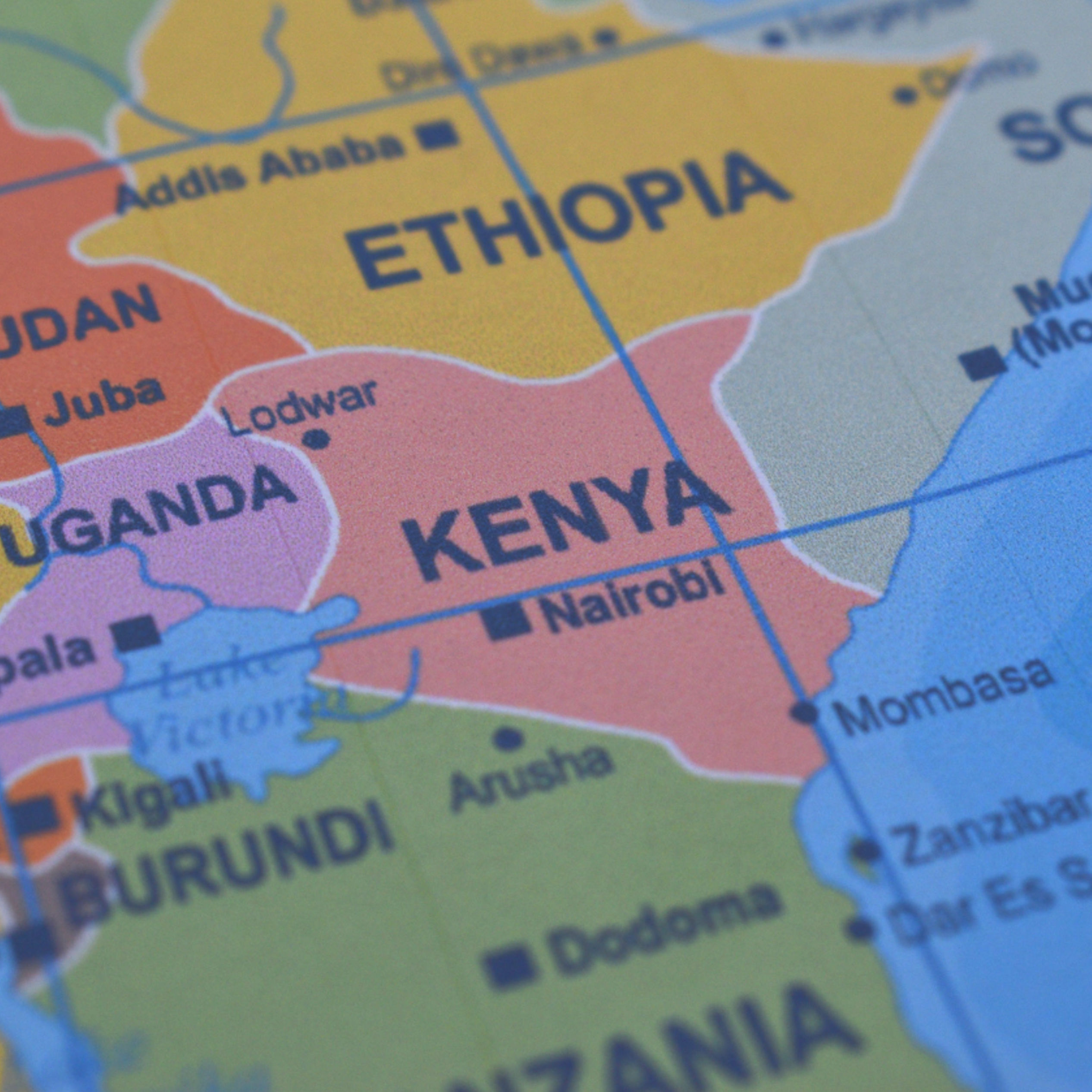
The East and Central Africa Observatory is a 3-year research project (2023-2025) that Ifri is carrying out jointly with the French Institute of Research in Africa (IFRA) in Nairobi for the French Ministry of Defense, and more specifically its International Relations and Strategy Division (DGRIS). This observatory focuses on the main political, security and geopolitical developments taking place in the geographical areas covered by itself. This is achieved through the regular production of research notes, in English or French and the organization of an annual seminar around a key theme. For our research notes and conferences, we call on internationally acknowledged experts in the topics covered. This Observatory began in 2016, under the title of Observatory of Central and Southern Africa within Ifri's Sub-Saharan Africa Center. 55 notes were drafted between 2016 and 2020.
Founded in 2007, Ifri's Sub-Saharan Africa center produces an in-depth analysis of the African continent and its security, geopolitical, political and socio-economic dynamics (in particular the phenomenon of urbanization). The Center aims to be both, through various publications and conferences, a space for disseminating analyzes intended for the media and the public but also a decision-making tool for political and economic actors with regard to the continent.
The center produces analyses for various organizations such as the Ministry of the Armed Forces, the Ministry of Europe and Foreign Affairs, the Organization for Economic Cooperation and Development (OECD), the French Development Agency (AFD) and even for various private supports. Its researchers are regularly interviewed by parliamentary committees.
The organization of events of various formats complements the production of analyzes by bringing the different spheres of the public space (academic, political, media, economic and civil society) to meet and exchange analytical tools and visions of the continent. The Sub-Saharan Africa Center regularly welcomes political leaders from different sub-Saharan African countries.