




Sub-Saharan Africa
Sub-Saharan Africa is not monolithic. While crises in the Sahel have attracted a great deal of attention, other regions also need to be monitored, and not just through the prism of security.
Related Subjects

Boko Haram, an Exception within the Jihadist Movement?
Boko Haram was created in 2002 and has been led since 2010 by Abubakar Shekau; however, we still know little about it.
South Sudan: From Disaster to Chaos
South Sudan is still neither a state nor a nation. Torn apart by ethnic rivalries, divided between diverging ideas about state organization, its only means of political dialogue is war.
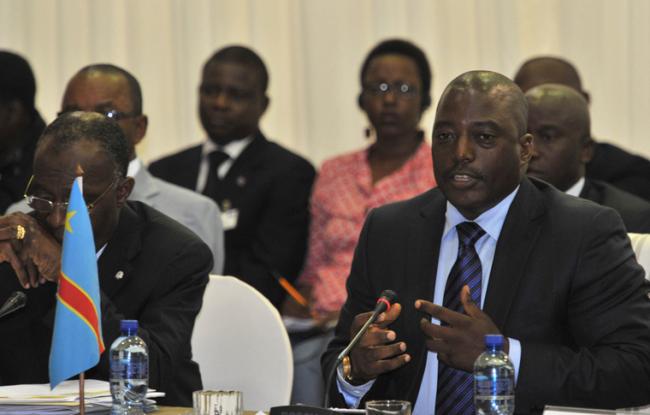
DRC’S Regional Positioning, in Between the African Great Lakes and Southern Africa
How transparent are the Democratic Republic of Congo’s regional strategies?
Fragility Factors and Reconciliation Needs in Forest Guinea
In December 2013 the first Ebola cases surfaced in Guéckedou district, near the Liberian and Sierra Leon borders in the Forest Region of Guinea. The outbreak quickly spread from Forest Guinea to the rest of the country and, through the borders, to neighbouring countries. It took three months to identify the Ebola virus as the causative agent of the burgeoning epidemic, longer for the Guinean government to understand the importance of treating the outbreak as a national emergency, and even more time for everyone involved to appreciate the great social toll of Ebola.

Oil and Gas in Eastern Africa: Current Developments and Future Perspectives
The position of oil companies toward East Africa has changed considerably since 2006 when the first reserves in Uganda came to light. However, for many investors interested in the region, it remains difficult to get a clear picture of the scale of developments of this sector.
Nigeria's 2015 Presidential Election: Deciphering a High-risk Operation
Nigeria is entering a new electoral cycle, holding its sixth general elections since the restoration of civilian rule in 1999. The elections were initially scheduled for February 14 (presidential elections) and 28 (governorship elections), 2015. The first round has now been postponed until March 28. The issue of the threat posed to Nigeria by Boko Haram is not, as one might expect, at the heart of the debate surrounding the presidential campaign in the country. Nevertheless, the peculiar security context in which the forthcoming elections will take place, as well as the changes under way in Nigeria's political landscape, make this vote unique. It is therefore essential to analyze the various issues at stake in the country's sixth general elections.
Ebola: A Post-colonial Epidemic
One reason Ebola has been so difficult to contain is that it emerged in countries marked by poverty and violence.
The Difficult Issue of College Rape in America
Cette Actuelle est la quatrième d'une série de quatre Chroniques américaines sur l'éducation aux Etats-Unis, publiées cette semaine.
International Relations: the Era of Anthropologists
Both perpetrators and forms of violence change. States are no longer the central referents of contemporary conflicts. We can no longer understand them as the outcome of a linear history starting from tribal societies and leading to Western political structures.
The Central African Republic: Analysis of a Largely Unknown Crisis
Displaced peoples, insecurity over food and sanitation, economic devastation, worsening community tensions: the Central African Republic is going through what must be the worst crisis in its history.
Fake medicines trafficking in West Africa: Supply chains and distribution networks (Nigeria, Benin, Togo, Ghana)
On December 13, 2013, in response to an Interpol initiative, the first ever African Conference on pharmaceutical crime was held in Addis Ababa, Ethiopia. Its final communiqué declared the intention of 20 countries to reinforce the struggle against the production of counterfeit drugs.
Gas in Mozambique: a High-risk Economic Revolution
Since oil was discovered in Uganda in 2006, East Africa has been an arena for a race in the exploration for hydro-carbons. Yet the oil reserves in Uganda, the more recent and modest ones in Kenya and the few pockets of gas in Ethiopia are on a completely different scale from the enormous gas resources discovered since 2010 in the off-shore waters of Mozambique and Tanzania.
The Mining Boom in the Sahel Region: Will the Development Last?
The Sahel, often discussed on account of its problems and crises – in particular recently, in view of the crisis in Mali – is in actual fact experiencing a new positive economic era, like the rest of the African continent. For the five countries of the Sahel region we shall be examining – Mauritania, Senegal, Mali, Burkina Faso and Niger – this favourable evolution, although it varies from country to country, is based on booming extractive industries.
France and the Fight against Terrorism in the Sahel: The History of a Difficult Leadership Role
Except for its extreme poverty and the disastrous effects of a series of droughts, the Sahel region has been largely out of the spotlight of international attention in the past. Yet the rise of terrorism and especially the creation of Al-Qaida in the Islamic Maghreb (AQIM) in 2007 brought the region into the focus of world politics. Initially, AQIM"s activities in the Sahel mainly posed a threat to the stability of the Sahelian states themselves. In an effort to internationalize its agenda, however, AQIM also started targeting Western countries.
A Class Defined "by Consumption": The Grocery-Shopping Practices of the Lower-Middle Classes in Johannesburg, South Africa
The black middle class in Johannesburg is a much debated but ill-defined phenomenon, treated more often by economic players than by social scientists. Far from static and clear, the concept of the middle class is for us relevant insofar as it reveals crucial dynamics of the society.
The Sahel: A Crossroads between Criminality and Terrorism
Besides the ongoing political conundrum in Mali, it is the entire West African region, from Guinea Bissau to Mali, which is under threat of destabilization. Indeed, for many years now, terrorists and drugs traffickers have been synergizing their respective illegal activities, transforming the Sahel into a narcoterrorist zone. As a result, the Sahel has become a dangerous crossroads for drugs, crime, terrorism and insurgency.
How to Create a Public Policy in a Failed State: The Challenge of Securing Land Rights in Eastern Congo
In the Democratic Republic of the Congo (DRC) 32 years of dictatorship and almost ten years of war have bled the country dry and left its administration incapable of providing the population with basic services and the government incapable of applying or even formulating public policy.
Quand les embouteillages " créent " la ville - L'influence de la congestion sur la structure et l'économie urbaines à Accra (Ghana)
Is Africa's Recent Economic Growth Sustainable?
Hardly a week goes by without an African investors’ conference or growth summit.
Ifri, a foundation recognized as being of public utility, relies largely on private donors – companies and individuals – to guarantee its sustainability and intellectual independence. Through their funding, donors help maintain the Institute's position among the world's leading think tanks. By benefiting from an internationally recognized network and expertise, donors refine their understanding of geopolitical risk and its consequences on global politics and the economy. In 2026, Ifri partners with over 90 French and international companies and organizations.

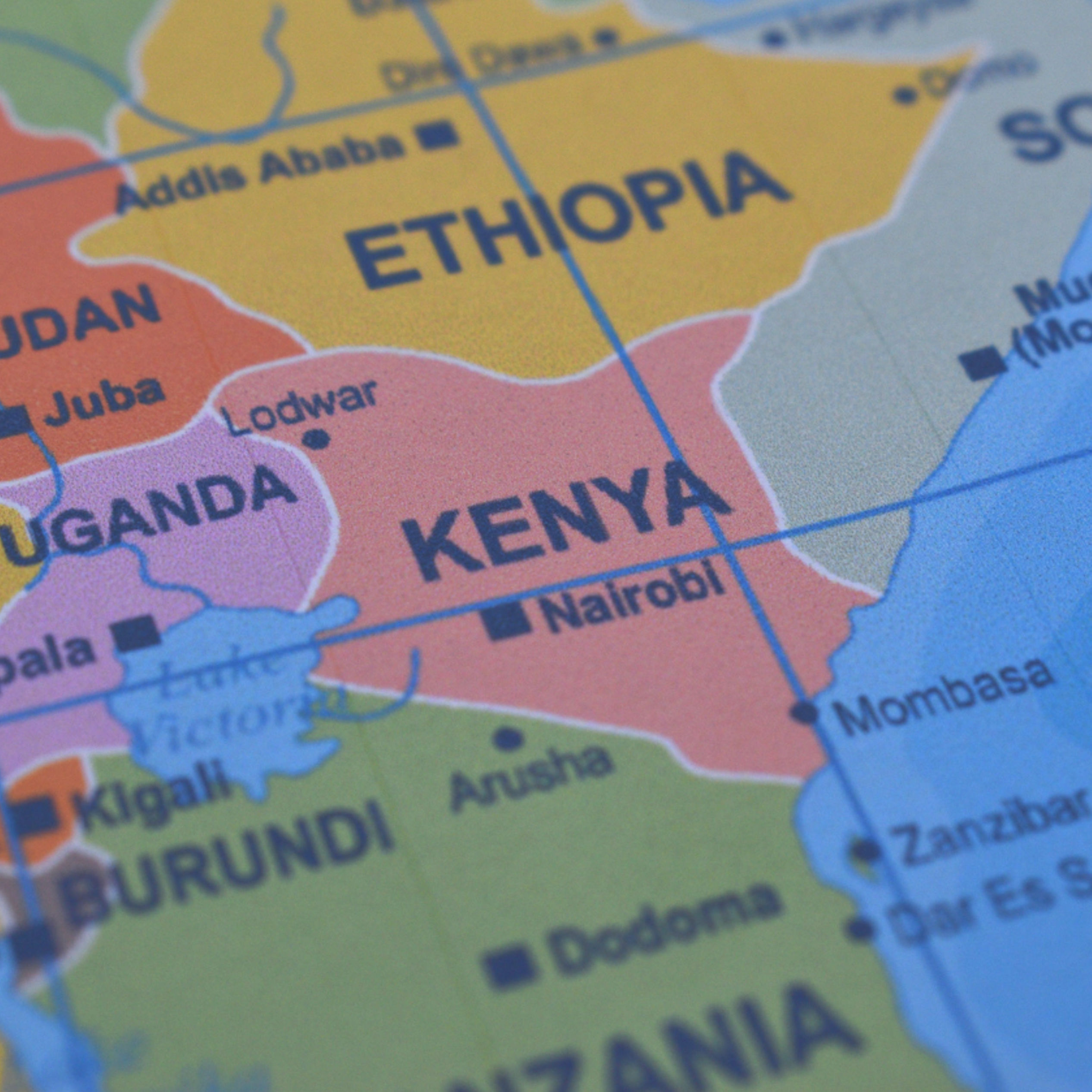
The East and Central Africa Observatory is a 3-year research project (2023-2025) that Ifri is carrying out jointly with the French Institute of Research in Africa (IFRA) in Nairobi for the French Ministry of Defense, and more specifically its International Relations and Strategy Division (DGRIS). This observatory focuses on the main political, security and geopolitical developments taking place in the geographical areas covered by itself. This is achieved through the regular production of research notes, in English or French and the organization of an annual seminar around a key theme. For our research notes and conferences, we call on internationally acknowledged experts in the topics covered. This Observatory began in 2016, under the title of Observatory of Central and Southern Africa within Ifri's Sub-Saharan Africa Center. 55 notes were drafted between 2016 and 2020.
Founded in 2007, Ifri's Sub-Saharan Africa center produces an in-depth analysis of the African continent and its security, geopolitical, political and socio-economic dynamics (in particular the phenomenon of urbanization). The Center aims to be both, through various publications and conferences, a space for disseminating analyzes intended for the media and the public but also a decision-making tool for political and economic actors with regard to the continent.
The center produces analyses for various organizations such as the Ministry of the Armed Forces, the Ministry of Europe and Foreign Affairs, the Organization for Economic Cooperation and Development (OECD), the French Development Agency (AFD) and even for various private supports. Its researchers are regularly interviewed by parliamentary committees.
The organization of events of various formats complements the production of analyzes by bringing the different spheres of the public space (academic, political, media, economic and civil society) to meet and exchange analytical tools and visions of the continent. The Sub-Saharan Africa Center regularly welcomes political leaders from different sub-Saharan African countries.