




Sub-Saharan Africa
Sub-Saharan Africa is not monolithic. While crises in the Sahel have attracted a great deal of attention, other regions also need to be monitored, and not just through the prism of security.
Related Subjects
Rural Land Issues as a factor of crisis in Sub-Saharan Africa: South Africa, Côte d'Ivoire, Kenya
From Thabo Mbeki to Jakob Zuma: What Will the New Vision for South Africa Be?
Identity-based Mobilizations in Contemporary Africa: The Question of Autochthony

"Hunger Riots": a (Geo-Political) Interpretation of (Social) Changes
'The 2008 'riots' are not related to increased food shortages. Aside from a few interruptions in supply linked to the present economic climate, basic foods were on the whole present on urban markets.'
Candide in Congo. The Expected Failure of Security Sector Reform (SSR)
What are the prospects after the nomination of Zimbabwe's national unity government?
Summary: Following repeated bouts of political violence, which were exacerbated by the presidential and legislative elections of 29 March 2008, opposition members and the government of Zimbabwe undertook lengthy and difficult negotiations to put an end to the unrest. These negotiations resulted in the creation of a new national unity government, which was sworn in on 13 February 2009. This marks the end of a long political battle between the regime of President Robert Mugabe and his opponents, of whom the new Prime Minister Morgan Tsvangirai had been the main spokesman. In a country on the brink of economic collapse, the new government faces enormous challenges. The economic and social balance remains precarious, and the political climate is still fraught with many rivalries. Thierry Vircoulon, associate researcher of IFRI's Africa Program comments on the crisis in Zimbabwe today, and delivers some thoughts on what we may expect from the new national unity government.
How to reform peacemaking in the Democratic Republic of Congo: When peace processes become international "systems of organized action"
Madagascar Crisis
Summary: The scale of the violence which has hit Madagascar has taken many commentators by surprise. However, early warning signs were visible over the last few months. The origin of this crisis can be linked to President Ravalomanana's management of political, economic and social issues coming into disrepute. There are numerous similarities with the 2002 political crisis even if strong nuances are also present. Mathieu Pellerin, journalist and consultant, details the political, social and economic divisions which have ripped Madagascan society apart and personal rivalries between Madagascar's president and Antananarivo's mayor. Text in English will be available very soon.

Thabo Mbeki's Fall and Succession: Interview with Thierry Vircoulon
Economic Partnership Agreements: an Essential Step on the Path Towards Regional Integration and Trade Liberalisation
Candide in Congo. The expected failure of Security Sector Reform (SSR)
From Afghanistan to the Central African Republic, through Haiti and Guinea Bissau, 'failed' or fragile states have finally turned out to be much more resilient than planned to the Security Sector Reforms (SSR) and other imported reforms of governance. Their ability to let any reform coming from abroad sink, to block or twist such initiatives strongly contrasts with the weakness of their human and financial resources. The example of the Democratic Republic of Congo illustrates the difficulties which are inherent to the concept of SSR.
Zimbabwe: Reflections on a Lasting Dictatorship
Marc-André Lagrange et Thierry Vircoulon,
African Union Government: Gradualism and status quo v. Immediate Action
Ifri, a foundation recognized as being of public utility, relies largely on private donors – companies and individuals – to guarantee its sustainability and intellectual independence. Through their funding, donors help maintain the Institute's position among the world's leading think tanks. By benefiting from an internationally recognized network and expertise, donors refine their understanding of geopolitical risk and its consequences on global politics and the economy. In 2026, Ifri partners with over 90 French and international companies and organizations.

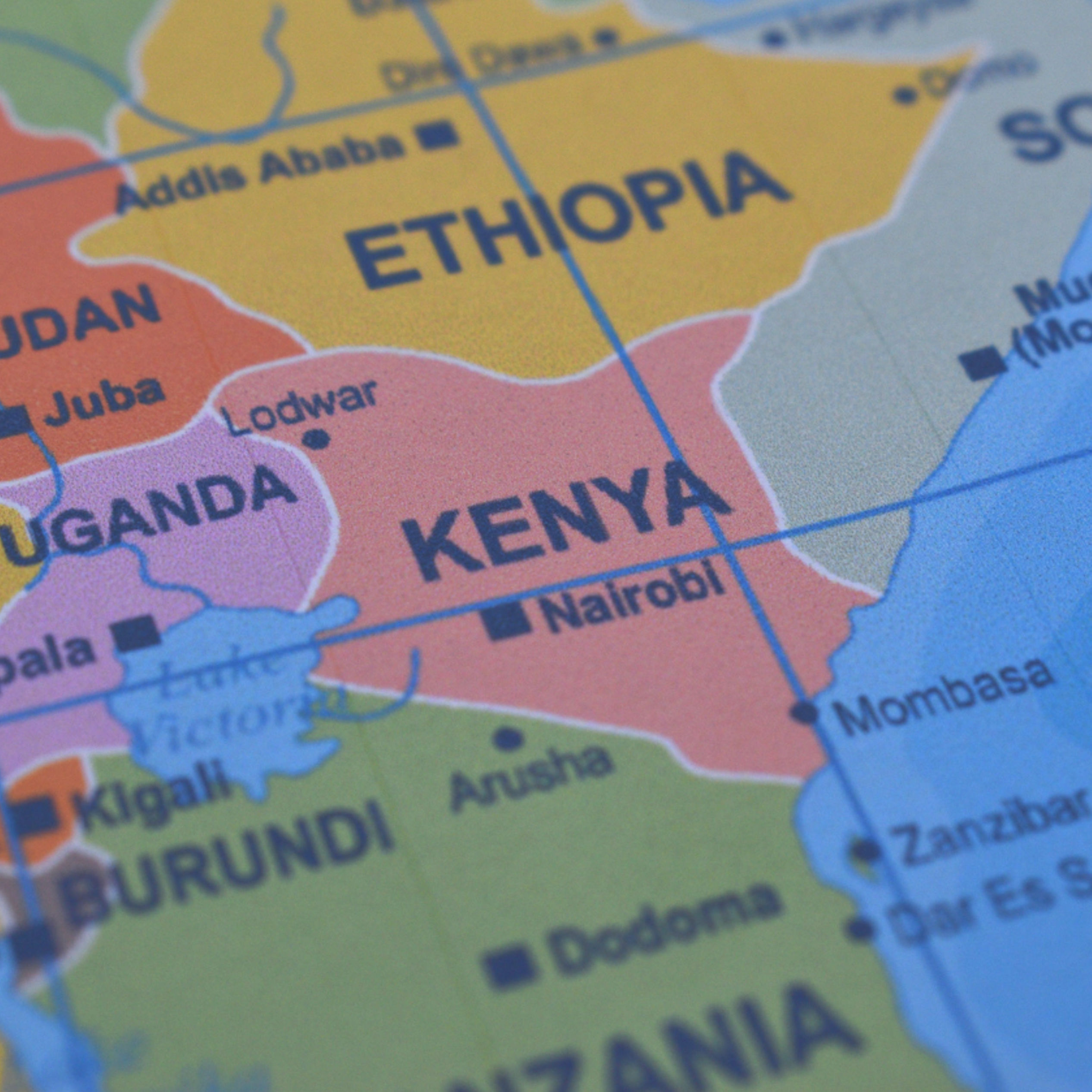
The East and Central Africa Observatory is a 3-year research project (2023-2025) that Ifri is carrying out jointly with the French Institute of Research in Africa (IFRA) in Nairobi for the French Ministry of Defense, and more specifically its International Relations and Strategy Division (DGRIS). This observatory focuses on the main political, security and geopolitical developments taking place in the geographical areas covered by itself. This is achieved through the regular production of research notes, in English or French and the organization of an annual seminar around a key theme. For our research notes and conferences, we call on internationally acknowledged experts in the topics covered. This Observatory began in 2016, under the title of Observatory of Central and Southern Africa within Ifri's Sub-Saharan Africa Center. 55 notes were drafted between 2016 and 2020.
Founded in 2007, Ifri's Sub-Saharan Africa center produces an in-depth analysis of the African continent and its security, geopolitical, political and socio-economic dynamics (in particular the phenomenon of urbanization). The Center aims to be both, through various publications and conferences, a space for disseminating analyzes intended for the media and the public but also a decision-making tool for political and economic actors with regard to the continent.
The center produces analyses for various organizations such as the Ministry of the Armed Forces, the Ministry of Europe and Foreign Affairs, the Organization for Economic Cooperation and Development (OECD), the French Development Agency (AFD) and even for various private supports. Its researchers are regularly interviewed by parliamentary committees.
The organization of events of various formats complements the production of analyzes by bringing the different spheres of the public space (academic, political, media, economic and civil society) to meet and exchange analytical tools and visions of the continent. The Sub-Saharan Africa Center regularly welcomes political leaders from different sub-Saharan African countries.