



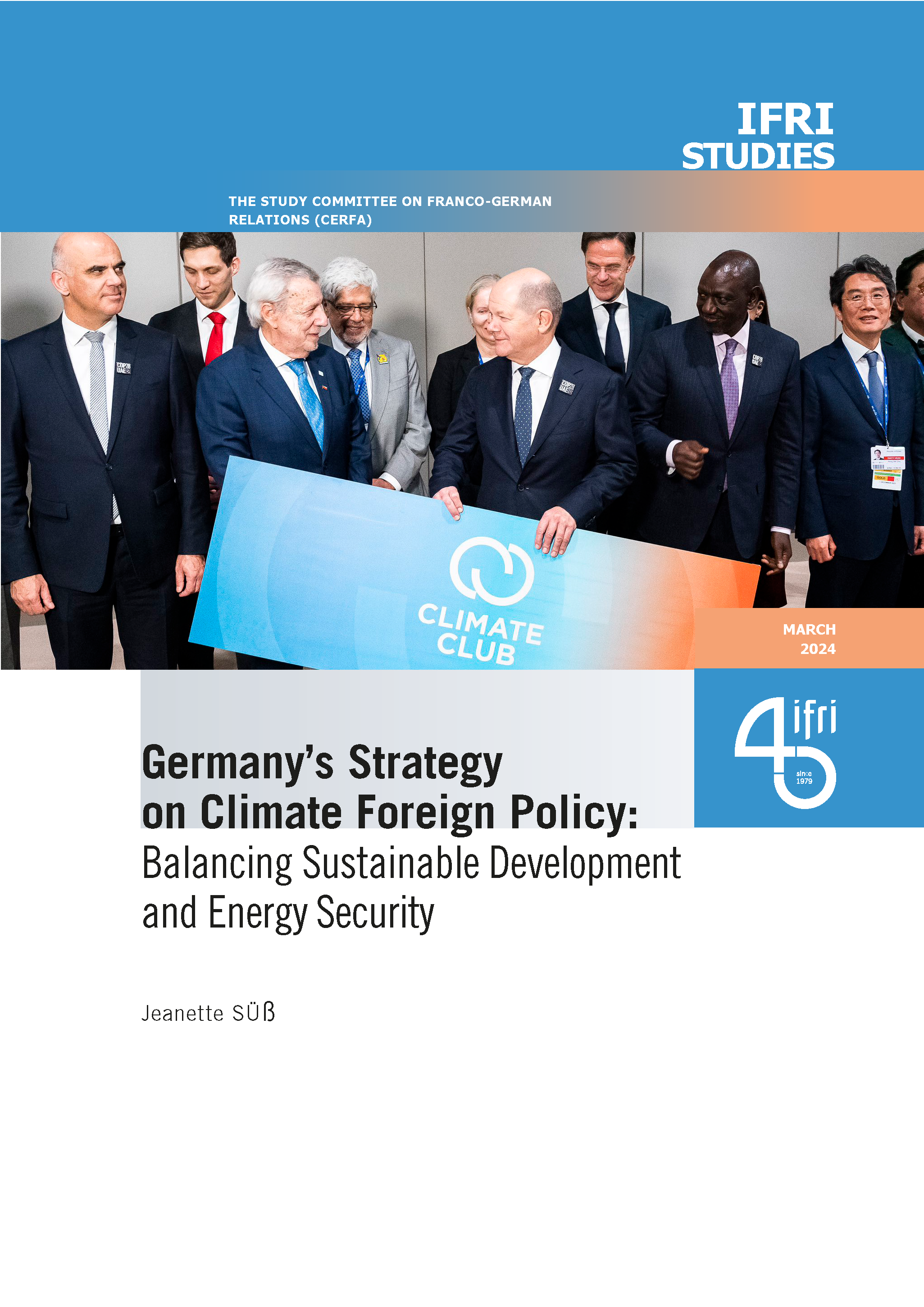
Germany’s Strategy on Climate Foreign Policy: Balancing Sustainable Development and Energy Security
With the war in Ukraine, Germany’s “traffic light” coalition government has had to adapt its climate policy to the upheavals caused by this war, which has turned its economic, energy, and military model upside down. Against a backdrop of high energy costs and increasing calls for reshoring in Europe, German industry is looking at how to maintain its competitiveness while decarbonizing its industry.
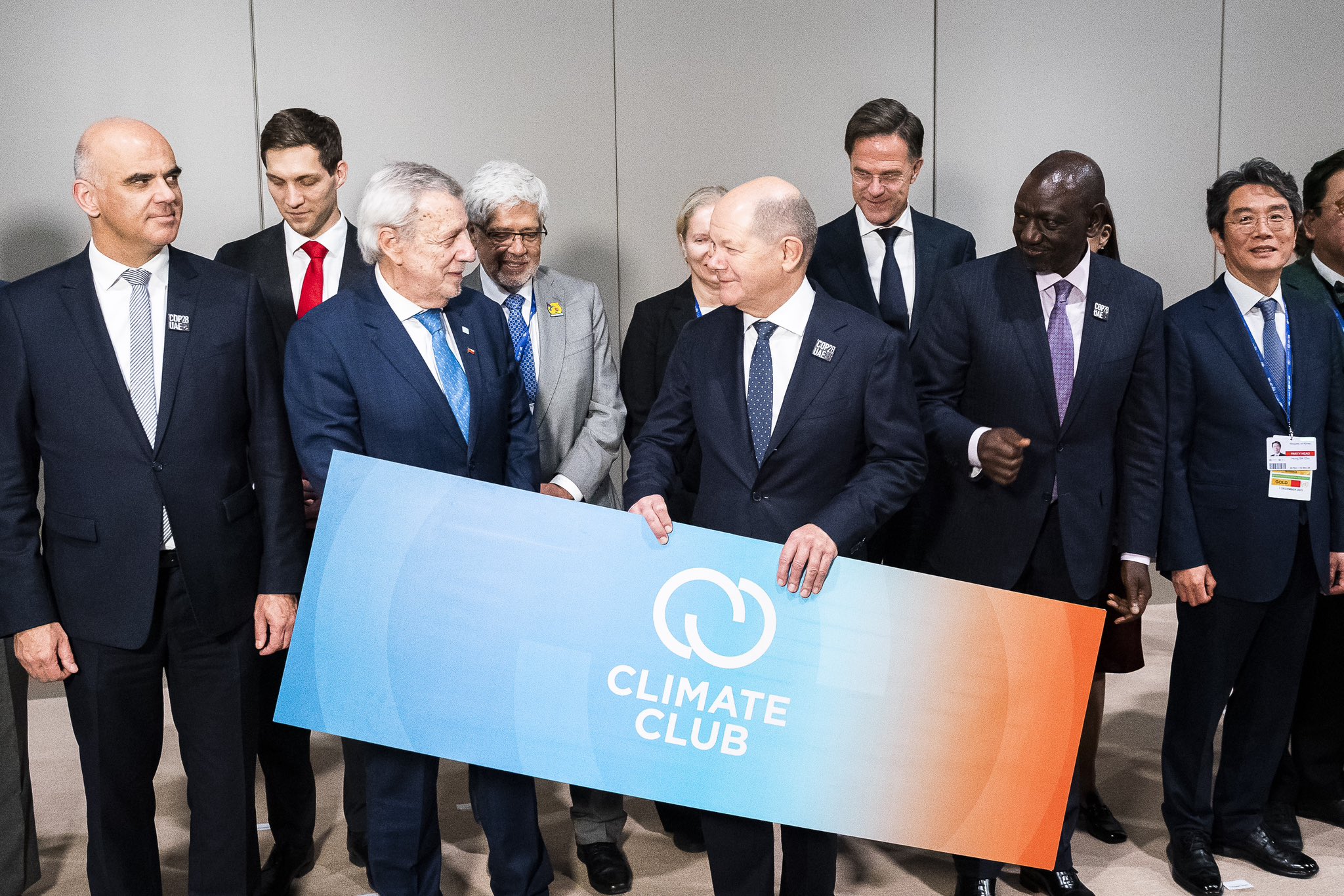
To combat climate change and find new forms of energy cooperation that are more sustainable for the planet, the federal government has set up a Strategy on Climate Foreign Policy bringing together its collaborative actions with partner countries. Climate, energy, and development partnerships play a vital role in this context, and emerging countries are key partners for climate initiatives. They have a high demand for energy and exploit resources, though without always respecting environmental, social, and governance standards. Their renewable energy (RE) production potential is significant, and there are major opportunities for CO2 reduction thanks to modernization technologies that Germany is seeking to transfer to its partners. To this end, Germany is using a multitude of diplomatic tools and is leveraging a unique network of international agencies, chambers of commerce and climate finance players.
Jeanette Süẞ is researcher at the Study Committee on Franco-German (Cerfa) at the French Institute of International Relations (Ifri), working in particular on the European Union and the Franco-German relations.
- This publication is available in French (PDF): La diplomatie climatique allemande. La recherche d’un équilibre entre développement durable et sécurité énergétique.

Available in:
Regions and themes
ISBN / ISSN
DOI
Ifri Studies, March 2024
Share
This page contains only a summary of our work. If you would like to have access to all the information from our research on the subject, you can download the full version in PDF format.
Germany’s Strategy on Climate Foreign Policy: Balancing Sustainable Development and Energy Security

Jeanette SÜß
Research Fellow, Study Committee on Franco-German Relations (Cerfa), Ifri


The Study Committee on Franco-German Relations (Cerfa)
The Study Committee on Franco-German Relations (Cerfa) was created in 1954 by an inter-governmental agreement between the Federal Republic of Germany and France, in order to raise awareness of Germany in France and analyze Franco-German relations, including in their European and international dimensions. In its conferences and seminars, which bring together experts, political leaders, senior decision-makers and representatives of civil society from both countries, Cerfa develops the Franco-German debate and stimulates political proposals. It regularly publishes studies through two collections: Cerfa notes and studies as well as Franco-German visions.
Cerfa maintains close relations with the network of German foundations and think tanks. In addition to its research and debate activities, Cerfa promotes the emergence of a new Franco-German generation through original cooperation programs. This is how in 2021-2022, Cerfa led a program on multilateralism with the Konrad Adenauer Foundation in Paris. This program is aimed at young professionals from both countries interested in the issues of multilateralism in the context of their activities. It covered a wide range of themes relating to multilateralism, such as international trade, health, human rights and migration, non-proliferation and disarmament. Previously, Cerfa had participated in the Franco-German future dialogue, co-led with the DGAP from 2007 to 2020, and supported by the Robert Bosch Foundation and the Daniel Vernet group (formerly the Franco-German Reflection Group) which was founded in 2014 upon the initiative of the Genshagen Foundation.
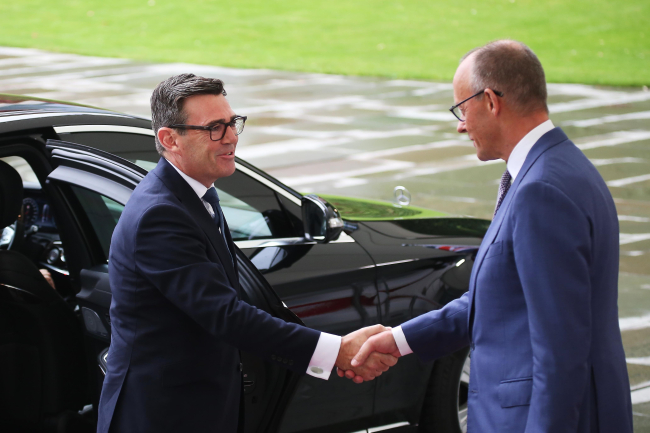
A Partnership Built on Security: Post-Brexit Rapprochement between Germany and the United Kingdom
Since the UK’s withdrawal from the EU, UK-German relations have undergone a remarkable transformation: from Berlin’s deliberate distancing from London during the Brexit negotiations, when Germany consistently prioritised EU-27 unity over bilateral arrangements, to a gradual rapprochement, culminating, for the time being, in the 2025 Kensington Treaty of Friendship.
Recalibrating Europe’s Security: Building Partnerships in an Era of ‘Wrecking-Ball Politics
The 2026 Munich Security Conference report observes that “the world has entered a period of wrecking-ball politics.” Indeed, the era of Western predominance, dependable alliances and capable multilateral institutions has given way to shifting balances of power and deepening uncertainty.
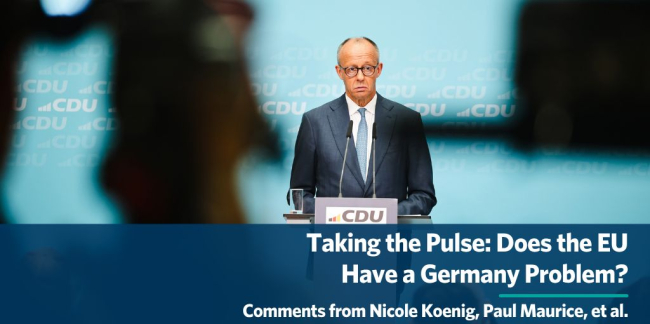
Taking the Pulse: Does the EU Have a Germany Problem?
Are Germany’s economic, industrial, and political struggles becoming a liability for the EU’s ability to rise to the geopolitical moment?
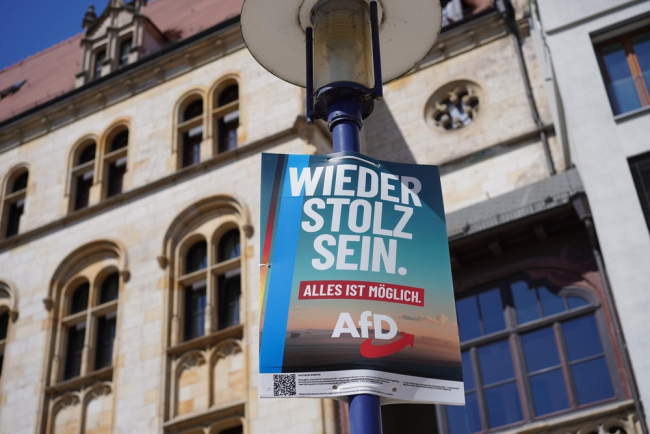
From Protest to Power? The AfD Ahead of the Eastern State Elections
The September state elections will test the AfD’s transition from protest force to potential governing power amid growing political fragmentation and dissatisfaction with Chancellor Friedrich Merz and his coalition. While firmly established in eastern Germany, the AfD is also gaining ground in the west, raising questions about coalition-building and the future direction of German politics.