



"Iron Swords" A Military Analysis of Israel's War in Gaza
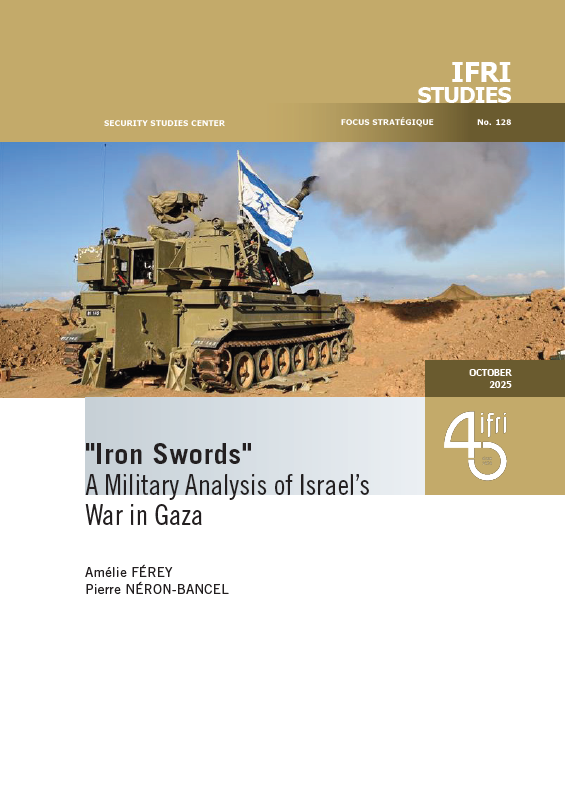
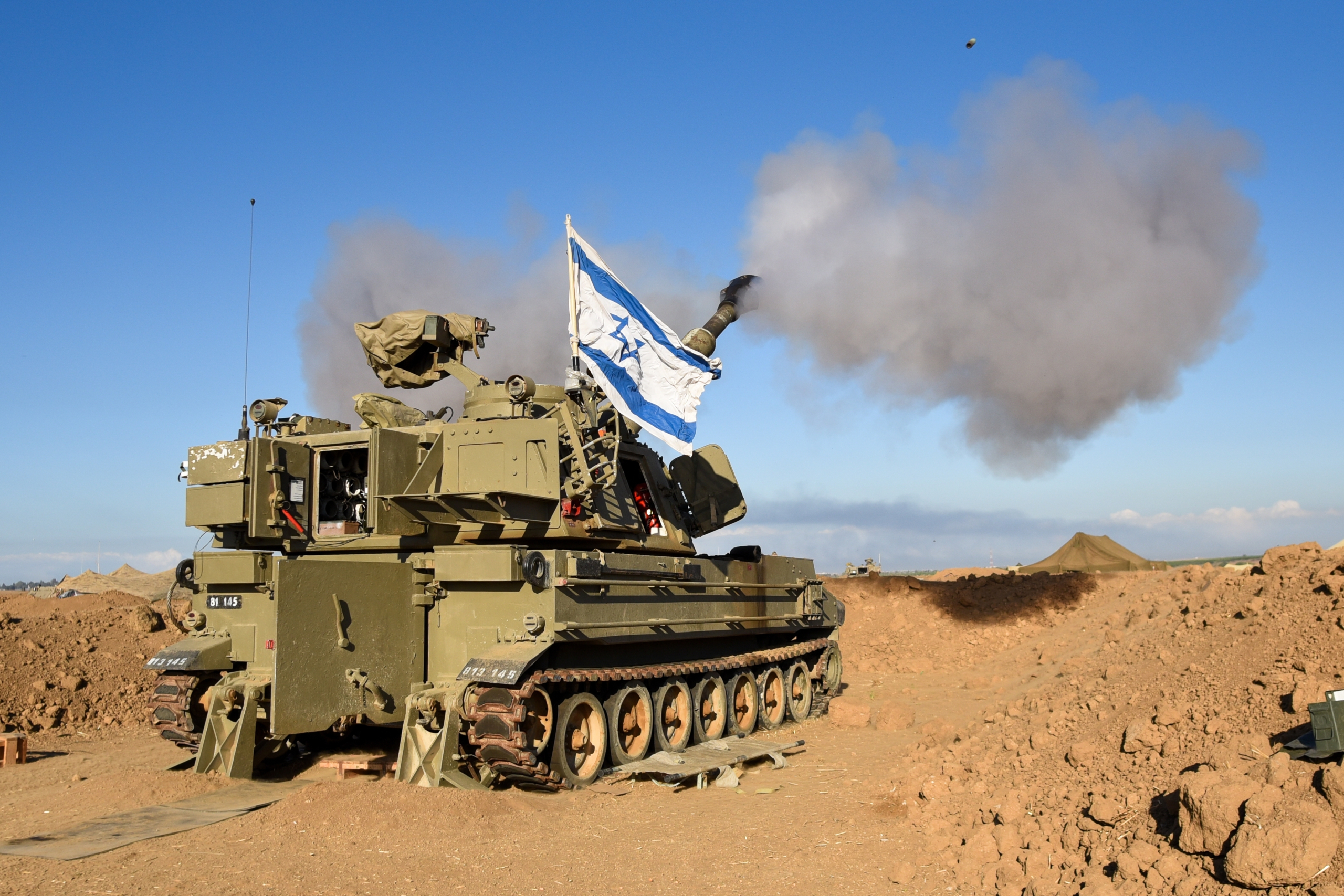
On October 7, 2023, Hamas' attack, dubbed “Al-Aqsa Flood,” caused a major shock and led Israel to launch the longest war in its history. Operation “Iron Swords” was notable for its unprecedented intensity, both in terms of the massive ground forces deployed and the firepower used.
This study adopts a feedback approach (RETEX) which consists of analyzing the strategic and tactical choices made by the Israeli Defense Forces (IDF) and their results from a military perspective, without judging their moral or political legitimacy. This approach allows us to understand the military rationale behind this operation while shedding light on the strategic impasses.
Prior to Operation “Al-Aqsa Flood,” Israel had developed a “bunkerization” strategy based on a land, air, and sea blockade of Gaza. Since withdrawing from the enclave in 2005, Israeli operations had alternated between air strikes and occasional incursions, without succeeding in eradicating Hamas. The construction in 2014 and modernization in 2021 of the security fence surrounding the Gaza Strip reinforced this sense of security for the IDF, fueled by their confidence in their technological superiority.
Israeli strategic culture, marked by the idea of an existential threat, has historically favored an offensive approach in the form of preemptive strikes. However, it has shifted toward a defensive posture, relying on the use of air power in targeted bombing campaigns rather than ground offensives.
The IDF, organized around a small professional core and a massive reserve, is a powerful and innovative army but limited in endurance. In response, Hamas consolidated its armed wing and established itself as a hybrid actor, combining military actions with political objectives. The October 7 attack took advantage of a political context in Israel that was deeply divided by the judicial reform crisis, diverting attention away from Gaza.
Operation “Al-Aqsa Flood” was a tactical success due to its speed of execution. On the morning of October 7, 2023, nearly 3,800 Hamas commandos breached the border at more than 60 points almost simultaneously, using a variety of rudimentary means such as pickup trucks, motorcycles, paragliders, and boats. They neutralized sensors and communications with drones and bulldozers, attacked Israeli bases and localities, and captured 251 Israelis, who were held hostage in the Gaza Strip.
The Israeli response, in the form of Operation Iron Swords, was then deployed in several phases: general mobilization, conquest of northern Gaza, offensive on Khan Yunis, and then capture of Rafah. This methodical advance from north to south was supported by massive air strikes and intense bombardments, causing unprecedented lethality and destruction.
Analyzed through the prism of the “factors of operational superiority” of French doctrine, Israel demonstrated great tactical agility and an ability to mobilize its population quickly.
However, its weaknesses became apparent in its lack of understanding of Hamas, its limited endurance, and the deterioration of its international image due to its repeated violations of international law. Diplomatic isolation and mounting accusations of war crimes and genocide, notably by the United Nations Human Rights Council in the summer of 2025, underscore the strategic cost of the campaign.

Available in:
Themes and regions
ISBN / ISSN
Share
This page contains only a summary of our work. If you would like to have access to all the information from our research on the subject, you can download the full version in PDF format.
"Iron Swords" A Military Analysis of Israel's War in Gaza


Amélie FÉREY
Former Research Fellow, Former Head of the Defense Research Unit, Security Studies Center, Ifri

Pierre NÉRON-BANCEL
Former Military Fellow, Defense Research Unit of Security Studies Center, Ifri


Security Studies Center
Heir to a tradition dating back to the founding of Ifri, the Security Studies Center provides public and private decision-makers as well as the general public with the keys to understanding power relations and contemporary modes of conflict as well as those to come. Through its positioning at the juncture of politics and operations, the credibility of its civil-military team and the wide distribution of its publications in French and English, the Center for Security Studies constitutes in the French landscape of think tanks a unique center of research and influence on the national and international defense debate.
Defense Research Unit
The Defense Research Unit is a program that aims at stimulating the strategic debate by dealing with subjects at the junction of the “technico-operational” and the “political-strategic”. A unique structure in France, it brings together civilian researchers and “military fellows” from each of the three armies to produce work on defense policies, the capability and strategic adaptation of armies, and foresight on tomorrow's conflicts.
Toward Space-Based Intelligence for All? The Case of the Spring 2026 Iranian Strikes
The conflict in the Middle East has highlighted the effectiveness of Iranian strikes in identifying targets and conducting precision strikes. This raises the question: which capabilities enabled the Islamic Revolutionary Guard Corps (IRGC) to achieve these results?

Confronting Russia’s High-Velocity Arsenal: European Challenges and Solutions
Since February 2022, Russian missile and long-range drone strikes against Ukraine have served as near-daily reminders of what European states could face in a war with Russia. The same weapon systems battering Ukrainian infrastructure and population centers would be directed against European military and civilian targets in any confrontation between Russia and NATO. As Russian missile production expands and its arsenal diversifies, Europe must confront an uncomfortable question: how to deter, and if push comes to shove, fight Russia's long-range strike arsenal?
The War on Terrorism: Global Experts Reflect on Lessons Learned Twenty-Five Years After 9/11
Twenty-five years ago, the September 11 attacks prompted the invention of new security architectures that shaped the war on terrorism. Sixteen think tank experts from fifteen countries reflect on the successes, failures, and missed opportunities in the fight against terrorism—a fight that is still ongoing.
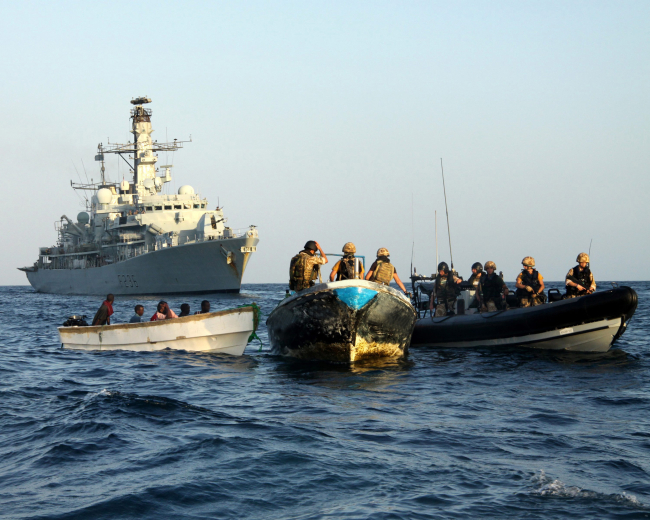
From Corsairs to Private Military Contractors. Nonmilitary Maritime Actors and the Historical Continuities of Naval Warfare
Since late 2023, several Houthi attacks on commercial shipping have involved privately contracted armed teams conducting defensive engagements and coordinating immediate response efforts, often in the relative absence of regular naval forces during the immediate hostilities at sea. These cases highlight a strategic tension that increasingly confronts modern navies. On the one hand, they are expected to conduct persistent, low-intensity maritime security tasks such as counterpiracy, maritime policing, and the protection of commercial shipping. On the other hand, they face renewed pressure to prepare for high-intensity conflict against peer and near-peer adversaries amid the return of great power competition.