



France has a new nuclear doctrine of ‘forward deterrence’ for Europe. What does it mean?
On Monday, French President Emmanuel Macron delivered a speech on France’s nuclear deterrence at the Île Longue naval base near Brest in Brittany, which hosts the country’s nuclear-armed ballistic missile submarines. Such addresses are a well-established presidential ritual, typically delivered once per presidential term and receiving moderate attention. This one, however, was highly anticipated in France and abroad, given the profound geopolitical shifts since Macron’s first nuclear speech in February 2020.
Russia’s invasion of Ukraine, now in its fourth year, has reintroduced large-scale, high-intensity war to the European continent. Moscow’s repeated nuclear signaling — ranging from rhetorical threats to the alleged deployment of non-strategic nuclear weapons in Belarus — has increased the perception of nuclear risk in Europe. Meanwhile, uncertainty about the long-term trajectory of US security guarantees to allies has intensified, particularly as US domestic politics remain volatile and Washington’s strategic attention continues to shift toward China. In this fast-changing environment, European allies have looked to Paris with renewed interest to bridge a perceived deterrence gap. But what role can France play in European security?
Macron sought to respond to these European demands without abandoning the core tenets of the French nuclear doctrine. In his speech, he proposed meaningful adjustments, both doctrinal and capability-related, while being careful to preserve national consensus and the principle of strategic autonomy that has long defined France’s posture. If Macron’s nuclear speech seems to have reconciled these two visions, it remains to be seen how France’s forward deterrence will be articulated.
Doctrinal evolutions — but still no nuclear umbrella. Central to his address, Macron introduced the notion of “forward deterrence” (dissuasion avancée) — a doctrine that seeks to embed France’s nuclear deterrent more deeply within a European strategic security architecture, without establishing formal guarantees akin to NATO’s nuclear umbrella. As the president stated: “We must conceive our deterrence strategy within the depth of the European continent … with the progressive implementation of what I will call ‘forward deterrence.’”
Unlike NATO’s nuclear sharing, in which US dual-capable aircraft and weapons are stationed on allied soil under established protocols, France’s approach remains deliberately opaque and sovereign. Macron was clear that France will retain sole authority over the nuclear threshold and decide independently on targeting, planning, and use of its nuclear arsenal. In addition, no formal guarantee will be extended to partners in the strict legal or treaty sense, such as NATO’s article-based commitments. The definition of France’s vital interests, which are protected by nuclear deterrence, also remains within the purview of the French president. Macron, however, did state that these vital interests “should not merely [be] considered as what is within our national border.” By this, Macron confirmed the long-standing principle that an attack on a European country might affect France’s vital interests and thereby trigger a response.
But France is not trying to mimic the US extended deterrence model.
Contrary to the United States, France’s vital interests are inherently deeply rooted in the European continent to which it is geographically attached. The proposed framework, therefore, rests on structured political and military mechanisms designed to deepen coordination with a first cohort of willing partners, including the United Kingdom (with whom France already have a special security partnership), Germany (with a specific Nuclear Steering Group, the creation of which was announced shortly after Monday’s speech), Belgium, the Netherlands, Denmark, Poland, Sweden, and Greece.
The initiative remains open-ended, and other states such as Norway have indicated their desire to participate. Notably, the inclusion of countries contributing to NATO’s dual-capable aircraft mission (Germany, Belgium, and the Netherlands) demonstrates that this European initiative and NATO nuclear deterrence are deemed compatible, and that the presence of US nuclear warheads and dual-capable aircraft on their territory is not barring these countries from also associating with a French forward nuclear deterrence. Macron was also keen on insisting that this initiative is “perfectly complementary to NATO’s at both strategic and technical level,” with a high-ranking NATO official quoted as saying to the press on Tuesday that the alliance welcomed this new concept.
Concretely, the proposal includes the creation of regular consultation groups dedicated to nuclear doctrine, escalation management, and crisis signaling. Escalation management has been of particular concern lately in France, and Macron put a special emphasis on the “intensification of conflicts under the [nuclear] threshold,” explaining that these require specific coordination with European partners and new conventional capabilities. Beyond consultations, allies are also invited to observe — and in some cases participate in — French nuclear exercises, such as the Poker operation of the Forces Aériennes Stratégiques, the French strategic air forces. The aim here is operational integration of allies’ conventional capabilities in the French nuclear deterrent mission, as well as political familiarity and strategic literacy.
One of the starkest novelties of Macron’s speech is that France would allow its nuclear-capable aircraft to be deployed abroad to increase their survivability and offer a “new strategic depth.” Although the possibility of forward-deploying French nuclear warheads had generated a lot of discussions, Macron did not explicitly mention this, only alluding to the “elements of our strategic air forces” and a “temporary” deployment. The French version insists on the “circumstances” of such a deployment, underlying the fact that it would be only during a crisis. But that subtlety has, maybe deliberately, been lost in the translation.
Beyond the concept of “forward deterrence,” Macron’s speech included other significant doctrinal changes. For instance, there is a return to the explicit notion of France’s overseas territories as being part of France’s vital interests. The notion of “unacceptable damages” inflicted on an adversary also disappeared from the speech as being the objective of the French nuclear forces. Instead, Macron preferred a more evasive goal: “If we had to use our arsenal, no State, however powerful, could shield itself from it; and no State, however vast, could recover.” Hearing Macron, France seems to be prepping itself for a more aggressive nuclear age.
Capability adjustments. On Monday, Macron also announced that France will be increasing the number of its nuclear warheads — the first such public commitment since the end of the Cold War. And Macron added that France will cease public disclosures of warhead totals. This break with decades of transparency signals a shift toward calibrated opacity intended to enhance uncertainty in the strategic calculus of potential adversaries.
While not fully pointed at, these capability adjustments seem to be driven mainly by Russia. Moscow’s layered air defense systems, combined with advances in anti-submarine warfare and missile interception, complicate the credibility of France’s second-strike capabilities. But Macron also alluded to the broader strategic environment, implicitly referring to the growing strategic alignment between Russia and China. In a world where two nuclear peers may coordinate politically—if not militarily—France must ensure that its force can operate in a more contested, multi-adversary environment. A bigger arsenal will reinforce France’s penetration capacity, compensate for technological uncertainties, and send a reassuring signal to European allies who may fear strategic decoupling from the United States.
But the decision to stop disclosing the number of warheads is debatable: As nuclear norms and transparency are under attack, France was able, until now, to maintain a high standard, and it was considered legitimate to impose this standard on others, albeit with limited success. France could lose legitimacy from this decision. Moreover, despite Macron explicitly saying France is not engaged in an arms race, this position might be difficult to sustain at the next Review Conference of the Nuclear Non-Proliferation Treaty, planned next April and May. More opacity will make open-source assessment of the French nuclear arsenal even more valuable.
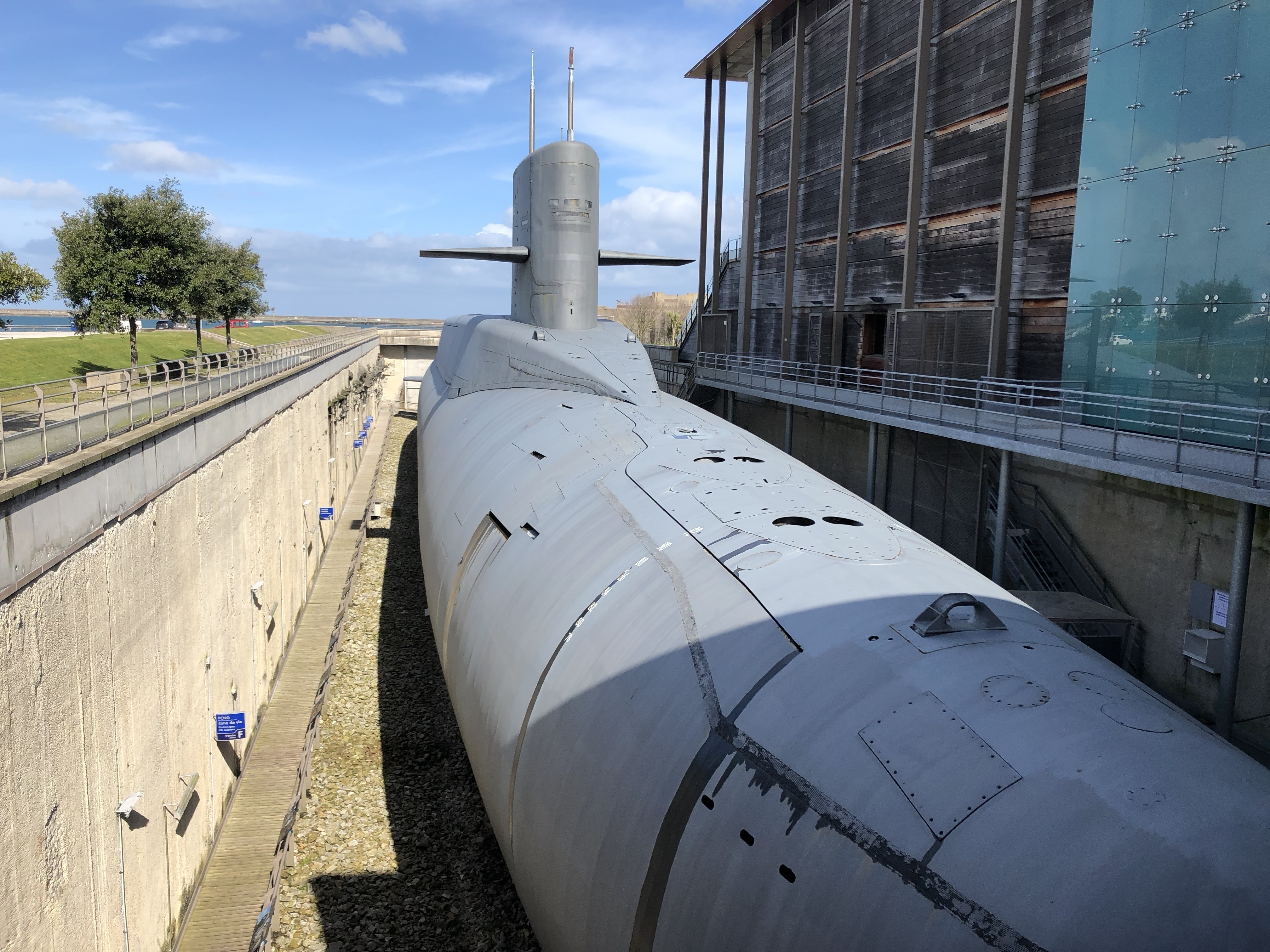
In terms of new capabilities, Macron reaffirmed France’s long-standing modernization programs. The renewal of the sea-based leg, which includes the third generation of ballistic missile submarines and upgraded submarine-launched ballistic missiles, remains on track. The air-based component of the French nuclear forces will also be modernized, with a new hypersonic missile scheduled to be deployed by 2037. These efforts build on decisions taken under previous defense programming laws. But Macron’s speech this year framed these programs as being explicitly within a deteriorating strategic environment.
Beyond nuclear forces, Macron highlighted complementary investments in conventional capabilities designed to strengthen escalation control under the threshold of nuclear use. The president cited programs such as the French-German initiative on early warning (called JEWEL), the European project to develop long-range missiles (ELSA), and ground-based air defense as essential. But those are either very recent or staggering programs. While France’s nuclear modernization programs appear robust and politically protected, conventional capabilities—particularly those enabling high-intensity warfare and territorial defense—still lag behind ambitions. If European allies are to rely more visibly on France’s nuclear posture, they should expect commensurate investments to be needed in the conventional domain to avoid a European strategic security that relies too much on nuclear weapons.
Reception. Initial reactions from European capitals have been largely positive. Coordinated statements from Berlin, Warsaw, Copenhagen, Stockholm, and Brussels welcomed France’s initiative and emphasized the importance of strengthening Europe’s strategic responsibility, while maintaining close coordination with NATO. In the United States, the fact that this initiative is not made or tailored to replace but to complete the US extended deterrence is also slowly being better understood.
Surprisingly, in France, Macron’s speech has succeeded in preserving a rare bipartisan consensus on nuclear deterrence. Criticism has been limited and largely focused on transparency, from the nuclear disarmament community, as well as on problems of cost. Even political parties on the far right and far left, historically skeptical of deeper European defense integration, have refrained from frontal opposition, despite claiming for weeks without evidence that France was about to share nuclear weapons with Germany or the European Union. The careful framing of the initiative as compatible with national sovereignty, and as an enhancement, not dilution, of French strategic autonomy, has proven politically effective.
As France approaches the presidential election next year, strategic stability matters. Nuclear deterrence has long been one of the few areas of enduring continuity in French defense policy. By updating doctrine without overturning fundamentals, Macron has sought to ensure that deterrence remains a pillar of national unity rather than a partisan battleground.
Macron’s speech does not revolutionize French nuclear doctrine. But it does something subtler and arguably more significant: It adapts a traditionally national instrument to a broader—and more unstable—strategic landscape. By proposing structured coordination with European allies without formal guarantees, calibrated opacity without abandonment of restraint, and modernization without doctrinal rupture, France is attempting to square a difficult circle. Whether this experiment in Europeanizing national deterrence will endure depends not only on Paris but also on the trajectory of the war in Ukraine, the evolution of US policy, and the cohesion of Europe itself.
This analysis is available on Bulletin of the Atomic Scientists's website.

Available in:
Themes and regions
Share

Héloïse FAYET
Research Fellow and Head of the Deterrence and Proliferation program, Security Studies Center, Ifri

Security Studies Center
Heir to a tradition dating back to the founding of Ifri, the Security Studies Center provides public and private decision-makers as well as the general public with the keys to understanding power relations and contemporary modes of conflict as well as those to come. Through its positioning at the juncture of politics and operations, the credibility of its civil-military team and the wide distribution of its publications in French and English, the Center for Security Studies constitutes in the French landscape of think tanks a unique center of research and influence on the national and international defense debate.
Deterrence and Proliferation
The conflicts in Europe, Asia and the Middle East demonstrate a return of nuclear power to the balance of power. Arsenals are being modernized and expanded, while arms control is collapsing. This research program aims to analyze these phenomena.

Confronting Russia’s High-Velocity Arsenal: European Challenges and Solutions
Since February 2022, Russian missile and long-range drone strikes against Ukraine have served as near-daily reminders of what European states could face in a war with Russia. The same weapon systems battering Ukrainian infrastructure and population centers would be directed against European military and civilian targets in any confrontation between Russia and NATO. As Russian missile production expands and its arsenal diversifies, Europe must confront an uncomfortable question: how to deter, and if push comes to shove, fight Russia's long-range strike arsenal?

The War on Terrorism: Global Experts Reflect on Lessons Learned Twenty-Five Years After 9/11
Twenty-five years ago, the September 11 attacks prompted the invention of new security architectures that shaped the war on terrorism. Sixteen think tank experts from fifteen countries reflect on the successes, failures, and missed opportunities in the fight against terrorism—a fight that is still ongoing.
From Corsairs to Private Military Contractors. Nonmilitary Maritime Actors and the Historical Continuities of Naval Warfare
Since late 2023, several Houthi attacks on commercial shipping have involved privately contracted armed teams conducting defensive engagements and coordinating immediate response efforts, often in the relative absence of regular naval forces during the immediate hostilities at sea. These cases highlight a strategic tension that increasingly confronts modern navies. On the one hand, they are expected to conduct persistent, low-intensity maritime security tasks such as counterpiracy, maritime policing, and the protection of commercial shipping. On the other hand, they face renewed pressure to prepare for high-intensity conflict against peer and near-peer adversaries amid the return of great power competition.
Framework Nation: A European Challenge and French Ambition
First appearing in the early 2000s, the framework nation concept follows several distinct rationales, whether it refers to a country assuming the leadership of a military operation, directing a multinational capability project, or commanding a permanent force structure. In every case, the country that takes on this role fully intends to derive from it additional politico-military influence.