



Sri Lanka’s NPP Government. From System Change to Structural Compliance
In September 2024, a relative outsider to Sri Lanka’s two-party-dominated political system, Anura Kumara Dissanayake, won the presidential elections. The anti-establishment, populist movement he represented, the National People’s Power (NPP), went on to receive an overwhelming mandate in the November 2024 general elections, winning 159 seats in a 225-member parliament.
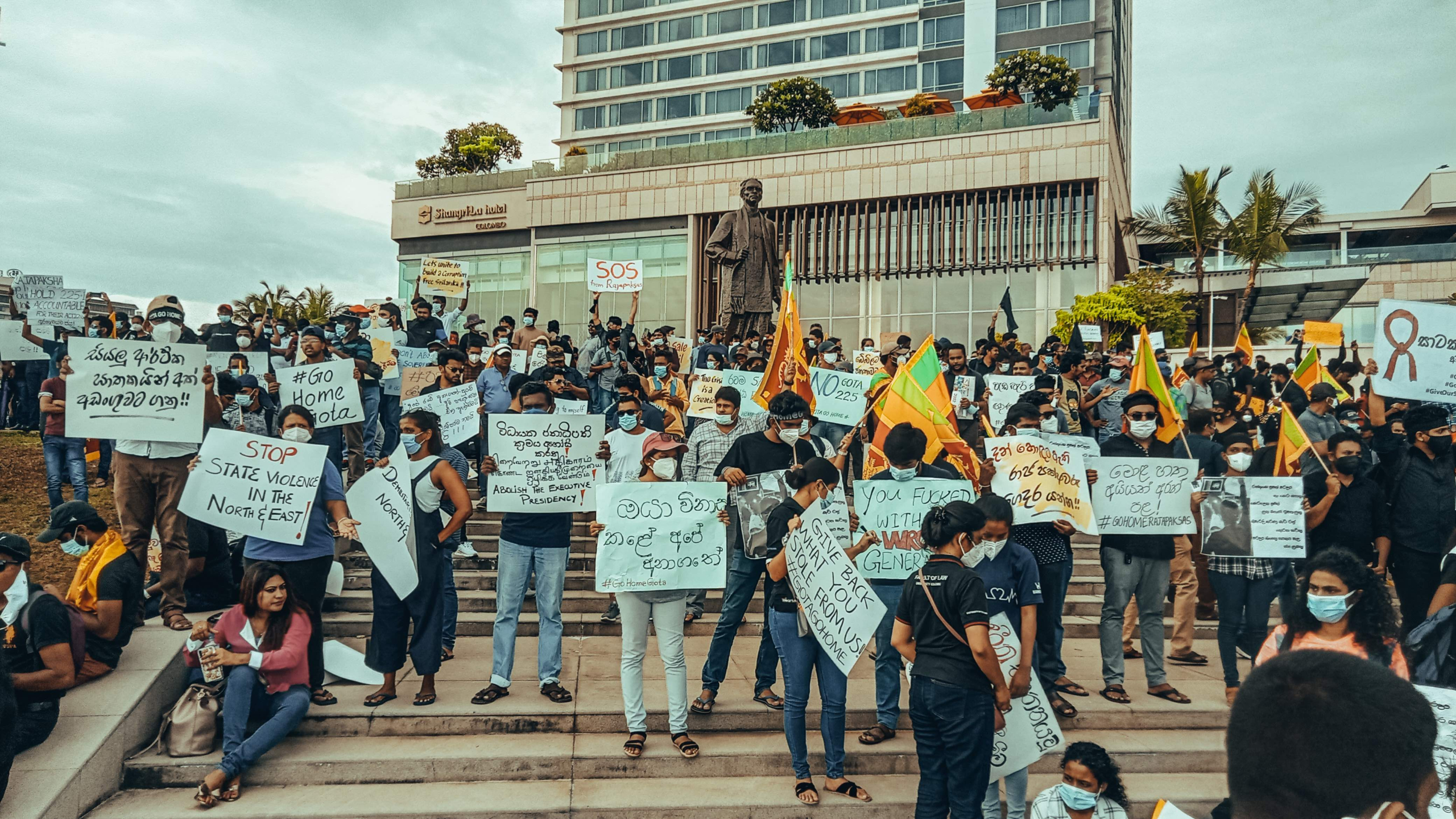
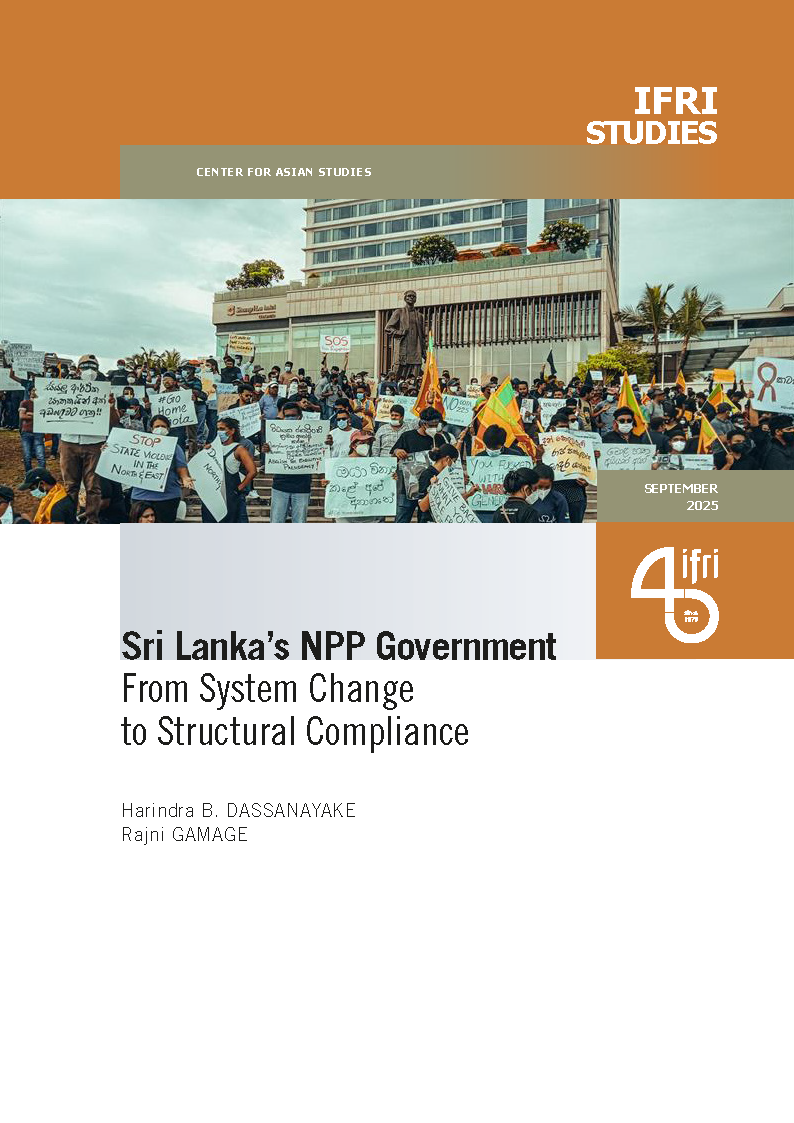
A key trigger of the skyrocketing popularity of the NPP was the country’s economic collapse in 2022. The NPP successfully mobilized the resulting popular anger that took the form of mass street protests by pressing an anti-elite, anti-establishment narrative that promised a “system change”. This attempt was legitimized by the leftist and grassroots credentials of the NPP’s main and only political party, the Marxist-Leninist Janatha Vimukthi Peramuna (JVP).
The National People’s Power (NPP) rose to power during the 2022 economic crisis and protests, gaining mass support by framing corruption as the root cause. This resonated with the strong anti-establishment sentiments of the emerging middle class, whose development aspirations were disrupted by the economic crisis.
In the November 2024 elections, the NPP won a two-thirds majority, signaling the sharp decline of the political old guard amid a fragmented opposition. Tamil and Muslim minority parties in the north and east lost ground, indicating a shift away from ethnic politics toward a broader national arena where parties compete across communities. The NPP’s electoral success lay in replacing ethno-nationalist narratives with a corruption versus anti-corruption axis of political polarization.
The post-economic crisis conditions facilitated a liberal consensus among the major political camps for International Monetary Fund (IMF)- led, open-market economic reforms. The shrinking space for alternative narratives fueled the rise of populist politics.
In December 2024, Sri Lanka completed its bilateral debt restructuring and postponed repayment to 2028. The largest bilateral single-country creditor is China (USD 4.8 billion), followed by Paris Club members, including India (USD 5.8 billion). However, most of Sri Lanka’s external debt is in the form of international sovereign bonds (USD 12.5 billion).
The interim government of 2022-2024 initiated an intense period of reforms, many of which were framed in technocratic terms; recovery was narrowly focused on fiscal targets. These reforms were often sequenced strategically to minimize democratic opposition. The NPP government continues these reforms, but at a slower pace.
With growth based on debt-financed infrastructure no longer sustainable, Sri Lanka’s patronage-driven model is coming under strain. The state’s limited capacity to provide resources through subsidies or permits results in the rising expectations of an aspirational middle class being unmet. This is likely to fuel greater political instability and/or increased authoritarianism to manage public discontent.
The NPP government has largely continued the previous administration’s macroeconomic policies. The NPP’s economic agenda reflects a statist narrative centered on export-led industrialization and manufacturing, yet its feasibility is likely to be curtailed by labor shortagesand the heightened volatility of global tariff regimes under the American President Trump.
The Sri Lankan state’s role in human development is shrinking amid IMF-led reforms and widening inequality. Poverty, food insecurity and child malnutrition have worsened since the 2022 crisis. Meanwhile, governments have failed to free fiscal space for welfare by reforming the oversized military and loss-making state enterprises.
The NPP’s promise of a “system change” refers to establishing a new social contract grounded in good governance, including accountability, transparency, anti-corruption and the rule of law. Its flagship program, Clean Sri Lanka, is designed to implement this agenda. This promise to bring about systemic change includes a new constitution with key structural reforms, such as abolishing the executive presidency, electoral reforms, and increased power-sharing.
The NPP government’s stance on accountability for alleged war crimes appears to favor domestic, homegrown mechanisms, reflecting a nationalist orientation that prioritizes national sovereignty. The government has continued the policy of opposing any international resolutions seeking the involvement of foreign judges or evidence collection mechanisms.
Sri Lanka’s foreign policy engagements reflect competing “democracy versus delivery” narratives entrenched at the domestic level, alternating between Western-oriented, liberal democratic, and free-market governments (India, West, and Japan axis) and those favoring an East Asian Tigers-style development model characterized by strong state centralization (China and Singapore).
Sri Lanka’s foreign relations with India have deepened since the economic crisis, paving the way for more Indian investments. This has led to some nationalist fearmongering by a strong anti-India lobby, along the lines of Liberation Tigers of Tamil Eelam (LTTE) revivalism and threats to the unitary state. Meanwhile, China’s reaction to Sri Lanka’s closer alignment with India, including a new but undisclosed bilateral defense agreement, is not yet evident; however, China is observed to be shifting from large infrastructure projects to community-level engagement.
The imposition of a 20% “reciprocal” tariff by the United States (US) and the requirement to reapply for the European Union (EU)’s Generalised Scheme of Preferences Plus (GSP+) trade benefits in 2026 challenge Sri Lanka’s reliance on Western trade and aid, in the context of debt distress and stalled development. As advanced economies turn increasingly inward, deprioritizing democracy and multilateralism, the traditional aid-driven development model is being replaced by a securitization narrative, reflected in rising Indian Ocean geopolitical tensions.
Amid intensifying global power rivalries, small states in the Global South, such as Sri Lanka, grapple with competing internal narratives of becoming more protectionist or more outwardly integrated. Sri Lanka is actively participating in regional forums like the Indian Ocean Rim Association (IORA) and the Bay of Bengal Initiative for Multi-Sectoral Technical and Economic Cooperation (BIMSTEC). However, although Sri Lanka once championed alternative regionalisms, such as the Bandung Conference and the Non-Aligned Movement, its current economic fragility and legitimacy crisis limit its influence.

Available in:
Themes and regions
ISBN / ISSN
Share
This page contains only a summary of our work. If you would like to have access to all the information from our research on the subject, you can download the full version in PDF format.
Sri Lanka’s NPP Government. From System Change to Structural Compliance

Center for Asian Studies
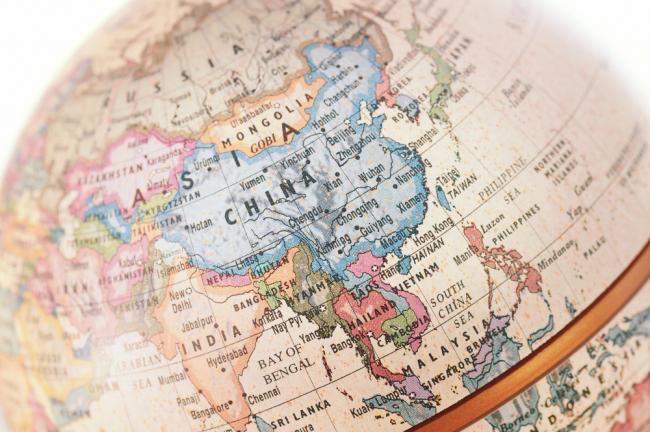
Asia is a nerve center for multiple global economic, political and security challenges. The Center for Asian Studies provides documented expertise and a platform for discussion on Asian issues to accompany decision makers and explain and contextualize developments in the region for the sake of a larger public dialogue.
The Center's research is organized along two major axes: relations between Asia's major powers and the rest of the world; and internal economic and social dynamics of Asian countries. The Center's research focuses primarily on China, Japan, India, Taiwan and the Indo-Pacific, but also covers Southeast Asia, the Korean peninsula and the Pacific Islands.
The Centre for Asian Studies maintains close institutional links with counterpart research institutes in Europe and Asia, and its researchers regularly carry out fieldwork in the region.
The Center organizes closed-door roundtables, expert-level seminars and a number of public events, including an Annual Conference, that welcome experts from Asia, Europe and the United States. The work of Center’s researchers, as well as that of their partners, is regularly published in the Center’s electronic journal Asie.Visions.
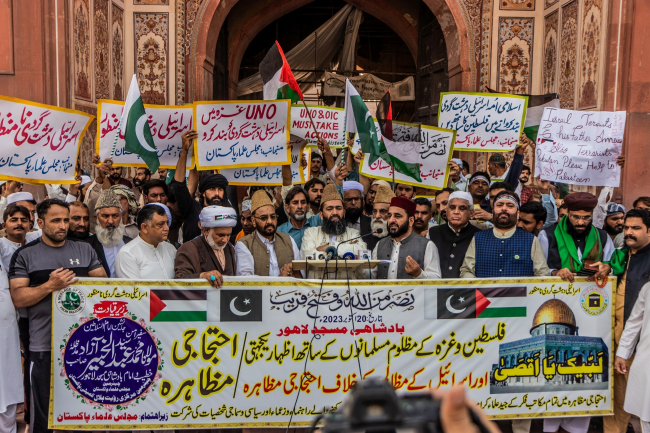
Pakistan and the Israel-Palestine Conflict: Transformation in Pakistan’s Approach After the War in Gaza
Pakistan has long combined vocal support for the Palestinian cause with covert engagement with Israel. Since the war in Gaza, this balance has become untenable: public opinion is united against Israel, joining Trump’s Board of Peace has drawn rare cross-party criticism, and new regional alignments put normalization out of reach.
The Oceania Factor in France’s Evolving Indo-Pacific Strategy
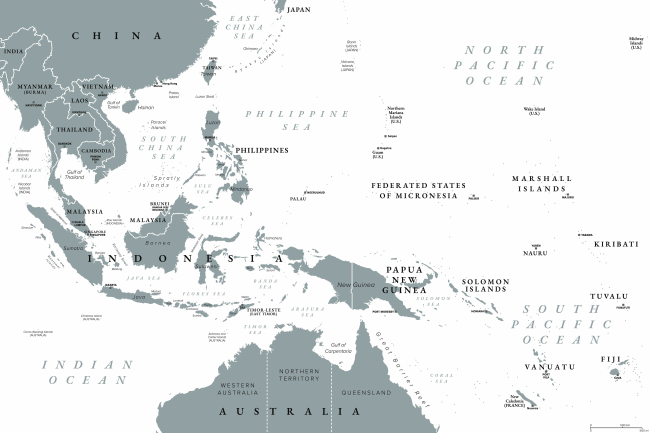
This paper examines the two-way relationship between France’s Indo-Pacific strategy and developments in Oceania. Oceania was not a priority in the initial years of France’s Indo-Pacific strategy, as the region was largely treated as secondary to major strategic hotspots and key partnerships, while overseas territories were primarily handled as domestic issues and recipients of a top-down strategy.

France’s View: From Diplomacy to Public-Private Action
France has emerged as the EU’s IMEC forerunner, combining port infrastructure, diplomatic alliances and public-private cooperation. With Marseille Fos at its core, the country brings a strategic hub for logistics, energy and digital connectivity to the corridor.
Trump II, the Crisis of the Rules-Based Order and Europe’s Indo-Pacific Strategy
This article examines the implications of Trump II for Europe’s engagement in the Indo-Pacific. The piece contends that Trump II is accelerating the erosion of the rules-based order and undermining the relevance of the Free and Open Indo-Pacific (FOIP) concept, while forcing Europe to refocus on its own continental security amid US retrenchment. Paradoxically, these very constraints create conditions for a more autonomous, pragmatic, and explicitly interest-driven European engagement in the Indo-Pacific, rather than outright withdrawal.