





The Revolution of Big Data
Big Data is changing our view of the world by changing our modes of approach, moving from analogue systems to digital-based knowledge.
Emerging Powers and Internet: Finding a Third Way?
Washington plays a leading role in Internet Governance, which is hardly surprising given the origins of the Internet and America’s technological ascendancy. However, the majority of Internet users are in non-Western countries.
Internet Governance after Snowden
The Snowden affair could bring about major changes in the structure of the Internet and its governance. Technologies should now a priori integrate standards which give citizens the capacity to keep a check on what data is available.
The Virtual Weapon: Dilemmas and Future Scenarios
Cyber technology challenges conventional mechanisms of deterrence and conflict management.
Internet Neutrality: Getting Beyond Scandals
While internet traffic is exploding and there is new costly infrastructure to be implemented, the “net neutrality” debate is raging.
The Internet and the Flaws of Multistakeholderism
The Internet Governance debate opposes multilateral thinking, favoring the role of State and interstate bodies, with a multistakeholder model, which aims to unite all concerned actors: states, business, experts, academics and internet groups, among others.

The Digital Tsunami. Natural Disasters Management in the Age of Social Media
Social media enable new means of natural disasters management. It is now easier to locate victims, to find shelters, or to coordinate humanitarian aid. Prevention has also become more efficient. From now on, this tool will be more and more present in the field of natural disasters management; however, it also poses some risks because of its open nature, which makes control more difficult.
Isolating, Not Taming: What's Behind the Impetus to "Digital Sovereignty" in Russia?
April 2014 was a particularly bitter month for Russian internet users and the local internet industry. President Vladimir Putin unsurprisingly made headlines when, at the Media Forum in St. Petersburg, he publicly labeled the internet as a “CIA project” and launched an attack against Russian internet businesses. Putin particularly expressed reservations about the successful Russian search engine Yandex, as it is registered in the Netherlands for, as Putin stated, “not only… taxation purposes but for other reasons, as well.” A week earlier, during his annual call-in TV show, Putin also referenced the internet when, responding to a question from Edward Snowden, he rejected any mass surveillance of the network by Russian law enforcement agencies.
Governing the Geostationary Orbit: Orbital Slots and Spectrum Use in an Era of Interference
Outer space, particularly in the telecommunication sector, is benefiting and becoming accessible to more and more actors. But with this trend comes also a reality that is every day more compelling: no meaningful development can be achieved without a clear, stable and predictable interference-free environment for the use and control of all satellites that depend upon ready access to radio frequencies and appropriate geostationary orbital slots to function properly.
Edward Snowden and democratization through the web
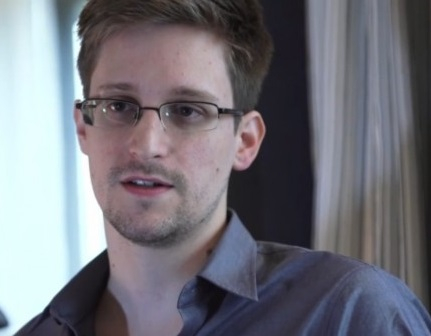
Why did Edward Snowden decide to disclose information related to U.S. secret services?
- Edward Snowden belongs to that generation of militants who do believe in the web as a tool for democratization, and do think that, to some extent, intelligence services of big states intend to monitor and to control the web at the expense of civil societies. This generation of militants believes in democratization through the web, and they want to fight against the "raison d'Etat". In that sense, there will be certainly other people like Snowden who will be ready to defend that cause of transparency. We'll see what is going to happen, but I definitely think he will become more and more a sort of a symbol of this cause, as Julian Assange is.
The Russian Internet Economy
The Russian Internet economy is demonstrating a substantial rate of growth, one that is significantly outperforming the rest of the domestic economy. According to joint research by the Higher School of Economics and the Russian Association of Electronic Communications, while in 2011 the Internet economy accounted for just 1% of Russia’s GDP, it was expected to grow at a rate of about 30% in 2012. According to BCG reports, the Internet contributed to 1.9% of Russian GDP in 2010, and is expected to grow by up to 2.8% by 2016. E-commerce, which combines retail and electronic payment systems, accounts for the large majority of the Internet economy, but other segments are also growing. Advertising is the fastest growing part of the Russian Internet economy, growing at a rate of 50% annually.
Internet, accélérateur des transformations de la Russie
La crise économique mondiale survenue en 2008, qui s’est durement répercutée en Russie, a cristallisé le mécontentement de la population, en particulier des classes moyennes et supérieures. Ce ressentiment, les réseaux sociaux et les blogs permettent de l’exposer sur la « place publique » en obtenant une résonance significative. Cette évolution n’est pas propre à la Russie ; elle est générationnelle.
Disponible sur Cairn
What lies behind Russia's new laws ?
Does the introduction of these laws lead to a more civilized political and cultural discourse in Russia?
- The main stake of these laws does not really deal with the emergence of a more civilized political discourse in Russia. What ultimately lies behind the Duma’s new laws is a mixture of nervousness about a political environment that is wholly unfamiliar, and a belief in the methods of Vladimir Putin’s previous stints as president.
Russian internet demonstrates high level of political maturity
How do you assess the Russian internet, in general? Is it different from the English web or not, in political terms?
- First of all, we should make a distinction between the official position on the internet as a political issue for the Russian government, and what happens in domestic terms. In the first case, it's very interesting to observe the desire by the Russian state to get back on the web.
Russia: Will the Web Reinvent Policy?
The Web has seen a spectacular development in Russia, opening an intermediary political space through which protesters against the regime have been able to coalesce, as shown by the events in late 2011 and early 2012.
Internet Companies in China: Dancing between the Party Line and the Bottom Line
With over 500 million Internet users and 900 million mobile-phone subscribers by mid-2011, the Chinese Internet is an enormous market that has produced the spectacular rise of many Chinese Internet companies and attracted substantial foreign investment. This paper argues that, despite a great degree of liberalization of its market over the past 15 years, the Chinese Internet remains authoritarian in nature. Not only did the central government actively shape the infrastructure and rules of China's information superhighways, but recently it has also vigorously built state-controlled Internet companies, including a national search engine.
Russia's virtual: the new reality?
Russia's blogosphere has until recently been largely written off as a politically blunt parallel space. The Facebook mobilisation of 50,000 protestors has challenged such assumptions, writes Julien Nocetti.
Obama's Diplomacy as Showcased by Web 2.0
Obama's administration is intent on restoring the US image abroad.
Internet et politique aux Etats-Unis
The growing use of the internet by citizens (blogs, social networks, on-line donations, etc...) certainly impacts the way politics are done in the United States. However, the internet may not be as democratizing a political tool as it seems. The author, François Vergniolle de Chantal, is a lecturer at the University of Burgundy and the co-editor-in-chief of the review Politique Américaine.
Ifri, a foundation recognized as being of public utility, relies largely on private donors – companies and individuals – to guarantee its sustainability and intellectual independence. Through their funding, donors help maintain the Institute's position among the world's leading think tanks. By benefiting from an internationally recognized network and expertise, donors refine their understanding of geopolitical risk and its consequences on global politics and the economy. In 2026, Ifri partners with over 90 French and international companies and organizations.
