



French Forward Deterrence: What Is in It for the Baltic States?
For what may be its most significant stress test since the end of the Cold War, European deterrence is under strain. Russia’s war against Ukraine has demonstrated Moscow’s willingness to use force and its ability to combine conventional operations with nuclear signalling, coercive rhetoric, and hybrid actions. At the same time, the gradual deterioration of transatlantic relations has revived concerns about the reliability of extended deterrence.
For what may be its most significant stress test since the end of the Cold War, European deterrence is under strain. Russia’s war against Ukraine has demonstrated Moscow’s willingness to use force and its ability to combine conventional operations with nuclear signalling, coercive rhetoric, and hybrid actions. At the same time, the gradual deterioration of transatlantic relations has revived concerns about the reliability of extended deterrence.
In the context of a potential ‘deterrence gap’ and the medium-term risk of direct Russian aggression against an eastern flank country, European states are increasingly weighing how they could do more. France has sought to position itself as part of the solution. Over the past few years, and more explicitly in his March 2026 speech, President Emmanuel Macron emphasised the European dimension of French nuclear deterrence and introduced a new framework for deeper consultation and coordination with partners—‘forward deterrence’.
Yet, this proposal remains cautious, both politically and doctrinally, and does not, at this stage, explicitly include the Baltic states. What does this French initiative mean in practice for Estonia, Latvia, and Lithuania?
Continuity and Adaptation
French nuclear deterrence stems from a deeply rooted concept of sovereignty. The nuclear arsenal was built to protect France from another occupation, such as the one experienced during the World War II, and to ensure that Paris would always retain freedom of action in both foreign and domestic policy. Its core objective is to deter attacks against French vital interests, the exact scope of which is deliberately left undefined but generally understood to encompass the survival of the state and its ability to function. This ambiguity is a hallmark of the doctrine, intended to complicate any adversary’s calculations.
While this posture may appear highly focused on protecting French territory, a European dimension has always existed. In the 1970s, this was understood as implicitly extending to West Germany, the Benelux countries, and northern Italy. Waiting for Soviet troops to reach France before signalling nuclear resolve would have come too late. Deterrence needed to be credible beyond national borders, as Paris would not have been able to withstand the invasion of its immediate neighbours. In the post-Cold War era, several attempts were made to integrate Allied interests into the French framework, but none fully materialised. With the perceived disappearance of the Russian threat, interest in nuclear deterrence declined, and most strategic thinking in Europe shifted to the NATO framework, from which France long remained partially distant.
However, the first strains in transatlantic relations during the first Trump administration, combined with the annexation of Crimea by Russia in 2014, rekindled debates on European strategic autonomy and the role of French nuclear weapons in the continent’s defence. President Macron, a strong advocate of European integration, outlined his vision in the Sorbonne speech in 2017, and later at the École de Guerre in 2020. In this seminal address, he reaffirmed that “French vital interests now have a European dimension” and invited European partners to engage in a strategic dialogue. Due to unfortunate timing—just weeks before the Covid-19 crisis—and limited political urgency, these proposals resulted in only modest follow-up.
In a profoundly altered geopolitical context—four years after the invasion of Ukraine and one year after Donald Trump’s re-election—the March 2026 speech at Île Longue signalled a further evolution. Without fundamentally altering the doctrine, it places greater emphasis on visibility, consultation, and operational engagement. Previously scattered initiatives have been brought together under the concept of forward deterrence, reflecting the idea that France’s security is intrinsically linked to Europe’s. Concrete avenues for cooperation are outlined, including the participation of foreign assets in French nuclear exercises, a stronger articulation between nuclear and conventional forces, and the creation of nuclear steering groups inspired by the Franco-British model.
However, important limits remain. France is seeking neither to replace US extended deterrence nor to replicate NATO’s nuclear arrangements. Paris continues to reject any form of nuclear sharing, and the decision to use nuclear weapons remains strictly national. In that sense, what is evolving is less the substance of deterrence than its political and operational expression. Not all European countries are explicitly mentioned in the March 2026 speech: notably, the Baltic states, despite being among the most exposed to the Russian threat, are absent.
Strategic Relevance, Political Distance
The absence of explicit reference to the Baltic states does not imply a lack of protection. French forward deterrence is not a nuclear umbrella extended to specific Allies. Rather, it rests on the idea that attacks against European partners could affect French vital interests. It is difficult to envisage a scenario in which Estonia, Latvia, or Lithuania would be invaded without major consequences for France. Such an event would undermine NATO credibility, signal weakness to Russia, and create a dangerous precedent that could be replicated elsewhere in Europe.
Nevertheless, the omission remains significant and can be explained by several structural factors. First, threat perceptions differ in both intensity and immediacy. While France primarily faces hybrid forms of Russian pressure—as outlined in the 2025 Revue Nationale Stratégique—Tallinn, Riga, and Vilnius perceive Moscow as a direct and immediate military threat. Their focus on conventional defence, rapid reinforcement, and NATO’s Article 5 is therefore entirely rational.
Second, NATO remains the cornerstone of Baltic security. The US plays an irreplaceable role, particularly through its nuclear guarantees, which are still considered credible. Although President Macron has emphasised complementarity rather than substitution, translating this into practice may take time. Any move perceived as distancing from Washington could generate political sensitivities, even if this is not Paris’ intention.
Third, nuclear deterrence occupies a different place in strategic debates. While western European nuclear powers, such as France and the United Kingdom, have long-standing traditions in this domain, the Baltic states have more limited institutional and political experience with nuclear issues. This does not imply a lack of interest, but it shapes the nature and pace of engagement.
Building a Credible Collective Deterrence Posture
Consequently, while maintaining and deepening the nuclear dimension of the French-Baltic relationship, investing in the conventional domain and the fight against hybrid threats is especially valuable.
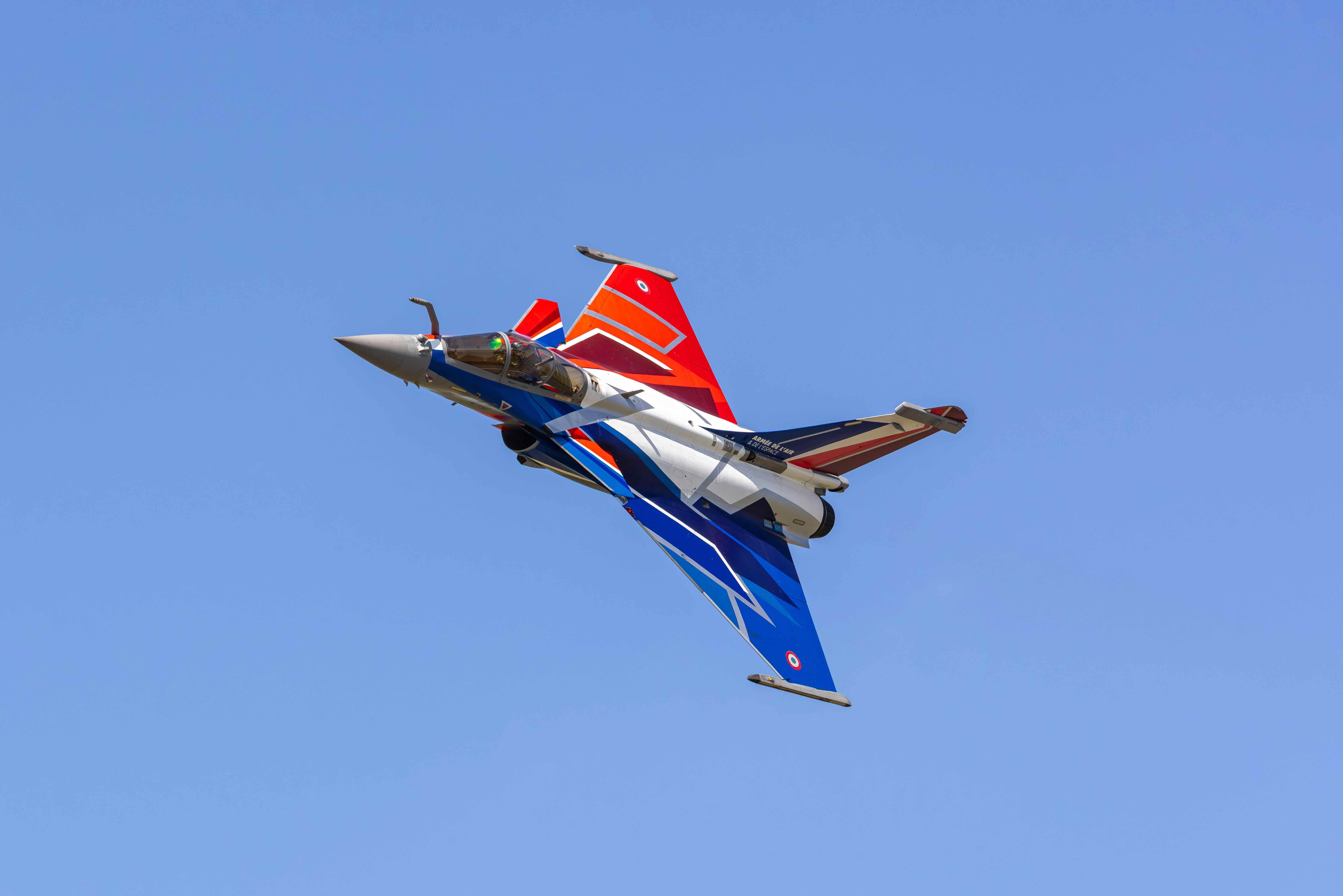
Aircraft from the French Strategic Air Force, capable of carrying nuclear weapons, were recently deployed in Lithuania for an exercise, and regularly participate in the Baltic Air Policing missions. While not a nuclear signal per se, the deployment demonstrates a willingness to operate in the region and to familiarise partners with French capabilities. High-level political exchanges have also increased, with Baltic leaders showing growing interest in understanding the role France could play in European deterrence, as seen in a recent meeting between the Latvian and Lithuanian presidents, during which they discussed the forward deterrence initiative.
Beyond nuclear deterrence, to counter Russia’s strategy that combines military, hybrid, and economic tools, there is significant potential for deeper cooperation between France and the Baltic states. Intelligence sharing on Russian military posture and hybrid activities is a natural area of convergence. The Baltic states possess a high level of situational awareness, while France brings complementary analytical and technical capabilities. Maritime security, for instance, has gained attention with the rise of Russia’s so-called shadow fleet, used to circumvent sanctions and sustain its war effort. Protecting critical infrastructure, including subsea cables and energy networks, is also a growing concern in the Baltic Sea region. In addition, France maintains strong ties with the NATO Cooperative Cyber Defence Centre of Excellence, based in Estonia.
Conventional defence is another key pillar. Strengthening NATO’s forward presence, improving military mobility, and ensuring rapid reinforcement are essential to credible deterrence. France is actively contributing to NATO deployments in the region, with more than 350 soldiers for the enhanced Forward Presence (eFP) mission in Estonia and the command of the enhanced Air Policing (eAP) mission in Lithuania in 2026. The French Navy is also committed to NATO surveillance operations in the Baltic Sea. However small, this presence carries a significant weight as the first line of deterrence and defence facing the Russian threat. It could easily be expanded, especially given France’s ambitions to become a NATO framework nation.
From Ambiguity to Practical Cooperation
French forward deterrence is best understood as an incremental evolution rather than a doctrinal shift. It reflects an effort to adapt to a more contested European security environment, while preserving the core principles of national deterrence. For the Baltic states, its added value is indirect but real. It does not replace NATO, nor does it offer explicit guarantees. But it contributes to a broader deterrence ecosystem, in which multiple actors reinforce the overall credibility of the European posture.
The key question is whether this dynamic can be sustained and deepened. Moving forward, the emphasis should be less on doctrinal debates and more on practical cooperation—joint exercises, regular dialogues, and coordinated responses to emerging threats, beyond the strict nuclear domain. In that sense, the future of French forward deterrence will depend not only on Paris but also on the willingness of partners, including the Baltic states, to engage with it. The challenge is not to redefine deterrence from scratch, but to make it more tangible, more collective, and ultimately more credible in the face of a changing threat landscape.
>> Read the commentary on the ICDS's website.

Available in:
Themes and regions
Share

Héloïse FAYET
Research Fellow and Head of the Deterrence and Proliferation program, Security Studies Center, Ifri

Security Studies Center
Heir to a tradition dating back to the founding of Ifri, the Security Studies Center provides public and private decision-makers as well as the general public with the keys to understanding power relations and contemporary modes of conflict as well as those to come. Through its positioning at the juncture of politics and operations, the credibility of its civil-military team and the wide distribution of its publications in French and English, the Center for Security Studies constitutes in the French landscape of think tanks a unique center of research and influence on the national and international defense debate.
Deterrence and Proliferation
The conflicts in Europe, Asia and the Middle East demonstrate a return of nuclear power to the balance of power. Arsenals are being modernized and expanded, while arms control is collapsing. This research program aims to analyze these phenomena.

Confronting Russia’s High-Velocity Arsenal: European Challenges and Solutions
Since February 2022, Russian missile and long-range drone strikes against Ukraine have served as near-daily reminders of what European states could face in a war with Russia. The same weapon systems battering Ukrainian infrastructure and population centers would be directed against European military and civilian targets in any confrontation between Russia and NATO. As Russian missile production expands and its arsenal diversifies, Europe must confront an uncomfortable question: how to deter, and if push comes to shove, fight Russia's long-range strike arsenal?

The War on Terrorism: Global Experts Reflect on Lessons Learned Twenty-Five Years After 9/11
Twenty-five years ago, the September 11 attacks prompted the invention of new security architectures that shaped the war on terrorism. Sixteen think tank experts from fifteen countries reflect on the successes, failures, and missed opportunities in the fight against terrorism—a fight that is still ongoing.
From Corsairs to Private Military Contractors. Nonmilitary Maritime Actors and the Historical Continuities of Naval Warfare
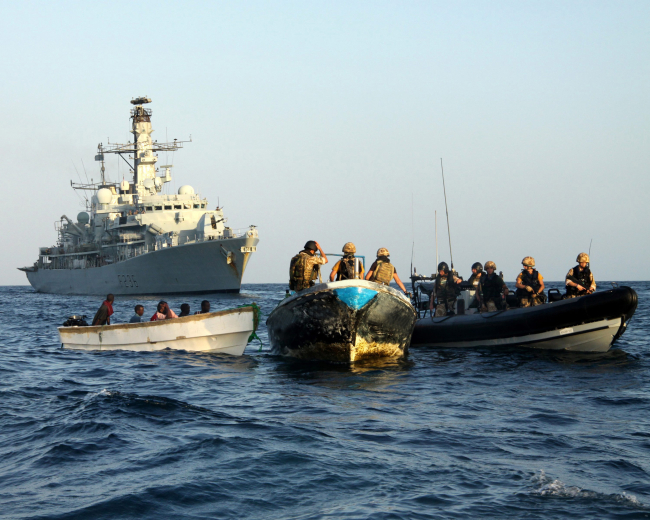
Since late 2023, several Houthi attacks on commercial shipping have involved privately contracted armed teams conducting defensive engagements and coordinating immediate response efforts, often in the relative absence of regular naval forces during the immediate hostilities at sea. These cases highlight a strategic tension that increasingly confronts modern navies. On the one hand, they are expected to conduct persistent, low-intensity maritime security tasks such as counterpiracy, maritime policing, and the protection of commercial shipping. On the other hand, they face renewed pressure to prepare for high-intensity conflict against peer and near-peer adversaries amid the return of great power competition.
Framework Nation: A European Challenge and French Ambition
First appearing in the early 2000s, the framework nation concept follows several distinct rationales, whether it refers to a country assuming the leadership of a military operation, directing a multinational capability project, or commanding a permanent force structure. In every case, the country that takes on this role fully intends to derive from it additional politico-military influence.