



France’s View: From Diplomacy to Public-Private Action
France has emerged as the EU’s IMEC forerunner, combining port infrastructure, diplomatic alliances and public-private cooperation. With Marseille Fos at its core, the country brings a strategic hub for logistics, energy and digital connectivity to the corridor.
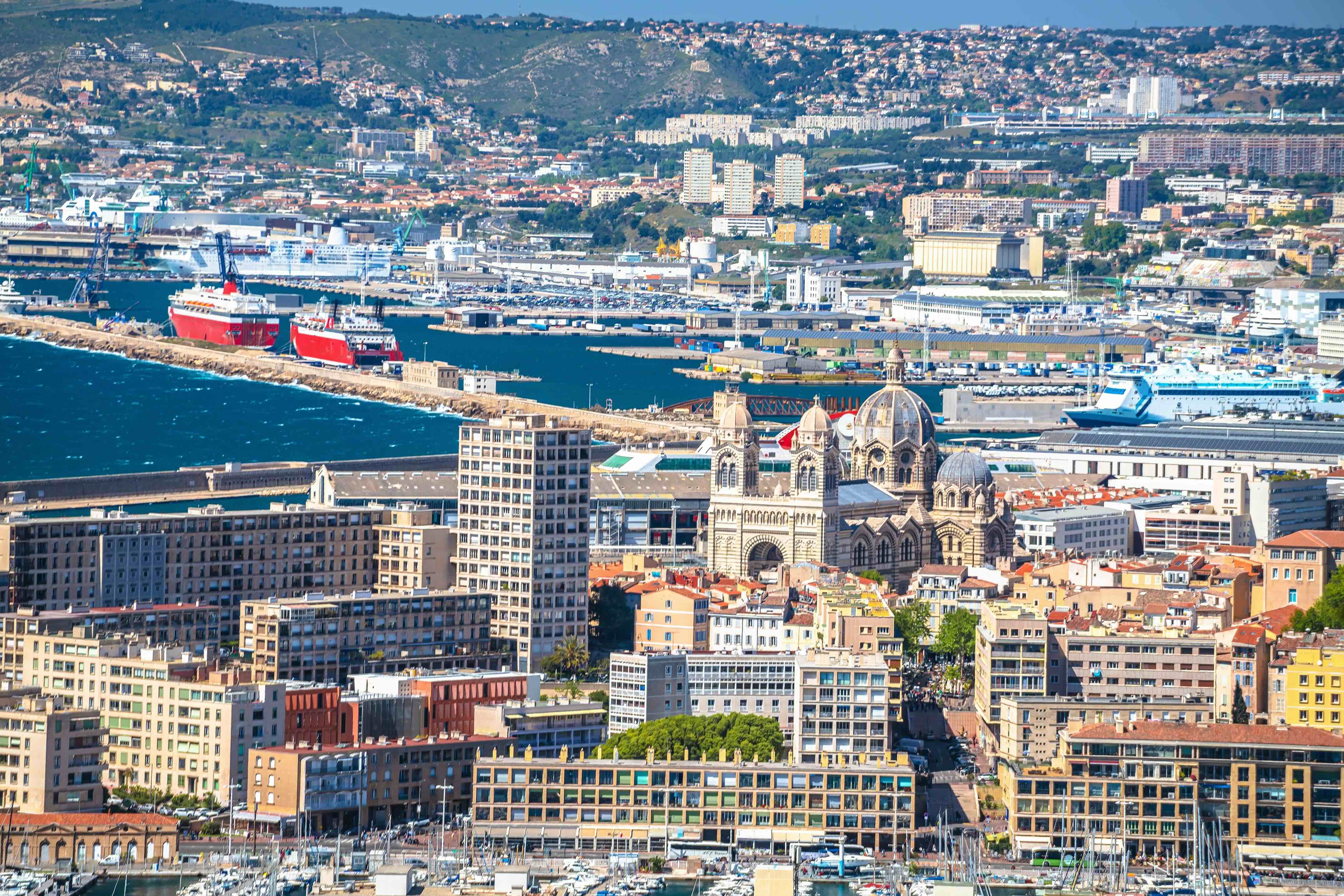
The India–Middle East–Europe Economic Corridor (IMEC) is as a major, transformative project which, given its ambition, brings together a wide range of political, public and private stakeholders. France became involved in the initiative at an early stage, helping to foster a dynamic of coordination among the various actors expected to turn the corridor into a reality: the strategic ambition to position Marseille, and more broadly the Mediterranean region, along the corridor; the integration of IMEC into the development strategy of the Port of Marseille; and the mobilisation of major French companies capable of contributing to its implementation. It is precisely at the intersection of these three dimensions – strategic, public and private – that the potential of IMEC lies, as well as France’s ability to fully leverage the opportunities it offers.
France at the diplomatic forefront
The French diplomatic service engaged with the (IMEC) initiative at a very early stage and has been fully committed to it ever since. As early as November 2023, barely two months after the project was launched on the sidelines of the G20 Summit in New Delhi, President Emmanuel Macron appointed Gérard Mestrallet as his Special Envoy for IMEC, with the stated objective, among others, of “making Marseille its main entry and exit point in Europe”. France was thus the first signatory country to establish such a mechanism.
France also has the distinctive advantage of maintaining long-standing diplomatic relations with all the countries along the proposed IMEC route, which has enabled France, alongside Italy, to help place the European dimension at the heart of the project. While the European leg is now firmly embedded in the project, this was by no means a given from the outset: Marseille is located at the westernmost end of the corridor. France’s proactive approach has also enabled it to play an active role in discussions on establishing a collective governance framework for the project, which remains under development. As an illustration of this leadership, France hosted the first meeting of IMEC sherpas and special envoys in Paris in May 2025.
Marseille: more than a maritime port
In France, Marseille naturally stands out as IMEC’s gateway to Europe. In its new “Marseille Fos 25–29” strategy, the Mediterranean port identifies its “integration into [new] maritime and logistics routes” as one of its main opportunities, including IMEC but also, more broadly, other intercontinental connectivity projects, particularly with Southeast Asia and Latin America. While Marseille remains behind the world’s largest ports in terms of tonnage, as well as behind its main competitors in Northern Europe, it nevertheless remains France’s leading Mediterranean port.
Beyond port capacity – which is expected to be strengthened through investments – the real challenge lies in transporting these flows to their final destinations within the European market. On this front, there is currently strong political support for developing Marseille’s hinterland, notably through the planned completion by 2050 of the MeRS (Mer-Rhône-Saône) axis – a river logistics corridor connecting the Port of Marseille Fos to the Rhône-Saône axis, and subsequently to the inland waterway and industrial networks of central and northern France.
At the same time, the Port of Marseille has assets that are closely aligned with IMEC’s vocation as a corridor encompassing not only logistics, but also energy and digital connectivity. In terms of energy, Marseille is particularly well positioned. The port, which still derives around half of its activity from hydrocarbon flows (oil and LNG), is seeking to prepare for a post-oil future and has already embarked on a decarbonisation pathway, including the electrification of berths and the development of green hydrogen-related industries within its industrial-port area. Marseille is also very well positioned in terms of digital connectivity, as it is one of the main landing points for submarine cables connecting Europe with Africa, the Middle East and Asia.
It was also in Marseille that the IMEC Ports Club was launched in May 2026, as a new platform for dialogue and cooperation bringing together ports involved in the development of the corridor. This initiative follows the signing, in mid-February 2026, of a strategic partnership between Adani Port & SEZ – India’s leading private port operator, which notably operates the Port of Mundra – and the Port of Marseille Fos, aimed at strengthening trade connectivity between India and Europe. These initiatives led by the Port of Marseille Fos illustrate the transition from political ambitions to operational implementation, and the concrete translation of the strategic directions established at the political level.
A new public-private compact
Finally, France’s early mobilization around the IMEC project has also helped raise awareness of the initiative among French private-sector stakeholders and bring them together around the project. Prime Minister Narendra Modi’s visit to CMA CGM’s headquarters in Marseille on February 2025 was a strong symbol of this engagement. On that occasion, the group publicly expressed its intention to contribute to the development of IMEC. While CMA CGM’s commitment to potential direct investments in the project remains cautious at this stage, the corridor nevertheless overlaps with a number of the group’s existing interests and operations. CMA CGM is not merely a shipping company serving the main ports along the corridor; it is also an investor in, or operator of, port infrastructure at several key stages of the route: Mundra and Nhava Sheva Freeport (NSFT) in India and Khalifa Port in the United Arab Emirates.
Beyond CMA CGM, several major French industrial companies in the digital, energy and transport sectors could benefit from the project’s spillover effects. To this end, effective coordination between public and private stakeholders will once again be essential, particularly on the economic diplomacy front, with the involvement of organizations such as Business France, in order to monitor the project’s development and identify future economic opportunities. In the medium term, the establishment of a dedicated label could help companies identify opportunities and position themselves accordingly, while also facilitating access to dedicated sources of financing, notably through the Global Gateway initiative.
Beyond IMEC: a Franco-Indian strategic partnership
The Franco-Indian dynamic can be seen at all three levels of the project. At the political level, first, through the close involvement of France and India in shaping and implementing IMEC, building on their strategic partnership. At the public level, through the growing cooperation between the Port of Marseille Fos and Adani Ports and their shared ambition to develop a broader network of ports along the corridor. Finally, at the corporate level, through the development of Franco-Indian partnerships across a wide range of sectors. That said, the Franco-Indian partnership alone will not be sufficient to sustain the project. In particular, the involvement of Saudi Arabia, which remains challenging given the tense geopolitical environment in the Middle East, is also essential to ensuring the project’s long-term viability.
> Read the article on ISPI's website.

Available in:
Themes and regions
Share

Sylvia MALINBAUM
Research Fellow, Head of India and South Asia Research, Center for Asian Studies, Ifri

Center for Asian Studies
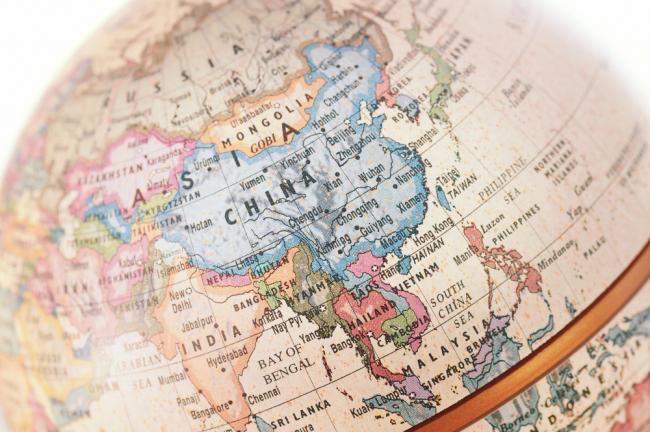
Asia is a nerve center for multiple global economic, political and security challenges. The Center for Asian Studies provides documented expertise and a platform for discussion on Asian issues to accompany decision makers and explain and contextualize developments in the region for the sake of a larger public dialogue.
The Center's research is organized along two major axes: relations between Asia's major powers and the rest of the world; and internal economic and social dynamics of Asian countries. The Center's research focuses primarily on China, Japan, India, Taiwan and the Indo-Pacific, but also covers Southeast Asia, the Korean peninsula and the Pacific Islands.
The Centre for Asian Studies maintains close institutional links with counterpart research institutes in Europe and Asia, and its researchers regularly carry out fieldwork in the region.
The Center organizes closed-door roundtables, expert-level seminars and a number of public events, including an Annual Conference, that welcome experts from Asia, Europe and the United States. The work of Center’s researchers, as well as that of their partners, is regularly published in the Center’s electronic journal Asie.Visions.
Pakistan and the Israel-Palestine Conflict: Transformation in Pakistan’s Approach After the War in Gaza
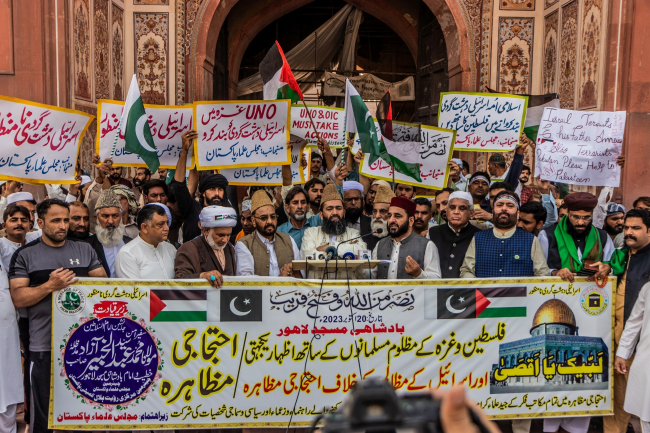
Pakistan has long combined vocal support for the Palestinian cause with covert engagement with Israel. Since the war in Gaza, this balance has become untenable: public opinion is united against Israel, joining Trump’s Board of Peace has drawn rare cross-party criticism, and new regional alignments put normalization out of reach.
The Oceania Factor in France’s Evolving Indo-Pacific Strategy
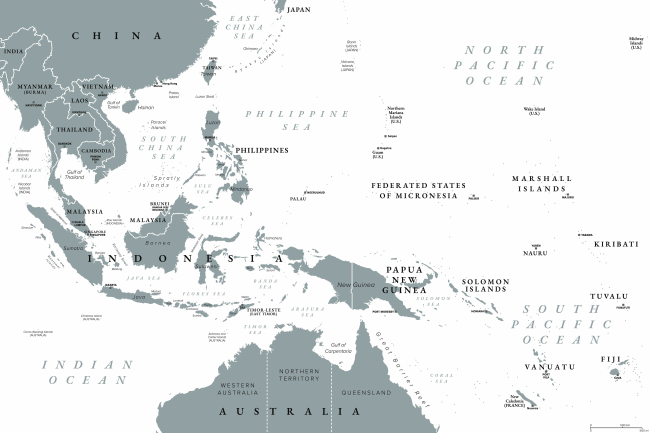
This paper examines the two-way relationship between France’s Indo-Pacific strategy and developments in Oceania. Oceania was not a priority in the initial years of France’s Indo-Pacific strategy, as the region was largely treated as secondary to major strategic hotspots and key partnerships, while overseas territories were primarily handled as domestic issues and recipients of a top-down strategy.
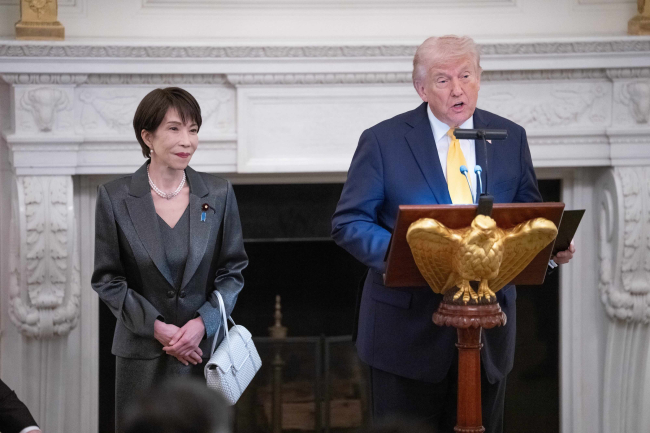
Trump II, the Crisis of the Rules-Based Order and Europe’s Indo-Pacific Strategy
This article examines the implications of Trump II for Europe’s engagement in the Indo-Pacific. The piece contends that Trump II is accelerating the erosion of the rules-based order and undermining the relevance of the Free and Open Indo-Pacific (FOIP) concept, while forcing Europe to refocus on its own continental security amid US retrenchment. Paradoxically, these very constraints create conditions for a more autonomous, pragmatic, and explicitly interest-driven European engagement in the Indo-Pacific, rather than outright withdrawal.
China and Trade in Critical Raw Materials (CRMs)
Critical raw materials (CRMs) have become central features of a new dynamic in global power politics, with China now wielding considerable leverage. Amid rising regional and global uncertainty, resource security is back in the spotlight as a key determinant of sovereignty and national security for Europe, its allies and its partners. The very survival of key, even vital industries, from automotive to aerospace to health to energy to defense, is at stake.