



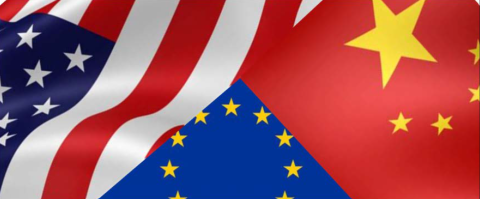

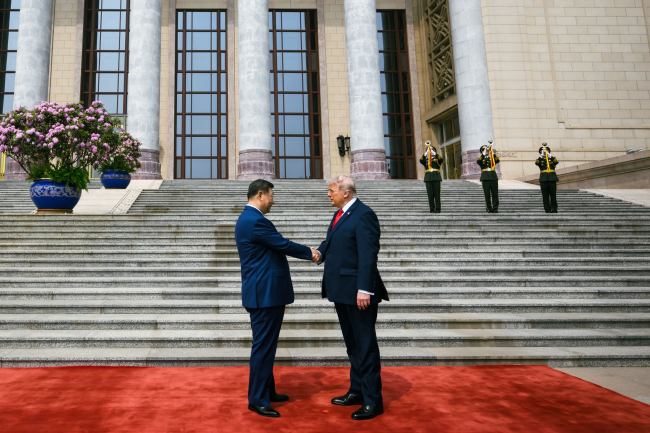
Why Xi’s US trip leaves Europe relieved by the trade truce – but wary of what comes next
The summit in Washington eases near-term uncertainty over rare earths, but analysts fear the bloc could have less say over decisions shaping its economic interests.
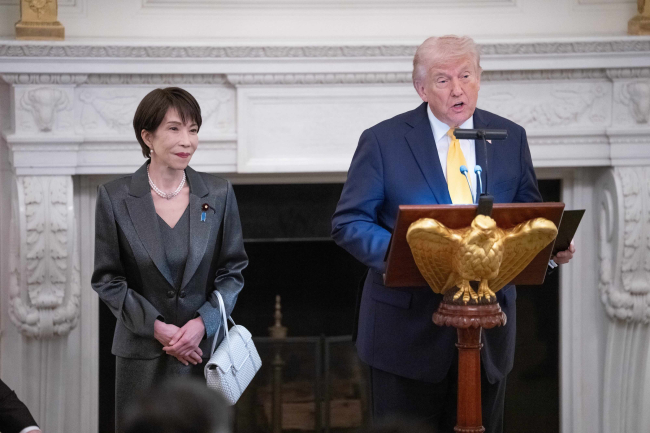
Trump II, the Crisis of the Rules-Based Order and Europe’s Indo-Pacific Strategy
This article examines the implications of Trump II for Europe’s engagement in the Indo-Pacific. The piece contends that Trump II is accelerating the erosion of the rules-based order and undermining the relevance of the Free and Open Indo-Pacific (FOIP) concept, while forcing Europe to refocus on its own continental security amid US retrenchment. Paradoxically, these very constraints create conditions for a more autonomous, pragmatic, and explicitly interest-driven European engagement in the Indo-Pacific, rather than outright withdrawal.

Trump's Anthropic Crackdown Sets Off AI Alarms for US Allies — The latest ban, which hits Anthropic’s Mythos and Fable models, affects software that banks, law firms and government offices are rushing to adopt. According to Mathilde Velliet, "that decision materializes a risk that had been on everyone’s mind outside of the US. [...] Mistral stands to gain from Anthropic’s restrictions in the long run, as Europe’s only large developer of AI models."

quoted by Mark Bergen and Ania Nussbaum for Bloomberg
Reflections on A Darkening World
The system that emerged after the Second World War to regulate international relations is now moribund. Russia and China may have weakened it, but it seems that Donald Trump’s United States may deliver the fatal blow. The prevailing atmosphere is one of power struggles, and the rise of nationalisms is fraught with danger. The artificial intelligence revolution also needs to be factored into this equation, as it has a strong bearing on how much power different players can exert. In this respect, Europe must ensure it does not get left behind.
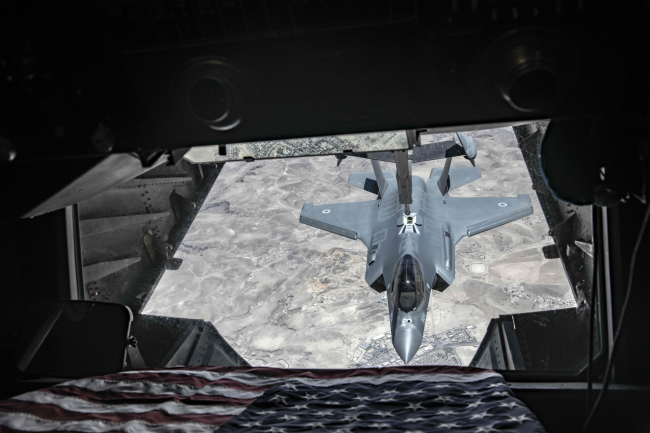
Fury from the Skies. A Strategic Analysis of Air Campaign against Iran
What is the outcome of Operations Roaring Lion (RL) and Epic Fury (EF), launched by Israel and the United States against the Islamic Republic of Iran on February 28, 2026?
Replay - The United States and Europe Adrift: Transatlantic Security in the Trump Era
Against an international backdrop marked by the war in Ukraine, Russia’s emergence as a lasting threat to Europe, and an uncertain U.S. commitment to the Old Continent, questions about the future of the transatlantic relationship are mounting.
The United States: Internal and External Perspectives
Plenary session of the 2026 World Policy Conference dedicated to analyzing the continuities and discontinuities of American policy under the presidency of Donald Trump.
Both sides of the Atlantic | Warsaw European Conversation 2026
This episode discusses the future of transatlantic relations and the evolution of security policy on both sides of the Atlantic. It examines France’s strategic stance and the implications of potential leadership change. It also looks at the dynamics of U.S. domestic politics – the role of political parties and civil society in curbing Donald Trump’s power, and the significance of the midterm elections. It considers what these processes mean for Europe, especially in the context of Article 5. Joining Marta Prochwicz-Jazowska, Deputy Head of the ECFR Warsaw office, in the discussion will be Thomas Gomart, director of the French Institute of International Relations, and Amanda Sloat, professor at the School of Politics, Economics, and Global Affairs at IE University.

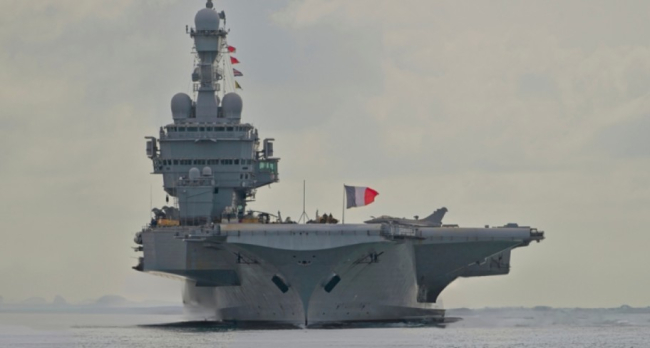
War in Mideast Tests Europe’s Military Might. The Verdict? Mixed.
To defend allies from Iran, the continent’s powers have mounted a rare show of force. But those efforts have diverted limited resources from other hot spots. Despite refusing to join the attacks on Iran, Europe’s leaders have responded to the widening war in the Middle East by sending warships, fighter jets and air-defense systems to protect bases and allies in the region.
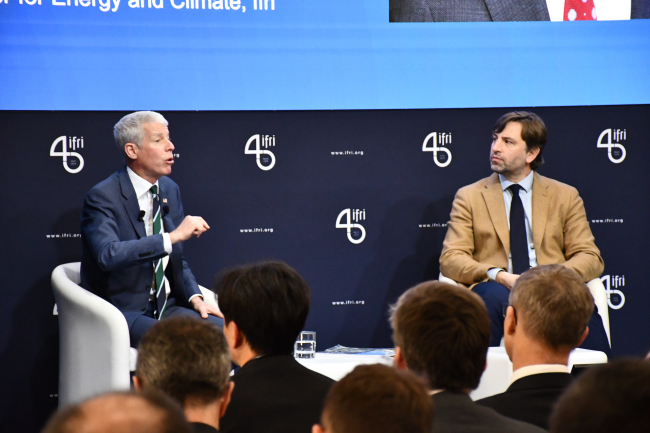
Replay - Conference with Chris Wright, Secretary, U.S. Department of Energy
Welcomed at the French Institute of International Relations (Ifri), Chris Wright outlined his vision of American energy policy built around two core axes: the human reality of energy access, and a data-driven approach. For the Secretary, energy is the foundation of prosperity, health, and longer life expectancy on a global scale. His doctrine rests on an ambition of American "energy dominance" — not merely independence, but the capacity to produce at scale in order to lower domestic costs, reindustrialize the country, and support U.S. allies.
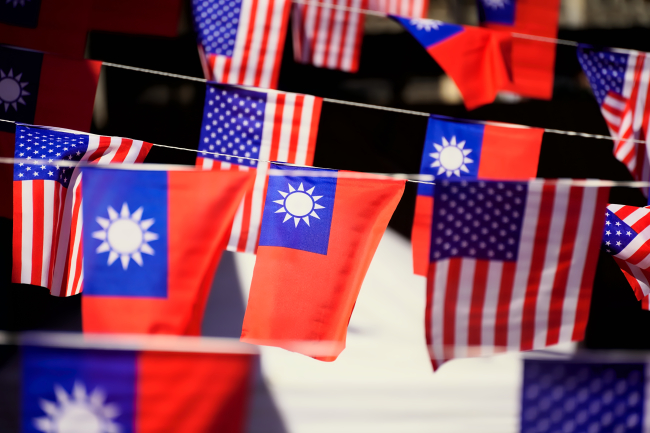
The U.S. Policy Toward Taiwan Beyond Donald Trump: Mapping the American Stakeholders of U.S.-Taiwan Relations
Donald Trump’s return to the White House reintroduced acute uncertainty into the security commitment of the United States (U.S.) to Taiwan. Unlike President Joe Biden, who repeatedly stated the determination to defend Taiwan, President Trump refrains from commenting on the hypothetical U.S. response in the context of a cross-Strait crisis.
Regulatory Dynamics and Tensions in the Space Sector: Towards and Americanization of Space Law?
The development of space law has gradually evolved from a top-down normative dynamic dominated by the founding impetus of the UN to a bottom-up normativity driven by national and industrial practices. This evolution is now accompanied by growing normative competition, raising the risk of an Americanization of space law and prompting the question of a European response.
Trump II: The Clash of Ideologies
The second Trump administration brings together a number of very different, even opposing, ideologies: far-right populism, the reactionary Christian right, paleolibertarianism, and technolibertarianism. The most visible measures taken since Donald Trump's return to the White House have been populist in nature, with the president's authority strengthened, checks and balances weakened, a form of identity politics embraced, and economic nationalism implemented.
Trump II and Asia: The Wind is Picking Up…
The Indo-Pacific is a priority for the second Trump administration, which sees China as the United States' principal rival. However, Donald Trump began his second term in a rather disconcerting fashion by taking a harder line with Washington's traditional partners. He then provoked hostilities with Beijing, sparking a trade war even more intense than during his first term. The Chinese authorities have no intention of taking it lying down.


Thomas Gomart, director of the French Institute of International Relations: 'Trump reasserts the US' strategic centrality'
By bombing Iran alongside Israel, Donald Trump has performed a show of force aimed at China and Russia, explains the director of the French Institute of International Relations in an interview.
Replay - Europe in turbulence: navigating a new world order without the United States?
A webinar organized by the Austro-French Centre for Rapprochement in Europe (ÖFZ) and the French Institute of International Relations (Ifri), on June 25, 2025. The foundations of the post-1945 international order, long anchored by U.S. leadership, are shifting. Amid intensifying geopolitical rivalry, democratic backsliding, and strategic fatigue in Washington, the question arises: what if the United States no longer plays its pivotal role in international security? Simultaneously, the Global South is asserting new political and economic agency, complicating the old binaries of West vs. Rest. For Europe, this landscape is both a challenge and an inflection point.
Trump's Indo-Pacific Vision & Japan's Strategic Autonomy
Satoru Mori, Senior Fellow at the Nakasone Peace Institute, explores key insights into President Trump's likely priorities for the Indo-Pacific region. His primary concerns include addressing economic trade imbalances with countries like China, Japan, and South Korea. Additionally, he aims to deter regional conflicts, particularly over Taiwan, and wishes to advance the denuclearization of North Korea.
What Is Dividing the West?
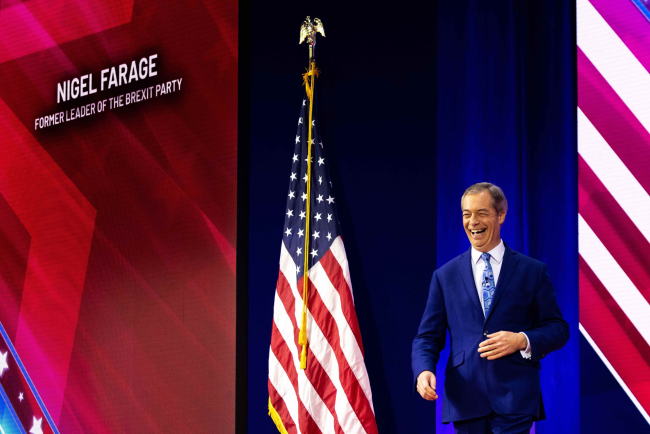
Once united by shared values and strategic interests, the West is increasingly fractured along ideological lines. Just as illiberal politicians have spent years building an international reactionary movement, their liberal counterparts must foster transatlantic dialogue to forge a common democratic vision.


How Will the Trump Presidency Change EU-China Relations?
Over the past few years, European countries have started to line up with the United States on China policy. But now, as Donald Trump destroys the trust European countries had in America, China is stepping up, promising stability and consistency.
Migrations Between Mexico and the United States: More of the Same or a Headlong Rush?
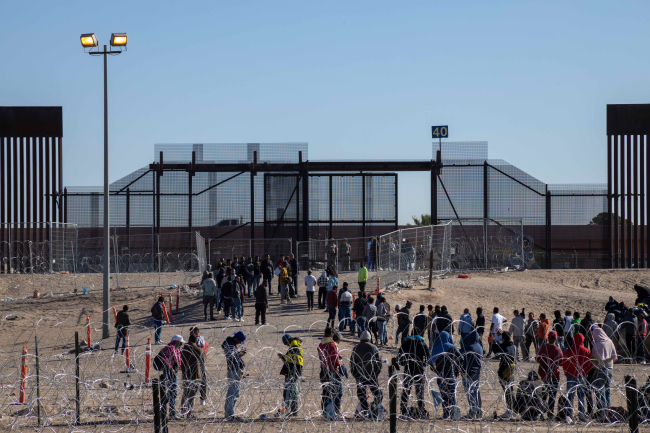
As Trump prepares to tighten border controls with Mexico and carry out mass deportations of undocumented immigrants, Mexico is questioning the economic consequences of this migration policy and expects to have to negotiate the issue in connection with the tariffs imposed by the Trump administration.
Trump II, the Crisis of the Rules-Based Order and Europe’s Indo-Pacific Strategy
This article examines the implications of Trump II for Europe’s engagement in the Indo-Pacific. The piece contends that Trump II is accelerating the erosion of the rules-based order and undermining the relevance of the Free and Open Indo-Pacific (FOIP) concept, while forcing Europe to refocus on its own continental security amid US retrenchment. Paradoxically, these very constraints create conditions for a more autonomous, pragmatic, and explicitly interest-driven European engagement in the Indo-Pacific, rather than outright withdrawal.
Reflections on A Darkening World
The system that emerged after the Second World War to regulate international relations is now moribund. Russia and China may have weakened it, but it seems that Donald Trump’s United States may deliver the fatal blow. The prevailing atmosphere is one of power struggles, and the rise of nationalisms is fraught with danger. The artificial intelligence revolution also needs to be factored into this equation, as it has a strong bearing on how much power different players can exert. In this respect, Europe must ensure it does not get left behind.
Fury from the Skies. A Strategic Analysis of Air Campaign against Iran
What is the outcome of Operations Roaring Lion (RL) and Epic Fury (EF), launched by Israel and the United States against the Islamic Republic of Iran on February 28, 2026?
The U.S. Policy Toward Taiwan Beyond Donald Trump: Mapping the American Stakeholders of U.S.-Taiwan Relations
Donald Trump’s return to the White House reintroduced acute uncertainty into the security commitment of the United States (U.S.) to Taiwan. Unlike President Joe Biden, who repeatedly stated the determination to defend Taiwan, President Trump refrains from commenting on the hypothetical U.S. response in the context of a cross-Strait crisis.
Regulatory Dynamics and Tensions in the Space Sector: Towards and Americanization of Space Law?
The development of space law has gradually evolved from a top-down normative dynamic dominated by the founding impetus of the UN to a bottom-up normativity driven by national and industrial practices. This evolution is now accompanied by growing normative competition, raising the risk of an Americanization of space law and prompting the question of a European response.
Trump II and Asia: The Wind is Picking Up…
The Indo-Pacific is a priority for the second Trump administration, which sees China as the United States' principal rival. However, Donald Trump began his second term in a rather disconcerting fashion by taking a harder line with Washington's traditional partners. He then provoked hostilities with Beijing, sparking a trade war even more intense than during his first term. The Chinese authorities have no intention of taking it lying down.
Trump II: The Clash of Ideologies
The second Trump administration brings together a number of very different, even opposing, ideologies: far-right populism, the reactionary Christian right, paleolibertarianism, and technolibertarianism. The most visible measures taken since Donald Trump's return to the White House have been populist in nature, with the president's authority strengthened, checks and balances weakened, a form of identity politics embraced, and economic nationalism implemented.
Migrations Between Mexico and the United States: More of the Same or a Headlong Rush?
As Trump prepares to tighten border controls with Mexico and carry out mass deportations of undocumented immigrants, Mexico is questioning the economic consequences of this migration policy and expects to have to negotiate the issue in connection with the tariffs imposed by the Trump administration.
Donald Trump v. the States: the Case of New York
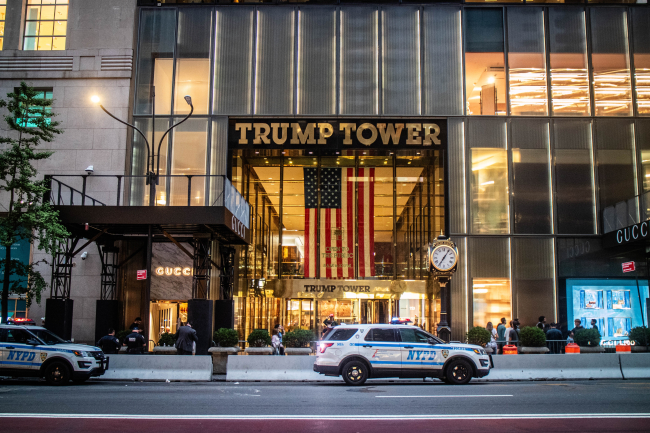
While the disruptive policies of the second Trump administration are being implemented at the federal level and on the international stage, they are also being felt in the federal states and major cities across the country. In the spring of 2025, several cases involving the state and city of New York demonstrate that the president’s attacks on environmental protection, the separation of powers, freedom of speech, etc., are also being carried out at the local level.

The European Space Model: Renewing Ambition in a Changing Strategic Landscape
The European space model, based on science, cooperation and trade, is now being undermined by changes in international relations and the economic upheavals brought about by New Space. In light of the war in Ukraine and American disengagement, Europe needs to rethink its strategy by adding a fourth pillar dedicated to defense, in order to strengthen its sovereignty and deter possible aggression against the continent.
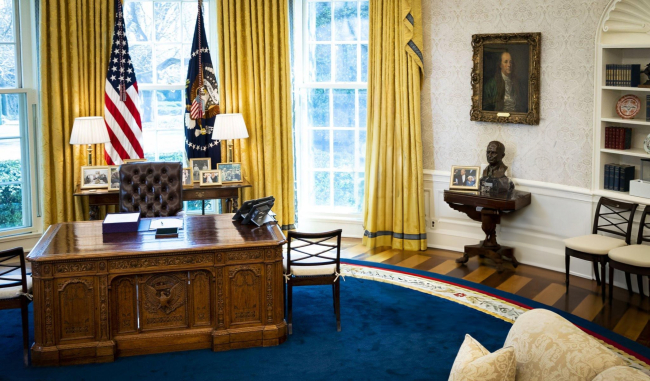
Will Trumpian Authoritarianism Lead to a Constitutional Crisis?
Since his return to the White House on January 20, 2025, President Donald Trump has signed around sixty executive orders to implement his political agenda. Numerous other measures have also been introduced by the White House and the new Department of Government Efficiency (DOGE) as part of these orders.

From Conservative Nationalists to Tech-Libertarians: Far-Right Ideologies in the Trump 2 Administration
The officials and advisers of the Trump 2 administration represent diverse ideological currents, some of which are relatively new to Washington.

Populism and International Relations
Populism is flourishing, in Europe and elsewhere: a populist holds power today in Argentina and perhaps tomorrow in the United States. What does its spread say about our societies? And how is it shaping them, where populists rule? Do their economic policies stand any chance of success? Do their foreign policies have a greater impact on the world around them or at home? If “Trump 2.0” comes to be, will he have a free hand? If so, what can we expect?
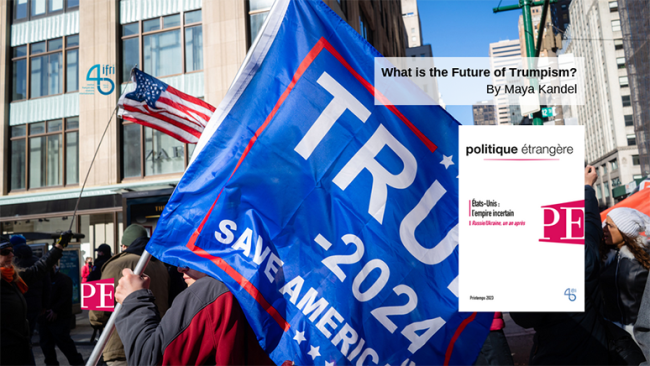
What Is the Future of Trumpism?
Donald Trump's presidency allowed the most radical wing of the Republicans to seize hold of the party.
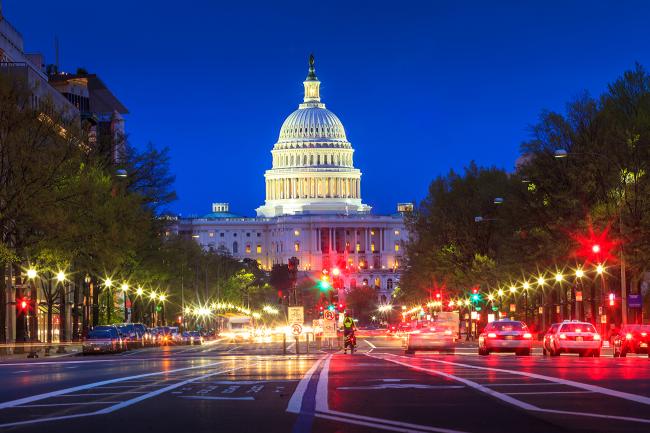
The U.S. Political Landscape Two Months Before Midterms. Can the Democrats Avoid Defeat?
The Biden Administration has succeeded this summer in passing several important pieces of legislation. In addition to progressive societal measures that break with the Supreme Court's rulings, the Administration has focused on the economy and the environment: the CHIPS Act and the Inflation Reduction Act promote the relocation of semiconductor and electric vehicle battery plants.
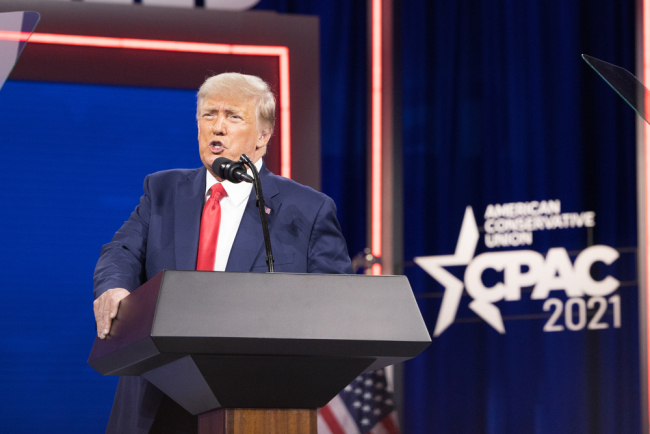
Trump and the Republican Party: electoral defeat, ideological victory?
During Donald Trump’s four-year term, many new Republican candidates have been elected to Congress. Often backed by the former president from the GOP’s primaries, they were chosen for their devotion towards him and their support for his policies : moral conservatism and laissez-faire attitudes towards fiscal and environmental issues are old Republican tenets taken over by Trump, while nativist and economic nationalism (based on anti-immigration and protectionist policies respectively), as well as the portrayal of White people without college degree as an oppressed minority are fresh precepts brought forward by the former populist President.
The China dilemma from Trump to Biden: one consensus and three worldviews
The United States underwent a fundamental transformation in its stance on China during the Trump presidency.
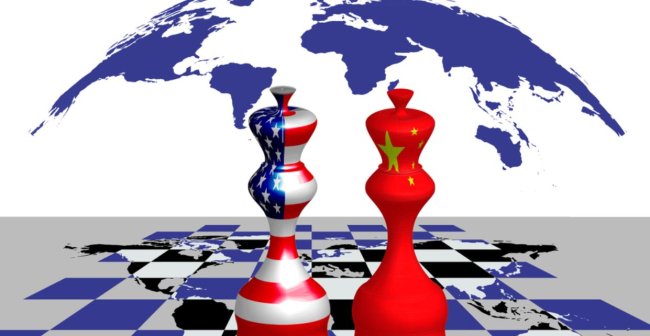
Towards the Second Crusade?
Europeans first grew aware of a possible pandemic exactly one year ago. The wave is here. It has submerged the world, claiming many lives and causing tremendous collateral damage.
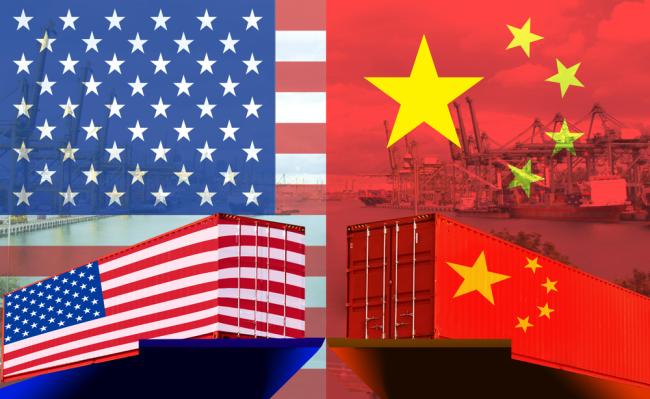
The US-China Trade War: What Is the Outcome after the Trump Presidency?
One of Donald Trump’s campaign promises in 2016 was to end China’s “cheating” on trade and to reduce America's trade deficit by imposing significant tariffs on U.S. imports of Chinese products. This study draws up a first assessment of his policy - and of the "trade war" which stemmed from it.
Why Xi’s US trip leaves Europe relieved by the trade truce – but wary of what comes next
The summit in Washington eases near-term uncertainty over rare earths, but analysts fear the bloc could have less say over decisions shaping its economic interests.
Both sides of the Atlantic | Warsaw European Conversation 2026
This episode discusses the future of transatlantic relations and the evolution of security policy on both sides of the Atlantic. It examines France’s strategic stance and the implications of potential leadership change. It also looks at the dynamics of U.S. domestic politics – the role of political parties and civil society in curbing Donald Trump’s power, and the significance of the midterm elections. It considers what these processes mean for Europe, especially in the context of Article 5. Joining Marta Prochwicz-Jazowska, Deputy Head of the ECFR Warsaw office, in the discussion will be Thomas Gomart, director of the French Institute of International Relations, and Amanda Sloat, professor at the School of Politics, Economics, and Global Affairs at IE University.
War in Mideast Tests Europe’s Military Might. The Verdict? Mixed.
To defend allies from Iran, the continent’s powers have mounted a rare show of force. But those efforts have diverted limited resources from other hot spots. Despite refusing to join the attacks on Iran, Europe’s leaders have responded to the widening war in the Middle East by sending warships, fighter jets and air-defense systems to protect bases and allies in the region.
Replay - Conference with Chris Wright, Secretary, U.S. Department of Energy
Welcomed at the French Institute of International Relations (Ifri), Chris Wright outlined his vision of American energy policy built around two core axes: the human reality of energy access, and a data-driven approach. For the Secretary, energy is the foundation of prosperity, health, and longer life expectancy on a global scale. His doctrine rests on an ambition of American "energy dominance" — not merely independence, but the capacity to produce at scale in order to lower domestic costs, reindustrialize the country, and support U.S. allies.
Thomas Gomart, director of the French Institute of International Relations: 'Trump reasserts the US' strategic centrality'
By bombing Iran alongside Israel, Donald Trump has performed a show of force aimed at China and Russia, explains the director of the French Institute of International Relations in an interview.
What Is Dividing the West?
Once united by shared values and strategic interests, the West is increasingly fractured along ideological lines. Just as illiberal politicians have spent years building an international reactionary movement, their liberal counterparts must foster transatlantic dialogue to forge a common democratic vision.
How Will the Trump Presidency Change EU-China Relations?
Over the past few years, European countries have started to line up with the United States on China policy. But now, as Donald Trump destroys the trust European countries had in America, China is stepping up, promising stability and consistency.

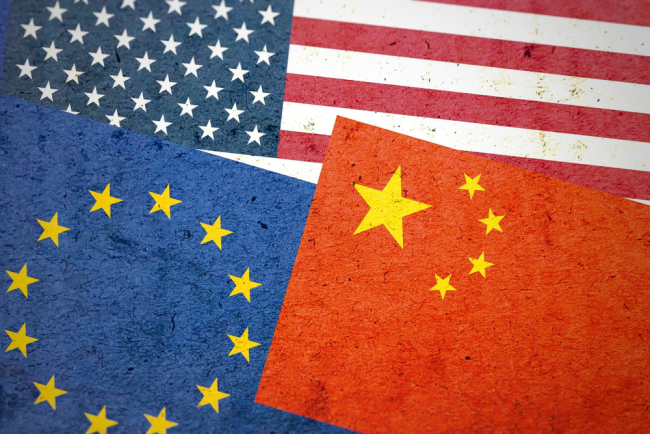
Trump-battered Europe eyes China with launch of diplomatic flurry to Beijing
EU officials and European national representatives are on overlapping visits but each will be asking for something slightly different

AI showcase pays off for France, but US tech scepticism endures
France is staking its claim as an AI powerhouse. At the AI Action Summit in Paris this week, global leaders, tech innovators, and policymakers converged to chart the future of artificial intelligence - backed by major investments and bold ambitions for Europe’s leadership in the field. RFI breaks down the key takeaways.

Macron takes a risk in courting Trump, but has little to show for it
PARIS — President Emmanuel Macron was put on the spot this year in front of a room full of journalists when one asked, provocatively: Which man is more dangerous, North Korea’s leader, Kim Jong-un; or Donald J. Trump?
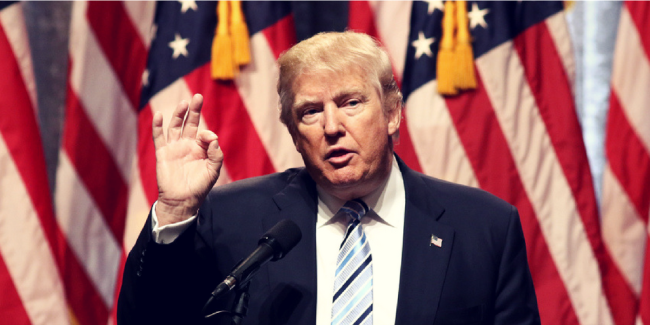
Reaction to U.S. Election Results
Europe needs better relations between Moscow and Washington. President-Elect Donald Trump spoke on the campaign trail of mending U.S. relations with Russia.

A facist America?
Are the United States at risk of giving into a totalitarian drift embodied by Donald Trump?
Replay - The United States and Europe Adrift: Transatlantic Security in the Trump Era
Against an international backdrop marked by the war in Ukraine, Russia’s emergence as a lasting threat to Europe, and an uncertain U.S. commitment to the Old Continent, questions about the future of the transatlantic relationship are mounting.
The United States: Internal and External Perspectives
Plenary session of the 2026 World Policy Conference dedicated to analyzing the continuities and discontinuities of American policy under the presidency of Donald Trump.
Both sides of the Atlantic | Warsaw European Conversation 2026
This episode discusses the future of transatlantic relations and the evolution of security policy on both sides of the Atlantic. It examines France’s strategic stance and the implications of potential leadership change. It also looks at the dynamics of U.S. domestic politics – the role of political parties and civil society in curbing Donald Trump’s power, and the significance of the midterm elections. It considers what these processes mean for Europe, especially in the context of Article 5. Joining Marta Prochwicz-Jazowska, Deputy Head of the ECFR Warsaw office, in the discussion will be Thomas Gomart, director of the French Institute of International Relations, and Amanda Sloat, professor at the School of Politics, Economics, and Global Affairs at IE University.
Replay - Conference with Chris Wright, Secretary, U.S. Department of Energy
Welcomed at the French Institute of International Relations (Ifri), Chris Wright outlined his vision of American energy policy built around two core axes: the human reality of energy access, and a data-driven approach. For the Secretary, energy is the foundation of prosperity, health, and longer life expectancy on a global scale. His doctrine rests on an ambition of American "energy dominance" — not merely independence, but the capacity to produce at scale in order to lower domestic costs, reindustrialize the country, and support U.S. allies.

The European Pillar of Security
Leo Litra and Lesia Ogryzko are joined by Élie Tenenbaum and Oleksandr Sushko to discuss June’s NATO summit—and what Europe’s security step up means for Ukraine.
Replay - Europe in turbulence: navigating a new world order without the United States?
A webinar organized by the Austro-French Centre for Rapprochement in Europe (ÖFZ) and the French Institute of International Relations (Ifri), on June 25, 2025. The foundations of the post-1945 international order, long anchored by U.S. leadership, are shifting. Amid intensifying geopolitical rivalry, democratic backsliding, and strategic fatigue in Washington, the question arises: what if the United States no longer plays its pivotal role in international security? Simultaneously, the Global South is asserting new political and economic agency, complicating the old binaries of West vs. Rest. For Europe, this landscape is both a challenge and an inflection point.
Trump's Indo-Pacific Vision & Japan's Strategic Autonomy
Satoru Mori, Senior Fellow at the Nakasone Peace Institute, explores key insights into President Trump's likely priorities for the Indo-Pacific region. His primary concerns include addressing economic trade imbalances with countries like China, Japan, and South Korea. Additionally, he aims to deter regional conflicts, particularly over Taiwan, and wishes to advance the denuclearization of North Korea.
(Replay) US-China-Taiwan Relations: What to expect in the Trump II Era?
Replay of Ifri's Center for Asian Studies' conference "US-China-Taiwan Relations: What to expect in the Trump II era?", held at Ifri on Tuesday 11 March 2025.
AI showcase pays off for France, but US tech scepticism endures
France is staking its claim as an AI powerhouse. At the AI Action Summit in Paris this week, global leaders, tech innovators, and policymakers converged to chart the future of artificial intelligence - backed by major investments and bold ambitions for Europe’s leadership in the field. RFI breaks down the key takeaways.
Trump’s Indo-Pacific and European Strategies: Change or Continuity?
An interview with Kelly Grieco, Senior Fellow at the Stimson Center, in which she explains what changes and continuities might the future Trump administration bring to U.S. alliances and Indo-Pacific strategy.
Taiwan's Security: Challenges Ahead and the Impact of a Trump Administration
An interview with I-chung Lai, President, Prospect Foundation, in which he explains how Taiwan's security environment has evolved and what to expect from the next Trump administration.
Joe Biden's America: the Calm after the Storm?
In the aftermath of the November elections, Ifri's Program on North America held the 19th edition of its annual conference on the United States.
U.S. public opinion and the 2020 campaign: an interview with John Zogby
John Zogby, Senior Partner, John Zogby Strategies LLC and Founder, The Zogby Poll speaks about U.S. public opinion and the 2020 campaign on the sidelines of Ifri's 18th annual U.S. conference held on December 6, 2019.
U.S. Foreign Policy in the Age of Trump
Despite a very particular style, the Trump administration's foreign policy continues on many points the American withdrawal from World affairs which had started under Barack Obama. The main trends of thought of American foreign policy show this evolution, with the resurgence of non-interventionist and even nationalist ideas amongs DC think-tankers.
The 2020 Campaign and the Impeachment Process. Conference video
The Democratic Party primary campaign is in full swing and the Impeachment inquiry against Donald Trump proceeds speedily. What is the state of American public opinion less than a year before the elections? How are conservative and progressive media lining up to cover the event?
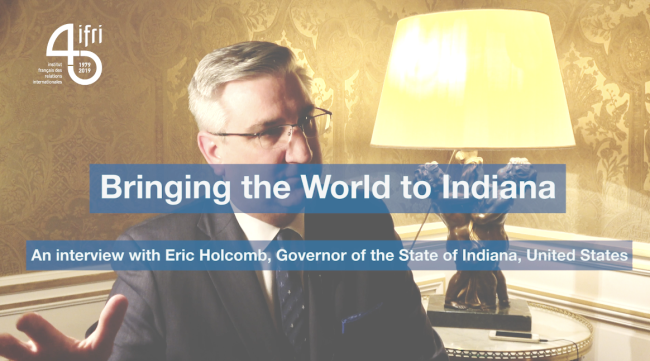
An interview with Eric Holcomb, Gouvernor of the State of Indiana
During his visit in France on March 7th, 2019, Ifri had the pleasure to realize this interview with Eric HOLCOMB, Governor of the State of Indiana, USA.
How will Middle America vote in 2020? (Lara Putnam)
An interview with Lara Putnam, Professor and Chair, History Department, University of Pittsburgh.
Transatlantic relations in the age of "America First" (Sophia Besch)
An interview with Sophia Besch, Research Fellow, Center for European Reform.
How will Middle America vote in 2020? (Henry Olsen)
An interview with Henry Olsen, Senior Fellow, Ethics and Public Policy Center (EPPC).
Ifri, a foundation recognized as being of public utility, relies largely on private donors – companies and individuals – to guarantee its sustainability and intellectual independence. Through their funding, donors help maintain the Institute's position among the world's leading think tanks. By benefiting from an internationally recognized network and expertise, donors refine their understanding of geopolitical risk and its consequences on global politics and the economy. In 2026, Ifri partners with over 90 French and international companies and organizations.


Why Xi’s US trip leaves Europe relieved by the trade truce – but wary of what comes next
The summit in Washington eases near-term uncertainty over rare earths, but analysts fear the bloc could have less say over decisions shaping its economic interests.
Trump's Anthropic Crackdown Sets Off AI Alarms for US Allies — The latest ban, which hits Anthropic’s Mythos and Fable models, affects software that banks, law firms and government offices are rushing to adopt. According to Mathilde Velliet, "that decision materializes a risk that had been on everyone’s mind outside of the US. [...] Mistral stands to gain from Anthropic’s restrictions in the long run, as Europe’s only large developer of AI models."
quoted by Mark Bergen and Ania Nussbaum for Bloomberg

Merz's statement now needs to be followed up in the long term at political level, on both the French and German sides. It's been on the table for five years, and if we don't talk about it now, when Europe is in danger, we'll never talk about it.

cited by Politico.