




India
Through its "multi-alignment" diplomacy, Narendra Modi's India is an essential partner for the Indo-Pacific powers, while retaining its freedom to cooperate with Russia and Iran. Its main rival remains China.
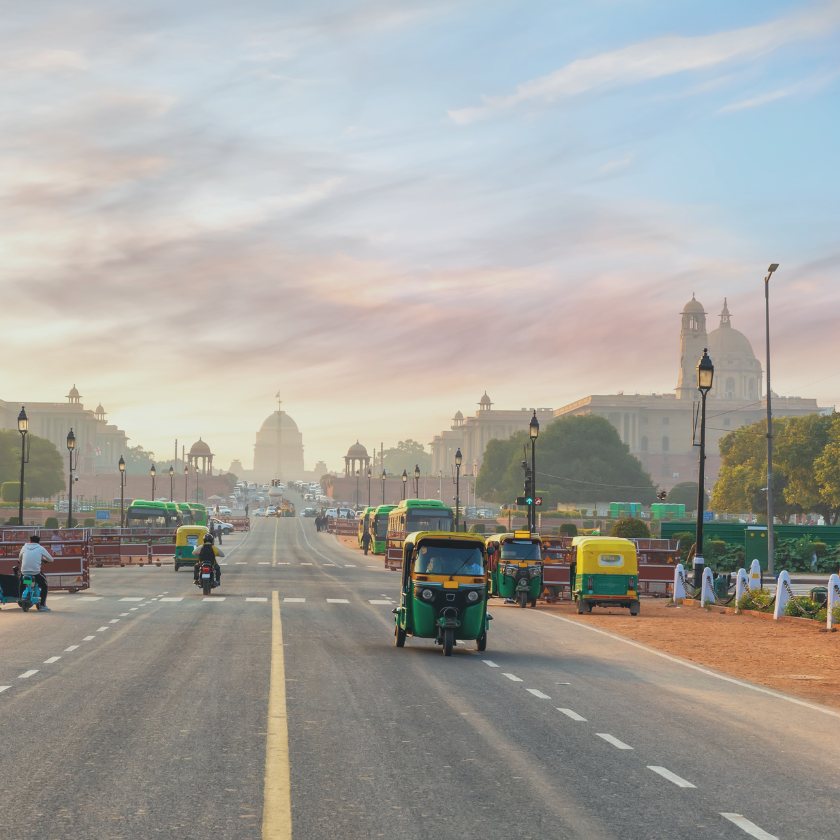
Replay - Navigating Uncertainty: Asian Powers amid US-China Competition
On 14 October 2026, Ifri’s Center for Asian Studies brought together experts from Taiwan, South Korea, Japan, the Philippines and India to discuss how Asian countries are adapting to the competition between Washington and Beijing. They share a common concern: being caught out either by a sudden military escalation or by a deal struck between the two superpowers at their expense.

France’s View: From Diplomacy to Public-Private Action
France has emerged as the EU’s IMEC forerunner, combining port infrastructure, diplomatic alliances and public-private cooperation. With Marseille Fos at its core, the country brings a strategic hub for logistics, energy and digital connectivity to the corridor.
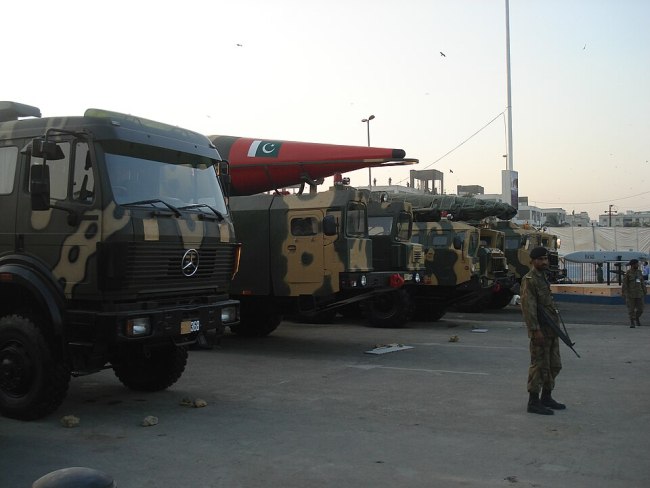
Stability under Pressure. A Pakistani View on Nuclear Deterrence after Pahalgam
The May 2025 India-Pakistan crisis after the Pahalgam attack has generated a familiar but incomplete debate: did nuclear deterrence work, or did it merely allow both sides to fight a limited war under the nuclear shadow? The better answer is that deterrence worked at the level at which it was designed to work. It prevented a general war and an uncontrolled vertical escalation, and kept nuclear weapons in the background. But it did not prevent India from attempting to carve out space for conventional action, nor did it prevent Pakistan from responding conventionally to restore deterrence credibility.

What Do Companies Fear? The New Geography of Geopolitical Risk
Geopolitical risk has established itself, within the space of a few years, as a central variable in corporate strategy.
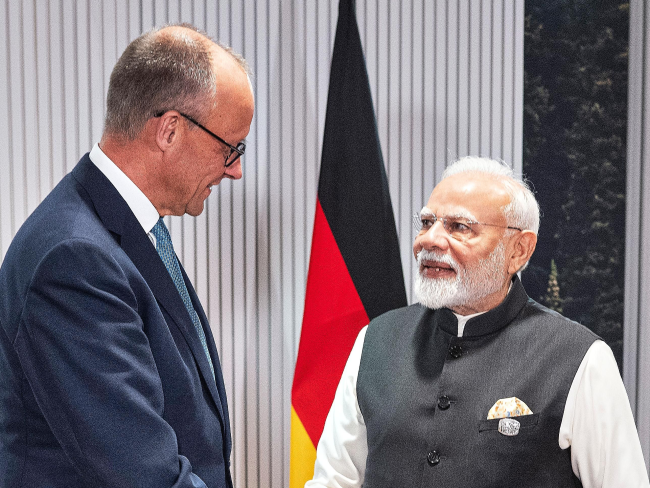
German-Indian Relations: a Partnership based on values or on interests?
In recent years, virtually no other Asian country has seen such a rise in prominence in German foreign policy as India.
Replay - From Ambition to Action: Exploring Technological Partnerships with India
Replay of the conference at Ifri, March 18, 2026
Can EU-India technological cooperation reshape global strategic balances? This conference brought together European and Indian leaders to discuss opportunities and challenges in AI, semiconductors, and digital innovation. Watch the full debate.
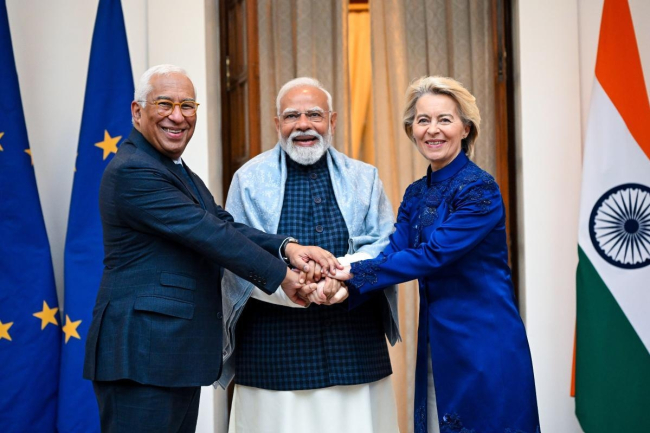
European Union-India: Lasting Rapprochement or Partnership of Convenience?
The partnership between the European Union (EU) and India has long been limited to economic exchanges. Its political dimension has gradually developed, culminating in its elevation to the status of a “strategic partnership” in 2004. However, the failure of negotiations for a free-trade agreement in 2013 slowed this momentum. Since the early 2020s, in an uncertain geopolitical context, bilateral rapprochement has gained new momentum.
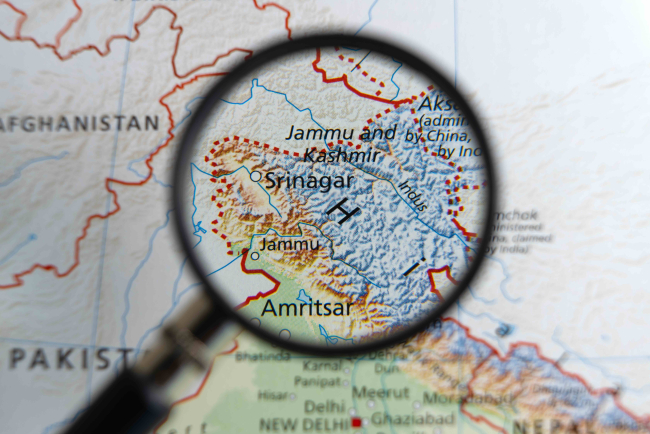
Jammu and Kashmir in the Aftermath of August 2019
The abrogation of Article 370, which granted special status to the state of Jammu and Kashmir (J&K), has been on the agenda of the Bharatiya Janata Party (BJP) for many decades.
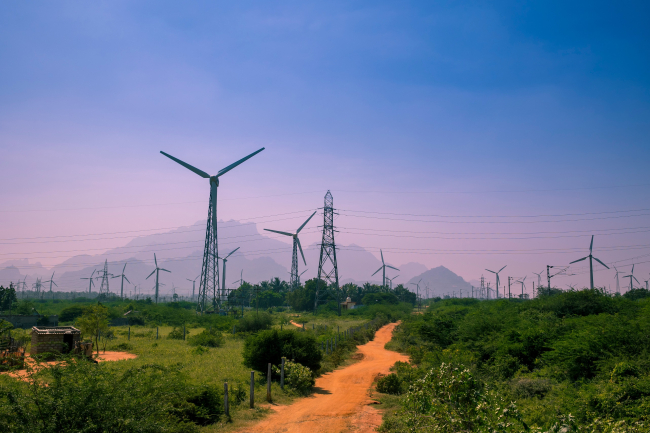
Unlocking India’s Energy Transition: Addressing Grid Flexibility Challenges and Solutions
India is rapidly scaling up its renewable energy (RE) capacity, adding 15–20 GW annually, but the ambitious goal of 500 GW of non-fossil capacity by 2030 is at risk unless the pace accelerates.

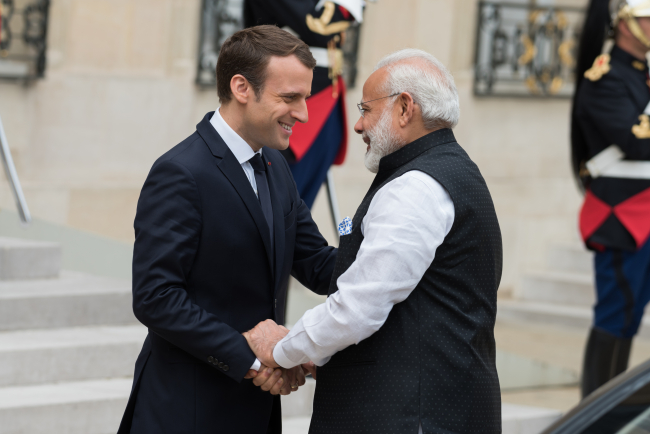
India's Modi heads to Paris as co-chair of AI summit
Indian Prime Minister Narendra Modi is visiting France from Monday as co-chair of an international summit on artificial intelligence in Paris that is expected to be attended by industry leaders, including executives from OpenAI and DeepSeek.
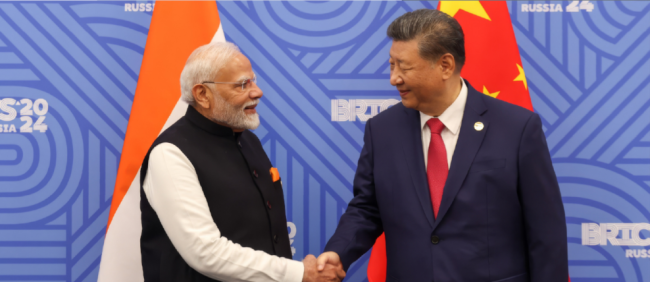
India’s Quest for Economic Emancipation from China
In October 2024, the meeting between Chinese President Xi Jinping and Indian Prime Minister Narendra Modi initiated a thaw in relations between the two Asian powers. Has India's high level of economic dependence on China played an important role in bringing about this diplomatic shift?
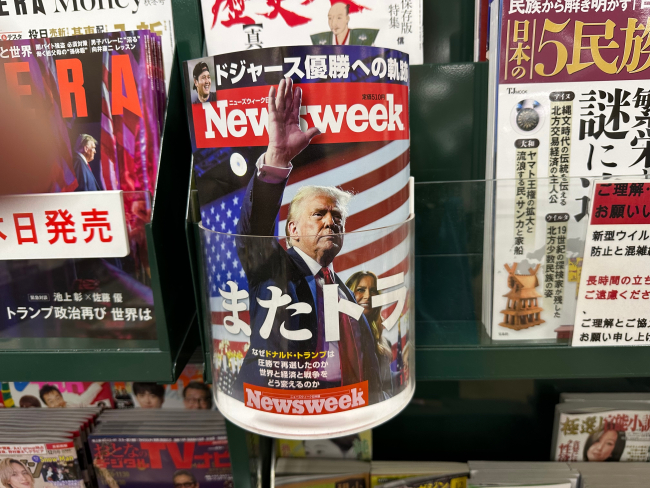
The Indo-Pacific and Trump II. In Uncle Sam’s brutal embrace
In this collective analysis, the research team of the Center for Asian Studies presents a synthetic and non-exhaustive assessment of the relations taking shape between the United States under the Trump II administration and some of the main players in the Indo-Pacific.
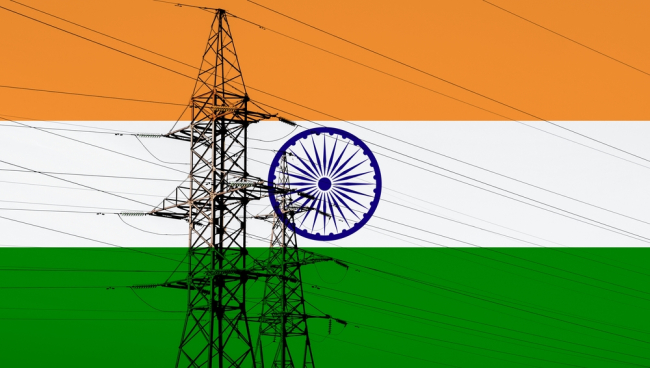
India’s Broken Power Economics : Addressing DISCOM Challenges
India’s electricity demand is rising at an impressive annual rate of 9%. From 2014 to 2023, the country’s gross domestic product (GDP) surged from 1.95 trillion dollars ($) to $3.2 trillion (constant 2015 US$), and the nation is poised to maintain this upward trajectory, with projected growth rates exceeding 7% in 2024 and 2025. Correspondingly, peak power demand has soared from 136 gigawatts (GW) in 2014 to 243 GW in 2024, positioning India as the world’s third-largest energy consumer. In the past decade, the country has increased its power generation capacity by a remarkable 190 GW, pushing its total installed capacity beyond 400 GW.
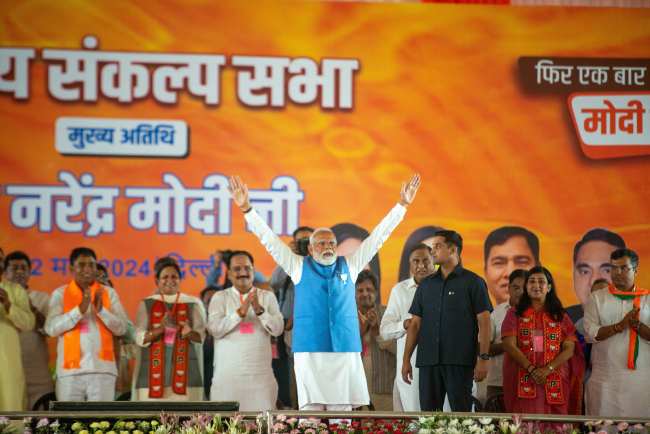
Foreign Policy Issues in the BJP 2024 Election Campaign: Boosting National Pride and Glorifying a Strong Government
While election campaigns in India traditionally focus on domestic issues above all, the Bharatiya Janata Party’s (BJP) campaign for the 2024 general elections placed a strong emphasis on foreign policy. It emphasized how, under the leadership of Prime Minister Narendra Modi, India has strengthened its diplomatic role and achieved international economic success.
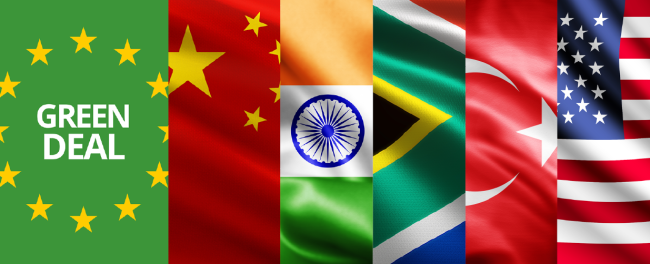
The EU Green Deal External Impacts: Views from China, India, South Africa, Türkiye and the United States
Ahead of June 2024 European elections and against the backdrop of growing geopolitical and geoeconomic frictions, if not tensions, between the EU and some of its largest trade partners, not least based on the external impacts of the European Green Deal (EGD), Ifri chose to collect views and analyses from leading experts from China, India, South Africa, Türkiye and the United States of America (US) on how they assess bilateral relations in the field of energy and climate, and what issues and opportunities they envisage going forward.
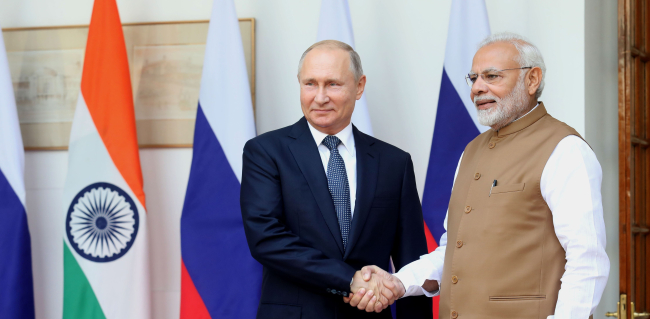
India-Russia Relations in Troubled Times: Steady but Stagnating
This paper examines the trajectory of India-Russia relations post-February 2022. The war in Ukraine emerged as a significant challenge for bilateral ties, presenting new obstacles to political and diplomatic relations and intensifying the previous difficulties in developing economic cooperation.
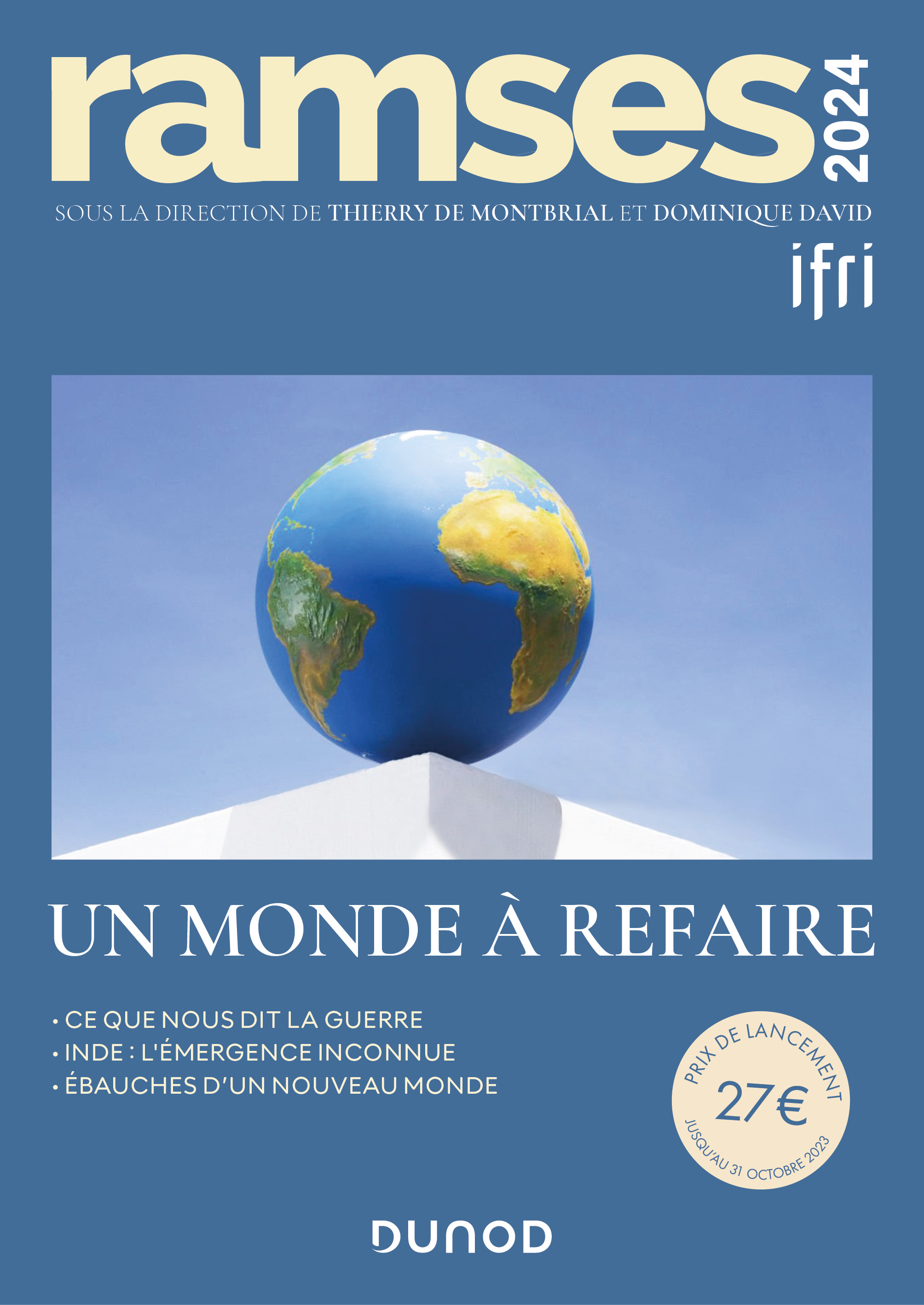
RAMSES 2024. A World to Be Remade
For its 42nd edition, RAMSES 2024 identifies three major challenges for 2024.

India’s Power Games, between Ukraine and the G20
India’s drive for power merits examination in the light of New Delhi’s abstention on Ukraine, and its stated objectives for its presidency of the G20.
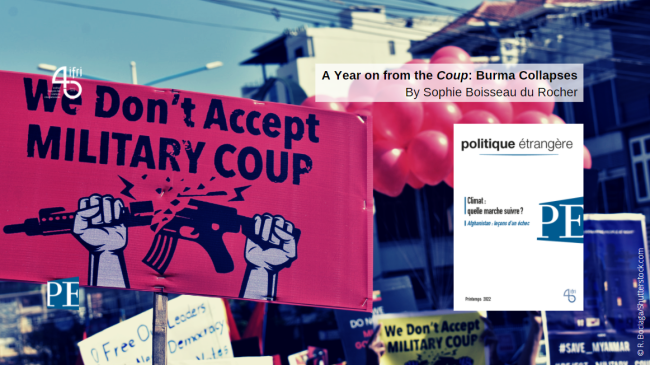
A Year on from the Coup: Burma Collapses
The February 2021 coup encountered a level of resistance that the military did not expect: demonstrations, boycotts, and a slide toward an armed resistance against repression from the authorities.
“Development for All”: The Tarnished Slogan of Modi’s India
Narendra Modi’s BJP (Bharatiya Janata Party) has held an unprecedented majority since the 2014 elections.
France’s View: From Diplomacy to Public-Private Action
France has emerged as the EU’s IMEC forerunner, combining port infrastructure, diplomatic alliances and public-private cooperation. With Marseille Fos at its core, the country brings a strategic hub for logistics, energy and digital connectivity to the corridor.
Stability under Pressure. A Pakistani View on Nuclear Deterrence after Pahalgam
The May 2025 India-Pakistan crisis after the Pahalgam attack has generated a familiar but incomplete debate: did nuclear deterrence work, or did it merely allow both sides to fight a limited war under the nuclear shadow? The better answer is that deterrence worked at the level at which it was designed to work. It prevented a general war and an uncontrolled vertical escalation, and kept nuclear weapons in the background. But it did not prevent India from attempting to carve out space for conventional action, nor did it prevent Pakistan from responding conventionally to restore deterrence credibility.
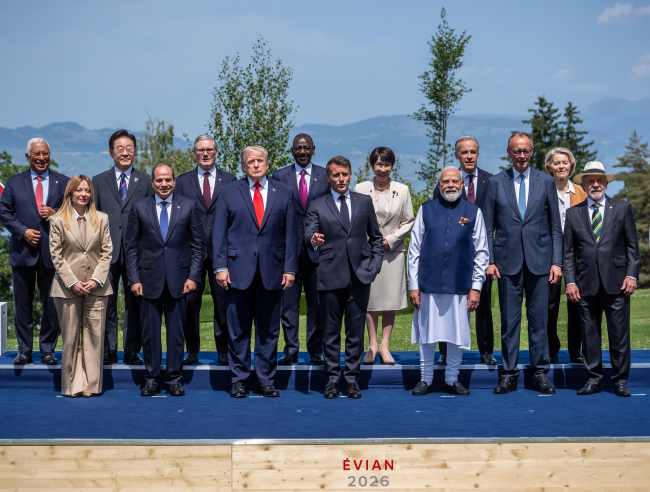
The G7 Leaders’ Summit in France: An Unexpected Success
Overall, it was a successful summit for President Macron. However, caution is warranted regarding the 2026 G7’s lasting legacy, as the unpredictability of the U.S. president could affect the durability of commitments made.
What Do Companies Fear? The New Geography of Geopolitical Risk
Geopolitical risk has established itself, within the space of a few years, as a central variable in corporate strategy.
German-Indian Relations: a Partnership based on values or on interests?
In recent years, virtually no other Asian country has seen such a rise in prominence in German foreign policy as India.
European Union-India: Lasting Rapprochement or Partnership of Convenience?
The partnership between the European Union (EU) and India has long been limited to economic exchanges. Its political dimension has gradually developed, culminating in its elevation to the status of a “strategic partnership” in 2004. However, the failure of negotiations for a free-trade agreement in 2013 slowed this momentum. Since the early 2020s, in an uncertain geopolitical context, bilateral rapprochement has gained new momentum.
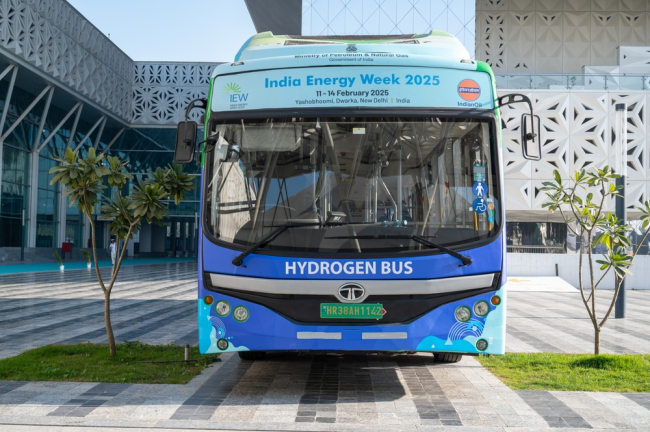
India’s Green Hydrogen Strategy in Action: Policy Actions, Market Insights, and Global Opportunities
India is poised to remain the world’s fastest-growing major economy, and this rapid growth is driving a sharp rise in energy demand. As the most populous country on the planet, India urgently needs to decarbonize its energy systems.
Jammu and Kashmir in the Aftermath of August 2019
The abrogation of Article 370, which granted special status to the state of Jammu and Kashmir (J&K), has been on the agenda of the Bharatiya Janata Party (BJP) for many decades.
Unlocking India’s Energy Transition: Addressing Grid Flexibility Challenges and Solutions
India is rapidly scaling up its renewable energy (RE) capacity, adding 15–20 GW annually, but the ambitious goal of 500 GW of non-fossil capacity by 2030 is at risk unless the pace accelerates.
India’s Quest for Economic Emancipation from China
In October 2024, the meeting between Chinese President Xi Jinping and Indian Prime Minister Narendra Modi initiated a thaw in relations between the two Asian powers. Has India's high level of economic dependence on China played an important role in bringing about this diplomatic shift?
The Indo-Pacific and Trump II. In Uncle Sam’s brutal embrace
In this collective analysis, the research team of the Center for Asian Studies presents a synthetic and non-exhaustive assessment of the relations taking shape between the United States under the Trump II administration and some of the main players in the Indo-Pacific.
India’s Broken Power Economics : Addressing DISCOM Challenges
India’s electricity demand is rising at an impressive annual rate of 9%. From 2014 to 2023, the country’s gross domestic product (GDP) surged from 1.95 trillion dollars ($) to $3.2 trillion (constant 2015 US$), and the nation is poised to maintain this upward trajectory, with projected growth rates exceeding 7% in 2024 and 2025. Correspondingly, peak power demand has soared from 136 gigawatts (GW) in 2014 to 243 GW in 2024, positioning India as the world’s third-largest energy consumer. In the past decade, the country has increased its power generation capacity by a remarkable 190 GW, pushing its total installed capacity beyond 400 GW.
Foreign Policy Issues in the BJP 2024 Election Campaign: Boosting National Pride and Glorifying a Strong Government
While election campaigns in India traditionally focus on domestic issues above all, the Bharatiya Janata Party’s (BJP) campaign for the 2024 general elections placed a strong emphasis on foreign policy. It emphasized how, under the leadership of Prime Minister Narendra Modi, India has strengthened its diplomatic role and achieved international economic success.
The EU Green Deal External Impacts: Views from China, India, South Africa, Türkiye and the United States
Ahead of June 2024 European elections and against the backdrop of growing geopolitical and geoeconomic frictions, if not tensions, between the EU and some of its largest trade partners, not least based on the external impacts of the European Green Deal (EGD), Ifri chose to collect views and analyses from leading experts from China, India, South Africa, Türkiye and the United States of America (US) on how they assess bilateral relations in the field of energy and climate, and what issues and opportunities they envisage going forward.
India-Russia Relations in Troubled Times: Steady but Stagnating
This paper examines the trajectory of India-Russia relations post-February 2022. The war in Ukraine emerged as a significant challenge for bilateral ties, presenting new obstacles to political and diplomatic relations and intensifying the previous difficulties in developing economic cooperation.
The Expanding Chinese Footprint in Latin America: New Challenges for China, and Dilemmas for the US
The physical presence of China in Latin America is entering a phase of significant expansion, as the logical consequence of the rapid growth over the past decade of its trade, investment, and infrastructure for doing business in the region.
India's Modi heads to Paris as co-chair of AI summit
Indian Prime Minister Narendra Modi is visiting France from Monday as co-chair of an international summit on artificial intelligence in Paris that is expected to be attended by industry leaders, including executives from OpenAI and DeepSeek.
Replay - Navigating Uncertainty: Asian Powers amid US-China Competition
On 14 October 2026, Ifri’s Center for Asian Studies brought together experts from Taiwan, South Korea, Japan, the Philippines and India to discuss how Asian countries are adapting to the competition between Washington and Beijing. They share a common concern: being caught out either by a sudden military escalation or by a deal struck between the two superpowers at their expense.
Replay - From Ambition to Action: Exploring Technological Partnerships with India
Replay of the conference at Ifri, March 18, 2026
Can EU-India technological cooperation reshape global strategic balances? This conference brought together European and Indian leaders to discuss opportunities and challenges in AI, semiconductors, and digital innovation. Watch the full debate.
Ifri, a foundation recognized as being of public utility, relies largely on private donors – companies and individuals – to guarantee its sustainability and intellectual independence. Through their funding, donors help maintain the Institute's position among the world's leading think tanks. By benefiting from an internationally recognized network and expertise, donors refine their understanding of geopolitical risk and its consequences on global politics and the economy. In 2026, Ifri partners with over 90 French and international companies and organizations.

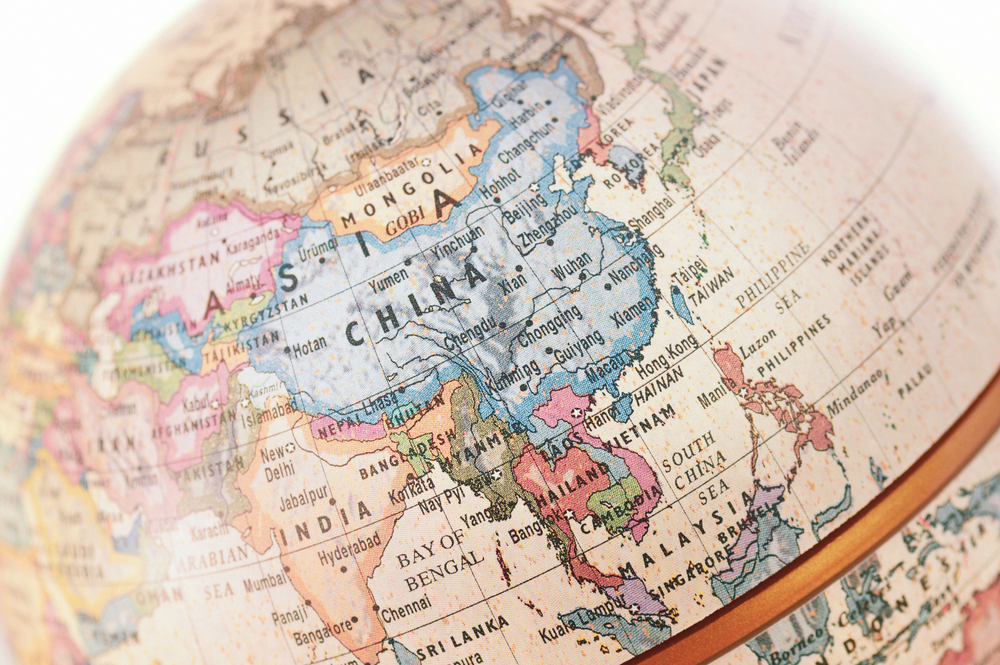
Asia is a nerve center for multiple global economic, political and security challenges. The Center for Asian Studies provides documented expertise and a platform for discussion on Asian issues to accompany decision makers and explain and contextualize developments in the region for the sake of a larger public dialogue.
The Center's research is organized along two major axes: relations between Asia's major powers and the rest of the world; and internal economic and social dynamics of Asian countries. The Center's research focuses primarily on China, Japan, India, Taiwan and the Indo-Pacific, but also covers Southeast Asia, the Korean peninsula and the Pacific Islands.
The Centre for Asian Studies maintains close institutional links with counterpart research institutes in Europe and Asia, and its researchers regularly carry out fieldwork in the region.
The Center organizes closed-door roundtables, expert-level seminars and a number of public events, including an Annual Conference, that welcome experts from Asia, Europe and the United States. The work of Center’s researchers, as well as that of their partners, is regularly published in the Center’s electronic journal Asie.Visions.