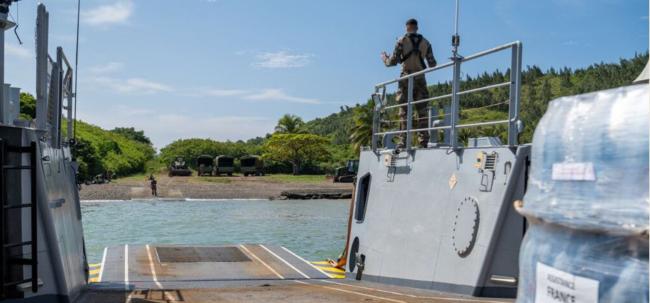
Reflecting on a Decade of the South Pacific Defence Ministers Meeting (SPDMM). Achievements and Future Pathways
The South Pacific Defence Ministers Meeting (SPDMM) is taking place in Nouméa (New Caledonia) from December 4th to 6th of this year.
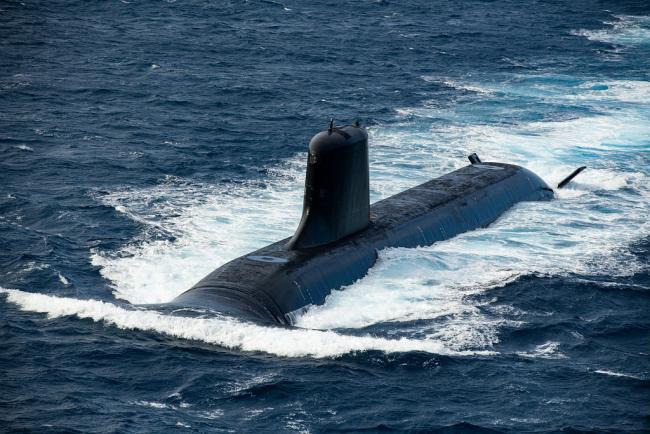
Naval Nuclear Propulsion: The Technical and Strategic Challenges of a Restricted Technology
The technical and operational capabilities of naval nuclear propulsion - discretion, power, autonomy and manoeuvrability - make this technology a strategic asset for nuclear deterrence.

France in the Indo-Pacific: The Need for a Pragmatic Strategic Posture
As US-China rivalry reaches its peak and the likelihood of a high-intensity conflict in the region seems greater than ever, this report advocates for a pragmatic recalibration of France’s strategic posture in the Indo-Pacific. This adjustment should be grounded in a realistic reframing of ambitions and an analysis of France’s core interests and the threats it faces.

Macron is not giving up France's role as a Pacific player
President offers 'alternative' for states squeezed between U.S. and China
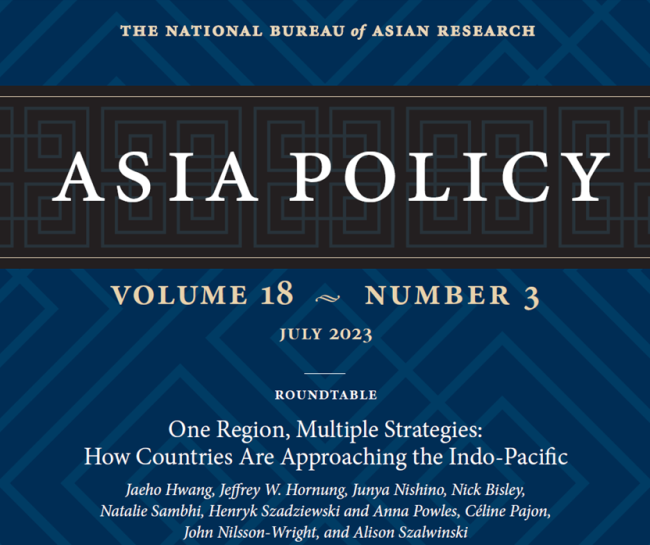
France's IndoPacific Strategy: From a Balancing Power to a Constructive Stakeholder
France was the first European country to announce an Indo-Pacific strategy, launching it in 2018.

India’s Power Games, between Ukraine and the G20
India’s drive for power merits examination in the light of New Delhi’s abstention on Ukraine, and its stated objectives for its presidency of the G20.

Türkiye’s Stifled Ambitions
As its elections have unfolded this spring, Türkiye has again shown itself to be symptomatic of the times. Across the world, numerous political regimes oscillate between democratic forms of government and an authoritarian concentration of power; impressive periods of growth give way to inflation and recession; and international deregulation gives rise to widespread diplomacy in an effort to juggle a myriad of shifting political loyalties. Faced with the war in Ukraine, Ankara is playing a strong hand by enlarging its areas of presence and intervention. Türkiye is more important to its partners than ever, independent of its eventual domestic trajectory.
Western discourse predicted the advent of Chinese dominance in the very short term, but events have taken a rather different turn. The drivers that enabled the unprecedented growth of recent decades seem to have run out of steam. Moreover, the outcome of Beijing’s economic strategies is still uncertain, in a context shaped primarily by U.S. policies. China’s influence in the future will be considerable, but the direction its rebound will take remains unclear.
For Europeans, the events in Ukraine and the thorny issue of the Sino-American rivalry cannot paper over the other security problems we face: On what common vision of our history and future will we build the Europe of tomorrow? Has drug trafficking already changed the nature of our societies? Can we afford to turn away from instances of destabilization in Africa, from the Horn to the Sahel?
Macron's Taiwan comments expose muddled China policy
French President Emmanuel Macron's call for Europe to steer clear of a Taiwan conflict -- rooted in France's pride and deep-seated resistance to following America's lead -- has raised questions about where he and Paris really stand on China.

France's Macron is sending China the wrong signals
More realistic posture would strengthen Paris' role in Indo-Pacific region

Does Macron's stance on Taiwan weaken G7 deterrence against China?
One of Prime Minister Fumio Kishida’s top goals for next month’s Group of Seven summit in Hiroshima is to create a united front on issues like China and Ukraine. But finding a unified approach to dealing with Beijing’s assertiveness might have just become harder.
The Ambitions of the Islamic Republic of Iran in the Pacific
In January 2023, the Iranian Navy staged a show of force near the Australian Exclusive Economic Zone (EEZ) amid growing tensions between Tehran and Canberra.
Japan and the Pacific Islands Countries. Longstanding Strategic Interests, Recent Strategic Engagement
A Green-Blue Alliance in Motion: Pacific Island Countries and Europe Fighting Climate Change
The Pacific Islands Countries (PICs) were the first to ratify the Paris climate agreement in 2015. Indeed, for them, climate change has had very concrete implications for years. Islanders have seen the sea level rising, endangering the very existence of atolls. They have also experienced increasingly violent cyclones and other natural disasters, and must deal with multiple impacts of a changing climate on their everyday lives
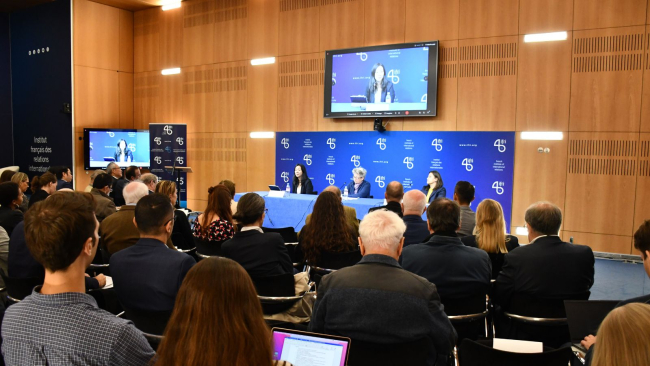
Asia after the War in Ukraine: Re-imagining multilateralism and the risk of high-intensity conflict (video replay)
Annual conference of Ifri's Center for Asian Studies. The war in Ukraine has marked the return of high-intensity conflict in Europe and represents a profound, structural shift in the region’s strategic environment. It also takes place against a backdrop of a decades-long rebalancing of global power and the increase of strategic competition between the United States and China, in particular.

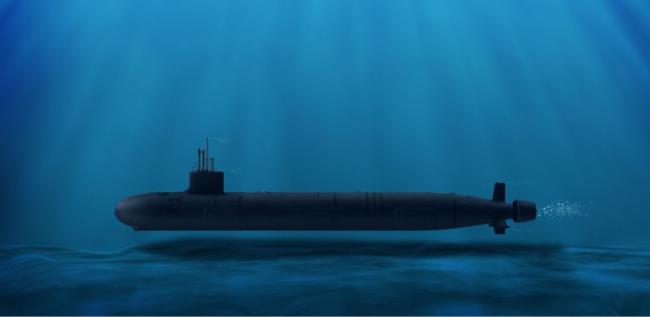
France and AUKUS: A Necessary Reconciliation
One year on, the announcement of the Australia-U.K.-U.S alliance has not been accompanied by any major changes to France’s Indo-Pacific defense strategy.
New government in Canberra: A reset for Australia’s Indo-Pacific approach?
Following the May Federal election, Australia has its first centre-left government in close to a decade, led by Prime Minister Anthony Albanese.

New Pacific alliance PBP to counter China’s influence will likely grow to include more European nations, say analysts
Partners in the Blue Pacific (PBP) is made up of US, UK, Japan, Australia, New Zealand, with the latter two expected to spearhead cooperation efforts. Some experts say France is already interested despite anger over Aukus security pact; the new PBP will become ‘multilateral rather than minilateral’.
Are Marine Protected Areas a relevant tool for the Pacific?
Marine protected areas (MPAs) offer a solution for countries in the region to manage their maritime space. Access to scientific data is required to set MDA.
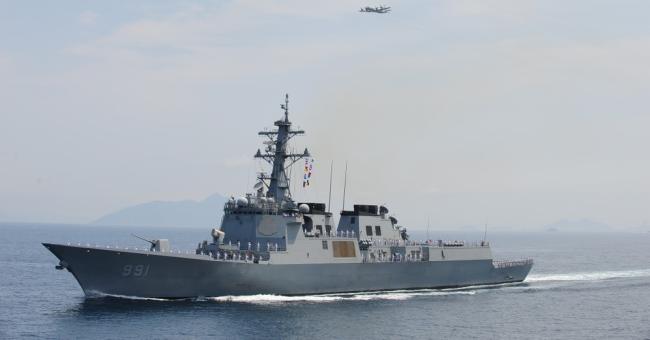
La paix par la force. La modernisation de la défense sud-coréenne sous la présidence Moon Jae-in
South Korea's defense modernization plan, Defense Reform 2.0, represents a significant effort in terms of military capabilities since 2018. The outgoing president, Moon Jae-in, has placed particular emphasis on high-tech acquisition as well as transforming the Korean defense industrial and technological base into a major domestic and international supplier.
Ifri, a foundation recognized as being of public utility, relies largely on private donors – companies and individuals – to guarantee its sustainability and intellectual independence. Through their funding, donors help maintain the Institute's position among the world's leading think tanks. By benefiting from an internationally recognized network and expertise, donors refine their understanding of geopolitical risk and its consequences on global politics and the economy. In 2026, Ifri partners with over 90 French and international companies and organizations.