



Taiwan's Energy Supply: The Achilles Heel of National Security
Making Taiwan a “dead island” through “a blockade” and “disruption of energy supplies” leading to an “economic collapse.” This is how Colonel Zhang Chi of the People’s Liberation Army and professor at the National Defense University in Beijing described the objective of the Chinese military exercises in May 2024, following the inauguration of Taiwan’s new president, Lai Ching-te. Similar to the exercises that took place after Nancy Pelosi’s visit to Taipei in August 2022, China designated exercise zones facing Taiwan’s main ports, effectively simulating a military embargo on Taiwan. These maneuvers illustrate Beijing’s growing pressure on the island, which it aims to conquer, and push Taiwan to question its resilience capacity.
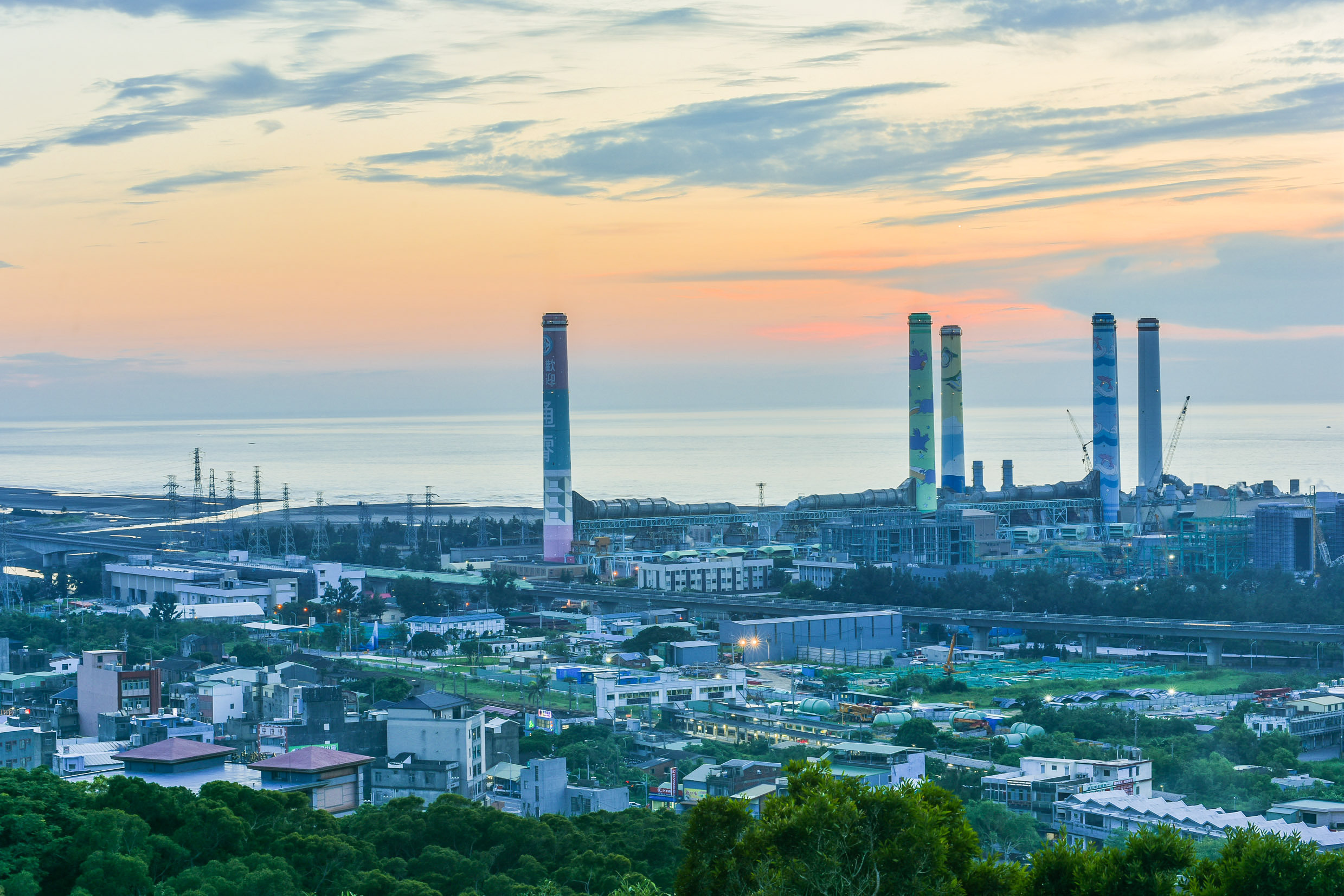
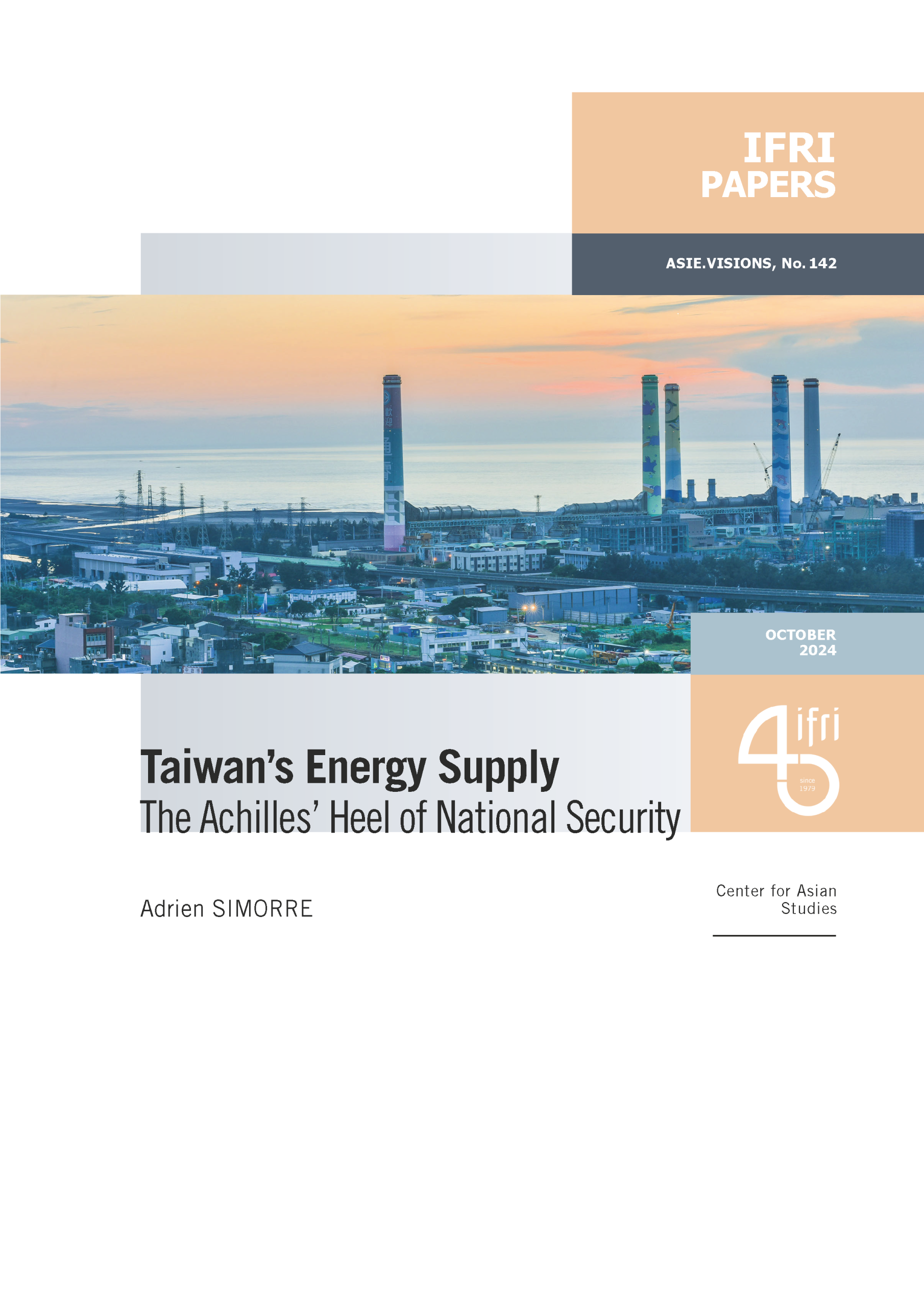
Taiwan, an island the size of Belgium but with a population as large as Australia’s (23 million people), has an insular energy system, with an isolated electrical grid. This grid powers one of the world’s most densely populated areas and energy-intensive high-tech industries, concentrated to the west of a massive central mountain range that runs from north to south. Moreover, Taiwan includes several islands that must rely on their own energy supply, particularly Kinmen and Matsu, two islands located just a few kilometers off the Chinese coast.
To meet these energy needs, Taiwan’s energy mix relies primarily on fossil fuels (natural gas and coal). This dependence will persist after the complete phase-out of nuclear power in 2025 (a commitment made by the Democratic Progressive Party [DPP] when it came to power in 2016), despite the rapid development of renewable energies.
In the context of regional tensions, energy supply represents a true Achilles’ heel for Taiwan’s national security. With 96% of its energy imported, the island is highly vulnerable to an embargo or disruption of maritime traffic. Additionally, fuel storage capacity is limited, as evidenced by the legal reserve of only eight days for liquefied natural gas (LNG). The location of major above-ground gas and oil storage tanks in western Taiwan, along with key power plants and the distribution network, increases the exposure of the energy system in the event of a military attack such as a bombing.
Aware of the challenge, the Taiwanese government is working to strengthen its energy independence, for example by encouraging the development of renewable energies, diversifying fossil fuel suppliers, increasing fuel storage capacities, and enhancing the security of the power grid.
However, the government struggles to formulate an energy policy that explicitly aligns with national security needs. Energy policy is nonetheless inseparable from national security, especially as the confidence of the Taiwanese people in their defense capabilities remains mixed. The sector also suffers from a fragmentation of responsibilities between private actors, the government, and state-owned enterprises, leading to inadequate investment strategies. It must also contend with other imperatives, such as the goal of reducing greenhouse gas emissions and the need to produce cheap electricity for the industrial sector.
This study is based on open sources as well as numerous interviews with industry players, experts, and political representatives conducted between May and July 2024 in Taipei.

Available in:
Themes and regions
ISBN / ISSN
Share
This page contains only a summary of our work. If you would like to have access to all the information from our research on the subject, you can download the full version in PDF format.
Taiwan's Energy Supply: The Achilles Heel of National Security

Center for Asian Studies
Asia is a nerve center for multiple global economic, political and security challenges. The Center for Asian Studies provides documented expertise and a platform for discussion on Asian issues to accompany decision makers and explain and contextualize developments in the region for the sake of a larger public dialogue.
The Center's research is organized along two major axes: relations between Asia's major powers and the rest of the world; and internal economic and social dynamics of Asian countries. The Center's research focuses primarily on China, Japan, India, Taiwan and the Indo-Pacific, but also covers Southeast Asia, the Korean peninsula and the Pacific Islands.
The Centre for Asian Studies maintains close institutional links with counterpart research institutes in Europe and Asia, and its researchers regularly carry out fieldwork in the region.
The Center organizes closed-door roundtables, expert-level seminars and a number of public events, including an Annual Conference, that welcome experts from Asia, Europe and the United States. The work of Center’s researchers, as well as that of their partners, is regularly published in the Center’s electronic journal Asie.Visions.
Center for Energy & Climate
Ifri's Energy and Climate Center carries out activities and research on the geopolitical and geoeconomic issues of energy transitions such as energy security, competitiveness, control of value chains, and acceptability. Specialized in the study of European energy/climate policies as well as energy markets in Europe and around the world, its work also focuses on the energy and climate strategies of major powers such as the United States, China or India. It offers recognized expertise, enriched by international collaborations and events, particularly in Paris and Brussels.
The Oceania Factor in France’s Evolving Indo-Pacific Strategy
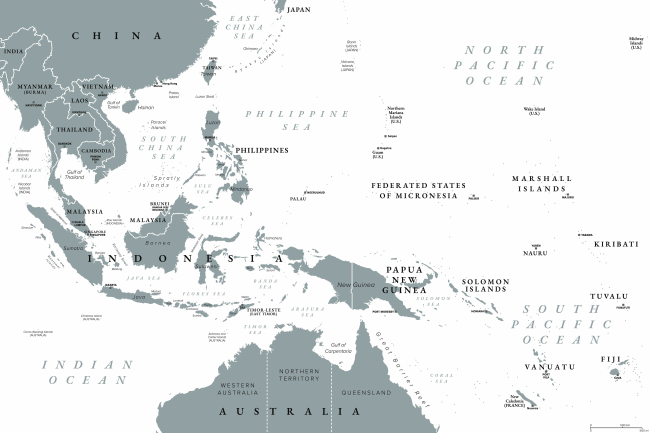
This paper examines the two-way relationship between France’s Indo-Pacific strategy and developments in Oceania. Oceania was not a priority in the initial years of France’s Indo-Pacific strategy, as the region was largely treated as secondary to major strategic hotspots and key partnerships, while overseas territories were primarily handled as domestic issues and recipients of a top-down strategy.

France’s View: From Diplomacy to Public-Private Action
France has emerged as the EU’s IMEC forerunner, combining port infrastructure, diplomatic alliances and public-private cooperation. With Marseille Fos at its core, the country brings a strategic hub for logistics, energy and digital connectivity to the corridor.
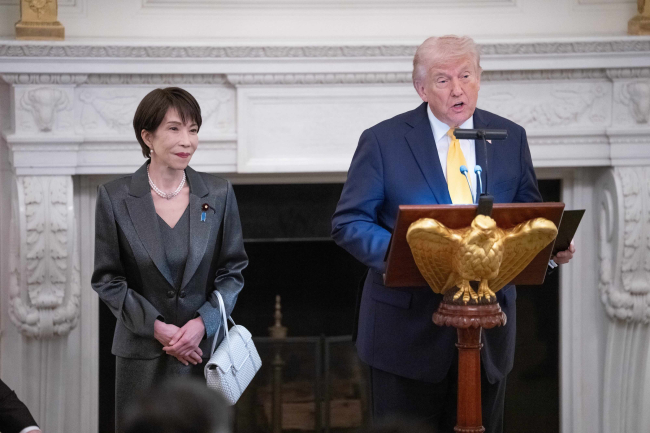
Trump II, the Crisis of the Rules-Based Order and Europe’s Indo-Pacific Strategy
This article examines the implications of Trump II for Europe’s engagement in the Indo-Pacific. The piece contends that Trump II is accelerating the erosion of the rules-based order and undermining the relevance of the Free and Open Indo-Pacific (FOIP) concept, while forcing Europe to refocus on its own continental security amid US retrenchment. Paradoxically, these very constraints create conditions for a more autonomous, pragmatic, and explicitly interest-driven European engagement in the Indo-Pacific, rather than outright withdrawal.
China and Trade in Critical Raw Materials (CRMs)
Critical raw materials (CRMs) have become central features of a new dynamic in global power politics, with China now wielding considerable leverage. Amid rising regional and global uncertainty, resource security is back in the spotlight as a key determinant of sovereignty and national security for Europe, its allies and its partners. The very survival of key, even vital industries, from automotive to aerospace to health to energy to defense, is at stake.